Jean-Pierre Serre developed methods connecting algebraic topology, algebraic geometry and number theory. He received the first Abel Prize in 2003. [ref]
https://abelprize.no/abel-prize-laureates/2003. Official laureate record and citation
His 1951 work used singular homology to study loop spaces and homotopy groups. A loop space turns paths in a topological space that start and end at a fixed base point into points of a new space . Serre treated as the fibre of a fibration whose total space is contractible, linking the topology of the fibre to that of . The resulting Serre spectral sequence organizes the calculation into successive algebraic stages.[ref]
Homologie singulière des espaces fibrés. Applications by Jean-Pierre Serre. printed page 425, Introduction and account of Chapter II
The dimension shiftmakes the strategy useful: information about families of loops becomes information about higher-dimensional homotopy groups. For example, a loop in describes a continuously varying family of loops in , introducing a second parameter. Turning a geometric question into a calculation about another space is a characteristic strength of this approach.[ref]
Homologie singulière des espaces fibrés. Applications by Jean-Pierre Serre. Introduction, loop-space relation and indirect method
Articles by others on the same topic

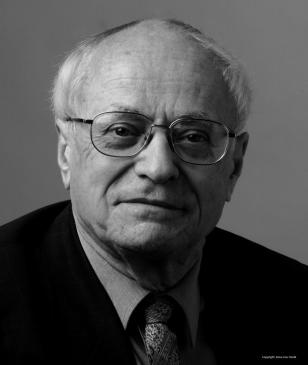
Jean-Pierre Serre is a renowned French mathematician, known for his significant contributions to various fields such as algebraic geometry, topology, and number theory. He was born on September 15, 1926, and has been highly influential in the development of modern mathematics. Serre's work spans several important areas, including the study of sheaf theory, cohomology, and algebraic varieties.