Richard Scheines studies causal discovery: learning causal structure from statistical evidence under explicit assumptions. With Peter Spirtes, Clark Glymour and collaborators, he developed the Tetrad research programme, connecting causal inference, algorithms and machine learning.[ref]
Richard Scheines by Carnegie Mellon University. Bio, first two paragraphs: causal discovery, statistical evidence and Tetrad collaboration
In Causation, Prediction, and Search by Peter Spirtes, Clark Glymour and Richard Scheines, the collaborators examine how patterns of conditional independence constrain a causal directed acyclic graph. The connection is informative but conditional: faithfulness of a directed acyclic graph, restrictions on unobserved causes and the correctness of the independence information affect what can be identified. Different graphs can remain indistinguishable under Markov equivalence of directed acyclic graphs, so observational data need not select one unique causal story.[ref]
Causation, Prediction, and Search by Peter Spirtes, Clark Glymour and Richard Scheines. Chapter 3, Markov and faithfulness assumptions; chapter 5, discovery algorithms
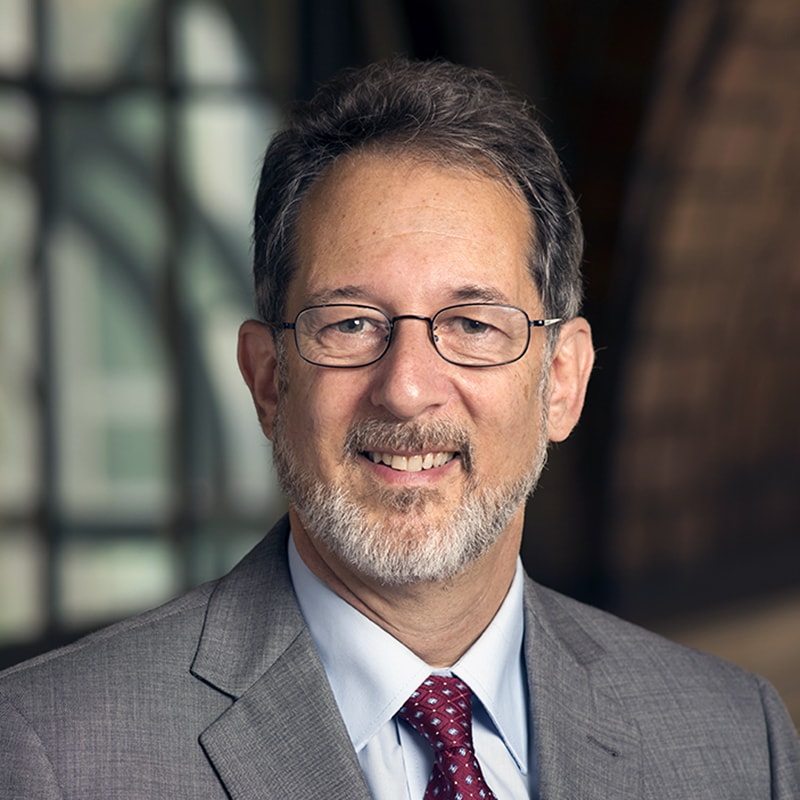
Portrait of Richard Scheines
. Portrait selected from the matching Carnegie Mellon institutional profile. Source.Peter Spirtes develops mathematical and computational methods for causal discovery. His work asks which causal conclusions can be recovered from statistical data and background knowledge when fully controlled experiments are unavailable, and how to turn the corresponding guarantees into practical algorithms.[ref]
Peter Spirtes by Carnegie Mellon University. Research: the two goals of the Tetrad project and limitations of its assumptions
With Clark Glymour and Richard Scheines, he coauthored Causation, Prediction, and Search by Peter Spirtes, Clark Glymour and Richard Scheines. One important example is the PC algorithm, which uses conditional independence information to remove candidate edges and orient some of the remaining ones. Under its assumptions, the resulting graph represents an equivalence class of possible causal explanations; it need not recover every arrow in a unique graph. Making these limitations explicit is part of the method's contribution, rather than an exception to it.[ref]
Causation, Prediction, and Search by Peter Spirtes, Clark Glymour and Richard Scheines. Chapter 5, section 5.4.2, PC algorithm; Markov equivalence and the stated causal assumptions
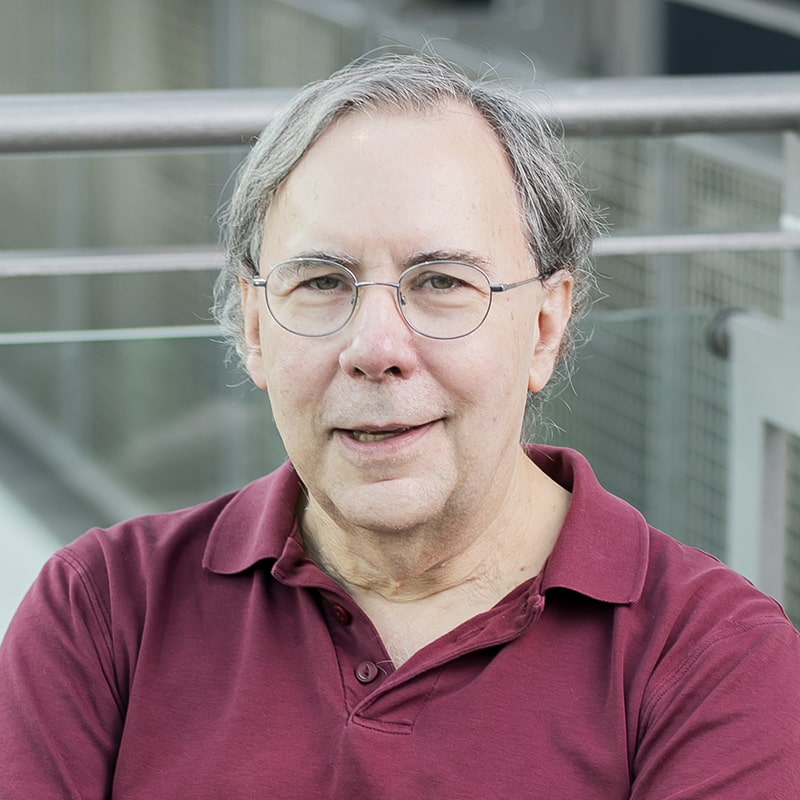
Portrait of Peter Spirtes
. Portrait selected from the matching Carnegie Mellon institutional profile. Source.
Portrait of George Berkeley
. John Smibert; National Portrait Gallery, Smithsonian Institution; Google Art Project reproduction, cropped on Wikimedia Commons. Public domain (Commons PD-old-100-expired and PD-Art declarations). Source usage terms, via Wikimedia Commons. Source.An American philosopher associated here with Peirce's law.

Portrait of Charles Sanders Peirce in 1859
. Unknown photographer. Tuttle Collection, Institute for Studies in Pragmaticism, Texas Tech University. The linked Commons record identifies the subject and marks the image as public domain in the United States; it supplies further usage information. Source.Philosopher whose new riddle of induction concerns the selection of predicates for projection beyond examined cases.[ref]
Fact, Fiction, and Forecast by Nelson Goodman. Chapters III–IV

Portrait of Ian Hacking
. Ludvig Hertzberg, International Wittgenstein Symposium, Kirchberg am Wechsel, 13 August 2009. Cropped version with later tonal adjustment as recorded on Commons. Creative Commons Attribution-ShareAlike 3.0, creativecommons.org/licenses/by-sa/3.0/ . No additional alteration except display scaling. Source.
Portrait of Hilary Putnam
. Photographer unidentified on the Commons record; released by Hilary Putnam as copyright holder, Wikimedia permission ticket 2006081310002761. Creative Commons Attribution-ShareAlike 2.5, creativecommons.org/licenses/by-sa/2.5/ . Commons records later cropping, greyscale conversion and cleanup; displayed without further alteration except scaling. Source.Portrait: University of Chicago photographic archive.

Portrait of Rudolf Carnap
. Photographer unknown; Virtual Archive of Logical Empiricism, Carnap Collection. Public domain (Commons PD-old-assumed-expired; U.S. pre-1931 publication tag). Source and usage information on the linked Wikimedia file page. Source.Institutional biography: Harvard memorial, with portrait.

Portrait of Willard Van Orman Quine
. Photographer unknown; source states permission by University of Pittsburgh (spelled Pittsburg on Commons), 1935. CC0 1.0, via Wikimedia Commons. Source.
Portrait of Thomas Aquinas
. Carlo Crivelli, Saint Thomas Aquinas (1476); faithful reproduction of public-domain painting. Public domain (PD-Art; author died circa 1495; pre-1931 publication). Source and usage information on the linked Wikimedia file page. Source.Author homepage with portrait: sites.pitt.edu/~dmw121/
Institutional profile and portrait: Carnegie Mellon University.

Portrait of David Hume
. Allan Ramsay, portrait of David Hume (1766), Scottish National Portrait Gallery; photographic reproduction. Public domain (PD-Art). Source and usage information on the linked Wikimedia file page. Source.
Portrait of Aristotle
. Photograph by Jastrow (2006); Roman sculpture after a Greek portrait attributed to Lysippos; Ludovisi Collection, Palazzo Altemps, inv. 8575. Photograph released into the public domain by Jastrow (PD-self); ancient sculpture public domain. Source and usage information on the linked Wikimedia file page. Source.
Portrait of Francis Bacon
. Paul van Somer I; Łazienki Palace, Warsaw, ŁKr 896; reproduction photographer not identified. Public domain (PD-Art / historical painting and faithful reproduction, as declared on Commons). Source and usage information on the linked Wikimedia file page. Source.
Portrait of Pierre Duhem
. Photographer unknown; photograph made before 1916; source cited by Commons: University of Maryland carnap.umd.edu/~parkerdn/250/Duhem.jpg; transferred from English Wikipedia. Public domain, as the file page states on the basis of creation before 1916. Source and usage information on the linked Wikimedia file page. Source.
Portrait of John Worrall (philosopher)
. LSE Library, formal staff portrait, circa 1980s; LSE image library reference IMAGELIBRARY/1023; Flickr photo 4303825488. No known copyright restrictions (Flickr Commons; reviewed on Commons), via Wikimedia Commons. Source.
Portrait of Thomas Kuhn
. Bob Bielk, 1977; Princeton University Weekly Bulletin. Public domain in the United States; the linked file page records territorial qualifications. Source.
Portrait of Imre Lakatos
. Library of the London School of Economics and Political Science; staff portrait circa 1960s; IMAGELIBRARY/277; Flickr photo 3983645490. No known copyright restrictions (Flickr Commons), via Wikimedia Commons. Source.
Portrait of Karl Popper
. Franz Barta; LSE Library, circa 1980. No known copyright restrictions, via Wikimedia Commons. Source.
Portrait of John Locke
. Godfrey Kneller, 1697; Hermitage Museum. Public domain. Source and usage information on the linked Wikimedia file page. Source.
Portrait of Tim Maudlin
. Philosophy at the University of Edinburgh; frame from its online course, cropped on Wikimedia Commons. CC BY 4.0, via Wikimedia Commons. Source.
Portrait of Thomas Nagel
. Nagelt; cropped by Lykos and converted to greyscale by WikiPedant. CC BY-SA 4.0, via Wikimedia Commons. Source.


