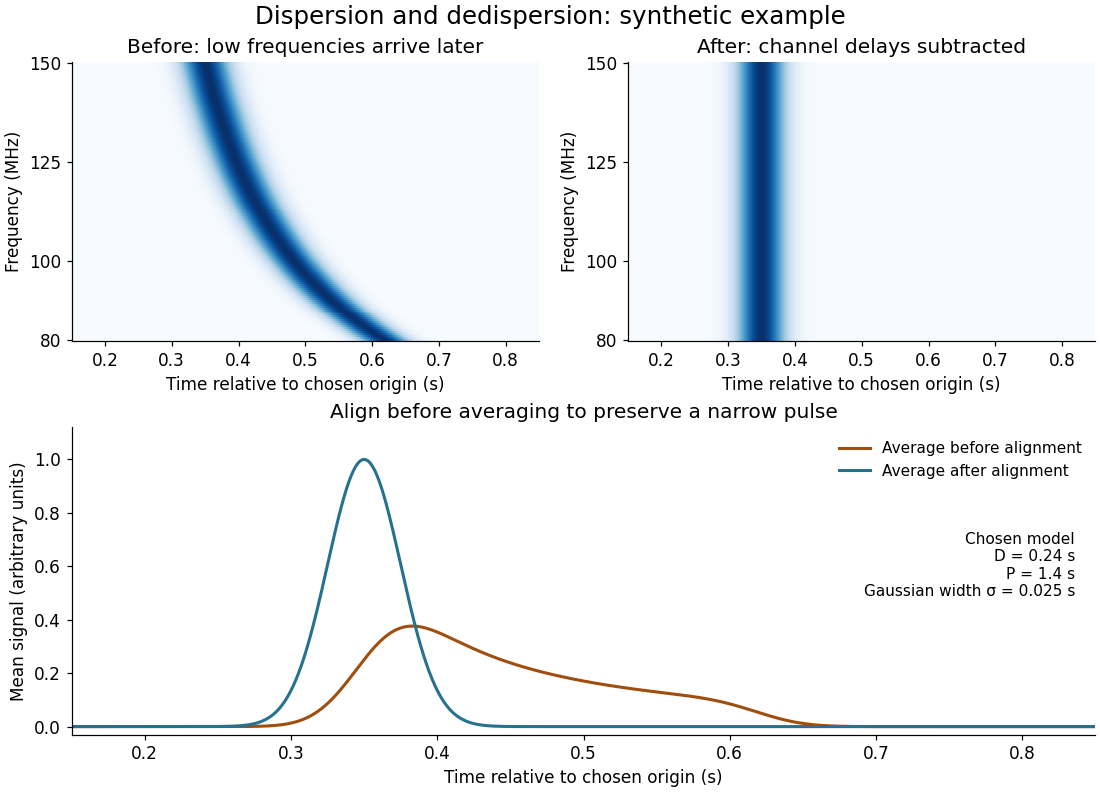
Pulsar dedispersion aligns radio wave arrival times in separate frequency channels before combining them. For an original illustrative model chooseBoth bracketed ratios are dimensionless, so supplies all the time units. The reference is : delays are there, at , and at . These are chosen model values, not measurements of the first pulsar. Subtracting the delay aligns the peaks; summing channels first spreads a short pulse over a longer interval and reduces its peak. Finite channel width and incorrect delay parameters leave residual smearing.

Articles by others on the same topic
There are currently no matching articles.