
Republican Party (United States) Updated 2025-07-16
Charlie Wilson's War Updated 2025-07-16
The Nerdy Kid in the White Shirt scene from Charlie Wilson's War
. Source. The old man lost his horse scene from Charlie Wilson's War
. Source. The Right Stuff (1983) Updated 2025-07-16
Ah, Ciro Santilli was not expecting this. What a unique mixture of humour, technology, politics and bravery. No wonder it was a box flop, there's something good about this film.
Ł Updated 2026-10-18
Spherical coordinate system Updated 2025-07-16
Chemical weapon Updated 2025-07-16
Blood agent Updated 2025-07-16
Nerve agent Updated 2025-07-16
Galilean transformation Updated 2025-07-16
Lorentz group Updated 2025-07-16
Subgroup of the Poincaré group without translations. Therefore, in those, the spacetime origin is always fixed.
Or in other words, it is as if two observers had their space and time origins at the exact same place. However, their space axes may be rotated, and one may be at a relative speed to the other to create a Lorentz boost. Note however that if they are at relative speeds to one another, then their axes will immediately stop being at the same location in the next moment of time, so things are only valid infinitesimally in that case.
This group is made up of matrix multiplication alone, no need to add the offset vector: space rotations and Lorentz boost only spin around and bend things around the origin.
One definition: set of all 4x4 matrices that keep the Minkowski inner product, mentioned at Physics from Symmetry by Jakob Schwichtenberg (2015) page 63. This then implies:
Planck constant Updated 2025-07-16
And analogously for matter, appears in the de Broglie relations relating momentum and frequency. Also appears in the Schrödinger equation, basically as a consequence/cause of the de Broglie relations most likely.
Intuitively, the Planck constant determines at what length scale do quantum effects start to show up for a given energy scale. It is because the Plank constant is very small that we don't perceive quantum effects on everyday energy/length/time scales. On the , quantum mechanics disappears entirely.
A very direct way of thinking about it is to think about what would happen in a double-slit experiment. TODO think more clearly what happens there.
Defined exactly in the 2019 redefinition of the SI base units to:
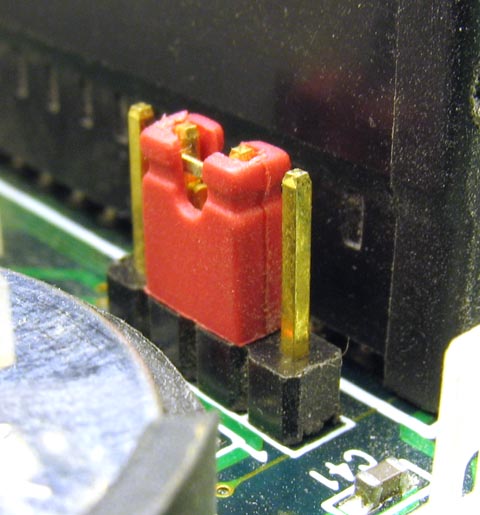
Jumper (computing) Updated 2025-07-16
Coral of life Updated 2025-07-16

Coral of life by János Podani (2019)
Source. Fantastic work!!! Some cool things we can easily see: Second-order phase transition Updated 2025-07-16
The more familiar transitions we are familiar with like liquid water into solid water happen at constant temperature.
However, other types of phase transitions we are less familiar in our daily lives happen across a continuum of such "state variables", notably:
- superfluidity and its related manifestation, superconductivity
- ferromagnetism
Merck Group Updated 2025-07-16
Arline Greenbaum Updated 2025-07-16
Feynman's first wife, previously his local-high school-days darling. Feynman was like an reversed Stephen Hawking: he married his wife knowing that she had a serious illness, while Hawking's wife married him knowing that as well. Except that in Feynman's case, the disease outcome (tuberculosis) was much more uncertain, and she tragically died in 1945 much earlier while Feynman was at Los Alamos Laboratory, while Hawking, despite his decline, lived much longer.
Feynman first noticed Arline on the beaches on the region of his home in Far Rockaway, in the Queens, New York, near Long Beach. She lived a bit further inland in Cedarhurst. Arline was beautiful and boys competed for her, but Richard persisted, stalking her at an after-school social league sponsored by the local Synagogue and joining an art class she went to, until he eventually won it out. The region was highly Jewish, and both were from Jewish families, as also suggested by their family names.
Reading about her death e.g. at Genius: Richard Feynman and Modern Physics by James Gleick (1994) is a major tearjerker, it's just too horrible. The book mentions on chapter "The Last Springtime" that at last, during the last months of her life, after much hesitation, they did fuck in the sanatorium Arline where was staying at in Albuquerque, the nearest major city to Los Alamos (154 km), despite the risk of Feynman being infected, which would be particularly serious given that Feynman would be in constant contact with students and possibly infect others as part of his career as a researcher/teacher. Feynman would visit her on weekends by bus, and stay in Los Alamos during the week.
Arline finally died on June 16th 1945, exactly one month before the Trinity nuclear test was carried out. The atomic bombings of Hiroshima and Nagasaki were a little later on 6 and 9 of August 1945.
On one of his last trips to Oak Ridge town late 1945, after her death, Feynman walked past a shop window and saw a pretty dress. He thought to himself, "Arline would have liked that", and the reminder made him cry for the first time after Arline's death.
It is even sadder to think that the first antibiotics for tuberculosis, streptomycin, finished its first major clinical trial at around 1948, not long after her death.
Ciro Santilli considers this tragedy a cause of Feynman was a huge womanizer during a certain period of his life.


The film suggests that Feynman and Arline fucked a lot before the final Los Alamos fuck, that fuck story from book being only "fuck after tuberculosis diagnosis", after which they had to slow it down a bit.
This is likely true given how long they had been together for at that point. Ciro Santilli is such a pure soul for not having thought that! They were not very conservative at all those two.
Also their wedding got slowed down because there was a clause in Feynman's scholarship at Princeton University stating that the recipient could not be married, those were different times altogether.
Feynman was a huge womanizer during a certain period of his life Updated 2025-07-16
Feynman became a terrible womanizer after his first wife Arline Greenbaum died, involving himself with several married women, and leading to at least two abortions according to Genius: Richard Feynman and Modern Physics by James Gleick (1994).
Ciro Santilli likes to think that he is quite liberal and not a strict follower of Christian morals, but this one shocked him slightly even. Feynman could be a God, but he could also be a dick sometimes.
One particular case that stuck to Ciro Santilli's mind, partly because he is Brazilian, is when Feynman was in Brazil, he had a girlfriend called Clotilde that called him "Ricardinho", which means "Little Richard"; -inho is a diminutive suffix in Portuguese, and also indicates affection. At some point he even promised to take her back to the United States, but didn't in the end, and instead came back and married his second wife in marriage that soon failed.
Richard's third and final wife, Gweneth Howarth, seemed a good match for him though. When they started courting, she made it very clear that Feynman should decide if he wanted her or not soon, because she had other options available and being actively tested. Fight fire with fire.
Joan Feynman Updated 2025-07-16
My brother, Richard: How he came to be so smart interview with Joan Feynman by Web of Stories (2019)
Source. Ah, shame to see Joan so old. Some good stories. The tiles game thing was not mentioned in Genius: Richard Feynman and Modern Physics by James Gleick (1994) I think. Richard Feynman's drug use Updated 2025-07-16
From Surely You're Joking, Mr. Feynman chapter O Americano, Outra Vez!:
The people from the airlines were somewhat bored with their lives, strangely enough, and at night they would often go to bars to drink. I liked them all, and in order to be sociable, I would go with them to the bar to have a few drinks, several nights a week.One day, about 3:30 in the afternoon, I was walking along the sidewalk opposite the beach at Copacabana past a bar. I suddenly got this treMENdous, strong feeling: "That's just what I want; that'll fit just right. I'd just love to have a drink right now!"I started to walk into the bar, and I suddenly thought to myself, "Wait a minute! It's the middle of the afternoon. There's nobody here, There's no social reason to drink. Why do you have such a terribly strong feeling that you have to have a drink?" - and I got scared.I never drank ever again, since then. I suppose I really wasn't in any danger, because I found it very easy to stop. But that strong feeling that I didn't understand frightened me. You see, I get such fun out of thinking that I don't want to destroy this most pleasant machine that makes life such a big kick. It's the same reason that, later on, I was reluctant to try experiments with LSD in spite of my curiosity about hallucinations.
One notable drug early teens Ciro consumed was Magic: The Gathering, see also: Section "Magic: The Gathering is addictive".
There are unlisted articles, also show them or only show them.