
Once upon a time (early 2010's), Eclipse dominated the IDE landscape and all was good. NetBeans was around too. And Java was still unmarred by Google LLC v. Oracle America, Inc..
But then something happened.
And the project that had once been a vibrant community of awesomeness, started to become... a zombie of its former self.
Buggyness started increasing. And not even hard to fix bugs. One liners that affect every user immediately after startup.
Sometimes, to Eclipse's defense they weren't "bugs". Just features that it became evident with time every programmer expected from a modern IDE.
But somehow the Eclipse community had a deep problem. A cancer. It had completely lost touch with user experience.
Perhaps is was due to the increasing interest of the several corporations that had adopted Eclipse as the base IDE for the proprietary solutions?
Perhaps.
Many users stuck to the IDE.
Some heroic efforts were made as plugins that drastically improved certain defects. The Darkest Dark plugin comes to mind.
But all those efforts required configuration. A setup time that most users simply don't have. The core devteam had become dumb and dead, unable to incorporate such changes.
This greatly opened up the space for other competing IDEs to come along. The "semi feature complete but at least easy to use and not so buggy" Visual Studio Code and the proprietary JetBrains IDEs being some of the most notable ones.
Using Eclipse as of the early 2020's is such a mixed experience. If you spend enough time to configure out the key buggyness, there are moments where you can feel "OMG, this feature is amazing".
But the effort is just too great, and soon another bug or obvious missing feature hits you and brings you back to reality.
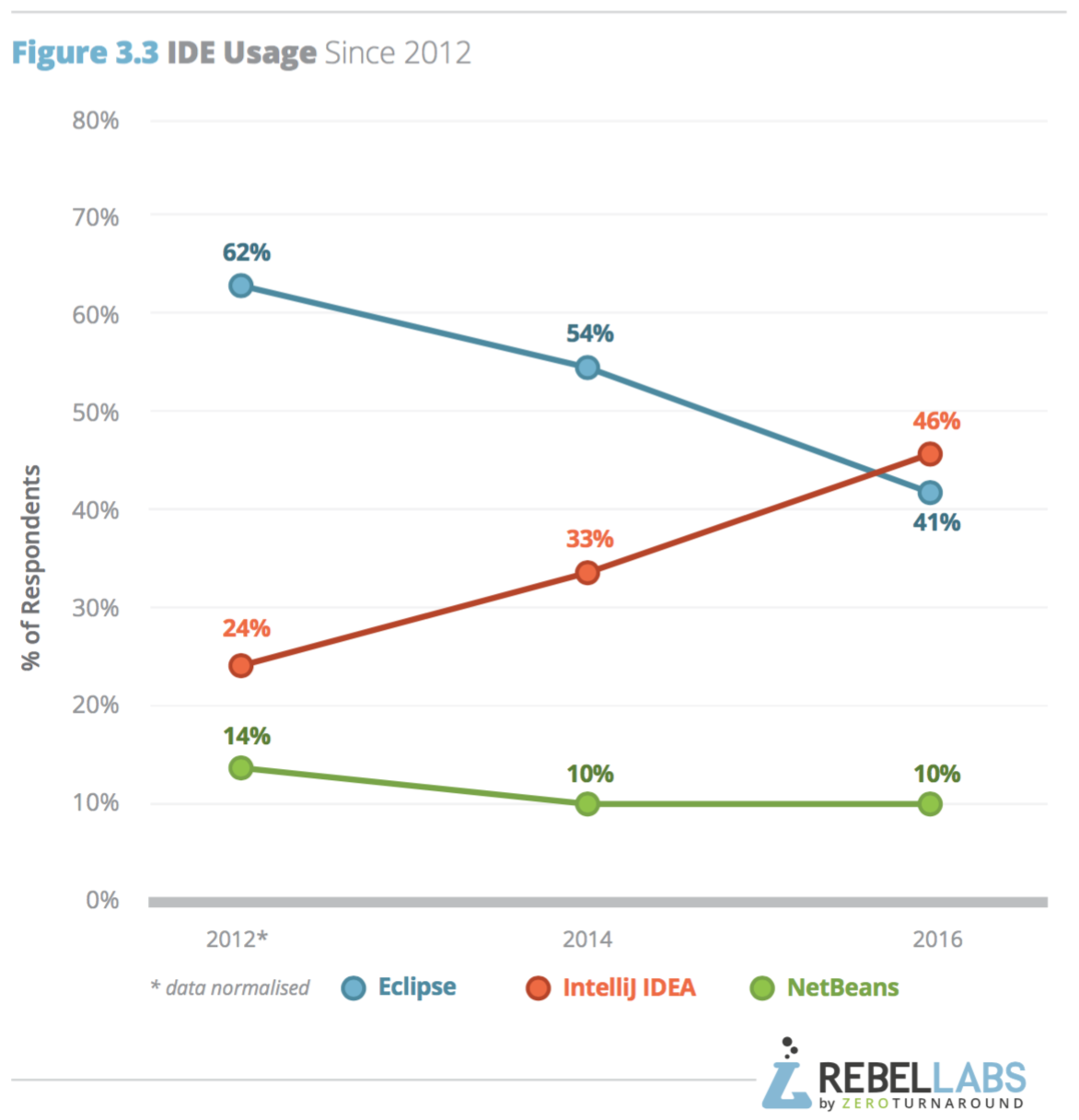
Every young person uses VS Code now. Eclipse is dead, and there is no way back, usage will just continue dropping.
Bibliography:
But one thing you should really know, as often mentioned in Power, Sex, Suicide by Nick Lane (2006): they are all eukaryotes.
Because prokaryotes are fundamentally unable to do phagocytosis, because they have a rigid cell wall. Changing cell shape at will requires a cytoskeleton.
It is hard to say if this channel is good because of the awesome information, or if because of the absolute cutness of that British presenter. Maybe it is both.
Examples under cmake:
- cmake/hello: just print a message in CMake itself and exit. No compilation.
- cmake/hello_c: C hello world
- cmake/option:
set()andoption()basic examples - cmake/multi_executable
- cmake/multi_file
- cmake/multi_file_recursive
- cmake/shared_lib_external
There are unlisted articles, also show them or only show them.