Ciro Santilli @cirosantilli 40
Joined 2022-11-02 Message
Incoming links: Cornell University
Advanced quantum mechanics by Freeman Dyson (1951) Updated 2025-07-16
Lecture notes that were apparently very popular at Cornell University. In this period he was actively synthesizing the revolutionary bullshit Richard Feynman and Julian Schwinger were writing and making it understandable to the more general physicist audience, so it might be a good reading.
We shall not develop straightaway a correct theory including many particles. Instead we follow the historical development. We try to make a relativistic quantum theory of one particle, find out how far we can go and where we get into trouble.
Hans Bethe Updated 2025-07-16
Richard Feynman was working under him there, and was promoted to team lead by him because Richard impressed Hans.
He was also the person under which Freeman Dyson was originally under when he moved from the United Kingdom to the United States.
And Hans also impressed Feynman, both were problem solvers, and liked solving mental arithmetic and numerical analysis.
This relationship is what brought Feynman to Cornell University after World War II, Hans' institution, which is where Feynman did the main part of his Nobel prize winning work on quantum electrodynamics.
Richard Feynman Updated 2025-07-16
Some of Feynman's key characteristics are:
- obsession with understanding the experiments well, see also Section "How to teach and learn physics"
- when doing more mathematical stuff, analogous obsession about starting with a concrete example and then generalizing that into the theory
- liked to teach others. At Surely You're Joking, Mr. Feynman for example he mentions that one key problem of the Institute for Advanced Study is that they didn't have to teach, and besides that making you feel useless when were not having new ideas, it is also the case that student's questions often inspire you to look again in some direction which sometimes happens to be profitableHe hated however mentoring others one to one, because almost everyone was too stupid for him
- interest in other natural sciences, and also random art and culture (and especially if it involves pretty women)
Some non-Physics related ones, mostly highlighted at Genius: Richard Feynman and Modern Physics by James Gleick (1994):
- Feynman was a huge womanizer during a certain period of his life
- he hated pomp, going as far as seeming uneducated to some people in the way he spoke, or going out of his way to look like that. This is in stark contrast to "rivals" Murray Gell-Mann and Julian Schwinger, who were posh/snobby.
Even Apple thinks so according to their Think different campaign: www.feynman.com/fun/think-different/
quantum electrodynamics lectures:
Feynman was apparently seriously interested/amused by computer:
- Video "Los Alamos From Below by Richard Feynman (1975)" see description for the human emulator
- quantum computers as experiments that are hard to predict outcomes was first attributed to Feynman
- www.youtube.com/watch?v=EKWGGDXe5MA Richard Feynman Computer Heuristics Lecture (1986)
Two official websites?
- www.richardfeynman.com/ this one has clearly superior scientific information.
- www.feynman.com/
In 1948 he published his reworking of classical quantum mechanics in terms of the path integral formulation: journals.aps.org/rmp/abstract/10.1103/RevModPhys.20.367 Space Time Approach to nonrelativistic quantum mechanics (paywalled 2021)
Ron Maimon Updated 2025-07-26
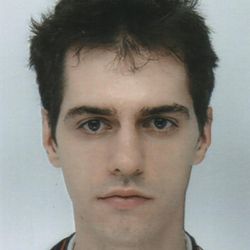
Ron Maimon is a male human theoretical physicist with an all but dissertation started in 1995 at Cornell University[ref][ref].

Ron is mostly known for simultaneously:
- the amazing free online content he has published in online forums such as Stack Overflow and Quora, notably about particle physics, until around 2014 when Ron disappeared from the Internet entirely. Ciro Santilli figures he's hanging out with Ettore Majorana somewhere in the metaverse.
- having either been blocked from or quit every single website he participates in, partly due to his highly combative nature, e.g.:He explicitly defends this combative approach at youtu.be/ObXbKbpkSjQ?t=944 from Video 1. "Ron Maimon interview with Jeff Meverson (2014)":
- Physics Stack Exchange: physics.meta.stackexchange.com/users/4864/ron-maimon
physics.meta.stackexchange.com/questions/976/physics-ses-inability-to-deal-with-users-who-are-highly-persistent-have-kook-b user Marty Green makes one of the best characterizations of Ron's approach to science/collaboration:The thing about Ron Maimon is he definitely comes here to talk about physics. I personally can't get into discussions with him for two reasons: first, he's so single-minded in his own point of view that you can't really communicate with him back and forth; secondly, the structure of this forum is simply not conducive to extended discussions. But he sometimes posts things that are so coherently argued and with such intricate detail that even if I can't understand them myself, I just can't believe he's simply pulling this stuff out of his ass.
- physics.meta.stackexchange.com/questions/1376/what-violation-caused-this-suspension user Jerry Schirmer makes another good comment:
- Quora: www.quora.com/profile/Ron-Maimon. Ron was very active on Quora, until he was blocked for his views on the Boston Marathon bombing as mentioned at Video 1. "Ron Maimon interview with Jeff Meverson (2014)"
And notably, relevant to cirosantilli.com/china-dictatorship/stack-overflow-mods-refuse-to-clarify-if-anti-ccp-imagery-is-allowed-or-not-2021In order to have this process work [finding of truth] it is extremely important that the tone is hostile, that it is like a court of law, where you have an adversarial relationship with your opponent. Because if you have a friendly relationship with your opponent, then political consensus is preserved.
and he then also mentions that Wolfgang Pauli was a major proponent of this in physics, and so was Galileo.Unfortunately, when you're in a minority, the only way to correct the consensus view is to just shout it, and repeat it, until people go and look and check for themselves. The reason is that it creates an adversarial atmosphere where the people have to pick sides, and they don't like to pick sides, they would rather have everyone be happy. So when you have to pick sides, what do you do? You either butt out, you just leave it alone, you run away. Or you sit and review the evidence until you know which side to pick.
- Physics Stack Exchange: physics.meta.stackexchange.com/users/4864/ron-maimon
Ron seems to share a few philosophies which Ciro greatly agrees with as part of Cirism, which together with his knowledge of physics, make Ciro greatly respect Ron. Such philosophies include:
- he gives great importance to the history of physics and learning from original papers. He appears to know this insanely well, notably emphasizing that there is value in tutorials written by early pioneers of the field, see also Section "How to teach and learn physics". TODO find quote. Ciro Santilli distinctly remembers one specifically taking about this, but can't find it anymore.
- education views, notably emphasising autodidacticism
- www.quora.com/Why-should-high-school-students-learn-physics/answer/Ron-Maimon, highlighted at gmachine1729.livejournal.com/161418.html: "Why should high school students learn physics?" Answer:Yes, please, give it to me baby:
But they should learn it, preferably on their own, because the school doesn't know how to teach physics. Physics is extremely interesting, even the elementary kind. It takes the mathematics you learn in high school and uses it to describe certain natural phenomenon completely, beyond what was imagined possible in the wildest dreams of people like Pythagoras or Archimedes. If you have a computer, Newton's laws plus a tiny code can produce the motion of the planets around the sun, the motion of a free-twirling baton, the motion of colliding billiards, it's very simple.
- www.quora.com/Why-should-high-school-students-learn-physics/answer/Ron-Maimon, highlighted at gmachine1729.livejournal.com/161418.html: "Why should high school students learn physics?" Answer:
- enthusiasm for molecular biology technologies, seen e.g. at: www.quora.com/Why-are-an-abundance-of-physicists-moving-to-theoretical-biology/answer/Ron-Maimon on Quora:Ciro is actually specifically curious about whole cell simulation which he makes reference to.
[biology] is also clearly going to be the major technology of the 21st century, you should have a sugar outlet next to the electrical outlet, and plug in artificial biological technology made out of artificial cells. To plan these requires a complete method of describing biological cells, a precise model of all the processes, so that you can make artificial ones, and it produces a type of precise control on single-molecule chemistry that makes chemists drool.
- effortless effort and the to explain everything he knows online. These can be seen at www.quora.com/How-do-you-control-your-urge-to-access-the-internet-so-you-can-complete-your-assignments "How do you control your urge to access the Internet so you can complete your assignments?":
- his cheapness as in Ciro Santilli's cheapness as mentioned at youtu.be/ObXbKbpkSjQ?t=2454 from Video 1. "Ron Maimon interview with Jeff Meverson (2014)":Interviewer: there's a question on Quora where you say that you took a vow of poverty when you were very young.Ron: I was ten, I mean, most people would give it up, but I mean I figured I didn't have any need to give it up, so I just kept with it, I mean, I was never was really offered that much more. When we started the startup, I think I was offered 50k, but I said "no, I'll keep it 40k, I took a vow", and then they gave me 40k. And that of sort of set an example, the CEO also took 40k. It was a very good thing because we had very little money, we were a startup, and we were going by seed money.
However he also subscribes to some theories which Ciro Santilli considers conspiracy theories, e.g. his ideas about the Boston Marathon bombing that got him banned from Quora (a ban which Ciro strongly opposes due to freedom of speech concerns!), but the physics might be sound, Ciro Santilli does not know enough physics to judge, but it often feels that what he says makes sense.
chat.stackexchange.com/transcript/message/7104585#7104585 mentions that he was at Cornell University and did all but dissertation, but he mentions that he was still self-taught:This is corroborated e.g. at: web.archive.org/web/20201226171231/http://pages.physics.cornell.edu/~gtoombes/Student_Index.html (original pages.physics.cornell.edu/~gtoombes/Student_Index.html down as of 2023).
Eugene Seidel: On your personal info page you write that you are not a physics Ph.D. but does that mean you were a physics undergrad in college then went to grad school and finished ABD... or are you entirely self taught?Ron Maimon: ABD. I am self- taught though, I only went to school for accreditation. I had a thesis worth of work at the time I left grad-school,Eugene Seidel: ok thanksRon Maimon: I was just kind of sickened by academic stuff that was going on--- large extra dimensions were popular then.
At youtu.be/ObXbKbpkSjQ?t=2454 from Video 1. "Ron Maimon interview with Jeff Meverson (2014)" he mentions his brother is a professor. At physics.stackexchange.com/questions/32382/could-we-build-a-supercomputer-out-of-wires-and-switches-instead-of-a-microchip confirms that his brother's name is "Gaby Maimon", so this neuroscience professor at the Rockerfeller University is likely him: www.rockefeller.edu/our-scientists/heads-of-laboratories/985-gaby-maimon/. Looks, age, location and research interest match.
Some notable technical posts:
Some notable history posts:
- physics.stackexchange.com/questions/18632/good-book-on-the-history-of-quantum-mechanics/18643#18643 about the history of quantum mechanics give the quadratic explanation
- and closely related for the factor 2: physics.stackexchange.com/questions/27847/why-is-there-a-frac-1-2-in-frac-1-2-mv2/27916#27916
Bibliography:
- www.reddit.com/r/DecodingTheGurus/comments/17cb0n8/do_you_remember_ron_maimon_from_the_prepodcast/ "Do you remember Ron Maimon from the pre-podcast era? Where would he rank on the Guru scale?" user JohnFatherJohn comments:
I was actually friends with Ron Maimon at Cornell around 2006-2008. He was doing some research for my undergraduate research advisor and was a regular at a few of the same coffee shops I frequented. He was a legitimate brilliant physicist who had some strange personality quirks and blindspots, but his simultaneous breadth and depth of physics knowledge was staggering. He detested academia and couldn't stay focused on any one given problem for too long before moving on to something else though.
- gmachine1729.livejournal.com/161418.html Ron Maimon answers about physics and math on Quora (part 1) by Sheng Li (2020) contains a selection of some amazing Ron Maimon posts
- www.reddit.com/r/RonMaimon/ someone made a Reddit for him. Less than 100 users as of 2022, but has potential.
- some Quora threads about him, oh the irony:
- www.quora.com/Is-Ron-Maimon-actually-a-pioneer-or-a-jest
- www.quora.com/Are-Ron-Maimons-answers-on-mathematics-physics-and-computer-science-factually-correct
- www.quora.com/What-do-people-think-of-Ron-Maimons-paper-Computational-Theory-of-Biological-Function-I
- www.quora.com/Who-is-Ron-Maimon/answer/Ron-MaimonAlso in a comment he explains something to a now deleted comment, presumably asking why he dropped out of grad school, and gives a lot more insight:
I'm a physics grad school drop-out working in theoretical biology but I still do physics when I get a chance, but not right now because I am in a middle of a project to understand the properties of a certain virus as completely as possible.
I dropped out mainly to do biology with friends at a startup, because I figured out how you're supposed to do theory in biology, but also I truly believe it was next to impossible for me to get a degree without selling out, and I would rather be shot than write a paper with an idea I don't believe.My grad school phase was a disaster. I first worked for Eric Siggia, but I got away because he had me do something boring and safe, I figured I have only a limited number of years before I turn 30 and my brain rots, and I wasn't going to sell out and do second-rate stuff. I found a young guy at the department doing interesting things (Siggia was also doing interesting things, like RNA interactions, he just wouldn't assign any of them to ME), this was Philip Argyres, and got him to take me. Argyres wanted me to work on large-extra dimensions (this was 1998), but I made it clear to him that I would rather be boiled in oil. I worked a little bit on a crappy experimental setup that didn't work at all, because I didn't know enough about electromagnetic screening nor about how to set up experiment. But EVERYONE LOVED IT! This is also how I knew it was shit. Good work is when everyone hates it. But I learned Lifschitz's ideas for quantum electrodynamics in media from this project.Me and every competent young person in high-energy physics knew large extra dimensions was a fraud on the day it came out, and I had no intention of doing anything except killing the theory. Once Wikipedia appeared, I did my best to kill it by exposing it's charlatanry on the page for large extra dimension. That was in 2005 (after getting fired from the company), and from this point onward large-extra-dimensions lost steam. But I can't tell how much of this was my doing.Argyres liked N=2 theory, and we did something minor in N=2 SUSY models around 2000, but I was bogged down here, because I was trying to do Nicolai map for these, and it ALMOST worked for years, but it never quite worked. But I knew from the moduli interpretation and Seiberg-Witten solution that it must work. If I live long enough, I'll figure it out, I am still sure it isn't hard. But this was the link to statistical stochastic models, the work I was doing with Jennifer Schwarz, and I wanted to link up the two bodies of work (they naturally do through Nicolai map).But I had my own discovery, the first real discovery I made, in 1999, this thing that I called the mass-charge inequality, what Vafa and Motl called "the weakest-force principle" when they discovered it in 2006. It was swampland, and Vafa hadn't yet begun swampland. My advisor didn't believe my result was correct, because he saw me say many stupid things before this. So he wouldn't write it or develop it with me (but I had read about Veltman telling 'tHooft he couldn't publish the beta-function, I knew Argyres was wrong about this)Anyway, Argyres left for Cincinnatti in 2000, and I joined the company then. I was in the company until january 2005. Then they fired me, which was ok, by then it was a miserable hell-hole full of business types.I discovered Wikipedia, and started killing large extra dimensions. I wanted to finish my thesis, and some people agreed to help me do this, but I had told myself "no thesis until you get the Nicolai map sorted out" and I never did. I worked with Chris Henley a little bit, who wanted me to do some stuff for him, and I discovered an interesting model for high-Tc, but Henley said it was out of fasion, and nobody would care, even though I knew it was the key to the phenomenon (still unpublished, but soon).This was 2008-2009, and I became obsessed with cold fusion, so Henley dropped me, as I had clearly gone crazy. I developed the theory of cold fusion during the last weeks of working for Henley. Then I dropped out for good.Honestly, by the time I was gone, I realized that the internet would make a degree counterproductive, because I knew I had better internet writing skills than any of the old people, I was a Usenet person. Online, the degrees and accreditation were actually a hinderance. So by this point, I secretly preferred not to have a PhD, because I knew I was good at physics, and I could attack from the outside and win. It's not too hard if you know the technical material.The only problem is that I was unemployed and isolated in Ithaca for about 7 years after having gone through my first productive phase. But I developed the cold-fusion ideas in this period, I learned a lot of mathematics, and I developed a ton of biology ideas that are mostly unpublished, but will be published soon. It astonished people that I could have no degree and be unemployed and have such a sky-high ego. The reason is that I could evaluate my own stuff, and I liked it!
Other possible accounts:
Backlinks:
- 2022: twitter.com/johncarlosbaez/status/1556085484937310209 by John Baez. This page was one of the top Google hits for "Ron Maimon" at the time.
Ron Maimon interview with Jeff Meverson (2014)
Source. Ripped from Jeff's "Quoracast": player.fm/series/quoracast-podcast/ron-maimon-truther Ron mentions he was an early-Usenet user. Key points:- youtu.be/ObXbKbpkSjQ?t=2247 mentions that there is a question on Quora where Ron said he took a vow of poverty when he was 10. This reminded Ciro of Ciro Santilli's cheapness.
- youtu.be/ObXbKbpkSjQ?t=2532 mentions his admiration for Leonard Susskind, in particular him starting out as a plumber
- youtu.be/ObXbKbpkSjQ?t=3088Ron: no, no, I'll just go and do, library, write some papers or whatever. This is not, and this is not like... basically, look, I wrote most of what I wanted to write on Quora anyway. I have gotten almost everything out of my system. I wanted to write, a couple of other things, but they weren't major.