Topics (266k) Articles (272k) Users (353) Discussions (237) Comments (383) Files (2k) New article

- youtu.be/29aTqLvRia8?t=714 GlobalFoundries seems to be one of the leaders at the time. E.g. quantum computing company PsiQuantum uses them. Part of this was from acquiring IBM's microelectronics division in 2014.
- youtu.be/t0yj4hBDUsc?t=566 mentions the paper Deep learning with coherent nanophotonic circuits
- youtu.be/t0yj4hBDUsc?t=440 block diagram
- youtu.be/t0yj4hBDUsc?t=456 Lightmatter lightmatter.co/ seems to be using an in-silicon Mach-Zehnder interferometer to do analog matrix multiplication with light. It is an actual analog computer element!
Silicon Photonics for Extreme Computing by Keren Bergman (2017)
Source. The knowledge that light is polarized precedes the knowledge of the existence of the photon, see polarization of light for the classical point of view.
The polarization state and how it can be decomposed into different modes can be well visualized with the Poincaré sphere.
One key idea about photon polarization is that it carries angular momentum. Therefore, when an electron changes orbitals in the Schrödinger equation solution for the hydrogen atom, the angular momentum (as well as energy) change is carried out by the polarization of the photon!
- clear animations showing how two circular polarizations can make a vertical polarization
- a polarizer can be modelled bra operator.
- light polarization experiments are extremely direct evidence of quantum superposition. Individual photons must be on both L and R states at the same time because a V filter passes half of either L or R single photons, but it passes all L + R photons
In it, each of the six sides has a clear and simple to understand photon polarization state, either of:
The sphere clearly suggests for example that a rotational or diagonal polarizations are the combination of left/right with the correct phase. This is clearly explained at: Video "Quantum Mechanics 9b - Photon Spin and Schrodinger's Cat II by ViaScience (2013)".

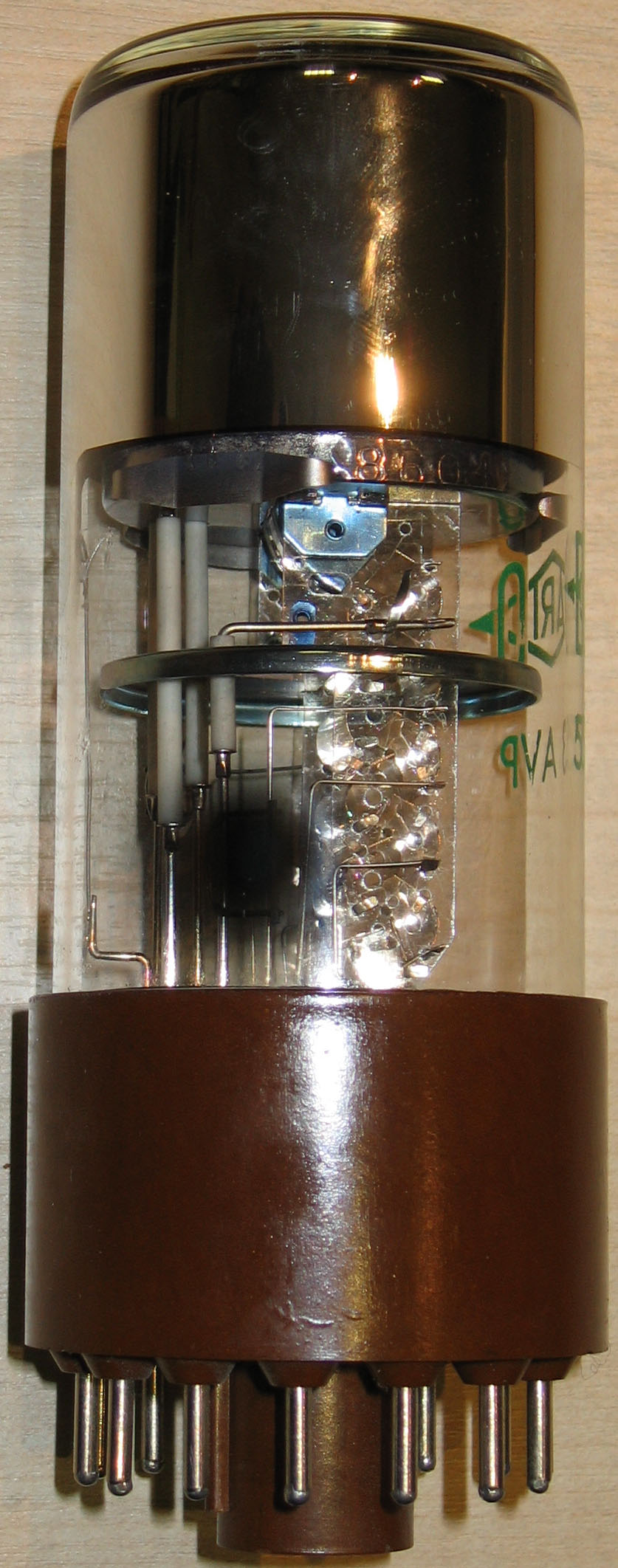
Can be used to detect single photons.
Richard Feynman likes them, he describes the tube at Richard Feynman Quantum Electrodynamics Lecture at University of Auckland (1979) at one point.
It uses the photoelectric effect multiple times to produce a chain reaction. In particular, as mentioned at youtu.be/5V8VCFkAd0A?t=74 from Video 1. "Using a Photomultiplier to Detect single photons by Huygens Optics" this means that the device has a lowest sensitive light frequency, beyond which photons don't have enough energy to eject any electrons.
Here is a vendor showcasing their device. They claim in that video that a single photon is produced and detected:
Concrete device described at: Video "How to use an SiPM - Experiment Video by SensLTech (2018)".
One of the sequencers made by Oxford Nanopore Technologies.
The device has had several updates since however, notably of the pore proteins which are present in the critical flow cell consumable.
Official documentation: nanoporetech.com/products/minion (archive)
The following images of the device and its peripherals were taken during the experiment: Section "How to use an Oxford Nanopore MinION to extract DNA from river water and determine which bacteria live in it".

Top view of a closed Oxford Nanopore MinION
. Source. 
Side view of an Oxford Nanopore MinION
. Source. 
Top view of an open Oxford Nanopore MinION
. Source. 


- www.varsity.co.uk/features/24648 ‘It felt impossibly romantic’: the nightclimbers of Cambridge by Varsity (2022)
- youtu.be/9aOLwjUZLm0?t=1216 superconducting qubits are bad because it is harder to ensure that they are all the same
- youtu.be/9aOLwjUZLm0?t=1270 our wires are provided by lasers. Gives example of ytterbium, which has nice frequencies for practical laser choice. Ytterbium ends in 6s2 5d1, so they must remove the 5d1 electron? But then you are left with 2 electrons in 6s2, can you just change their spins at will without problem?
- youtu.be/9aOLwjUZLm0?t=1391 a single atom actually reflects 1% of the input laser, not bad!
- youtu.be/9aOLwjUZLm0?t=1475 a transition that they want to drive in Ytterbium has 355 nm, which is easy to generate TODO why.
- youtu.be/9aOLwjUZLm0?t=1520 mentions that 351 would be much harder, e.g. as used in inertially confied fusion, takes up a room
- youtu.be/9aOLwjUZLm0?t=1539 what they use: a pulsed laser. It is made primarily for photolithography, Coherent, Inc. makes 200 of them a year, so it is reliable stuff and easy to operate. At www.coherent.com/lasers/nanosecond/avia-nx we can see some of their 355 offers. archive.ph/wip/JKuHI shows a used system going for 4500 USD.
- youtu.be/9aOLwjUZLm0?t=1584 Cirac and Zoller proposed the idea of using entangled ions soon after they heard about Shor's algorithm in 1995
- youtu.be/9aOLwjUZLm0?t=1641 you use optical tweezers to move the pairs of ions you want to entangle. This means shining a laser on two ions at the same time. Their movement depends on their spin, which is already in a superposition. If both move up, their distance stats the same, so the Coulomb interaction is unchanged. But if they are different, then one goes up and the other down, distance increases due to the diagonal, and energy is lower.
- youtu.be/9aOLwjUZLm0?t=1939 S. Debnah 2016 Nature experiment with a pentagon. Well, it is not a pentagon, they are just in a linear chain, the pentagon is just to convey the full connectivity. Maybe also Satanism. Anyways. This point also mentions usage of an acousto-optic modulator to select which atoms we want to act on. On the other side, a simpler wide laser is used that hits all atoms (optical tweezers are literally like tweezers in the sense that you use two lasers). Later on mentions that the modulator is from Harris, later merged with L3, so: www.l3harris.com/all-capabilities/acousto-optic-solutions
- youtu.be/9aOLwjUZLm0?t=2119 Bernstein-Vazirani algorithm. This to illustrate better connectivity of their ion approach compared to an IBM quantum computer, which is a superconducting quantum computer
- youtu.be/9aOLwjUZLm0?t=2354 hidden shift algorithm
- youtu.be/9aOLwjUZLm0?t=2740 Zhang et al. Nature 2017 paper about a 53 ion system that calculates something that cannot be classically calculated. Not fully controllable though, so more of a continuous-variable quantum information operation.
- youtu.be/9aOLwjUZLm0?t=2923 usage of cooling to 4 K to get lower pressures on top of vacuum. Before this point all experiments were room temperature. Shows image of refrigerator labelled Janis cooler, presumably something like: qd-uki.co.uk/cryogenics/janis-recirculating-gas-coolers/
- youtu.be/9aOLwjUZLm0?t=2962 qubit vs gates plot by H. Neven
- youtu.be/9aOLwjUZLm0?t=3108 modular trapped ion quantum computer ideas. Mentions experiment with 2 separate systems with optical link. Miniaturization and their black box. Mentions again that their chip is from Sandia. Amazing how you pronounce that.
This job announcement from 2022 gives a good idea about their tech stack: web.archive.org/web/20220920114810/https://oxfordionics.bamboohr.com/jobs/view.php?id=32&source=aWQ9MTA%3D. Notably, they use ARTIQ.
Merger between Cambridge Quantum Computing, which does quantum software, and Honeywell Quantum Solutions, which does the hardware.
As of 2021, their location is a small business park in Haywards Heath, about 15 minutes north of Brighton[ref]
Funding rounds:
- 2022:
- 67m euro contract with the German government: www.uktech.news/deep-tech/universal-quantum-german-contract-20221102 Both co-founders are German. They then immediatly announced several jobs in Hamburg: apply.workable.com/universalquantum/?lng=en#jobs so presumably linked to the Hamburg University of Technology campus of the German Aerospace Center.
- medium.com/@universalquantum/universal-quantum-wins-67m-contract-to-build-the-fully-scalable-trapped-ion-quantum-computer-16eba31b869e
- 2021: $10M (7.5M GBP) grant from the British Government: www.uktech.news/news/brighton-universal-quantum-wins-grant-20211105This grant is very secretive, very hard to find any other information about it! Most investment trackers are not listing it.The article reads:Interesting!
Universal Quantum will lead a consortium that includes Rolls-Royce, quantum developer Riverlane, and world-class researchers from Imperial College London and The University of Sussex, among others.
A but further down the article gives some more information of partners, from which some of the hardware vendors can be deduced:The consortium includes end-user Rolls-Royce supported by the Science and Technology Facilities Council (STFC) Hartree Centre, quantum software developer Riverlane, supply chain partners Edwards, TMD Technologies (now acquired by Communications & Power Industries (CPI)) and Diamond Microwave
- Edwards is presumably Edwards Vacuum, since we know that trapped ion quantum computers rely heavily on good vacuum systems. Edwards Vacuum is also located quite close to Universal Quantum as of 2022, a few minutes drive.
- TMD Technologies is a microwave technology vendor amongst other things, and we know that microwaves are used e.g. to initialize the spin states of the ions
- Diamond Microwave is another microwave stuff vendor
www.riverlane.com/news/2021/12/riverlane-joins-7-5-million-consortium-to-build-error-corrected-quantum-processor/ gives some more details on the use case provided by Rolls Royce:The work with Rolls Royce will explore how quantum computers can develop practical applications toward the development of more sustainable and efficient jet engines.This starts by applying quantum algorithms to take steps to toward a greater understanding of how liquids and gases flow, a field known as 'fluid dynamics'. Simulating such flows accurately is beyond the computational capacity of even the most powerful classical computers today.This funding was part of a larger quantum push by the UKNQTP: www.ukri.org/news/50-million-in-funding-for-uk-quantum-industrial-projects/ - 2020: $4.5M (3.5M GBP) www.crunchbase.com/organization/universal-quantum. Just out of stealth.
Co-founders:
- Sebastian Weidt. He is German, right? Yes at youtu.be/SwHaJXVYIeI?t=1078 from Video 3. "Fireside Chat with with Sebastian Weidt by Startup Grind Brighton (2022)". The company was founded by two Germans from Essex!
- Winfried Hensinger: if you saw him on the street, you'd think he plays in a punk-rock band. That West Berlin feeling.
Homepage points to foundational paper: www.science.org/doi/10.1126/sciadv.1601540
Universal Quantum emerges out of stealth by University of Sussex (2020)
Source. Explains that a more "traditional" trapped ion quantum computer would user "pairs of lasers", which would require a lot of lasers. Their approach is to try and do it by applying voltages to a microchip instead.- youtu.be/rYe9TXz35B8?t=127 shows some 3D models. It shows how piezoelectric actuators are used to align or misalign some plates, which presumably then determine conductivity
Quantum Computing webinar with Sebastian Weidt by Green Lemon Company (2020)
Source. The sound quality is to bad to stop and listen to, but it presumaby shows the coding office in the background.Fireside Chat with with Sebastian Weidt by Startup Grind Brighton (2022)
Source. Very basic target audience:- youtu.be/SwHaJXVYIeI?t=680 we are not at a point where you can buy victory. There is too much uncertainty involved across different approaches.
- youtu.be/SwHaJXVYIeI?t=949 his background
- youtu.be/SwHaJXVYIeI?t=1277 difference between venture capitalists in different countries
- youtu.be/SwHaJXVYIeI?t=1535 they are 33 people now. They've just setup their office in Haywards Heath, north of Bristol.
Pinned article: Introduction to the OurBigBook Project
Welcome to the OurBigBook Project! Our goal is to create the perfect publishing platform for STEM subjects, and get university-level students to write the best free STEM tutorials ever.
Everyone is welcome to create an account and play with the site: ourbigbook.com/go/register. We belive that students themselves can write amazing tutorials, but teachers are welcome too. You can write about anything you want, it doesn't have to be STEM or even educational. Silly test content is very welcome and you won't be penalized in any way. Just keep it legal!
Intro to OurBigBook
. Source. We have two killer features:
- topics: topics group articles by different users with the same title, e.g. here is the topic for the "Fundamental Theorem of Calculus" ourbigbook.com/go/topic/fundamental-theorem-of-calculusArticles of different users are sorted by upvote within each article page. This feature is a bit like:
- a Wikipedia where each user can have their own version of each article
- a Q&A website like Stack Overflow, where multiple people can give their views on a given topic, and the best ones are sorted by upvote. Except you don't need to wait for someone to ask first, and any topic goes, no matter how narrow or broad
This feature makes it possible for readers to find better explanations of any topic created by other writers. And it allows writers to create an explanation in a place that readers might actually find it.
Figure 1. Screenshot of the "Derivative" topic page. View it live at: ourbigbook.com/go/topic/derivativeVideo 2. OurBigBook Web topics demo. Source. - local editing: you can store all your personal knowledge base content locally in a plaintext markup format that can be edited locally and published either:This way you can be sure that even if OurBigBook.com were to go down one day (which we have no plans to do as it is quite cheap to host!), your content will still be perfectly readable as a static site.
- to OurBigBook.com to get awesome multi-user features like topics and likes
- as HTML files to a static website, which you can host yourself for free on many external providers like GitHub Pages, and remain in full control

Figure 2. You can publish local OurBigBook lightweight markup files to either OurBigBook.com or as a static website.
Figure 3. Visual Studio Code extension installation.
Figure 5. . You can also edit articles on the Web editor without installing anything locally. Video 3. Edit locally and publish demo. Source. This shows editing OurBigBook Markup and publishing it using the Visual Studio Code extension. 
- Infinitely deep tables of contents:




All our software is open source and hosted at: github.com/ourbigbook/ourbigbook
Further documentation can be found at: docs.ourbigbook.com
Feel free to reach our to us for any help or suggestions: docs.ourbigbook.com/#contact