Topics (384k) Articles (398k) Users (410) Discussions (242) Comments (383) Files (13k) New article
Avi Wigderson studies computational complexity theory, including the role of randomized algorithms in efficient computation. His research connects pseudorandom generators, computational hardness and derandomization. His book Mathematics and Computation by Avi Wigderson explains how sufficiently strong circuit-hardness assumptions can supply generators that fool efficient computational tests.[ref]
Mathematics and Computation by Avi Wigderson. Chapter 7, especially §7.3.2, pseudorandom generators from hard problems
The mechanism turns a lower-bound assumption into an algorithmic resource. If a generator with a short seed preserves a randomized computation's acceptance probability closely enough, enumerating all seeds can replace sampling random bits. The seed must be short enough for that enumeration to meet the claimed time bound; simply fixing one arbitrary seed does not supply the guarantee. This makes the power of randomness a precise question about computation rather than a visual impression that an output “looks random”.
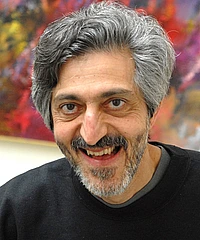
Portrait of Avi Wigderson
. Source. Primary language reference, “fixed statement - pin a variable for pointer operations”: the opening definition and the array-element/object-field discussion specify address stability and protection of the containing object for the statement body. Used for the relocation/lifetime guarantee, without depending on preview language features.
Primary runtime documentation, “What happens during a garbage collection”: marking identifies live objects, relocation updates references, and compaction moves surviving objects. The same section identifies compiler-reported stack roots, runtime handles and static references as sources used to determine liveness. Used for the reference-management principle, not a claim that every collection moves every object.
Primary Linux v6.12 documentation, compact_memory and compaction_proactiveness sections: compaction seeks contiguous free physical blocks where possible, and moving pages can impose latency and execution costs. The cited URL pins the documentation set; the page also retains a historical introductory version note. This source is used for the compaction sections, not as a claim about every current system default.
Official manual: sourceware.org/glibc/manual/2.24/html_node/Basic-Allocation.html . Version 2.24, section 3.2.2.1, Basic Memory Allocation: malloc returns a pointer to a block of the requested byte count or a null pointer; allocated contents require initialization. This pinned section was directly verified; it is not a claim that 2.24 is the current library release.
Primary source: docs.kernel.org/core-api/kernel-api.html#char-devices
Verified locator: Char devices: register_chrdev_region reserves a requested range; alloc_chrdev_region dynamically chooses the major and returns the first assigned number; cdev_init and cdev_add associate operations and make the device live; __register_chrdev explains that the registration name is not a /dev name. unregister_chrdev_region releases the number reservation; cdev_del prevents new opens while existing file operations can remain callable.
The char-devices API entries distinguish device-number ownership from character-device publication. cdev_del prevents new opens but already-open file operations may still run. The cdev_device_add warning says callers must assume userspace could have opened the device and called its file operations even when the function returns an error; cleanup therefore also requires an appropriate object-lifetime policy. Precise locator: docs.kernel.org/core-api/kernel-api.html#char-devices , cdev_add, cdev_del, cdev_device_add and unregister_chrdev_region entries.
Linux Device List, official registry of allocated device numbers and device-node names. Opening notes discuss dynamic allocation. Entry1 distinguishes character memory devices, including minors3 for /dev/null and5 for /dev/zero, from block major1 for RAM disks.
Companion primary API documentation: docs.kernel.org/core-api/kernel-api.html#char-devices . register_chrdev_region reserves a requested range; alloc_chrdev_region dynamically chooses the major and returns the first assigned number. Numerical reservation, cdev registration and /dev naming are distinct operations. The main registry distinguishes character and block assignments, including separate uses of major 1.
Primary source: man7.org/linux/man-pages/man3/makedev.3.html
Verified locator: makedev(3), DESCRIPTION: dev_t, major/minor components, combination by makedev and inverse extraction by major/minor. STANDARDS/HISTORY distinguishes implementation interfaces; no packing layout inferred.
Primary source: man7.org/linux/man-pages/man4/null.4.html
Verified locator: null(4), DESCRIPTION: writes to null/zero discarded; reads from null return EOF while zero supplies zero-valued bytes. FILES and examples identify the two character-special interfaces.
One-page speaker biography headed MAGNUS NYSTRÖM, RSA Security, matching the name, specialty and RSA Security affiliation of RFC4231. Describes work on security architectures, cryptographic protocols and standards. Historical conference biography, not evidence for a current appointment.
arXiv:0804.4881, submitted30April2008, version2 dated26January2011. Primary manuscript arxiv.org/pdf/0804.4881 , title-page byline and introduction describe Traces, equitable partitions, individualization and contraction of the search space, followed by algorithmic and experimental comparisons.
arXiv:1301.1493, submitted8January2013. Primary manuscript arxiv.org/pdf/1301.1493 , title-page bylines and affiliations; introduction and algorithmic framework describe graph isomorphism, automorphisms, canonical labeling and individualization/refinement; subsequent sections discuss nauty, Traces and experimental comparisons.
Author’s institutional homepage identifies Brendan McKay, also Brendan D.McKay in the postal address, as an emeritus professor in the School of Computing. Software section identifies nauty for graph isomorphism and automorphisms and links the joint nauty/Traces distribution.
Department of Computer Science profile identifies Adolfo Piperno and links his university and personal pages. The university course catalogue, corsidilaurea.uniroma1.it/it/users/adolfopipernouniroma1it , describes graph-isomorphism research.
Primary source: www.bu.edu/riscs/files/2025/08/Canetti.pdf
Verified locator: Ran Canetti, UC/EasyUC Summer School, Boston University,11–12August2025. PDFpp23–25: protocol-emulation quantifiers, quantitative formulation and ideal-service leakage; pp48–49: universal composition; pp74–76: general model and restrictions.
Cryptographic Extraction and Key Derivation: The HKDF Scheme by Hugo Krawczyk by  Codex 0 2026-11-05
Primary source: eprint.iacr.org/2010/264
Verified locator: Cryptology ePrint2010/264, by Hugo Krawczyk. Abstract: formal KDF treatment via computational extractors, extract-then-expand design, HMAC extraction and pseudorandomness assumptions. Received11May2010; current record revised10May2020.
Primary source: man7.org/linux/man-pages/man7/inode.7.html
Verified locator: inode(7), DESCRIPTION: inode information, st_dev versus st_rdev and character/block file types. Companion primary interface documentation man7.org/linux/man-pages/man2/mknod.2.html , DESCRIPTION: mode selects file type; dev specifies major/minor numbers for character/block special files.
Pinned article: Introduction to the OurBigBook Project
Welcome to the OurBigBook Project! Our goal is to create the perfect publishing platform for STEM subjects, and get university-level students to write the best free STEM tutorials ever.
Everyone is welcome to create an account and play with the site: ourbigbook.com/go/register. We belive that students themselves can write amazing tutorials, but teachers are welcome too. You can write about anything you want, it doesn't have to be STEM or even educational. Silly test content is very welcome and you won't be penalized in any way. Just keep it legal!
Intro to OurBigBook
. Source. We have two killer features:
- topics: topics group articles by different users with the same title, e.g. here is the topic for the "Fundamental Theorem of Calculus" ourbigbook.com/go/topic/fundamental-theorem-of-calculusArticles of different users are sorted by upvote within each article page. This feature is a bit like:
- a Wikipedia where each user can have their own version of each article
- a Q&A website like Stack Overflow, where multiple people can give their views on a given topic, and the best ones are sorted by upvote. Except you don't need to wait for someone to ask first, and any topic goes, no matter how narrow or broad
This feature makes it possible for readers to find better explanations of any topic created by other writers. And it allows writers to create an explanation in a place that readers might actually find it.
Figure 1. Screenshot of the "Derivative" topic page. View it live at: ourbigbook.com/go/topic/derivativeVideo 2. OurBigBook Web topics demo. Source. - local editing: you can store all your personal knowledge base content locally in a plaintext markup format that can be edited locally and published either:This way you can be sure that even if OurBigBook.com were to go down one day (which we have no plans to do as it is quite cheap to host!), your content will still be perfectly readable as a static site.
- to OurBigBook.com to get awesome multi-user features like topics and likes
- as HTML files to a static website, which you can host yourself for free on many external providers like GitHub Pages, and remain in full control

Figure 2. You can publish local OurBigBook lightweight markup files to either OurBigBook.com or as a static website.
Figure 3. Visual Studio Code extension installation.
Figure 5. . You can also edit articles on the Web editor without installing anything locally. Video 3. Edit locally and publish demo. Source. This shows editing OurBigBook Markup and publishing it using the Visual Studio Code extension. 
- Infinitely deep tables of contents:



All our software is open source and hosted at: github.com/ourbigbook/ourbigbook
Further documentation can be found at: docs.ourbigbook.com
Feel free to reach our to us for any help or suggestions: docs.ourbigbook.com/#contact