
Jan C. Willems was an electrical engineer and systems theorist whose work helped make dissipativity a general tool for studying dynamical systems. His university-hosted curriculum records an electrical-engineering doctorate at MIT in1968, a systems-and-control professorship at Groningen from1973, and later work as a guest professor at KU Leuven. It records his death on31August2013.[ref]
Curriculum Vitae of Jan C. Willems. Professional biography
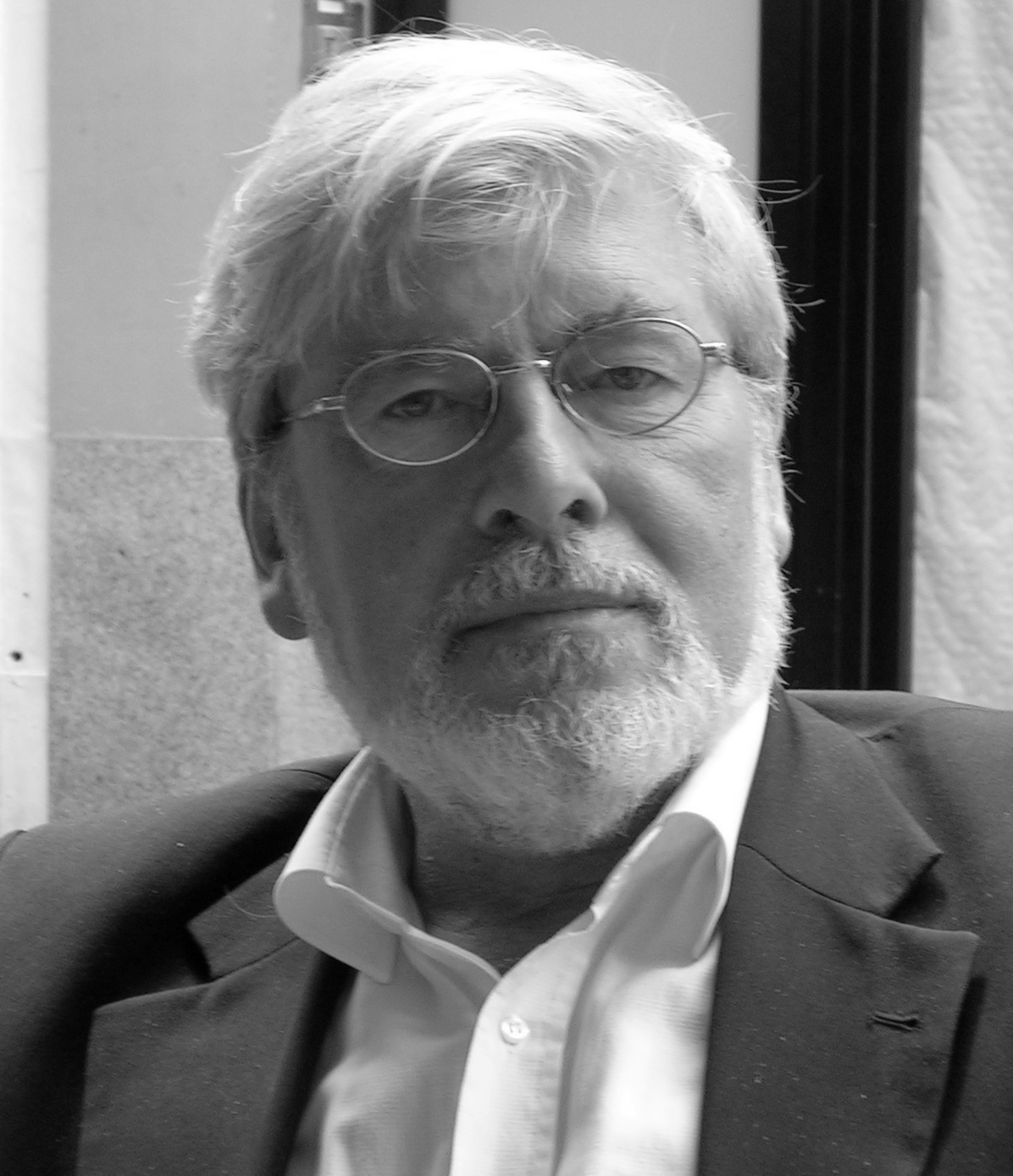
Jan C. Willems, portrait linked from his university homepage
. His1972general theory expresses a system's balance using a storage function and supply rate. The formulation compares a change in stored quantity with integrated input supply, allowing physical energy accounting and input–output performance bounds to share one mathematical language.[ref]
Dissipative Dynamical Systems, Part I: General Theory by Jan C. Willems. Part I: General Theory, storage and supply formulation
An original example illustrates the scientific idea. A2kilogram mass with viscous coefficient3newton-seconds per metre obeys . Its kinetic energy is joules when is expressed in metres per second, andAt constant velocity1metre per second, a3newton force supplies3watts, all dissipated while the stored kinetic energy stays1joule. The dissipativity article develops the general inequality; this simple case shows why its supply and storage terms must be distinguished.
Willems also developed behavioral systems theory, which describes a dynamical system by a family of admissible time histories. His curriculum explains the motivation: an interconnected system need not come with a uniquely privileged division into control inputs and plant outputs. Interconnection can instead impose shared variables and compatibility between trajectories.[ref]
Curriculum Vitae of Jan C. Willems. Professional biography, behavioral approach and interconnection
The two contributions address complementary questions: which histories are possible, and what balance law must each history obey? New to topics? Read the docs here!