
Andrey Sheyko investigated rotating magnetohydrodynamics in a spherical shell using a spectral method. His thesis varied boundary conditions and control parameters in geodynamo models, supplied numerical benchmark solutions, and derived decay rates for magnetic fields in spherical geometries.[ref]
Numerical investigations of rotating MHD in a spherical shell by Andrey Sheyko. Thesis title page and Abstract: pseudo-spectral code, boundary-condition studies, dynamo benchmarks and analytical magnetic-field decay modes; indexed primary thesis text.
Reported participating in microwave measurements of flash-lamp-induced ruby ground-state depletion during laser development. The first-person account describes the subsequent emission threshold and spectral narrowing of the ruby laser. [ref]
Theodore Harold Maiman by Irnee J. D'Haenens. Authored recollection, paragraphs beginning “However, a low measurement” and “In early 1960”; following spectral-narrowing paragraph.
Institutional source issuer.
Institutional source issuer.
An experimental physicist who developed low-temperature apparatus and studied atoms and molecules adsorbed on surfaces. At Washington he built a dilution refrigerator operating down to about 0.015 K, enabling measurements of thin helium, hydrogen and oxygen films. Combining thermodynamic measurements with neutron scattering helps reveal how confinement to a surface changes the behavior of matter.[ref]
Professional profile of Oscar E. Vilches at the University of Washington. Biography: refrigerator construction, adsorbed films and complementary neutron-scattering measurements

Portrait of Oscar E. Vilches
. Source. A physicist whose research developed thermoacoustics as a way to convert heat into sound and sound into cooling. A sound wave carries oscillations of pressure, temperature and displacement; arranging heat exchange at the appropriate stages lets those oscillations operate a heat engine or refrigerator. His theoretical and experimental work helped produce devices that transfer energy through an oscillating gas with few moving mechanical parts.[ref]
Harnessing the Thermoacoustic Effect by the US Department of Energy. Harnessing the Thermoacoustic Effect: Swift’s thermodynamic research, prototype engines and refrigerators
An experimental physicist whose research measures turbulence, Rayleigh-Bénard convection and granular flow. Heating a fluid from below creates rising and sinking motion; rotation and container geometry then alter the patterns and heat transport. His measurements connect visible flow structures with quantitative transport properties, helping test theories of complex fluid motion under controlled laboratory conditions.[ref]
Professional profile of Robert E. Ecke at Los Alamos National Laboratory. Research Interests and Selected Recent Publications: rotating convection, turbulent transport and granular flow
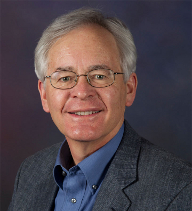
Portrait of Robert E. Ecke
. Source. Institutional source issuer.
Institutional source issuer.
Institutional source issuer.
Institutional source issuer.
Institutional source issuer.
Translator; professional specialization unestablished.
A contributor to international nomenclature recommendations for X-ray spectroscopy. The system relates line names to electronic energy levels instead of requiring a separate historical label for every transition, making complicated spectra easier to describe consistently.[ref]
Nomenclature System for X-ray Spectroscopy prepared by R. Jenkins and others. Prepared-for-publication credits and abstract: energy-level notation
A scientific contributor to IUPAC recommendations for labeling X-ray emission lines and absorption edges. Connecting a spectral label with an energy-level designation makes the notation applicable to different transitions, improving the comparability of spectroscopic descriptions.[ref]
Nomenclature System for X-ray Spectroscopy prepared by R. Jenkins and others. Prepared-for-publication credits and abstract: scope and purpose of the notation
A contributor to a standardized notation for X-ray spectroscopy. Naming a line through the electronic levels involved reduces reliance on historical labels. The resulting nomenclature gives experimentalists a consistent way to communicate which atomic transition a measured feature represents.[ref]
Nomenclature System for X-ray Spectroscopy prepared by R. Jenkins and others. Author credits and abstract: notation based on energy-level designation
A scientific contributor to IUPAC recommendations that standardize names for X-ray spectroscopy. The proposed notation identifies emission lines and absorption edges through their underlying energy-level designations, making the physical transition easier to compare across measurements and publications.[ref]
Nomenclature System for X-ray Spectroscopy prepared by R. Jenkins and others. Prepared-for-publication credits and abstract: energy-level-based notation
Institutional museum source.
A physics educator whose joint classroom experiment uses a cloud chamber to connect particle detection with observable condensation. The chamber’s temperature gradient creates vapor that condenses along ionized tracks. Illumination at a low angle reveals those tracks, letting students investigate naturally occurring cosmic rays with simple optical and thermal equipment.[ref]
Bringing Particle Physics to Life: Build Your Own Cloud Chamber by Francisco Barradas-Solas and Paloma Alameda-Meléndez. Assembly and operation: dry-ice base, warm upper region and low-angle illumination
A physics educator whose work with Paloma Alameda-Meléndez makes particle detection accessible through a homemade diffusion cloud chamber. An alcohol reservoir above a dry-ice-cooled base creates a sensitive vapor layer. Ionization along a passing particle’s path triggers droplets, turning an invisible trajectory into a visible track without a particle accelerator.[ref]
Bringing Particle Physics to Life: Build Your Own Cloud Chamber by Francisco Barradas-Solas and Paloma Alameda-Meléndez. The continuously sensitive diffusion cloud chamber; Assembly and operation
There are unlisted articles, also show them or only show them.