1-aminocyclopropane-1-carboxylate 2026-11-05
1-aminocyclopropane-1-carboxylate is the carboxyl-deprotonated form of 1-aminocyclopropane-1-carboxylic acid: a three-carbon ring bears an amino group and a carboxylate group on the same ring carbon. Its specified anionic form has formula . The familiar biochemical abbreviation ACC is also often used for the acid without specifying protonation.[ref]
PubChem Compound database by National Center for Biotechnology Information. 1-Aminocyclopropanecarboxylate, CID5460234; definition and connectivity
It is an intermediate between S-adenosylmethionine and Ethylene in plants. The 1979 apple experiments showed that labelled ACC became Ethylene in air and bypassed an inhibitor that blocked conversion from methionine. A supplied downstream intermediate restoring product formation helps locate the blocked reaction upstream.[ref]
Ethylene biosynthesis: Identification of 1-aminocyclopropane-1-carboxylic acid as an intermediate in the conversion of methionine to ethylene by D. O. Adams and S. F. Yang. Abstract; labelled precursor conversion and inhibitor bypass
1-aminocyclopropane-1-carboxylic acid 2026-11-05
1-aminocyclopropane-1-carboxylic acid is a non-proteinogenic alpha-amino acid with an amino group and a carboxyl group attached to the same carbon of a cyclopropane ring. Its molecular formula is , and it is commonly abbreviated ACC. The named acid and its conjugate base, 1-aminocyclopropane-1-carboxylate, distinguish protonation states of the same carbon framework.[ref]
1-aminocyclopropane-1-carboxylic acid in ChEBI. CHEBI:18053, Definition, Formula and conjugate-base relationship
Its role in plant ethene biosynthesis was established through precursor experiments. In 1979, labelled methionine supplied to apple tissue produced ethylene in air but accumulated as ACC under nitrogen. Labelled ACC was itself converted into ethylene in air; further precursor and inhibitor comparisons supported its placement between S-adenosylmethionine and ethylene.[ref]
The informative observation was not merely that ACC was present. Accumulation under one condition, conversion under another and differential effects on upstream and downstream precursors jointly constrained the pathway. A metabolite's concentration alone cannot establish which reaction produces or consumes it, because both processes affect its measured pool.
D. O. Adams 2026-11-05
D. O. Adams investigated the biochemical pathway by which plants convert methionine into Ethylene. Work with S. F. Yang in 1979 tested the role of 1-aminocyclopropane-1-carboxylate using labelled precursors in apple tissue.[ref]
Unlabelled 1-aminocyclopropane-1-carboxylate reduced conversion of labelled methionine to labelled Ethylene, whereas unlabelled methionine had little effect on conversion from labelled cyclic intermediate. This asymmetric dilution comparison supported a directed pathway: an upstream label passes through the downstream intermediate pool, while a supplied downstream intermediate need not return through the upstream pool.[ref]
Methylthioadenosine 2026-11-05
Methylthioadenosine is a sulfur-containing nucleoside, commonly called 5′-methylthioadenosine. Relative to adenosine, its terminal 5′ hydroxyl group is replaced by , a thioether group. Its formula is .[ref]
PubChem Compound database by National Center for Biotechnology Information. 5′-Methylthioadenosine, CID439176; structure and formula
In plant Ethylene biosynthesis, cleavage of S-adenosylmethionine produces 1-aminocyclopropane-1-carboxylate and methylthioadenosine. The fragments follow different subsequent reactions: the cyclic intermediate supplies Ethylene, whereas the sulfur-containing fragment can be recycled. In 1979, feeding differently labelled methionine to apple tissue connected the sulfur/methyl-labelled portion to a sulfur-containing sugar product, helping distinguish the two routes.[ref]
Ethylene biosynthesis: Identification of 1-aminocyclopropane-1-carboxylic acid as an intermediate in the conversion of methionine to ethylene by D. O. Adams and S. F. Yang. Abstract; methyl-14C and 35S tracing, proposed fragmentation and hydrolysis
S-adenosylmethionine 2026-11-05
S-adenosylmethionine is an activated methionine derivative in which an adenosyl group is bonded to the sulfur atom. The positively charged sulfur bears a transferable methyl group; S-adenosylmethionine therefore couples cellular metabolism to transfer of methyl groups onto other molecules, including DNA and proteins.[ref]
PubChem Compound database by National Center for Biotechnology Information. S-adenosylmethionine records CID34755 and parent CID34756; structure, charge conventions and methyl-donor role
The same starting molecule can also enter a different reaction. 1-aminocyclopropane-1-carboxylate synthase converts S-adenosylmethionine into 1-aminocyclopropane-1-carboxylate and methylthioadenosine, on the route to plant Ethylene. Here the enzyme directs fragmentation and ring formation rather than simple methyl group transfer. Naming a common substrate does not by itself identify which reaction occurred.[ref]
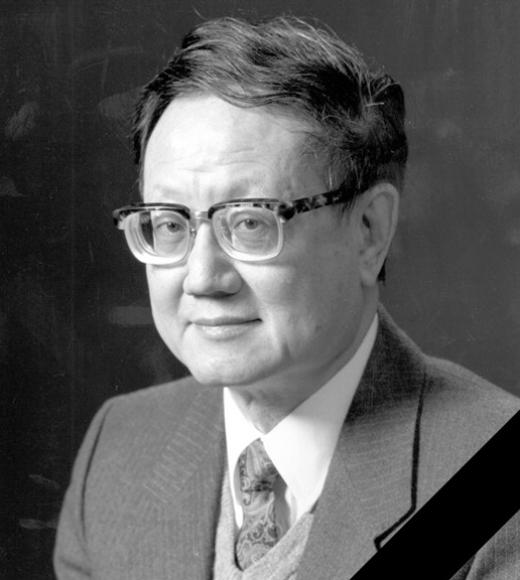
S. F. Yang 2026-11-05
S. F. Yang studied the biosynthesis of Ethylene, a plant hormone involved in fruit ripening. A 1979 study with D. O. Adams established 1-aminocyclopropane-1-carboxylate as an intermediate between methionine and Ethylene.[ref]
In apple tissue, labelled methionine produced Ethylene in air but accumulated the cyclic intermediate under nitrogen. Supplying labelled 1-aminocyclopropane-1-carboxylate and comparing responses to an inhibitor helped establish the order of the reactions. The design used both precursor tracing and bypass of a blocked upstream step, rather than assuming that correlated concentrations reveal pathway order.[ref]