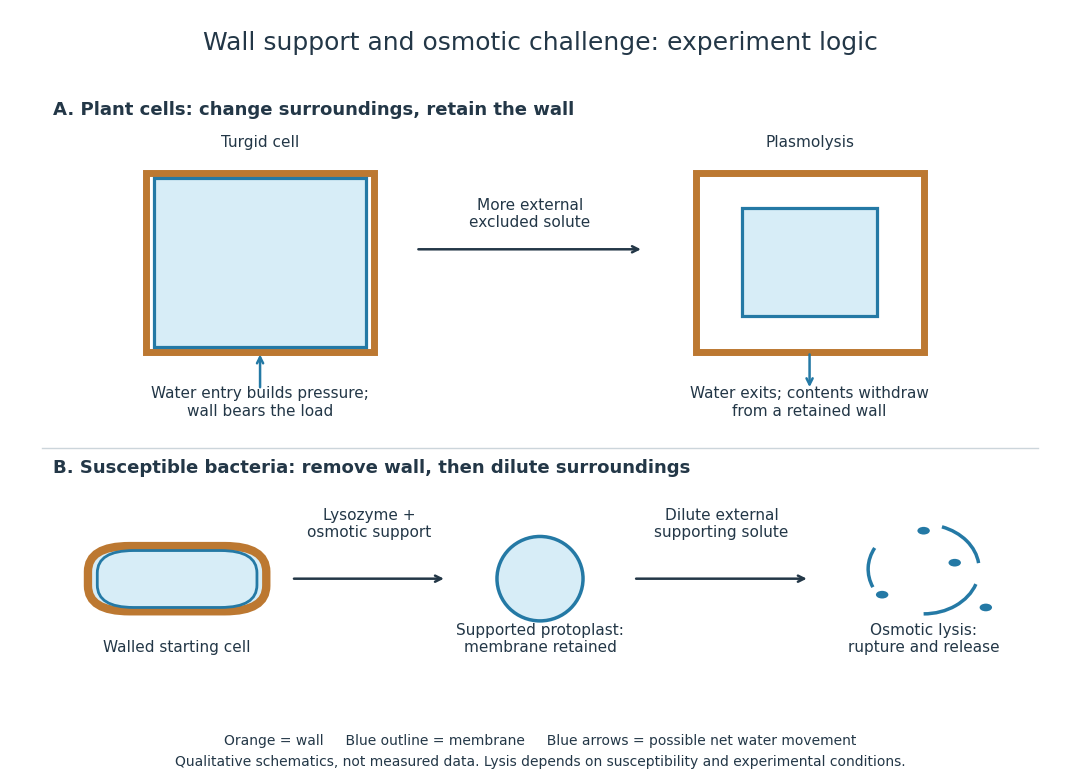
Plasmolysis is withdrawal of the membrane-bounded contents from parts of a cell wall after water loss. A sufficiently concentrated external hypertonic solution, with solutes effectively excluded by the cell membrane over the observation time, can cause this. The cell wall remains; the enclosed material contracts. Plasmolysis is therefore distinct from osmotic lysis, which breaks the cellular boundary during excessive swelling. A return to a less concentrated surrounding chemical solution can reverse plasmolysis if the biological cell remains functional.[ref]
5.2 Passive Transport. Biology 2e, §5.2, Tonicity in Living Systems and Figure 5.13: membrane withdrawal under hypertonic conditions

Articles by others on the same topic
There are currently no matching articles.