
Weak charge Updated 2025-07-16
W boson Updated 2025-07-16
Z boson Updated 2025-07-16
Interpretations of quantum mechanics Updated 2025-07-16
Matter wave Updated 2025-07-16
Human vitamin Updated 2025-07-16
Septuagint Updated 2025-07-16
It is fun to see that some New Testament sources cite this Greek version rather than more ancient ones because they or their listeners would not understand the other original languages.
New International Version Updated 2025-07-16
Direct translation from oldest documents deemed reliable, originally in a mixture of Hebrew, Aramaic, and Greek. Interesting project.
This is notably opposed to the approach taken by many versions which were based on the Septuagint, which was a much earlier full-Greek translation.
King James Version Updated 2025-07-16
Freely licensed Bibles Updated 2025-07-16
How can you make a translation of the Bible and not put it in the public domain???? You tell me, you tell me.
With Falun Gong it's even more fun: the words of God Himself are will be copyrighted for a while after Li Hongzhi dies!!!
Verilator interactive example Updated 2025-07-16
The example under verilog/interactive showcases how to create a simple interactive visual Verilog example using Verilator and SDL.
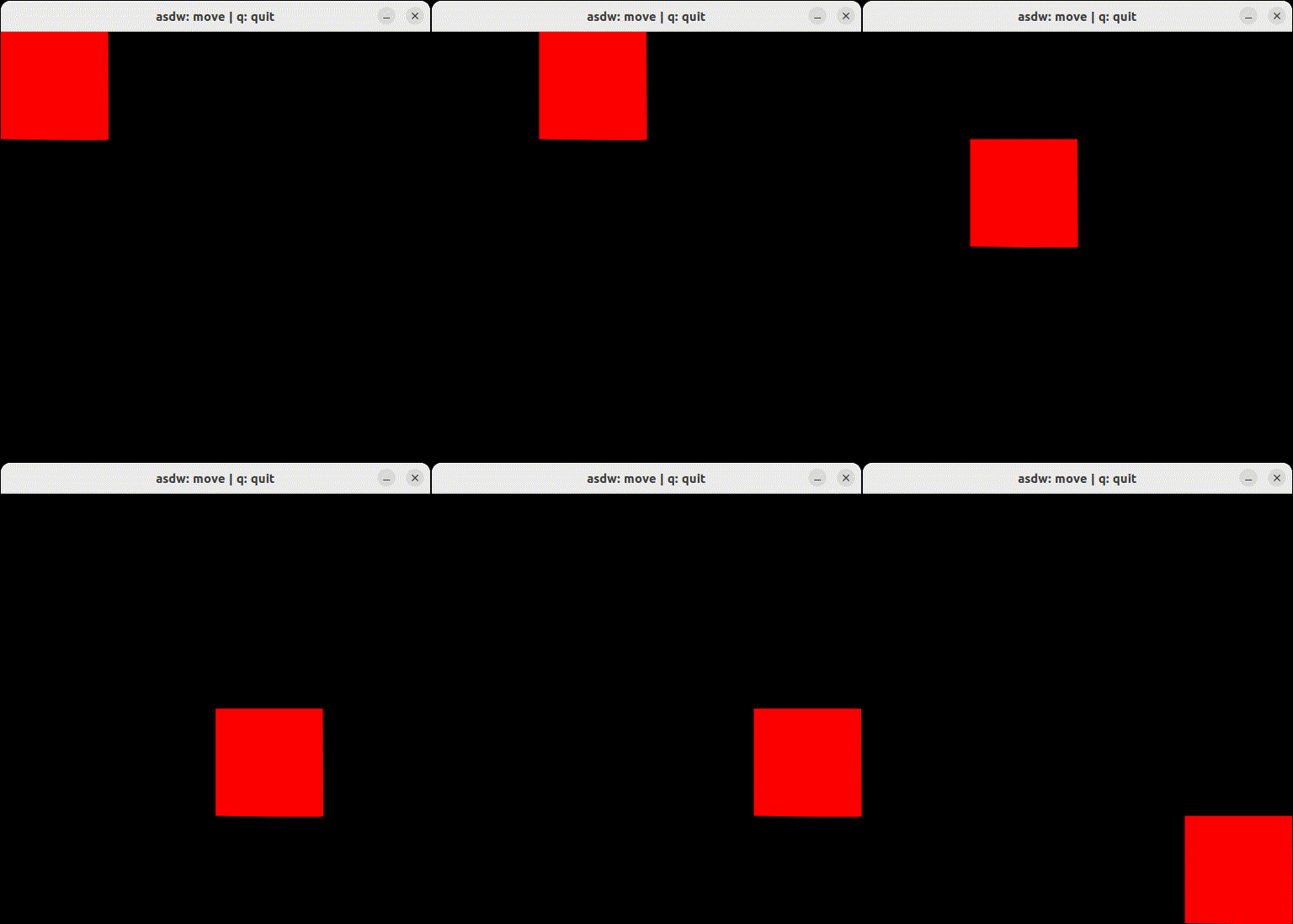
You could e.g. expand such an example to create a simple (or complex) video game for example if you were insane enough. But please don't waste your time doing that, Ciro Santilli begs you.
The example is also described at: stackoverflow.com/questions/38108243/is-it-possible-to-do-interactive-user-input-and-output-simulation-in-vhdl-or-ver/38174654#38174654
Usage: install dependencies:then run as either:Tested on Verilator 4.038, Ubuntu 22.04.
sudo apt install libsdl2-dev verilatormake run RUN=and2
make run RUN=moveFile overview:
Sequoia Capital Updated 2025-07-16
Target Big Markets by Don Valentine (2010)
Source. Kleiner Perkins Updated 2025-07-16
John Doerr Q&A at Berkeley (2015)
Source. - youtu.be/4xWGSUZmkIc?t=634 invest in batteries
plasticboy/vim-markdown Updated 2025-07-16
Ciro Santilli contributed a bit to this, and was even given push rights, see also: see also: Ciro Santilli's minor projects.
honza/vim-snippets Updated 2025-07-16
Vimium Updated 2025-07-16
Edwards Vacuum Updated 2025-07-16
Banheiros da USP Updated 2025-07-16
Semi-comical student website to review the toilets of the University of São Paulo. Some of the toilets had a reputation for being terrible.
One is reminded of Crushbridge.
Polytechnic School of the University of São Paulo Updated 2025-07-16
São Remo, the favela next to USP Updated 2025-07-16
While in Brazil, Ciro Santilli used to walk through the outskirts of a small favela to get to university every day, the Favela de São Remo.
See the street view for: R. Catumbi - Vila Butantã Vila Butantã, São Paulo - State of São Paulo, Brazil, e.g. with this link.
To the right, dudes selling drugs on the entry of a small corridor street, presumably to which they could easily escape to in case of need.
The cops could have identified the dealers with binoculars if they actually wanted to!!!
The drug sellers did keep the peace in their business area, and Ciro never got robbed, and would come back from university parties on foot late through the favela.
But Ciro's friends did say that things got much worse after Ciro left, for example a flash kidnapping was reported in 2015.
Wikipedia says that this favela started in the 60s and 70s as settlements of the builders of the University, and that many of the people there still work for the University.
This is consistent with the terribly old buildings Ciro saw when he was at university. They even had the building skills to build their own homes.
The state just has to either legalize those people, or give them houses somewhere else nearby. A world class University is the most important thing a poor country can have, and its image cannot be jeopardized like that.
The existence of that favela, right next to one of the most important universities in Latin America, puts Brazil's surreal social inequality into perspective. Especially considering that before extremely heavy university entry quotas were added, basically all students of the university (or at least of the courses that lead to high paying jobs) had attended private schools, and therefore were not of the poorer classes (see passage about 10 out 500 passage from Section "Free gifted education").
The janitors of the apartment block Ciro lived all lived in the favela. Yes, in poor countries lives are worth nothing, and some poorer people work by watching the entrance of buildings of less poor people 24/7 to guard it from other even more desperate poor people who might want to rob the not so poor inhabitants. They also do janitor jobs like cleaning common areas in parallel.
They were incredibly nice hard-working people, and Ciro spoke often with them. If only given the opportunity, those people could be amazing engineers or scientists obviously. Ciro was also glad to be their friends, and sat down with them quite a few times for several minutes after coming back from University parties, partly because he felt bad about them having to work at that time, but also partly because he just liked them. And they were always up to date on who had come back with a girl to the apartment or not. Ciro imagines that if it had been him, it would have been a perfect bragging opportunity ;)
They had "nothing" but were still happy. This is true wisdom, and a good reminder that all our non-transhumanist technical goals are nothing.
We must destroy social inequality.
There are unlisted articles, also show them or only show them.