Topics (384k) Articles (398k) Users (410) Discussions (242) Comments (383) Files (13k) New article

A clinical psychologist who tested exposure and response prevention in obsessive-compulsive disorder.[ref]
Randomized, placebo-controlled trial of exposure and ritual prevention, clomipramine, and their combination in the treatment of obsessive-compulsive disorder by Edna B. Foa and others. 2005, author and study described in the original publication

Portrait of Edna B. Foa
. David Shankbone. CC BY 3.0, via Wikimedia Commons. Source.A clinical psychologist who evaluated preventive family intervention after parental bereavement.[ref]
Six-year follow-up of a preventive intervention for parentally bereaved youths by Irwin Sandler and others. 2010, author and study described in the original publication
A clinical psychologist who tested cognitive-behavioral prevention of depression in high-risk adolescents.[ref]
Prevention of Depression in At-Risk Adolescents by Judy Garber and others. 2009, author and study described in the original publication
A clinical psychologist who developed learning-based explanations and strategies for exposure therapy.[ref]
Maximizing exposure therapy: An inhibitory learning approach by Michelle G. Craske and others. 2014, author and study described in the original publication

Portrait of Michelle G. Craske
. Romaine; crop by Kleon3. CC0 1.0, via Wikimedia Commons. Source.A clinical psychologist who developed the social anxiety model with David M. Clark. [ref]
https://research.manchester.ac.uk/en/persons/adrian.wells. Manchester research profile: cognitive theory and emotional disorders

Portrait of Adrian Wells
. Psychology publisher author portrait. Source.A researcher who examined treatment of childhood anxiety disorders when mothers also had an anxiety disorder. A 211-family trial tested additions targeting maternal anxiety or mother–child interaction alongside child treatment, including economic evaluation. Its design addresses whether treating family processes adds value beyond a child-focused intervention.[ref]

Portrait of Cathy Creswell
. Publisher author portrait. Source.A researcher who tested cognitive behavioral therapy for adolescent panic disorder. A trial compared an adolescent intervention with self-monitoring in 26 participants aged fourteen to seventeen. The comparison distinguishes an evaluated treatment from simply recording symptoms, and the small sample defines the precision with which its effects can be estimated.[ref]
Cognitive-behavioral treatment of panic disorder in adolescence by Donna B. Pincus and others. 2010, PCT-A versus self-monitoring comparison

Portrait of Donna B. Pincus
. Boston University profile portrait. Source.A researcher who examined the applicability of a cognitive model of social anxiety disorder to adolescents. Her work with David M. Clark connects self-focused attention and safety behaviors to treatment while considering developmental qualifications. This avoids assuming that a model developed for adults transfers unchanged to younger people.[ref]
Understanding Social Anxiety Disorder in Adolescents and Improving Treatment Outcomes: Applying the Cognitive Model of Clark and Wells (1995) by Eleanor Leigh and David M. Clark. 2018, cognitive model and developmental qualifications

Portrait of Eleanor Leigh
. Medical Research Foundation profile portrait. Source.A researcher who tested parent-based treatment for childhood anxiety through the SPACE treatment program. A noninferiority trial compared the parent intervention with child cognitive behavioral therapy and measured family accommodation. This asks whether changing parental responses can achieve an acceptable clinical outcome even when the child does not attend the intervention sessions.[ref]
Parent-Based Treatment as Efficacious as Cognitive-Behavioral Therapy for Childhood Anxiety: A Randomized Noninferiority Study of Supportive Parenting for Anxious Childhood Emotions by Eli R. Lebowitz and others. 2020, noninferiority design, ages 7–14 and accommodation outcomes
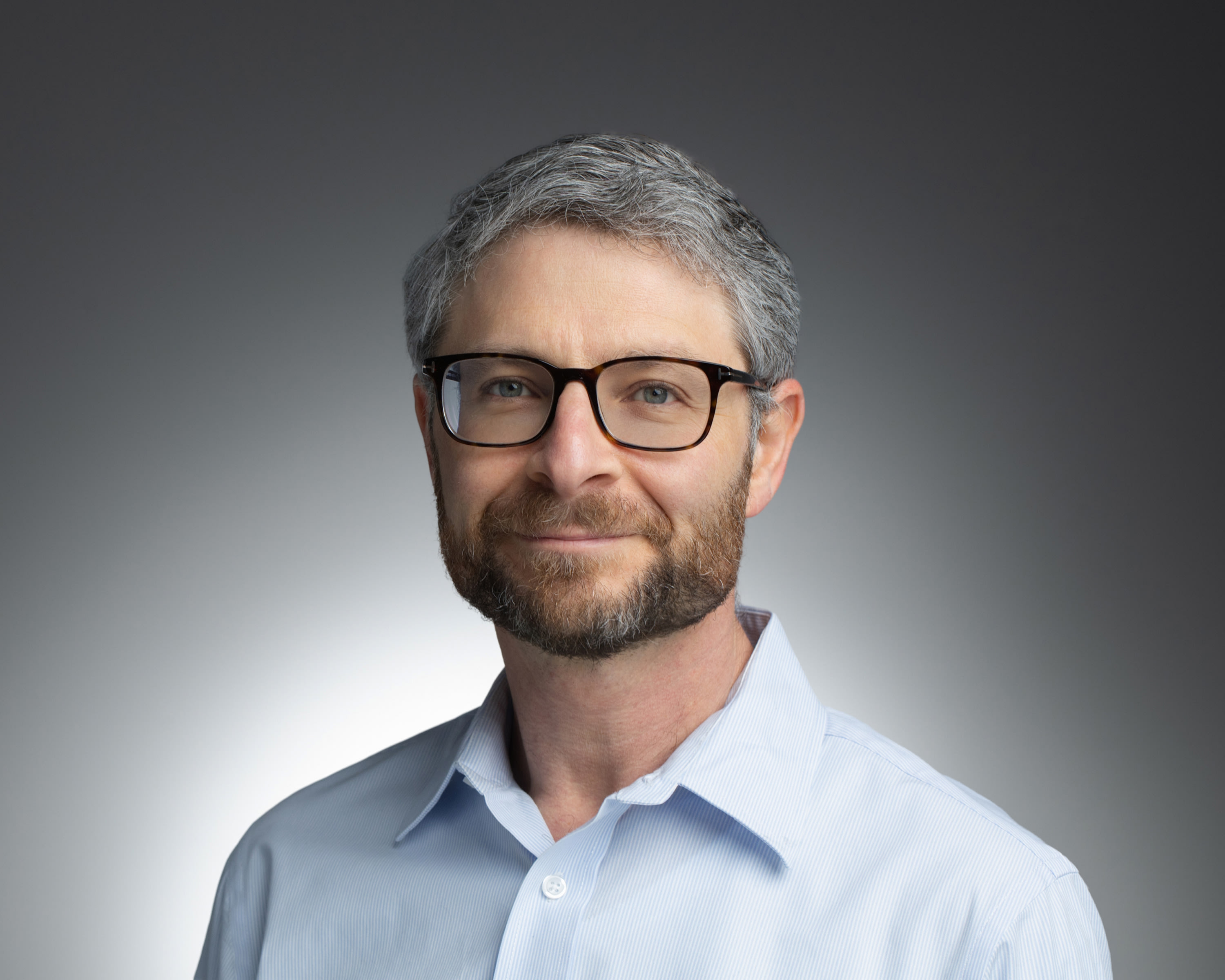
Portrait of Eli R. Lebowitz
. Yale Medicine profile portrait. Source.A researcher who tested cognitive behavioral therapy for childhood anxiety disorders. A randomized trial compared a sixteen-session intervention with a waiting-list condition in children aged nine to thirteen. The work made clinical claims testable through measured outcomes, while the comparison leaves separate questions about specific mechanisms and performance against another active treatment.[ref]

Portrait of Philip C. Kendall
. Publisher author portrait. Source.A researcher who tested internet-delivered cognitive behavioral therapy for adolescent anxiety disorders in routine care. A randomized comparison evaluated the addition of parent sessions, with diagnostic remission assessed after treatment and at follow-up. This separates evidence for the treatment package from evidence that involving parents supplies an additional benefit.[ref]
A randomized controlled trial of internet-delivered cognitive behaviour therapy for adolescent anxiety disorders in a routine clinical care setting with and without parent sessions by Polly Waite and others. 2019, randomized parent-session comparison and remission outcomes
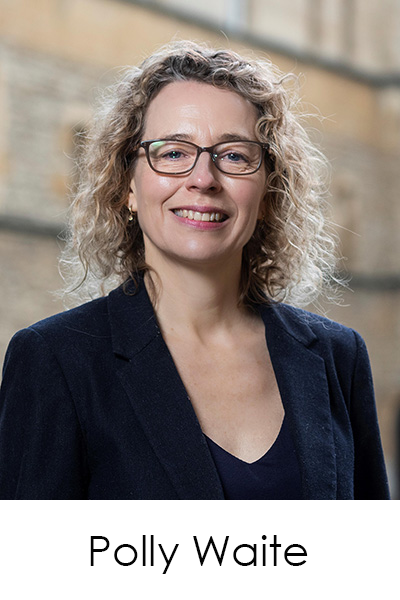
Portrait of Polly Waite
. Professional-association workshop portrait. Source.A researcher who examined whether parental anxiety changes how well children respond to cognitive behavioral therapy for anxiety. Her trial compared child treatment with and without additional parent anxiety management, separating families by parental-anxiety status. The design tests when a parent intervention adds benefit instead of assuming the same effect in every family.[ref]
The role of parental anxiety in the treatment of childhood anxiety by Vanessa E. Cobham and others. 1998, parental-anxiety strata and parent-intervention comparison

Portrait of Vanessa E. Cobham
. University of Queensland profile portrait. Source.A clinical psychologist who studied prospective adaptation and differing courses after bereavement.[ref]
Resilience to loss and chronic grief by George A. Bonanno and others. 2002, author and original research

Portrait of George A. Bonanno
. Via Wikimedia Commons. Source.A clinical psychologist who tested the effectiveness and specificity of the Penn Resiliency Program.[ref]
A clinical psychologist who examined attachment and mental-health outcomes following randomized foster-care allocation.[ref]
A clinical psychologist who investigated genetic and environmental contributions to adversity exposure-conditioned adaptation scores.[ref]
A clinical psychologist who tested prospective relationships between prior adversity, later psychological stress and depression.[ref]
Randy O. Frost developed a cognitive-behavioral account of hoarding incorporating information processing, attachment, avoidance and beliefs about possessions. The model links apparently similar accumulation outcomes to several candidate maintaining processes. It generates hypotheses for assessment and intervention rather than establishing one cause from the presence of clutter alone. [ref]
A cognitive-behavioral model of compulsive hoarding by Randy O. Frost and others. 1996, original multifactor model
David F. Tolin studied decision making in hoarding. His experiment compared keep-or-discard decisions involving personally owned and control items while measuring neural activity. Ownership-dependent responses help distinguish difficulty discarding one’s own possessions from a general inability to make any decision. [ref]
Neural mechanisms of decision making in hoarding disorder by David F. Tolin and others. 2012, owned versus control-item decisions and neuroimaging
Erik Hedman studied internet-delivered cognitive behavioral therapy for severe health anxiety. A randomized trial compared therapist-guided internet treatment with an attention-control condition. The comparison tests that delivery arrangement and treatment package, rather than showing that an online format alone is sufficient or that every form of health concern has the same mechanism. [ref]
Internet-based cognitive-behavioural therapy for severe health anxiety: randomised controlled trial by Erik Hedman and others. 2011, randomized therapist-guided internet-CBT comparison
Pinned article: Introduction to the OurBigBook Project
Welcome to the OurBigBook Project! Our goal is to create the perfect publishing platform for STEM subjects, and get university-level students to write the best free STEM tutorials ever.
Everyone is welcome to create an account and play with the site: ourbigbook.com/go/register. We belive that students themselves can write amazing tutorials, but teachers are welcome too. You can write about anything you want, it doesn't have to be STEM or even educational. Silly test content is very welcome and you won't be penalized in any way. Just keep it legal!
Intro to OurBigBook
. Source. We have two killer features:
- topics: topics group articles by different users with the same title, e.g. here is the topic for the "Fundamental Theorem of Calculus" ourbigbook.com/go/topic/fundamental-theorem-of-calculusArticles of different users are sorted by upvote within each article page. This feature is a bit like:
- a Wikipedia where each user can have their own version of each article
- a Q&A website like Stack Overflow, where multiple people can give their views on a given topic, and the best ones are sorted by upvote. Except you don't need to wait for someone to ask first, and any topic goes, no matter how narrow or broad
This feature makes it possible for readers to find better explanations of any topic created by other writers. And it allows writers to create an explanation in a place that readers might actually find it.
Figure 1. Screenshot of the "Derivative" topic page. View it live at: ourbigbook.com/go/topic/derivativeVideo 2. OurBigBook Web topics demo. Source. - local editing: you can store all your personal knowledge base content locally in a plaintext markup format that can be edited locally and published either:This way you can be sure that even if OurBigBook.com were to go down one day (which we have no plans to do as it is quite cheap to host!), your content will still be perfectly readable as a static site.
- to OurBigBook.com to get awesome multi-user features like topics and likes
- as HTML files to a static website, which you can host yourself for free on many external providers like GitHub Pages, and remain in full control

Figure 2. You can publish local OurBigBook lightweight markup files to either OurBigBook.com or as a static website.
Figure 3. Visual Studio Code extension installation.
Figure 5. . You can also edit articles on the Web editor without installing anything locally. Video 3. Edit locally and publish demo. Source. This shows editing OurBigBook Markup and publishing it using the Visual Studio Code extension. 
- Infinitely deep tables of contents:




All our software is open source and hosted at: github.com/ourbigbook/ourbigbook
Further documentation can be found at: docs.ourbigbook.com
Feel free to reach our to us for any help or suggestions: docs.ourbigbook.com/#contact