
Ulrich H. Faul coauthored lunar models using a laboratory-calibrated description of anelasticity in melt-free olivine. This connects small-scale mineral deformation with measurable planetary energy loss.[ref]
Dissipation at tidal and seismic frequencies in a melt-free Moon by Francis Nimmo and others. Abstract: deformation-based rheological model
Such a comparison tests whether solid-state relaxation can explain observations before an additional molten layer is required.
Edward J. Garnero coauthored a test of the Moon's interior using seismic attenuation, tidal dissipation and Love numbers. The calculation asked whether melt-free mantle material could reproduce several independent observations.[ref]
Dissipation at tidal and seismic frequencies in a melt-free Moon by Francis Nimmo and others. Abstract: joint dissipation and tidal-response constraints
Attenuation depends on forcing frequency and material relaxation, so a large energy loss need not uniquely imply a liquid layer.
Jana C. Schierjott coauthored three-dimensional ridge-transform models that favour excess lithospheric tension from transform fault shear as an explanation of asymmetric detachment fault formation.[ref]
How transform fault shear influences where detachment faults form near mid-ocean ridges by Jana C. Schierjott and others. Abstract: three-dimensional models and the stress mechanism for inside-corner detachment faulting
Garrett Ito coauthored a study of how magmatism and transform fault stresses influence the asymmetric formation of detachment faults near slow-spreading ridges.[ref]
How transform fault shear influences where detachment faults form near mid-ocean ridges by Jana C. Schierjott and others. Abstract: three-dimensional models and the stress mechanism for inside-corner detachment faulting
Mark D. Behn coauthored models coupling magmatic accommodation of seafloor spreading with faulting, testing how transform-generated stresses favour long-lived detachment faults.[ref]
How transform fault shear influences where detachment faults form near mid-ocean ridges by Jana C. Schierjott and others. Abstract: three-dimensional models and the stress mechanism for inside-corner detachment faulting
Xiaochuan Tian coauthored numerical experiments separating the effects of boundary friction and transform-generated tension on the formation of detachment faults near spreading ridges.[ref]
How transform fault shear influences where detachment faults form near mid-ocean ridges by Jana C. Schierjott and others. Abstract: three-dimensional models and the stress mechanism for inside-corner detachment faulting
Thomas Morrow coauthored a comparison of ridge-transform geometry with models of detachment fault formation, investigating why the faults favour one side of a junction.[ref]
How transform fault shear influences where detachment faults form near mid-ocean ridges by Jana C. Schierjott and others. Abstract: three-dimensional models and the stress mechanism for inside-corner detachment faulting
Boris J. P. Kaus coauthored three-dimensional models testing how transform fault stresses affect adjacent detachment fault formation, beyond a simple weak-boundary explanation.[ref]
How transform fault shear influences where detachment faults form near mid-ocean ridges by Jana C. Schierjott and others. Abstract: three-dimensional models and the stress mechanism for inside-corner detachment faulting
Javier Escartín coauthored a study linking detachment faults near ridge-transform junctions to shear stress and the resulting tension in adjacent lithosphere.[ref]
How transform fault shear influences where detachment faults form near mid-ocean ridges by Jana C. Schierjott and others. Abstract: three-dimensional models and the stress mechanism for inside-corner detachment faulting
James Byerlee synthesized laboratory measurements of rock friction, providing the empirical basis of Byerlee's law. The work compares the shear stress needed for sliding with the normal compressive stress and examines effects of roughness and fault gouge.[ref]
Friction of rocks by James Byerlee. Abstract and Conclusions: normal-stress regimes, roughness and low-friction gouge exceptions
The experiments explain why many rocks show similar sliding resistance at high normal stress while some gouge-rich faults can be much weaker. Applying the laboratory relation to a natural fault also requires its fluid-pressure and material conditions.
Paul Spudich coauthored a description of rupture directivity based on arrival-time contours across a finite earthquake source. If a rupture advances toward a receiver, seismic waves from successively rupturing patches can arrive over a compressed interval; retreating rupture spreads those arrivals out. The formulation makes this directional pulse concentration depend on source geometry and rupture timing, supplying a physical measure for interpreting strong ground motion.[ref]
A formulation of directivity for earthquake sources using isochrone theory by Paul Spudich and others. 2004 report, finite-source isochrone formulation and directivity interpretation
Geophysicist and author of primary studies of earthquake ground motion and rupture directivity. His authorship and USGS affiliation are documented on the 2004 report: pubs.usgs.gov/of/2004/1268/ .
David A. D. Evans and Ross N. Mitchell combined paleomagnetism with the record of ancient continental margins to reconstruct a core of the supercontinent Nuna. Rotating same-age paleomagnetic poles into a common reconstruction tests whether the proposed continental neighbors share a compatible history. The study compared Siberia, Laurentia and Baltica, using agreement and later divergence of their records to constrain assembly and separation. These magnetic tests complement geological fits rather than assuming that a visually plausible arrangement uniquely reconstructs a vanished supercontinent.[ref]
Assembly and breakup of the core of Paleoproterozoic-Mesoproterozoic supercontinent Nuna by David A. D. Evans and Ross N. Mitchell. Introduction and Nuna reconstruction, paleomagnetic comparison and continental-margin constraints
A researcher in paleomagnetism and continental reconstruction, including supercontinent histories. Institutional profile: earth.yale.edu/profile/david-evans
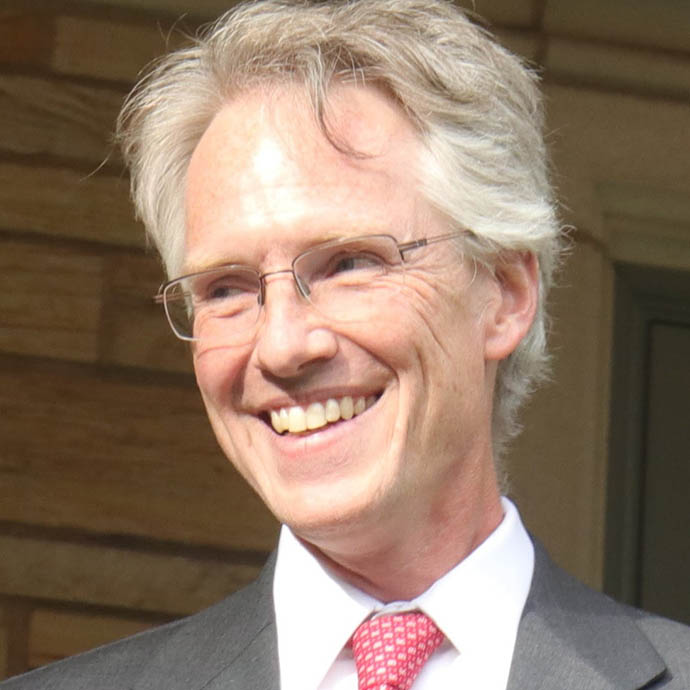
Catherine A. Rychert and Peter M. Shearer used fifteen years of global seismic wave observations to image a sharp interface near the lithosphere-asthenosphere boundary. Conversions from P waves to S waves constrain the interface's depth and sharpness: a transition that preserves high-frequency converted phases is too sharp to be explained by a broad thermal gradient alone. Their interpretation therefore considers composition, melting and seismic anisotropy, and distinguishes the interface beneath oceans from a possible internal boundary inside thicker cratons.[ref]
A global view of the lithosphere-asthenosphere boundary by Catherine A. Rychert and Peter M. Shearer. Abstract, converted phases, sharpness and tectonic-setting-dependent interpretation
A seismology researcher studying lithosphere and asthenosphere structure. Institutional profile: mit.whoi.edu/faculty/5644/
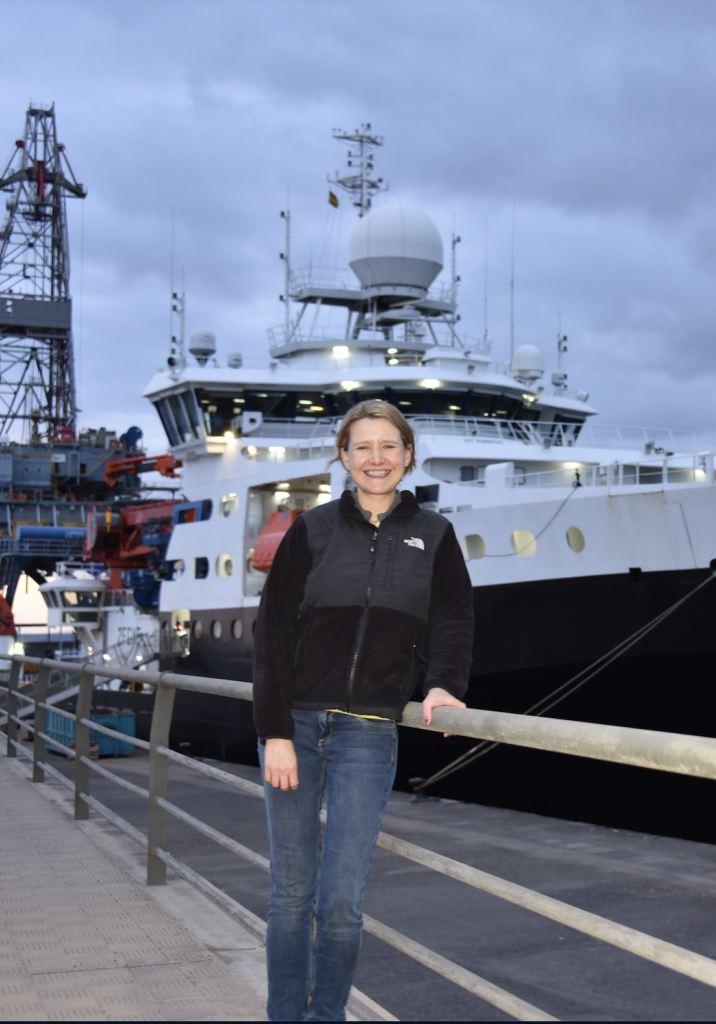
Kiyoo Wadati established that some earthquakes originate far deeper than the shallow sources then commonly assumed. His 1927 study analyzed recorded waveforms and seismic travel times, including the 27 July 1926 event interpreted as occurring about beneath central Japan. The argument used instrumental observations to constrain source depth, rather than inferring it solely from surface damage. He also investigated the geographical distribution of deep events, helping make deep earthquake sources an observable part of the Earth's interior.[ref]
The existence of deep-focus earthquakes and their study by Kiyoo Wadati. 1927 original Japanese abstract, waveform/travel-time analysis and the July 1926 event; source title translated here
A seismology researcher associated with the recognition of deep earthquakes and the Wadati-Benioff zone.


Hugo Benioff investigated whether sequences of earthquakes could reveal large faults extending far below the Earth's surface. His 1949 study used accumulated estimates of elastic-rebound strain increments to compare events as possible movements on one structure. He interpreted the Tonga–Kermadec and South American sequences as activity on great inclined faults reaching roughly depth. The observations helped establish the deep geometry later associated with a Wadati-Benioff zone; the original fault interpretation belongs to the historical development preceding modern subduction theory.[ref]
Seismic evidence for the fault origin of oceanic deeps by Hugo Benioff. 1949 paper abstract, strain-increment method and inclined deep structures
A seismology researcher associated with deep earthquake distributions, the Wadati-Benioff zone and seismograph development.

Hugo Benioff in 1964, portrait hosted by the Caltech Seismological Laboratory
. John Tuzo Wilson introduced transform faults as a distinct type of boundary needed to connect seafloor spreading and other relative plate motions. Where two spreading-ridge segments are offset, active sliding occurs on the connecting part of the fracture; its continuation beyond a ridge can separate crust moving together and need not remain an active plate boundary. The geometry predicts a slip direction that cannot be inferred merely by treating the offset ridge as a formerly continuous line. His 1965 proposal made a structural pattern into a test of plate tectonics.[ref]
A New Class of Faults and their Bearing on Continental Drift by John Tuzo Wilson. 1965 paper, transform geometry between offset spreading centers

Portrait of John Tuzo Wilson
. Stephen Morris, University of Toronto, 1992. CC BY-SA 3.0, via Wikimedia Commons. Source.
Miles Bodmer coauthored onshore–offshore seismic tomography of the Cascadia subduction zone. Relative arrival delays reveal along-strike changes in mantle seismic velocity, which were compared with plate locking and episodic slip patterns.[ref]
Buoyant Asthenosphere Beneath Cascadia Influences Megathrust Segmentation by Miles Bodmer and others. Abstract and section 4: tomographic observations and buoyancy hypothesis
Gina M. Schmalzle coauthored a study of persistent creep in the Cascadia subduction zone. It combines station-position time series, uplift measurements and paleoseismic subsidence to estimate plate locking and compare deformation over different timescales.[ref]
Central Cascadia subduction zone creep by Gina M. Schmalzle and others. Abstract: GPS, tide-gauge/levelling and paleoseismic constraints
Reduced interseismic uplift and reduced earthquake subsidence motivate partial-creep models for central Cascadia. The proposed connection with Siletzia involves permeability and pore pressure; the measured deformation and the mechanism proposed to explain it remain distinct parts of the argument.
Frank G. Lemoine coauthored a high-resolution lunar gravity solution from GRAIL spacecraft tracking. The GRGM900C model represents the field using spherical harmonics and compares it with the gravity predicted from lunar surface topography.[ref]
GRGM900C: A degree 900 lunar gravity model from GRAIL primary and extended mission data by Frank G. Lemoine and others. Abstract and sections 4.2–4.3: tracking solution and gravity/topography comparison
Higher harmonic degree resolves shorter spatial scales, but useful resolution also depends on orbit geometry and measurement uncertainty. Residual gravity after topographic correction helps investigate subsurface density structure.
Derrick Hasterok coauthored an analysis of oceanic heat flux measurements used to estimate the Earth's heat loss. Filtering sites by sediment cover and proximity to seamounts reduces the influence of ventilated hydrothermal circulation when testing conductive cooling models.[ref]
Oceanic heat flow: implications for global heat loss by Derrick Hasterok and others. Abstract: database filtering, hydrothermal ventilation and conductive heat loss
Water can carry heat laterally through young oceanic crust, so a local conductive measurement can underestimate the heat lost by the larger region. Survey environment is therefore part of the interpretation.
There are unlisted articles, also show them or only show them.