
A researcher who investigated support for children with mathematical difficulty. Her Numeracy Recovery pilot assessed separate components of numerical skill and tailored instruction to each child’s difficulties. The work motivates treating arithmetic as several interacting skills; a promising pilot is not equivalent to a definitive randomized demonstration of effectiveness.[ref]
Numeracy recovery: a pilot scheme for early intervention with young children with numeracy difficulties by Ann Dowker. 2001, component assessment and pilot intervention
Deborah Kelemen studied teleological reasoning in childhood. Comparing purpose-based with physical explanations of natural objects tests how children interpret why a feature exists. The design distinguishes endorsement of an explanation in a particular task from a conclusion that every childhood belief or every natural object is understood in the same way. [ref]
Why are rocks pointy? Children's preference for teleological explanations of the natural world by Deborah Kelemen. 1999, child-adult comparisons of purpose-based and physical explanations
A developmental psychologist who investigated how children reason about nonobvious properties of living things. Experiments on internal properties and category membership tested whether expectations follow surface appearance or deeper assumptions about what an organism is. This work informs psychological essentialism without treating children’s beliefs as biological facts.[ref]
Insides and essences: early understandings of the non-obvious by Susan A. Gelman and others. 1991, internal-properties and category-membership experiments

Portrait of Susan A. Gelman
. Via Wikimedia Commons; credits and usage information are on the linked source file page. Source.A researcher who examined how children organize knowledge about germs and contagion reasoning. Experiments asked about illnesses with similar visible symptoms but different causes and about germs as biological agents. The design distinguishes learning isolated facts from integrating them into an explanatory biological framework.[ref]
Deena Skolnick Weisberg tested the seductive allure of neuroscience explanations. Participants evaluated explanations with or without additional neuroscience information that was logically irrelevant to their quality. Separating explanation quality from technical vocabulary makes it possible to test why an account sounds convincing, rather than assuming that a biological phrase makes it informative. [ref]
The seductive allure of neuroscience explanations by Deena Skolnick Weisberg and others. 2008, explanation-quality and irrelevant-neuroscience manipulations
A computational neuroscientist whose work includes statistical models of neural trajectories.[ref]
Gaussian-process factor analysis for low-dimensional single-trial analysis of neural population activity by Byron M. Yu and others. Original author record and research contribution

Portrait of Byron M. Yu
. External portrait hosted by Carnegie Mellon University, Biomedical Engineering. Source.A comparative psychologist who, with Anthony Dickinson, tested episodic-like memory in scrub jays. Birds recovered different cached foods according to where they had hidden them and how long ago, including whether a perishable food would have spoiled. The design tests integrated what–where–when information without assuming that birds report autonoetic consciousness.[ref]
Episodic-like memory during cache recovery by scrub jays by Nicky Clayton and others. 1998, cache-recovery experiments, pp. 272–274

Portrait of Nicky Clayton
. VPRO; crop by Victuallers; CC BY-SA 4.0. Source.A cognitive psychologist who investigated the organization of executive functions. A study of 137 students used latent variable analysis to separate shifting, updating and inhibition while estimating their relationships. The results support both shared and distinct components, explaining why different complex executive tasks need not measure exactly the same ability.[ref]
Celeste Kidd studied the role of environmental reliability in children’s delayed-gratification decisions. Experimenter reliability was manipulated before the marshmallow task, allowing waiting behavior to be compared after different expectations had been established. Waiting time therefore need not be treated as a context-free measure of a child’s self-control. [ref]
Rational snacking by Celeste Kidd and others. 2013, reliable/unreliable experimenter conditions
A cognitive psychologist who, with Linda B. Smith, investigated cross-situational word learning. Infants encountered ambiguous word–picture pairings, and their later looking responses tested which associations they had acquired. The experiment demonstrates how statistical regularities across separate encounters can resolve uncertainty left by any single encounter.[ref]
Cesare Valerio Parise studied how crossmodal correspondences affect audiovisual integration. Timing and spatial-conflict experiments ask whether compatible features change how signals are combined even in people without synesthesia. The design distinguishes a correspondence between features from a literal identity of the sensations produced by the two modalities. [ref]
When Birds of a Feather Flock Together: Synesthetic Correspondences Modulate Audiovisual Integration in Non-Synesthetes by Cesare Valerio Parise and Charles Spence. 2009, three audiovisual timing/spatial-conflict experiments
A researcher in multisensory perception who, with Cesare Valerio Parise, tested whether crossmodal correspondences affect audiovisual integration in people without synesthesia. Timing and spatial-conflict tasks manipulated whether auditory and visual features corresponded. Such experiments distinguish a verbal association between features from a measurable change in how signals are combined.[ref]

Charles Spence at Karolinska Institutet in October 2019; photograph by Bengt Oberger, CC BY-SA 4.0; displayed without cropping
. Source. Marc O. Ernst studied multisensory cue combination using visual and haptic height information. Changing cue uncertainty tests whether observers adjust their weighting in the direction predicted by a statistical integration model. The experiment connects a perceptual estimate to measurable noise rather than assuming that one sensory modality always dominates. [ref]
Humans integrate visual and haptic information in a statistically optimal fashion by Marc O. Ernst and Martin S. Banks. 2002, visual-haptic estimates and uncertainty-dependent weights
Alan D. Castel studies human memory and metacognition. With Matthew G. Rhodes, he tested whether perceptual characteristics influence judgments of learning differently from later recall. Manipulating print size helped reveal a mismatch between a cue’s influence on prediction and its influence on performance. Measuring both outcomes makes it possible to identify a metacognitive illusion rather than assuming that an easily processed item will necessarily be remembered better. [ref]
Memory Predictions Are Influenced by Perceptual Information by Matthew G. Rhodes and Alan D. Castel. 2008, perceptual-cue manipulation and calibration of predictions
Allison L. Foote coauthored an experimental study of metacognition in rats with Jonathon D. Crystal. Rats classified the duration of a stimulus and could instead select a decline option. Preferential use of that option on difficult trials, together with comparisons of forced and accepted tests, made uncertainty-sensitive behavior measurable without asking for a verbal explanation. The interpretation requires considering associative alternatives as well as the monitoring account. [ref]
Metacognition in the rat by Allison L. Foote and Jonathon D. Crystal. 2007, duration-discrimination experiment and opt-out comparisons
A researcher in metacognition who proposed that subjective confidence depends on the consistency of evidence supporting an answer. In his self-consistency model, people can confidently choose a wrong answer when the accessible evidence consistently favors it. This separates the mechanism producing confidence from the external criterion used to judge its accuracy.[ref]
The self-consistency model of subjective confidence by Asher Koriat. 2012, model assumptions and confidence–accuracy predictions

Portrait of Asher Koriat
. Photograph by צחי לרנר, 26 November 2008. Reuse permitted with attribution to the photographer; see the linked Commons file page for its attribution-only terms. Source.Benjamin Baird studies cognition, including the relation between mind-wandering and creativity. In the creative-incubation experiment, participants returned to an idea-generation task after different intervening activities. An undemanding intervening task was associated with improvement for previously encountered problems. The result concerns a particular incubation arrangement and outcome, rather than showing that distraction always improves reasoning or that every reported off-task thought is creative. [ref]
Inspired by Distraction: Mind Wandering Facilitates Creative Incubation by Benjamin Baird and others. 2012, repeated problems, incubation conditions and divergent-use performance
Brian Maniscalco is a researcher in metacognition and its measurement. With Hakwan Lau, he introduced a method that estimates meta-d-prime from confidence reports and task outcomes. Comparing the estimate with first-order sensitivity asks how much task-relevant information is reflected in self-evaluation. It avoids identifying confidence magnitude alone with accurate monitoring, although the interpretation still depends on the specified signal detection theory model. [ref]
A cognitive psychologist who applied information theory to limits on human information processing. His 1956 paper distinguished immediate human memory from judgments of isolated sensory magnitudes and emphasized that chunking changes how much information a remembered unit contains. Familiar groups of items can be retained as units, so a count of remembered units is not a universal limit on bits of information. [ref]
The Magical Number Seven, Plus or Minus Two by George Armitage Miller. Immediate memory, recoding and concluding discussion
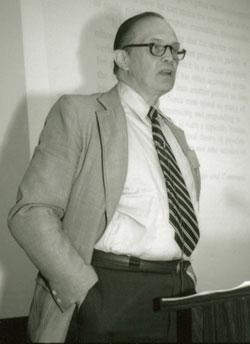


Hakwan Lau studies awareness and metacognition. With Brian Maniscalco, he developed a signal detection theory approach for estimating metacognitive sensitivity from confidence ratings. The resulting meta-d-prime expresses confidence-based discrimination using a scale comparable to task sensitivity. The method separates how strongly confidence tracks correctness from a general tendency to use high or low confidence, while retaining assumptions about the modeled decision process. [ref]
A signal detection theoretic approach for estimating metacognitive sensitivity from confidence ratings by Brian Maniscalco and Hakwan Lau. 2012, meta-d-prime construction and confidence criteria
There are unlisted articles, also show them or only show them.