A neuroscientist studies the nervous system, connecting its structure, activity, development or evolution to function. Experiments can address processes from ion channels to animal behaviour; an explanation at one scale need not replace measurements at another.
A computational neuroscientist develops or analyzes quantitative models of the nervous system. A model can connect a proposed mechanism to measurable neuron activity or animal behaviour, making its assumptions and predictions explicit.
A computational neuroscientist whose work includes statistical models of neural trajectories.[ref]
Gaussian-process factor analysis for low-dimensional single-trial analysis of neural population activity by Byron M. Yu and others. Original author record and research contribution
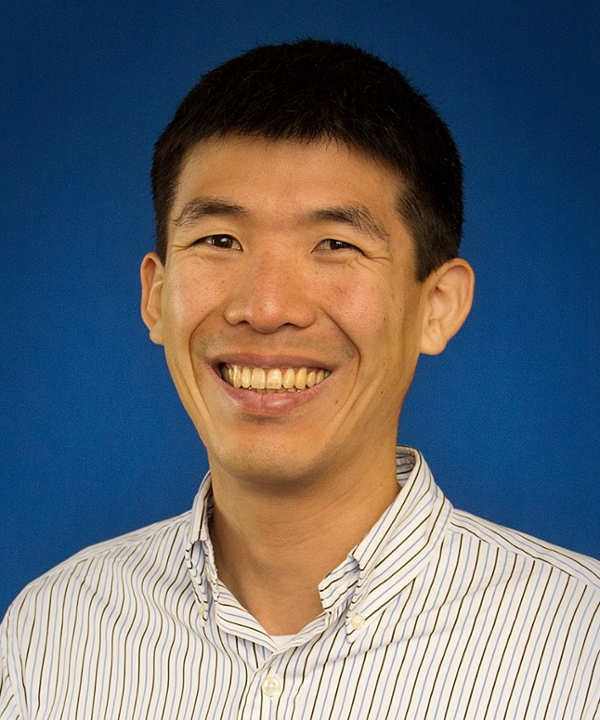
Portrait of Byron M. Yu
. External portrait hosted by Carnegie Mellon University, Biomedical Engineering. Source.A neuroanatomist studies the structure and connections of the nervous system. Mapping a pathway establishes possible routes for communication; experiments are still needed to determine when and how those routes contribute to function.
A neuroanatomist associated with the historical Papez circuit.[ref]
https://en.wikipedia.org/wiki/James_Papez. Identity and authorship record

Portrait of James Papez
. National Library of Medicine, James Wenceslas Papez Papers, MS C 416 (collection credit; photographer unidentified). External portrait hosted by U.S. National Library of Medicine, Circulating Now. Source.A neuroanatomist whose historical observations helped associate left frontal injury with impaired articulate speech. Their interpretation is reassessed by modern lesion imaging.[ref]
Paul Broca's historic cases by Nina F. Dronkers and others. 2007, historical cases and lesion extent

Portrait of Paul Broca
. Pierre Petit; Wellcome Library. Public-domain photograph, via Wikimedia Commons. Source.
His drawings of neurons made their branching structure visible with extraordinary clarity. The historical illustration under Purkinje cell shows how different neurons can occupy the same part of the cerebellum while having strikingly different shapes.

Portrait of Santiago Ramón y Cajal, 1899
. Anonymous photograph published by Clark University in 1899; cropped and digitally restored by Garrondo. Public-domain source, via Wikimedia Commons. Source.
A cognitive neuroscientist investigates how the nervous system supports cognition, including memory retention, attention and perception. Combining behavioral measurements with recordings or perturbations helps distinguish association from a causal contribution.
A researcher who coauthored single-neuron recordings during viewing and later free recall of cinematic episodes. Reactivation in the hippocampus connected remembered content with internally generated neural activity rather than ongoing visual stimulation.[ref]
Internally generated reactivation of single neurons in human hippocampus during free recall by Hagar Gelbard-Sagiv and others. study design and results; author roster
A researcher who developed a relational account of declarative memory. The proposal connected the hippocampus with organization and flexible expression of relationships among remembered events, distinguishing a theoretical account from one isolated recognition task.[ref]
The hippocampus and mechanisms of declarative memory by Howard Eichenbaum. study design and results; author roster

Portrait of Howard Eichenbaum
. Dan Kirksey, KDKC Photos, Escondido, California (explicit image caption credit). External portrait hosted by Boston University, BU Today. Source.- Critical role of the hippocampus in memory for sequences of events by Norbert J. Fortin and others
- Hippocampal time cells bridge the gap in memory for discontiguous events by Christopher J. MacDonald and others
- The hippocampus and mechanisms of declarative memory by Howard Eichenbaum
- The hippocampus and memory for what, where, and when by Ceren Ergorul and others
A researcher who coauthored experiments manipulating feature ambiguity in visual discrimination. Comparing overlapping features tested a role for the perirhinal cortex in representing combinations, beyond describing it solely as a memory store.[ref]
Perirhinal cortex resolves feature ambiguity in complex visual discriminations by Timothy J. Bussey and others. study design and results; author roster
A researcher who coauthored comparisons of visual discrimination after perirhinal cortex ablation. Simultaneous oddity tasks and feature controls helped distinguish perceptual demands from a delay-dependent memory explanation.[ref]
Selective perceptual impairments after perirhinal cortex ablation by Mark J. Buckley and others. study design and results; author roster
A researcher who coauthored functional-imaging experiments separating later memory for an item from memory for its source. Contrasting encoding tasks helped identify different routes to successful remembering.[ref]
Multiple routes to memory by Lila Davachi and others. study design and results; author roster

Portrait of Lila Davachi
. External portrait hosted by Yale University, Faculty of Arts and Sciences. Source.A researcher who coauthored recordings of hippocampal time cells during event sequences separated by a delay. Changing temporal structure tested how firing tracked position within an interval.[ref]
Hippocampal time cells bridge the gap in memory for discontiguous events by Christopher J. MacDonald and others. study design and results; author roster
A researcher who coauthored experiments combining odor, location and temporal information in a hippocampus-dependent memory task. Cue-combination probes tested memory for relationships rather than mere detection of one cue.[ref]
The hippocampus and memory for what, where, and when by Ceren Ergorul and others. study design and results; author roster
A researcher who coauthored a comparison of event-sequence judgments and item recognition after hippocampal lesions. The contrast tested the contribution of the hippocampus to temporal organization of remembered events.[ref]
Critical role of the hippocampus in memory for sequences of events by Norbert J. Fortin and others. study design and results; author roster
A researcher who coauthored behavioral comparisons of action representation and social understanding in autistic children. The study tested predictions of a mirror-system deficit account without directly recording individual mirror neurons.[ref]
A researcher who coauthored first-impression experiments comparing audiovisual, auditory, image and transcript information about autistic people. Separating presentation formats tested which information contributed to judgments about social interaction.[ref]
Neurotypical peers are less willing to interact with those with autism based on thin slice judgments by Noah J. Sasson and others. study design and results; author roster
A researcher who coauthored experiments passing story information along groups with different neurotype compositions. The design investigated communication as an interaction between participants rather than a fixed capacity measured in one person alone.[ref]
Autistic peer-to-peer information transfer is highly effective by Catherine J. Crompton and others. study design and results; author roster
A researcher who coauthored brain-imaging comparisons of spontaneous and explicitly instructed responses to others’ experiences in a selected offender sample. Separating conditions helped distinguish a spontaneous response from capacity under instruction.[ref]
Reduced spontaneous but relatively normal deliberate vicarious representations in psychopathy by Harma Meffert and others. study design and results; author roster
A researcher who coauthored measurement analyses of heartbeat-counting scores. Examining how the score relates to the counted and actual rates helped expose limitations in treating it as a pure measure of interoception.[ref]
A researcher who coauthored studies separating associations of alexithymia and autism with heartbeat-counting performance. The diagnostic comparison and the validity of the physiological task are distinct parts of the inference.[ref]
Alexithymia, not autism, is associated with impaired interoception by Punit Shah and others. study design and results; author roster
A researcher who coauthored experiments distinguishing objective interoceptive accuracy, subjective sensibility and metacognitive awareness. Separating performance from confidence clarified why one questionnaire or task cannot stand for every aspect of interoception.[ref]
Knowing your own heart: distinguishing interoceptive accuracy from interoceptive awareness by Sarah N. Garfinkel and others. study design and results; author roster

Portrait of Sarah N. Garfinkel
. Photograph uploaded by Neuro226, 13 April 2017; embedded metadata credits Eve Vagg. Via Wikimedia Commons. CC BY-SA 4.0. Source.
A researcher who coauthored experiments comparing compatibility between observed and executed finger movements. Symbolic, spatial and action-identity controls helped distinguish automatic imitation from other response-compatibility effects.[ref]
A researcher who coauthored intracranial recordings during execution and observation of actions in a clinical sample. Single-neuron measurements connected individual responses with both conditions, while clinically determined electrode placement constrained the sampled regions.[ref]
Single-neuron responses in humans during execution and observation of actions by Roy Mukamel and others. study design and results; author roster
A researcher who coauthored macaque action-observation experiments including partly hidden object interactions. Occlusion conditions tested the information required for responses beyond a fully visible movement.[ref]
I know what you are doing: a neurophysiological study by Maria Alessandra Umiltà and others. study design and results; author roster
A researcher who coauthored single-neuron recordings in macaque premotor cortex during action execution and observation. Comparing the two conditions established a cellular response pattern, which is distinct from demonstrating every proposed social function of a mirror system.[ref]
Action recognition in the premotor cortex by Vittorio Gallese and others. study design and results; author roster

Portrait of Vittorio Gallese
. Vgallese, 21 May 2016, via Wikimedia Commons. CC BY-SA 4.0. Source.
A researcher who coauthored neuroimaging studies separating alexithymia from autism in responses to another person’s pain. Measuring both characteristics helped distinguish a diagnostic-group difference from a correlated individual trait.[ref]
Empathic brain responses in insula are modulated by levels of alexithymia but not autism by Geoffrey Bird and others. study design and results; author roster
A researcher who coauthored comparisons of emotional and cognitive empathy after focal brain lesions. Different lesion groups and task demands were used to test whether these capacities could be dissociated.[ref]
A cognitive neuroscientist investigating language, literacy and related cognitive processes.[ref]
How learning to read changes the cortical networks for vision and language by Stanislas Dehaene and others. Science 330, 1359–1364; 10 illiterate/22 adult-literate/31 childhood-literate adults, visual and spoken-language fMRI

Portrait of Stanislas Dehaene
. NTNU, Faculty of Natural Sciences. CC BY 2.0, via Wikimedia Commons. Source.
A researcher who coauthored investigations of picture naming in chronic aphasia after targeted transcranial magnetic stimulation. A change following stimulation tested a possible contribution of a region to performance rather than only its activation during a task.[ref]
Improved picture naming in chronic aphasia after TMS to part of right Broca's area by Margaret A. Naeser and others. study design and results; author roster
A researcher who coauthored direct comparisons of spoken and sign language processing. Comparing sensory and motor modalities helped distinguish linguistic organization from the physical form of the input or response.[ref]
A researcher who coauthored studies of phonological processing in deaf signers with different ages of first-language acquisition. The comparison linked language experience with neural organization while distinguishing age of acquisition from the sensory modality of language.[ref]
Phonological processing in deaf signers and the impact of age of first language acquisition by Mairéad MacSweeney and others. study design and results; author roster
A researcher who coauthored studies relating syntactic processing to damage of dorsal language tracts. Mapping behavioral deficits against pathway anatomy tested a network contribution to sentence comprehension.[ref]
Syntactic processing depends on dorsal language tracts by Stephen M. Wilson and others. study design and results; author roster
A researcher who coauthored comparisons of neural-network connectivity in children who stutter. The work related developmental speech differences to interacting pathways rather than assigning fluency to one isolated brain location.[ref]
Neural network connectivity differences in children who stutter by Soo-Eun Chang and others. study design and results; author roster
A researcher who coauthored structural brain-imaging studies of an inherited speech and language disorder. Comparing affected and unaffected individuals connected a familial phenotype with anatomical variation.[ref]
MRI analysis of an inherited speech and language disorder: structural brain abnormalities by Kate Watkins and others. study design and results; author roster
A researcher who coauthored a stimulation experiment on judgments about observed actions. Person-lifting, bouncing-ball and duration controls tested the specificity of a contribution from left inferior frontal cortex.[ref]
Action understanding requires the left inferior frontal cortex by Gorana Pobric and others. study design and results; author roster
A researcher who coauthored comparisons of phonetic and pitch discrimination in language processing. Contrasting tasks on related sounds helped distinguish linguistic analysis from other auditory computations.[ref]
Lateralization of phonetic and pitch discrimination in speech processing by Robert J. Zatorre and others. study design and results; author roster

Portrait of Robert J. Zatorre at Karolinska Institutet, 2019
. Photograph by Bengt Oberger, 11 October 2019. CC BY-SA 4.0, via Wikimedia Commons. Source.
A cognitive neuroscientist whose patient studies investigated decision-making across immediate and future consequences.
A cognitive neuroscientist whose research includes the relationship between incentives and physical effort after basal ganglia injury.
A cognitive neuroscientist whose brain lesion studies examine working memory, executive functions and intelligence.
A cognitive neuroscientist whose research includes patient and experimental studies of action stopping.
A cognitive neuroscientist whose research distinguishes semantic representations from the control of their use, including comparisons between stroke aphasia and semantic dementia.
A researcher in language and cognitive neuropsychology whose case-series work investigated acoustic–phonological and semantic control impairments in Wernicke's aphasia.
A researcher who coauthored multivariate analyses of autonomic and reported emotional responses. Classification tested patterns distributed across measurements rather than assuming that one bodily variable uniquely identifies one emotion.[ref]
A researcher who coauthored investigations of impaired fear recognition after amygdala damage. Testing how participants sampled facial information helped connect a recognition deficit with a more specific perceptual mechanism.[ref]
A mechanism for impaired fear recognition after amygdala damage by Ralph Adolphs and others. study design and results; author roster

Portrait of Ralph Adolphs
. External portrait hosted by California Institute of Technology, Adolphs Laboratory. Source.A researcher who coauthored studies using the Salience Attribution Test in schizophrenia. The task separated adaptive and irrelevant cue associations, providing an operational test of one part of an aberrant-salience account.[ref]
Do patients with schizophrenia exhibit aberrant salience? by Jonathan P. Roiser and others. study design and results; author roster
A researcher who coauthored symptom-capture imaging studies of auditory hallucinations in psychotic and nonpsychotic groups. Comparing episode-related activation distinguished a measured neural response from the broader clinical significance of the experience.[ref]
Auditory hallucinations elicit similar brain activation in psychotic and nonpsychotic individuals by Kelly M. J. Diederen and others. study design and results; author roster
A researcher who coauthored imaging experiments comparing belief stories with other representations. Matched nonmental controls tested a contribution of temporoparietal regions to reasoning about other minds.[ref]
People thinking about thinking people: the role of the temporo-parietal junction in theory of mind by Rebecca Saxe and others. study design and results; author roster
A researcher who coauthored experiments combining placebo analgesia, pain ratings and opioid antagonism. The interventions tested shared contributions to experienced and vicarious pain without assuming that every aspect of the two experiences is identical.[ref]
Placebo analgesia and its opioidergic regulation suggest that empathy for pain is grounded in self pain by Markus Rütgen and others. study design and results; author roster
A researcher who coauthored multivariate comparisons of experienced and vicarious pain. Specificity and cross-prediction analyses tested whether patterns predicting one response also predicted the other.[ref]
Somatic and vicarious pain are represented by dissociable multivariate brain patterns by Anjali Krishnan and others. study design and results; author roster
A researcher who coauthored imaging comparisons between receiving pain and observing a partner’s pain. Contrasting conditions tested shared and distinct components rather than equating empathy with direct sensory experience.[ref]
Empathy for pain involves the affective but not sensory components of pain by Tania Singer and others. study design and results; author roster

Portrait of Tania Singer
. Kritzolina; CC BY-SA 4.0. Source.
Articles were limited to the first 100 out of 329 total.
Articles by others on the same topic
There are currently no matching articles.