Topics (203k) Articles (205k) Users (298) Discussions (237) Comments (383) Files (715) New article
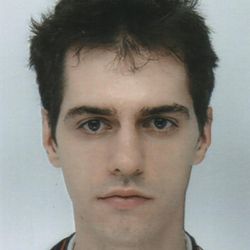
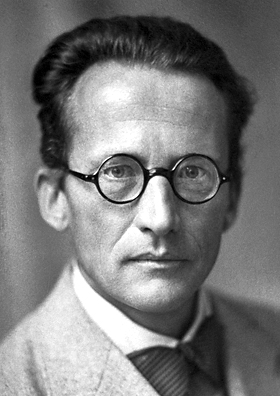

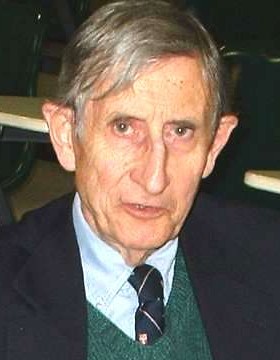
Ciro Santilli's admiration for Dyson goes beyond his "unify all the things approach", which Ciro loves, but also extends to the way he talks and the things he says. Dyson is one of Ciro's favorite physicist.
Besides this, he was also very idealistic compassionate, and supported a peaceful resolution until World War II with United Kingdom was basically inevitable. Note that this was a strategic mistake.
Dyson is "hawk nosed" as mentioned in Genius: Richard Feynman and Modern Physics by James Gleick (1994) chapter "Dyson". But he wasn't when he was young, see e.g. i2.wp.com/www.brainpickings.org/wp-content/uploads/2016/03/freemandyson_child-1.jpg?resize=768%2C1064&ssl=1 It seems that his nose just never stopped growing after puberty.
He also has some fun stories, like him practicing night climbing while at Cambridge University, and having walked from Cambridge to London (~86km!) in a day with his wheelchair bound friend.
Ciro Santilli feels that the label child prodigy applies even more so to him than to Feynman and Julian Schwinger.
Bibliography:
- QED and the men who made it: Dyson, Feynman, Schwinger, and Tomonaga by Silvan Schweber (1994) chapter 9 Freeman Dyson and the Structure of Quantum Field Theory
Richard Feynman was working under him there, and was promoted to team lead by him because Richard impressed Hans.
He was also the person under which Freeman Dyson was originally under when he moved from the United Kingdom to the United States.
And Hans also impressed Feynman, both were problem solvers, and liked solving mental arithmetic and numerical analysis.
This relationship is what brought Feynman to Cornell University after World War II, Hans' institution, which is where Feynman did the main part of his Nobel prize winning work on quantum electrodynamics.
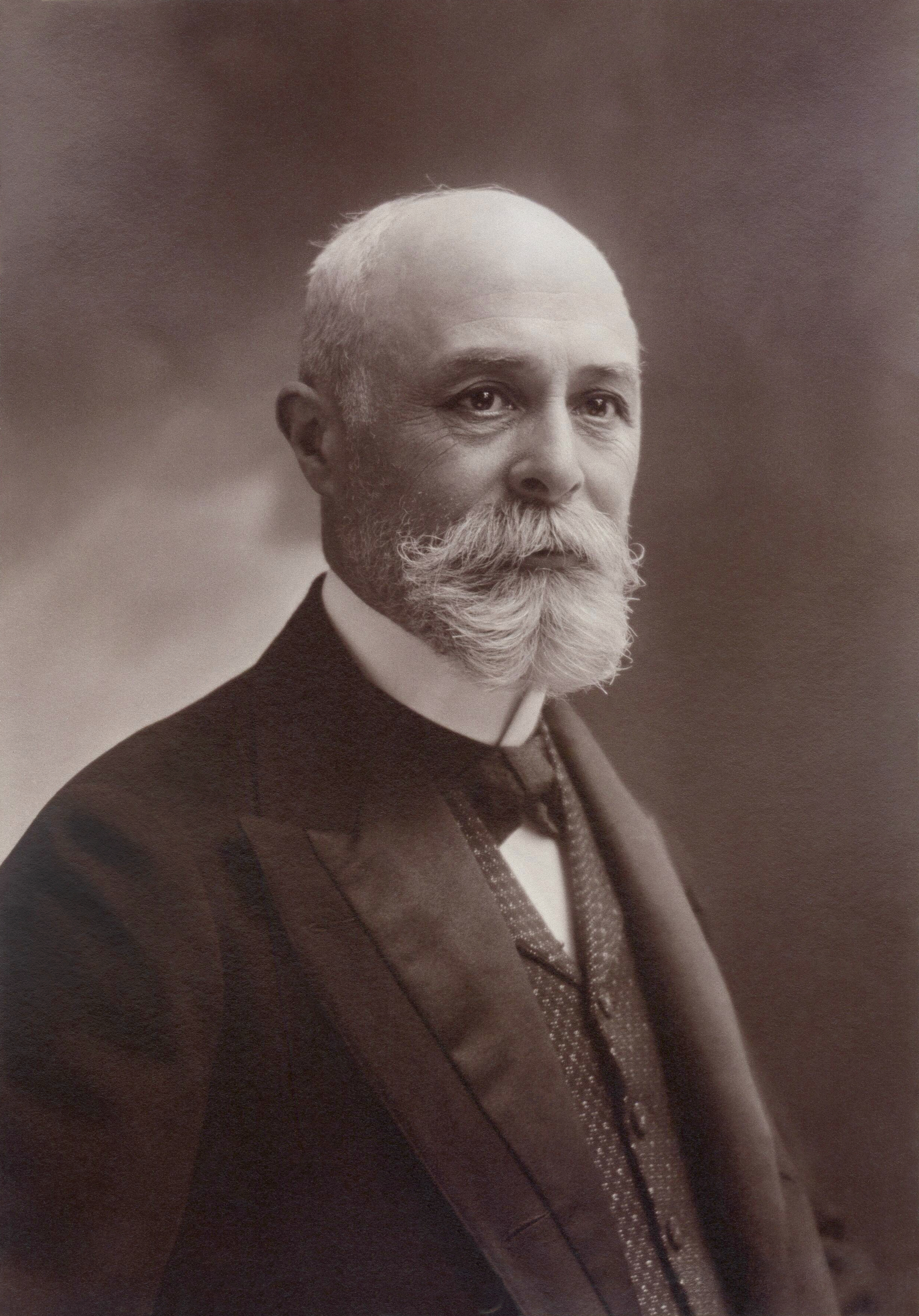
He was a leading figure at the MIT Radiation Laboratory, and later he was head at the Columbia University laboratory that carried out the crucial Lamb-Retherford experiment and the anomalous magnetic dipole moment of the electron published at The Magnetic Moment of the Electron by Kusch and Foley (1948) using related techniques.

Richard Feynman's mentor at Princeton University, and notable contributor to his development of quantum electrodynamics.
Worked with Niels Bohr at one point.
Web of Stories interview (1996): www.youtube.com/playlist?list=PLVV0r6CmEsFzVlqiUh95Q881umWUPjQbB. He's a bit slow, you wonder if he's going to continute or not! One wonders if it is because of age, or he's always been like that.
The Story of John Bardeen at the University of Illinois (2010)
Source. - youtu.be/OyV8qSwGUHU?t=976 of when Bardeen demoed the transistor in class is particularly memorable
- youtu.be/OyV8qSwGUHU?t=1105 some of his golf colleagues didn't know he had won a Nobel Prize!
This is the one Ciro Santilli envies the most, because he has such a great overlap with Ciro's interests, e.g.:
John von Neuman - a documentary by the Mathematical Association of America (1966)
Source. Some good testimonies. Some boring.He started working at night and sleeping during the moring/early afternoon while he was at university.
He was the type of guy that was so good that he didn't really have to follow the university rules very much. He would get into trouble for not following some stupid requirement, but he was so good that they would just let him get away with it.
Besides quantum electrodynamics, Julian worked on radar at the Rad Lab during World War II, unlike most other top physicists who went to Los Alamos Laboratory to work on the atomic bomb, and he made important contributions there on calculating the best shape of the parts and so on.
He was known for being very formal mathematically and sometimes hard to understand, in stark contrast to Feynman which was much more lose and understandable, especially after Freeman Dyson translated him to the masses.
However, QED and the men who made it: Dyson, Feynman, Schwinger, and Tomonaga by Silvan Schweber (1994) does emphacise that he was actually also very practical in the sense that he always aimed to obtain definite numbers out of his calculations, and that was not only the case for the Lamb shift.
Pinned article: Introduction to the OurBigBook Project
Welcome to the OurBigBook Project! Our goal is to create the perfect publishing platform for STEM subjects, and get university-level students to write the best free STEM tutorials ever.
Everyone is welcome to create an account and play with the site: ourbigbook.com/go/register. We belive that students themselves can write amazing tutorials, but teachers are welcome too. You can write about anything you want, it doesn't have to be STEM or even educational. Silly test content is very welcome and you won't be penalized in any way. Just keep it legal!
Intro to OurBigBook
. Source. We have two killer features:
- topics: topics group articles by different users with the same title, e.g. here is the topic for the "Fundamental Theorem of Calculus" ourbigbook.com/go/topic/fundamental-theorem-of-calculusArticles of different users are sorted by upvote within each article page. This feature is a bit like:
- a Wikipedia where each user can have their own version of each article
- a Q&A website like Stack Overflow, where multiple people can give their views on a given topic, and the best ones are sorted by upvote. Except you don't need to wait for someone to ask first, and any topic goes, no matter how narrow or broad
This feature makes it possible for readers to find better explanations of any topic created by other writers. And it allows writers to create an explanation in a place that readers might actually find it.
Figure 1. Screenshot of the "Derivative" topic page. View it live at: ourbigbook.com/go/topic/derivativeVideo 2. OurBigBook Web topics demo. Source. - local editing: you can store all your personal knowledge base content locally in a plaintext markup format that can be edited locally and published either:This way you can be sure that even if OurBigBook.com were to go down one day (which we have no plans to do as it is quite cheap to host!), your content will still be perfectly readable as a static site.
- to OurBigBook.com to get awesome multi-user features like topics and likes
- as HTML files to a static website, which you can host yourself for free on many external providers like GitHub Pages, and remain in full control

Figure 2. You can publish local OurBigBook lightweight markup files to either OurBigBook.com or as a static website.
Figure 3. Visual Studio Code extension installation.
Figure 5. . You can also edit articles on the Web editor without installing anything locally. Video 3. Edit locally and publish demo. Source. This shows editing OurBigBook Markup and publishing it using the Visual Studio Code extension. 
- Infinitely deep tables of contents:




All our software is open source and hosted at: github.com/ourbigbook/ourbigbook
Further documentation can be found at: docs.ourbigbook.com
Feel free to reach our to us for any help or suggestions: docs.ourbigbook.com/#contact