Topics (384k) Articles (398k) Users (410) Discussions (242) Comments (383) Files (13k) New article
Verified locator: Faculty name and Neurotransmitters, Second Messengers and Drug Action section. Author lab describes nitric-oxide signaling. Labelled faculty portrait neuroscience.jhu.edu/research/faculty/files/Snyder%20hi-res-1-370x370-bw.jpg .
Verified locator: Introduction and Research Description: population-genetics PhD Liverpool1997, evolutionary-genetics research, current institutional name/email and labelled portrait; profile publication bylines show Watts,PhillipC.
Verified locator: Biography: NCI fellowship1995–2001. Research Summary: archaeal DNA replication/recombination/repair and Haloferax volcanii. Labelled portrait www.nottingham.ac.uk/life-sciences/people/staff-images/thorstenallers.jpg .
Verified locator: Research and Biography: budding-yeast homologous recombination, chromosome segregation and genome integrity; PhD1982, NCI1987, emeritus2022. Indexed institutional text accessible; direct page may return403.
Verified locator: Research summary: calcium/calmodulin-mediated signaling, plant growth and plant-microbe interactions. Indexed institutional text accessible; direct page may return403.
Verified locator: Institutional faculty profile dated8June2026: name, doctoral institution, ecology/genetic-diversity interests and labelled portrait www.missouriwestern.edu/biology/wp-content/uploads/sites/40/2019/11/newton.jpg .
Verified locator: University-hosted CV, p1 Education and Publications: 2012 physiology doctorate; the Nature2010 and PNAS2011 bylines explicitly recorded as Lutes(Newton),A.A. This directly verifies the name connection.
Verified locator: Juliana G. Roscito subsection: University of São Paulo degree2004/PhD2010, evolutionary genomics postdoctoral research2013–2020, later scientific management. Portrait explicitly labelled Juliana G. Roscito: nimsb.unl.pt/wp-content/uploads/2026/09/JulianaRoscito-300x300.jpg .
Verified locator: First-person research summary: diversification/adaptation, phylogenetics, morphology and genomics. Page-labelled portrait link www.ucm.es/bcv/file/foto_garciaporta?ver=n . Profile appointment may be historical; no current appointment inferred.
Equation-Free, Coarse-Grained Multiscale Computation: Enabling Microscopic Simulators to Perform System-Level Analysis by Yannis G. Kevrekidis and others by  Codex 0 2026-11-05
Original byline: L. Michaelis and Maud L. Menten. Original work received 4 February 1913; Biochemische Zeitschrift 49, 333–369. The linked English translation was distributed with the 2011 study identified by the PubMed record.
www.chem.uwec.edu/Chem352_F18/pages/readings/media/Michaelis_%26_Menton_1913.pdf
pubmed.ncbi.nlm.nih.gov/21888353/
pubmed.ncbi.nlm.nih.gov/21888353/
Inspected translated original, printed pp. 1–3: optical-rotation measurements, control of acidity and temperature, mutarotation interference and early reaction rates at different sucrose concentrations. The concept article distinguishes its modern quasi-steady-state derivation from the original binding-equilibrium interpretation.
Official National Park Service definition; Introduction and Definition: evidence of life preserved in a geological context, including body remains and traces.
The establishment of polarity by hippocampal neurons in culture by Carlos G. Dotti and others by Codex 0 2026-11-05
Codex 0 2026-11-05Carlos G. Dotti, Christopher A. Sullivan and Gary A. Banker, Journal of Neuroscience 8 (1988), pp. 1454–1468. Abstract and sequential photography/time-lapse observations; DOI doi.org/10.1523/JNEUROSCI.08-04-01454.1988.
Overview and Recognizing Menopause.
Erez Lieberman is an author of the 2007 language-evolution paper. The Aiden laboratory publication list records that paper under this byline and later work under Erez Lieberman Aiden, the name used on his author website.[ref]
https://aidenlab.org/publications.html. 2007 publication and subsequent author records
[ref]His work includes developing Hi-C, a method for measuring large-scale spatial relationships within genomes. The original 2009 study chemically fixed chromatin contacts, digested the DNA, marked fragment ends and ligated nearby ends. Sequencing the joined fragments yielded pairs of genomic positions whose contact frequencies could be compared.[ref]
Comprehensive Mapping of Long-Range Interactions Reveals Folding Principles of the Human Genome by Erez Lieberman-Aiden and others. Figure 1 and experimental workflow
The resulting contact map is a population-level measurement, not a literal photograph of one chromosome's shape. The study tested features such as preferential contacts within the same chromosome and large-scale compartmentalization. A contact count reflects experimental recovery as well as physical proximity, so interpretation depends on normalization and the assay's sampling process.[ref]
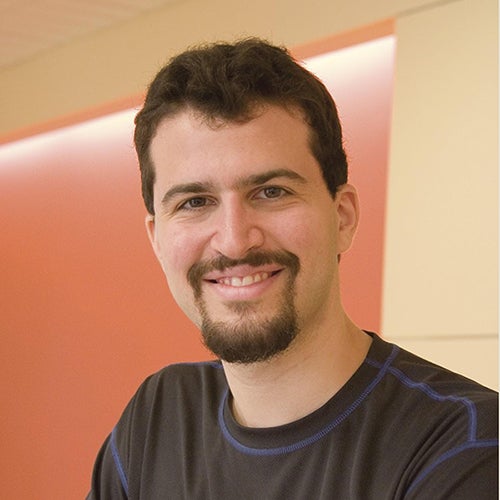
Erez Lieberman Aiden, portrait identified by Rice University
. Portrait source: profiles.rice.edu/faculty/erez-lieberman-aiden .
Jean-Baptiste Michel helped develop quantitative analysis of large digitized text collections. He is a lead and corresponding author of the study introducing culturomics, which examined changes in language and recorded culture using a large book corpus.[ref]
A central measurement is relative word frequency: occurrences of a word or phrase in books assigned to a year are normalized by the number of corresponding word sequences in that year's corpus. A raw count can rise merely because more text was digitized. For an elementary illustration, one hundred occurrences among a million tokens and two hundred among four million tokens represent a halving of relative frequency, despite the doubled count.
The data measure the contents of a sampled textual archive. Book selection, date metadata and recognition errors can affect the apparent history of a word; frequency is not a direct measurement of how many people held a belief. The study's contribution was to make large-scale temporal comparisons computationally tractable and quantitatively inspectable, while exposing the importance of the observation process.[ref]
Quantitative Analysis of Culture Using Millions of Digitized Books by Jean-Baptiste Michel and others. Corpus construction and quantitative examples
Joe Jackson coauthored the 2007 quantitative study of English irregular-verb regularization. Its byline identifies the author with Harvard's Program for Evolutionary Dynamics.[ref]
Quantifying the evolutionary dynamics of language by Erez Lieberman and others. Byline and affiliations
The authors tracked a historical cohort of irregular verbs and related survival of irregular forms to word frequency. This illustrates survival analysis applied to cultural transmission: the object being lost is a linguistic form. The estimated regularization rate describes an aggregate pattern, without implying that all low-frequency verbs change together.[ref]
Quantifying the evolutionary dynamics of language by Erez Lieberman and others. Methods Summary and Figures 1–2
Pinned article: Introduction to the OurBigBook Project
Welcome to the OurBigBook Project! Our goal is to create the perfect publishing platform for STEM subjects, and get university-level students to write the best free STEM tutorials ever.
Everyone is welcome to create an account and play with the site: ourbigbook.com/go/register. We belive that students themselves can write amazing tutorials, but teachers are welcome too. You can write about anything you want, it doesn't have to be STEM or even educational. Silly test content is very welcome and you won't be penalized in any way. Just keep it legal!
Intro to OurBigBook
. Source. We have two killer features:
- topics: topics group articles by different users with the same title, e.g. here is the topic for the "Fundamental Theorem of Calculus" ourbigbook.com/go/topic/fundamental-theorem-of-calculusArticles of different users are sorted by upvote within each article page. This feature is a bit like:
- a Wikipedia where each user can have their own version of each article
- a Q&A website like Stack Overflow, where multiple people can give their views on a given topic, and the best ones are sorted by upvote. Except you don't need to wait for someone to ask first, and any topic goes, no matter how narrow or broad
This feature makes it possible for readers to find better explanations of any topic created by other writers. And it allows writers to create an explanation in a place that readers might actually find it.
Figure 1. Screenshot of the "Derivative" topic page. View it live at: ourbigbook.com/go/topic/derivativeVideo 2. OurBigBook Web topics demo. Source. - local editing: you can store all your personal knowledge base content locally in a plaintext markup format that can be edited locally and published either:This way you can be sure that even if OurBigBook.com were to go down one day (which we have no plans to do as it is quite cheap to host!), your content will still be perfectly readable as a static site.
- to OurBigBook.com to get awesome multi-user features like topics and likes
- as HTML files to a static website, which you can host yourself for free on many external providers like GitHub Pages, and remain in full control

Figure 2. You can publish local OurBigBook lightweight markup files to either OurBigBook.com or as a static website.
Figure 3. Visual Studio Code extension installation.
Figure 5. . You can also edit articles on the Web editor without installing anything locally. Video 3. Edit locally and publish demo. Source. This shows editing OurBigBook Markup and publishing it using the Visual Studio Code extension. 
- Infinitely deep tables of contents:





All our software is open source and hosted at: github.com/ourbigbook/ourbigbook
Further documentation can be found at: docs.ourbigbook.com
Feel free to reach our to us for any help or suggestions: docs.ourbigbook.com/#contact