Topics (384k) Articles (398k) Users (410) Discussions (242) Comments (383) Files (13k) New article

Tina Tang coauthored the 2007 study relating historical changes in English irregular verbs to word frequency. Its byline identifies the author with Harvard's Program for Evolutionary Dynamics.[ref]
Quantifying the evolutionary dynamics of language by Erez Lieberman and others. Byline and affiliations
The authors found an approximate square-root relation between frequency and irregular-verb half-life. A hundredfold increase in frequency corresponds to a tenfold increase in half-life under that fitted relation. It describes a statistical pattern across the studied verbs, rather than a schedule for when an individual verb must change.[ref]
Indrani Mukharji is the author of a 2020 scientific memoir of Emanuel Margoliash. The memoir explains how work on cytochrome c connected protein chemistry with the reconstruction of evolutionary relationships. It follows the isolation and sequencing of the protein through to comparisons between species, showing how a laboratory material became evidence for evolution.[ref]
Emanuel Margoliash by Indrani Mukharji. Title page and pp. 2–3; National Academy of Sciences Biographical Memoirs, 2020
One concrete example is the assembly of a phylogenetic tree from cytochrome c sequences for 20 species. The useful idea is to compare corresponding positions in the same protein, rather than treat every difference between organisms as an unrelated observation. Indrani Mukharji's contribution here is documenting and explaining that scientific history; authorship of the memoir is distinct from authorship of the earlier experiments it describes.[ref]
Emanuel Margoliash by Indrani Mukharji. Page 3: twenty-species sequence comparison and emergence of molecular phylogeny
Abhijit Kulkarni is the first author, with H. Steven Colburn, of a 2000 study measuring variability in the headphone transfer function. Repeated placements on the KEMAR acoustical manikin changed the measured response, making it difficult to choose one inverse filter that reliably canceled the headphone contribution.[ref]
Variability in the characterization of the headphone transfer-function by Abhijit Kulkarni and H. Steven Colburn. Original Abstract: repeated cushion placement and compensation problem
The method supplies a clear example of measurement reproducibility. Repeating a measurement after removing and replacing the apparatus tests a different source of variation from repeating it without disturbing anything. The study identified the physical coupling of headphones to the ear region as part of the experimental system, rather than assuming an electronic input alone fixed the acoustic output.[ref]
Variability in the characterization of the headphone transfer-function by Abhijit Kulkarni and H. Steven Colburn. Introduction and Figures 1–2: placement trials and equalization comparisons
H. Steven Colburn is a researcher in auditory science and a coauthor with Abhijit Kulkarni of a 2000 study of headphone transfer function measurements. Using the KEMAR acoustical manikin, they repeatedly repositioned headphones and measured how their frequency response changed. This isolated placement variability while retaining the same experimental head and headphone system.[ref]
Variability in the characterization of the headphone transfer-function by Abhijit Kulkarni and H. Steven Colburn. Original paper Abstract and Introduction; Journal of the Acoustical Society of America 107, 1071–1074, 2000
A compensation filter based on one placement can become inaccurate after the cushion moves. The experiment therefore distinguishes a nominal device description from the sound actually delivered at the measurement point. That distinction matters when a hearing experiment depends on a precisely specified acoustic stimulus.[ref]
Variability in the characterization of the headphone transfer-function by Abhijit Kulkarni and H. Steven Colburn. Abstract and section I: headphone compensation and placement-dependent response
RadiologyInfo.org is an institutional author of patient-oriented explanations of medical imaging and the work of a radiologist. Its professional-role material distinguishes interpreting images, helping choose an appropriate imaging method and communicating the resulting findings.[ref]
What does a radiologist do? by RadiologyInfo.org. Your Radiologist; Your Radiologist Plays a Key Role in Your Healthcare By
Its procedure pages give useful physical examples. The venous ultrasonography explanation connects sound-based imaging with examination of blood vessels and measurement of moving blood. The magnetic resonance cholangiopancreatography explanation describes a specialized magnetic resonance imaging method for the biliary and pancreatic systems.[ref]
Venous Ultrasound by RadiologyInfo.org. What is Venous Ultrasound Imaging?
[ref]MRCP (MR Cholangiopancreatography) by RadiologyInfo.org. What is MRCP?
These are educational explanations of what an examination measures and how it is performed. Such a procedure description supplies context for interpreting a technique; it is a different kind of evidence from a controlled experiment comparing diagnostic performance in a defined population.
M. D. Burkhard coauthored, with R. M. Sachs, a 1975 paper describing an anthropometric manikin for acoustics research. Such instruments provide a reproducible physical stand-in for measurements affected by the shape of a listener's head and torso.[ref]
Anthropometric manikin for acoustic research by M. D. Burkhard and R. M. Sachs. Original title, byline and publication record: JASA 58, 214–222, 1975
KEMAR provides the concrete apparatus example. Its documented configurations combine a head and torso with external-ear shapes, canal extensions and ear simulators for testing headphones and related equipment. The manufacturer describes these as approximations to human acoustic properties.[ref]
A microphone alone measures the sound pressure at its position; placing it in a representative physical arrangement changes the experiment to include the effects of that arrangement. Repeatability of a manikin measurement does not imply that its response equals the response of every individual listener. Modern configurations also should not automatically be attributed to the original 1975 instrument.
R. M. Sachs coauthored, with M. D. Burkhard, a 1975 description of an anthropometric manikin for acoustics research. The contribution addressed a measurement problem: a test fixture should represent relevant features of a listener rather than merely hold a sensor in otherwise empty space.[ref]
Anthropometric manikin for acoustic research by M. D. Burkhard and R. M. Sachs. Original title, byline and publication record
Current KEMAR documentation illustrates the approach with shaped head-and-torso fixtures and interchangeable ear-related components. These support controlled tests in which the apparatus configuration is recorded and reproduced.[ref]
For a hypothetical comparison, use the same signal and fixture to test two headphone placements. A change in the measured response can then be investigated as a placement effect instead of being mixed with changes of listener anatomy. Conversely, changing an ear component changes the physical model itself. An interpretable comparison therefore specifies both the signal and the geometry.
Marie Albéric is a researcher in biomineralization and the structure of biological materials. Her institutional publication record directly identifies the author credited as M. Albéric in the 2018 study of mineralized collagen organization in elephant ivory.[ref]
Marie Albéric publication record at the Max Planck Institute of Colloids and Interfaces. Named researcher record, 2018 Acta Biomaterialia publication
That study combined X-ray scattering, polarized light microscopy and scanning electron microscopy to investigate how the orientation of mineralized collagen varies across the tusk. It described distinct structural arrangements near the outside and within the middle region. The authors proposed that this organization, together with birefringence, contributes to the bright-and-dark Schreger pattern, while treating its detailed structural origin as a question requiring evidence.[ref]
The three-dimensional arrangement of the mineralized collagen fibers in elephant ivory and its relation to mechanical and optical properties by M. Albéric and others. Abstract, complementary methods, orientation gradients and optical interpretation
A constructed geometry example explains the need for multiple views. A straight fiber segment of length lies at angle to a chosen axis. Its components along that axis and a perpendicular axis are and . For and , these are approximately and . A two-dimensional view can shorten an obliquely oriented structure; projected length alone cannot reveal both true length and three-dimensional orientation.
Albéric and collaborators' contribution connects hierarchical structure with optical behavior rather than treating ivory as a uniform solid. Complementary measurements constrain different aspects of the model: an orientation-sensitive signal and a structural image need not report the same quantity, even when both concern the same collagen network.
Heinz Horstmann is a researcher credited with the experimental development of serial block-face scanning electron microscopy. His 2004 paper with Winfried Denk describes repeatedly cutting a resin-embedded sample and imaging the newly exposed surface inside a scanning electron microscope. Its contribution statement credits both authors with performing experiments and supplying materials or analysis tools.[ref]
The apparatus addresses a practical reconstruction problem. Collecting separate thin sections can introduce handling and alignment difficulties; imaging the remaining block face after each cut retains a more directly ordered sequence of surfaces. A moving knife and a controlled specimen advance turn sectioning and imaging into repeated steps within the instrument.[ref]
Serial Block-Face Scanning Electron Microscopy to Reconstruct Three-Dimensional Tissue Nanostructure by Winfried Denk and Heinz Horstmann. Introduction; Materials and Methods, Microtome
The specimen advance used a lever to reduce the displacement of a motorized micrometer by a ratio of . Applied to the quoted actuator-position uncertainty, this gives at the reduced-motion side. This is the scaled contribution of that actuator uncertainty, not a measurement of the total uncertainty in every removed section.[ref]
A separate constructed sampling example highlights an interpretation limit. Two hundred nominal layers cover in depth. If the lateral pixels are wide, depth sampling is ten times coarser. Interpolating the image stack onto smaller depth steps can make a display smoother but does not supply observations of the missing intermediate planes. Horstmann and Denk's work therefore connects instrument mechanics with the geometry and limits of a three-dimensional biological reconstruction.
Thomas E. Kehl-Fie is a microbiologist whose research concerns metal availability and host defense. His published name is retained without expanding the middle initial. A 2011 collaborative study investigated calprotectin, a host protein involved in nutritional immunity, connecting metal chelation with biological function.[ref]
The study used isothermal titration calorimetry to measure metal binding to calprotectin. Its thermograms provide evidence about a chemical interaction, complementary to separate functional measurements. This is a useful distinction: binding a nutrient, changing an enzyme's activity and changing a biological outcome are different observations.[ref]
For an original idealized constant-pressure measurement, suppose one increment yields a measured heat of and a matched analytical blank yields . Assume that blank correction removes all nonbinding contributions and that of additional complexes actually form. The corrected heat isand the corresponding molar enthalpy change isThe sign denotes an exothermic binding contribution under the stated assumptions. These invented numbers are not affinities or measurements from Kehl-Fie's work. A single corrected heat value also does not determine a dissociation constant: that inference requires a binding model and measurements across suitable conditions.
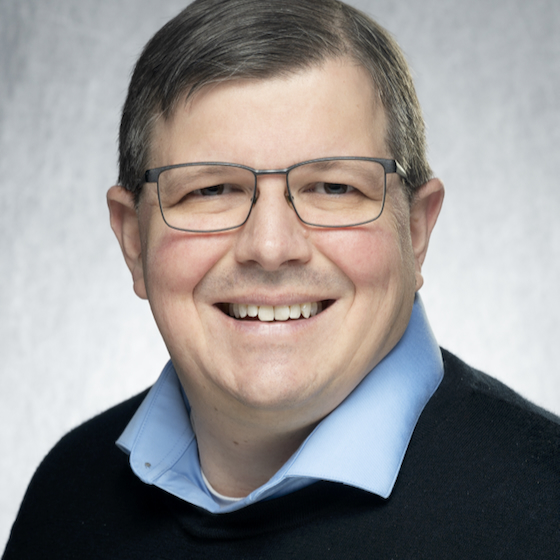
Thomas E. Kehl-Fie, portrait linked from the Vallee Foundation's named scholar profile
. [ref]Thomas E. Kehl-Fie named research profiles and portrait. Named scholar portrait and corroborating institutional research identity
Mihaela-Carmen Unciuleac is a joint first author of a 2021 study connecting polynucleotide phosphorylase structure with its reversible reactions at an RNA chain's end. In one direction, phosphorolysis releases nucleoside diphosphates; in the other, those substrates supply units for extension.[ref]
The study combined cryo-electron microscopy with changes to selected amino acid residues and measurements of enzyme activity. The structure localized substrate and metal-binding features; the activity comparisons tested their functional importance.[ref]
Structure and mechanism of Mycobacterium smegmatis polynucleotide phosphorylase by Mihaela-Carmen Unciuleac and others. Abstract and Results, structure-guided mutational analysis
For an original accounting example, shortening an RNA from 12 to eight nucleotides through four terminal phosphorolysis events consumes four inorganic phosphate equivalents and releases four nucleoside diphosphates. Reversing those four events consumes four nucleoside diphosphates and releases four phosphate equivalents. This balances the two directions without assuming that a reaction mixture must run equally fast both ways.
A structural contact also differs from a demonstrated chemical requirement. In the paper's Figure4, an imported comparison phosphate helps interpret the active site; it is not a directly resolved phosphate from that same reconstruction.[ref]
Structure and mechanism of Mycobacterium smegmatis polynucleotide phosphorylase by Mihaela-Carmen Unciuleac and others. Figure4, observed RNA/metals distinguished from the comparison phosphate
Comparing structural placement with separate reaction measurements makes the mechanistic claim testable without assigning unreported individual tasks to an author.Shreya Ghosh is a joint first author, with Mihaela-Carmen Unciuleac, of a 2021 structural and biochemical study of polynucleotide phosphorylase from Mycobacterium smegmatis. The enzyme links reversible RNA end chemistry with the architecture of a ring-shaped protein trimer.[ref]
The researchers used a Titan Krios G2 transmission electron microscope with a Gatan K3 camera for cryo-electron microscopy. Their reconstruction located a terminal RNA segment and two magnesium ions in an active site, and an adenine base in the polynucleotide phosphorylase central channel.[ref]
Structure and mechanism of Mycobacterium smegmatis polynucleotide phosphorylase by Mihaela-Carmen Unciuleac and others. Results, Cryo-EM structure; Figures1 and4
A useful original interpretation test is to compare a structural map with a reaction time course. Suppose a map resolves four terminal nucleotides, while an independent assay measures conversion of a 12-nucleotide chain to an eight-nucleotide chain. The map identifies an occupied configuration; the assay establishes net shortening by four units. Neither alone establishes how long each intermediate persisted. Combining positional and functional evidence answers more than treating a structural snapshot as a movie.
The paper's joint authorship establishes a shared scientific contribution. It does not assign each instrument operation or analysis step to Ghosh individually.

Shreya Ghosh, named portrait in the Sloan Kettering Institute's Stewart Shuman laboratory profile
. Joe M. McCord helped identify the enzymatic activity called superoxide dismutase. His 1981 first-person research recollection describes how an unexpected inhibition of cytochrome c reduction led to a different explanation of oxygen-dependent enzyme chemistry.[ref]
Citation Classic commentary on Superoxide dismutase by Joe M. McCord. Page1, account of the1968 experiments and1969 isolation/assay paper
The system contained xanthine oxidase, oxygen and a cytochrome c reporter. McCord initially sought direct binding between xanthine oxidase and an inhibitory protein. The eventual explanation involved freely diffusible superoxide: its competing removal could inhibit the reporter without the proposed binding. Preparations of other proteins contained a small amount of the catalytically active contaminant.[ref]
Citation Classic commentary on Superoxide dismutase by Joe M. McCord. Page1, unsuccessful binding hypothesis, solution intermediate and contaminating dismutase
The superoxide dismutase reaction is a disproportionation:In an original stoichiometry example, reaction of 40 superoxide equivalents produces 20 oxygen and 20 hydrogen peroxide equivalents. Decreasing the superoxide signal therefore need not mean producing only water. Likewise, a smaller cytochrome c reporter signal can reflect a competing reaction rather than less activity of the source enzyme. This is why a reporter's measured change must be connected to a reaction mechanism before interpreting an enzyme assay.

Joe McCord, portrait identified in the Pathways Bioscience scientific-team profile
. Pohl Milón is a researcher in biophysics and biochemistry whose work includes the timing of bacterial translation initiation. As first author of a 2012 kinetic study, he and collaborators investigated how bacterial translation initiation factors assemble on the 30S ribosomal subunit.[ref]
The study resolved a favored sequence in which bacterial initiation factor IF2 and bacterial initiation factor IF3 form an initially unstable assembly, then bacterial initiation factor IF1 stabilizes it. Messenger RNA can arrive at different stages, depending on its concentration and structure. Thus a final composition does not specify one compulsory order of assembly.[ref]
Real-time assembly landscape of bacterial 30S translation initiation complex by Pohl Milón and others. Abstract and Figures2–4,6–7, assembly kinetics and mRNA recruitment
An original waiting-time model shows the value of kinetic measurements. If two obligatory sequential steps have independent exponential distributions with rates and , their mean waiting times add to seconds. Doubling the faster rate reduces this mean to 0.55 seconds; doubling the slower rate reduces it to 0.35 seconds. These stipulated rates are not experimental fits. They show why identifying the slow step can matter more than simply counting how many components bind.

Andrew Philip Carter contributed to structural explanations of bacterial translation initiation. His own MRC-hosted curriculum vitae directly links that full name to the 2001 paper credited to A. P. Carter, which determined a complex of bacterial initiation factor IF1 and the 30S ribosomal subunit.[ref]
Curriculum vitae of Andrew Philip Carter. Page1, full name; page9, publication54
The X-ray crystallography structure showed IF1 occupying the ribosomal A site. It also revealed displacement of bases A1492 and A1493 of 16S ribosomal RNA, along with changes extending beyond the immediate binding region. A localized protein interaction can therefore influence the conformation of a much larger RNA–protein assembly.[ref]
Crystal structure of an initiation factor bound to the 30S ribosomal subunit by A. P. Carter and others. Abstract, A-site occlusion and long-range conformational changes; associated structure PDB1HR0
For an original occupancy example, imagine 100 otherwise identical snapshots in a model where IF1 and a second ligand cannot occupy the same A-site region. If IF1 occupies that region in 70 snapshots, at most 30 permit that other ligand's simultaneous occupancy. This geometric exclusion does not imply that 70 percent of biological translation is prevented: productive initiation places the initiator transfer RNA at the distinct ribosomal P site, and the actual pathway includes further steps. Site identity matters more than a generic statement that a factor blocks RNA binding.
The structural result supplies a concrete physical mechanism to compare with functional assays. Binding location, conformational rearrangement and eventual protein synthesis remain different observations.
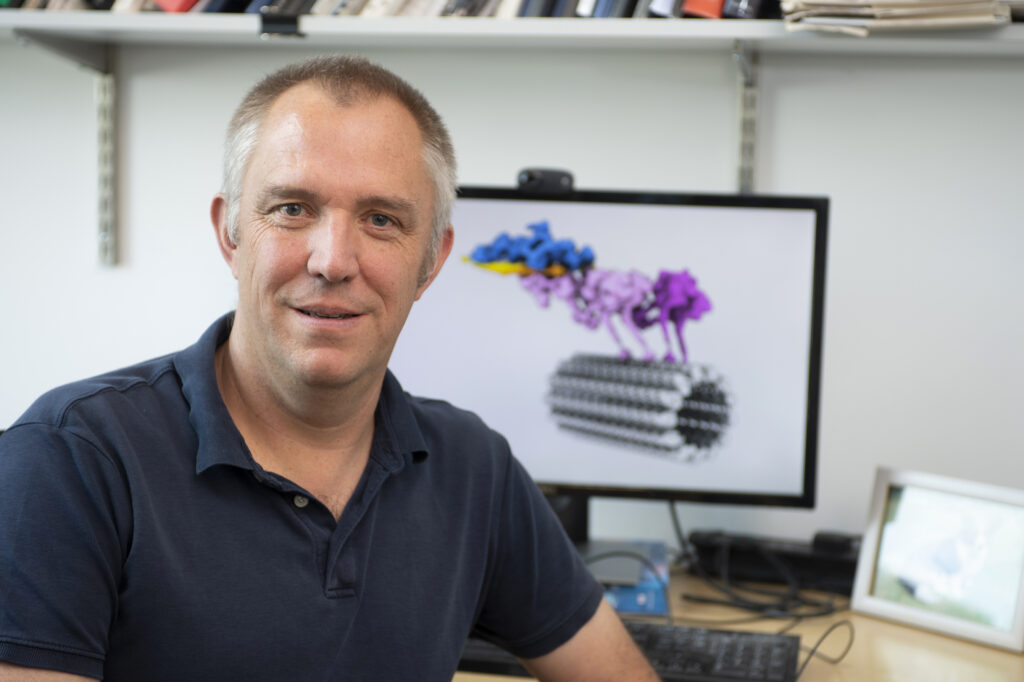
Andrew Carter, named portrait on the MRC Carter Laboratory People page
. Tanweer Hussain contributed to explaining how bacterial translation initiation changes the geometry of the ribosome and its bound transfer RNA. He is first author of a 2016 study that classified cryo-electron microscopy images into eleven reconstructions of 30S preinitiation complexes containing different arrangements of initiation components.[ref]
The structures connected movements of bacterial initiation factor IF3 and initiator transfer RNA with accommodation at the ribosomal P site and start codon recognition. Bacterial initiation factor IF1 anchors components near the ribosomal A site, while bacterial initiation factor IF2 helps position the initiating carrier's formylmethionine end.[ref]
Large-Scale Movements of IF3 and tRNA during Bacterial Translation Initiation by Tanweer Hussain and others. Highlights, Introduction and structural comparisons
An original two-state calculation shows why structural classes need kinetic interpretation. Let A and B interconvert with rates from A to B and from B to A. At equilibrium, balancing the flows givesRates and both give a B fraction of , despite a tenfold difference in timing. These are stipulated rates, not fits to the study. Counts of particle conformations alone would not distinguish them.
The paper's structural comparisons support a proposed initiation pathway. They are not a continuous record of one molecule passing through every reconstructed state; independent temporal or functional evidence is needed to assign transition rates.

Daniel A. Pomeranz Krummel contributed to determining the architecture of U1 snRNP, a small nuclear ribonucleoprotein involved in recognizing a splice site during RNA splicing. He is a joint first author of the 2009 X-ray crystallography study of its human functional core.[ref]
Crystal structure of human spliceosomal U1 snRNP at 5.5 Å resolution by Daniel A. Pomeranz Krummel and others. Byline, equal-contribution note and Abstract
The investigators reconstituted a particle from RNA and proteins, collected diffraction at the Swiss Light Source and obtained a 5.5-angstrom electron density map. Heavy-atom labeling supplied positional landmarks for fitting individual proteins, including the seven Sm proteins. The crystallized construct omitted the U1A protein and used engineered or truncated components; the paper separately modeled the more complete particle.[ref]
An original counting example clarifies that distinction. Seven Sm proteins, two additional U1-specific proteins and one U1 small nuclear RNA make ten molecular subunits, of which nine are proteins. Adding the omitted U1A protein gives ten proteins plus the RNA, rather than ten total subunits. This counts molecular components without asserting that every crystallized polypeptide has its full native sequence.
The scientific value is the spatial organization: a list of component names alone cannot show how RNA and proteins support one another. Conversely, the arrangement of an engineered functional core must be interpreted with its composition and resolution in view, rather than presented as an unmodified whole spliceosome.
Regina Bruggisser is first author of a 2002 investigation of chemical interference in the MTT assay. The investigators found that kaempferol could increase formazan production while the independently assessed number of cells decreased.[ref]
Interference of plant extracts, phytoestrogens and antioxidants with the MTT tetrazolium assay by Regina Bruggisser and others. 2002, byline and Abstract, comparison with crystal violet staining
The contribution concerns the interpretation of a measurement: a larger coloured signal need not mean greater cell viability. The MTT assay uses redox conversion of MTT to coloured formazan; if a test substance also drives this reaction, the signal combines cellular and chemical contributions.
An original additive model makes the ambiguity explicit. Let blank-corrected absorbance be , where is viable cell number, is signal per viable cell and is chemical interference. Suppose an untreated sample gives . A treated sample with and gives : apparent signal rises by 30 percent while the cellular contribution falls by 40 percent. These are illustrative values, not measurements from the paper. Measuring a compound-only negative control can test for , but does not establish that stays constant after treatment.
Katrin von Daeniken coauthored the 2002 study showing interference of natural compounds with the MTT assay. Its cell-free tests showed that coloured formazan could form without living cells.[ref]
A cell-free negative control asks a different question from an untreated cell culture: can the test mixture generate the readout chemically? Both controls are useful because neither alone distinguishes every contribution to absorbance.
Consider an original four-condition example. After subtraction of the reagent background, cells alone give , compound alone gives , and cells plus compound give . If chemical and cellular contributions are additive, the corrected cellular signal is , or 70 percent of the untreated signal. The uncorrected ratio would be 110 percent. The subtraction is conditional: a compound may behave differently in a cell culture than in a cell-free mixture. An independent cell count therefore tests something that this arithmetic cannot guarantee.
Gernot Jundt coauthored a 2002 investigation of misleading signals in the MTT assay.[ref]
Interference of plant extracts, phytoestrogens and antioxidants with the MTT tetrazolium assay by Regina Bruggisser and others. 2002, byline
His scientific contribution in this collaboration concerned the validity of a commonly used readout of cell viability, rather than a claim that every increase in dye formation represented cell proliferation.The study compared MTT-dependent formazan formation with crystal violet staining as a separate assessment of cell number.[ref]
Interference of plant extracts, phytoestrogens and antioxidants with the MTT tetrazolium assay by Regina Bruggisser and others. Abstract, comparison of the two measurements
These measurements need not answer the same biological question: cellular dye conversion can change even when the number of retained cells does not.In an original example, a culture falls from 100 to 80 viable cells, while average dye conversion per viable cell rises from 1 to 1.5 arbitrary units. Total signal rises from 100 to 120 units despite a 20 percent decline in viable cell number. This model needs no direct chemical interference at all. Together with compound-only controls, independent counting helps distinguish a change in cell number from a change in signal per cell. Neither readout alone identifies the cause of cell death.
Pinned article: Introduction to the OurBigBook Project
Welcome to the OurBigBook Project! Our goal is to create the perfect publishing platform for STEM subjects, and get university-level students to write the best free STEM tutorials ever.
Everyone is welcome to create an account and play with the site: ourbigbook.com/go/register. We belive that students themselves can write amazing tutorials, but teachers are welcome too. You can write about anything you want, it doesn't have to be STEM or even educational. Silly test content is very welcome and you won't be penalized in any way. Just keep it legal!
Intro to OurBigBook
. Source. We have two killer features:
- topics: topics group articles by different users with the same title, e.g. here is the topic for the "Fundamental Theorem of Calculus" ourbigbook.com/go/topic/fundamental-theorem-of-calculusArticles of different users are sorted by upvote within each article page. This feature is a bit like:
- a Wikipedia where each user can have their own version of each article
- a Q&A website like Stack Overflow, where multiple people can give their views on a given topic, and the best ones are sorted by upvote. Except you don't need to wait for someone to ask first, and any topic goes, no matter how narrow or broad
This feature makes it possible for readers to find better explanations of any topic created by other writers. And it allows writers to create an explanation in a place that readers might actually find it.
Figure 1. Screenshot of the "Derivative" topic page. View it live at: ourbigbook.com/go/topic/derivativeVideo 2. OurBigBook Web topics demo. Source. - local editing: you can store all your personal knowledge base content locally in a plaintext markup format that can be edited locally and published either:This way you can be sure that even if OurBigBook.com were to go down one day (which we have no plans to do as it is quite cheap to host!), your content will still be perfectly readable as a static site.
- to OurBigBook.com to get awesome multi-user features like topics and likes
- as HTML files to a static website, which you can host yourself for free on many external providers like GitHub Pages, and remain in full control

Figure 2. You can publish local OurBigBook lightweight markup files to either OurBigBook.com or as a static website.
Figure 3. Visual Studio Code extension installation.
Figure 5. . You can also edit articles on the Web editor without installing anything locally. Video 3. Edit locally and publish demo. Source. This shows editing OurBigBook Markup and publishing it using the Visual Studio Code extension. 
- Infinitely deep tables of contents:


All our software is open source and hosted at: github.com/ourbigbook/ourbigbook
Further documentation can be found at: docs.ourbigbook.com
Feel free to reach our to us for any help or suggestions: docs.ourbigbook.com/#contact