Topics (384k) Articles (398k) Users (410) Discussions (242) Comments (383) Files (13k) New article
Dry mass is the mass remaining after a specimen has been dried under a stated procedure. Removing water makes comparisons less sensitive to hydration, but the result remains operational: drying conditions can also remove volatile compounds or alter the material. A reproducible measurement specifies specimen preparation, drying conditions and the criterion for stopping.
For example, a rice-biomass protocol separates leaves, stems and reproductive structures, dries the components at , and checks for constant mass. Its stopping criterion is no change in the measured mass over 24 hours.[ref]
Procedure for determining aboveground biomass and nitrogen content in ORYZA by IRRI. Procedure, drying and final oven-dry weighing
This is a protocol for those samples, rather than a temperature prescribed for every biological material.For a synthetic calculation, a specimen has fresh mass 12 g and dry mass 3 g. The loss on drying is 9 g, or of fresh mass. The same loss is of dry mass. Both ratios describe the stipulated measurements, but use different denominators. Interpreting the loss specifically as water requires the assumption that other losses are negligible. Dry mass also includes retained inorganic material; it is not synonymous with the mass of organic nutrients.
The Lotus effect is self-cleaning by water droplets on a strongly water-repellent, textured surface, exemplified by lotus leaves. The surface structure reduces the contact of both water and contaminating particles with the solid. Mobile droplets can collect the particles and carry them away, connecting wetting, particle adhesion and surface microstructure.[ref]
Purity of the sacred lotus, or escape from contamination in biological surfaces by W. Barthlott and C. Neinhuis. Publisher abstract, relation of surface microrelief, water repellency and reduced particle adhesion
The motivating experiment was more specific than simply noticing that leaves look clean. W. Barthlott and C. Neinhuis artificially contaminated smooth and rough water-repellent plant surfaces with particles, then rinsed them with a sprinkler or fog generator. Rolling droplets removed the particles from the water-repellent surfaces. Comparing surface types linked cleaning performance to the combination of roughness and water repellency.[ref]
Purity of the sacred lotus, or escape from contamination in biological surfaces by W. Barthlott and C. Neinhuis. Primary abstract, contamination and artificial-rinsing experiment
A Cassie–Baxter state provides an idealized picture of a droplet supported partly by solid asperities and partly over trapped air. This reduces the effective solid contact area. Real cleaning additionally requires the drop to move: contact-line pinning and contact-angle hysteresis can hold a droplet even when its static contact angle is large. Thus measuring a contact angle and observing particle removal are different tests.
A force estimate explains why a cleaning experiment should specify drop size and tilt. On a surface inclined by , a droplet of mass has a downslope component of gravitational weightFor a water drop, taking density gives . At , the driving force is about . A surface that requires more force to overcome contact-line pinning can retain that drop. This is an illustrative force balance, not a measured lotus-leaf threshold; different drop volumes supply different driving forces.
For a biomimetics experiment, compare contaminated surfaces under the same droplet volume, inclination and rinsing protocol, and record both droplet motion and particles remaining. Wear or a change in surface chemistry can alter the result even if the surface still looks rough. The useful mechanism is the coupled behavior of surface texture, wetting, adhesion and droplet motion.
A biomedical engineer develops, investigates or evaluates systems at the intersection of engineering, biology and medicine. Work can include instrument design, biomechanics, biomaterials, data analysis and technical support for medical equipment. The role includes constructing models and experiments, not only assembling a finished device.[ref]
Bioengineers and Biomedical Engineers by the U.S. Bureau of Labor Statistics. What They Do, Duties and examples of technical specialties
An original load cell example makes the measurement work concrete. Suppose reference loads and produce outputs and . Fitting the stipulated linear measurement model givesA later output of then corresponds to . Ignoring the offset would instead report . With the calibration coefficients held fixed, an output uncertainty of contributes to force uncertainty; uncertainty in the reference loads and fitted coefficients adds further terms.
The engineer must also determine whether that model remains useful. A third reference load tests interpolation; repeated loading and unloading can reveal hysteresis; a temperature change can expose drift. Mounting the sensor on a biological specimen can alter the load path compared with the calibration fixture. Thus a satisfactory calibration curve is one part of demonstrating fitness for the intended measurement. Collaborating with users and reporting the conditions and limitations connects engineering performance to the biological question.
Tissue engineering uses biological cells, engineered environments and material structures to build or restore tissue-like function. A construct must do more than resemble the shape of a tissue: its cells need suitable surroundings, and the resulting structure must perform the intended biological or mechanical task. The field lies within biomedical engineering, whose scope includes engineering methods applied to biological materials and systems.[ref]
One approach seeds cells onto a tissue-engineering scaffold that provides an initial geometry and attachment environment. The cells can deposit extracellular matrix while the construct is maintained under controlled culture conditions. A bioreactor can supply nutrients and impose a defined mechanical environment. These roles should be distinguished: a scaffold’s initial strength, the matrix produced by the cells and the mature construct’s function need not be identical.
A motivating primary experiment is the 1999 report of arteries grown from vascular smooth muscle cells and endothelial cells. Bovine vessels were cultured under pulsatile conditions, then assessed for rupture strength, suture retention, contraction and cellular differentiation. The study also reported implantation in miniature swine, with a finite follow-up observation. The combination of mechanical and biological measurements illustrates why a tissue-like shape alone is insufficient evidence of function.[ref]
Functional arteries grown in vitro by L. E. Niklason and others. Primary abstract: cell sources, pulsatile culture, functional measurements and animal implantation
A simple design calculation shows how size affects cell support. For diffusion with characteristic diffusivity , the diffusion time over distance scales asFor illustrative , a distance gives , whereas gives . The tenfold increase in distance produces a hundredfold time scale. These chosen values do not establish a survival limit: consumption, binding, boundary concentrations and fluid transport also matter. They explain why scaling up a dense construct introduces a transport problem, rather than merely requiring more cells.
The engineering task is to coordinate transport, cell adhesion, matrix formation, biocompatibility and mechanical demands. An experiment can measure each separately: nutrient conditions, viable-cell distribution, matrix organization and force response. Together those observations test whether the designed environment has produced the intended tissue function.
Drug delivery concerns how a therapeutic substance is presented to a biological system: where it becomes available, over what time and in what form. Formulation, a carrier material and the route of administration can change the resulting transport. Drug release kinetics describes escape from a formulation or reservoir; pharmacokinetics additionally concerns what happens as the substance moves through and is removed from the body. These are related stages rather than interchangeable measurements.
A motivating historical development was the use of polymers for sustained release of proteins and other macromolecules, reported by Robert S. Langer and Judah Folkman in 1976.[ref]
Polymers for the sustained release of proteins and other macromolecules by Robert Langer and Judah Folkman. Original publication, Nature 263, pp. 797–800
The engineering question includes whether a carrier can retain a substance initially and then make it available over time while preserving the intended activity.An elementary reservoir model separates remaining material from cumulative release. If the remaining amount obeysthen and the released fraction is . For an illustrative reservoir-release half-time of six hours, . Half has been released at six hours and three quarters at twelve hours. The second six-hour interval releases one quarter of the initial amount, even though the first interval released one half. These are model fractions, not a drug regimen; the reservoir-release half-time is not an elimination half-life measured in a person.
An in vitro drug release test can place a formulation in a controlled medium, separate released material from retained material and measure amount against time. The apparatus can influence the answer. The FDA’s technical account explains that passive transport through a dialysis membrane can limit the measured response; its adaptive-perfusion prototype instead uses pressure-driven separation to investigate release from complex formulations.[ref]
Adaptive Perfusion: A Novel In Vitro Drug Release Testing Method for Complex Drug Products by the FDA. Technology Summary and Development Stage
A useful experimental record therefore states the medium, temperature, separation method, sampling schedule and material balance. A slowly changing measured concentration could reflect slow carrier release, slow transport through the apparatus or both. Comparing apparatus conditions and accounting for material remaining in the carrier helps distinguish these mechanisms. Evidence about release under those conditions must then be related to the biological environment before making claims about tissue exposure or therapeutic effect.
TaxID10141, species Cavia porcellus, guinea pig; lineage Rodentia, Caviidae, Cavia. Direct primary taxonomy record inspected. No breed, domestication-date, wild-range or conservation-status claim inferred.
An endotoxin-induced serum factor that causes necrosis of tumors by E. A. Carswell and others by  Codex 0 2026-11-05
Primary full-text record pmc.ncbi.nlm.nih.gov/articles/PMC433057/ . PNAS72(9),3666–3670(1975). Verified Abstract: serum from BCG-infected mice treated with endotoxin caused tumor necrosis; tests distinguished a host-derived factor from residual endotoxin; two neoplastic cell lines and mouse embryo cultures differed in toxicity. Macrophage origin is the authors' proposed interpretation, not direct identification by this experiment. Initial-only E. A. Carswell identity preserved.
Maurice B. Burg (1931–2022), discoverer of kidney transport mechanisms by Mark A. Knepper by Codex 0 2026-11-05
Codex 0 2026-11-05By Mark A. Knepper.
Verified locator: PNAS119(30),e2209749119(2022); primary colleague-authored remembrance by MarkA.Knepper, published15July2022. Opening:1931–2022, death24April2022, isolated-perfused-nephron method and physiological importance. Indexed primary article text inspected; direct fetch may show a browser challenge.
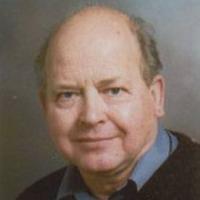
Verified locator: Fellow profile: recombination intermediate, epigenetics/DNA methylation, elected2005, died2014. Labelled RobinHolliday portrait science.org.au/sites/default/files/styles/profile_image/public/Fellow/image/Profile%20image/holliday_0.jpg?h=78b7a964&itok=igSNB5at . Birth year1932 corroborated by Royal Society catalogue record catalogues.royalsociety.org/CalmView/Record.aspx?id=IM%2F007182&src=CalmView.Catalog .
Verified locator: Institutional faculty page explicitly gives English name ChunyingKang; research summary describes strawberry organ development and genetics, Maryland postdoctoral research and HZAU appointment. ORCID0000-0001-9269-5185 and linked publications establish identity. No unverified portrait URL used.
Andrew P. Laudano entry in the University of New Hampshire 2013–2014 faculty catalog by Codex 0 2026-11-05
Codex 0 2026-11-05Verified locator: Faculty/emeritus list, Laudano,AndrewP entry: associate professor emeritus, molecular/cellular/biomedical sciences; UC San Diego PhD1981. Historical catalog supports a dated appointment rather than a current employment claim.
By Maurice B. Burg.
Verified locator: Biographical Memoirs77(1999), chapter Carl W. Gottschalk, opening p123: dates28April1922–15October1997 and byline MauriceB.Burg. Early research/micropuncture sections pp126–130: collaboration with Margaret Mylle, local fluid sampling, osmolality, dye/microdissection site verification. DOI10.17226/9681. Colleague-authored institutional memoir; original experimental observations separately cited to1959 paper.
Verified locator: Overview: transcription/DNA damage research; Stanford structural-biology postdoctoral training. Publications identify the2006 trigger-loop paper. ORCID0000-0002-2829-1546. Labelled photo link researcherprofiles.org/profile/Modules/CustomViewPersonGeneralInfo/PhotoHandler.ashx?NodeID=198795&cachekey=74193dda-7673-4135-b933-1affe0ac0b27 .
Pinned article: Introduction to the OurBigBook Project
Welcome to the OurBigBook Project! Our goal is to create the perfect publishing platform for STEM subjects, and get university-level students to write the best free STEM tutorials ever.
Everyone is welcome to create an account and play with the site: ourbigbook.com/go/register. We belive that students themselves can write amazing tutorials, but teachers are welcome too. You can write about anything you want, it doesn't have to be STEM or even educational. Silly test content is very welcome and you won't be penalized in any way. Just keep it legal!
Intro to OurBigBook
. Source. We have two killer features:
- topics: topics group articles by different users with the same title, e.g. here is the topic for the "Fundamental Theorem of Calculus" ourbigbook.com/go/topic/fundamental-theorem-of-calculusArticles of different users are sorted by upvote within each article page. This feature is a bit like:
- a Wikipedia where each user can have their own version of each article
- a Q&A website like Stack Overflow, where multiple people can give their views on a given topic, and the best ones are sorted by upvote. Except you don't need to wait for someone to ask first, and any topic goes, no matter how narrow or broad
This feature makes it possible for readers to find better explanations of any topic created by other writers. And it allows writers to create an explanation in a place that readers might actually find it.
Figure 1. Screenshot of the "Derivative" topic page. View it live at: ourbigbook.com/go/topic/derivativeVideo 2. OurBigBook Web topics demo. Source. - local editing: you can store all your personal knowledge base content locally in a plaintext markup format that can be edited locally and published either:This way you can be sure that even if OurBigBook.com were to go down one day (which we have no plans to do as it is quite cheap to host!), your content will still be perfectly readable as a static site.
- to OurBigBook.com to get awesome multi-user features like topics and likes
- as HTML files to a static website, which you can host yourself for free on many external providers like GitHub Pages, and remain in full control

Figure 2. You can publish local OurBigBook lightweight markup files to either OurBigBook.com or as a static website.
Figure 3. Visual Studio Code extension installation.
Figure 5. . You can also edit articles on the Web editor without installing anything locally. Video 3. Edit locally and publish demo. Source. This shows editing OurBigBook Markup and publishing it using the Visual Studio Code extension. 
- Infinitely deep tables of contents:



All our software is open source and hosted at: github.com/ourbigbook/ourbigbook
Further documentation can be found at: docs.ourbigbook.com
Feel free to reach our to us for any help or suggestions: docs.ourbigbook.com/#contact