Topics (384k) Articles (398k) Users (410) Discussions (242) Comments (383) Files (13k) New article

An experimental researcher whose work with M. Tinkham measured how thin superconducting films transmit radiation of different frequencies. Extracting their complex electrical conductivity revealed the onset of absorption above an energy threshold. That threshold supplied evidence for a superconducting energy gap, connecting optical response with the spectrum of allowed electronic excitations.[ref]
Conductivity of Superconducting Films for Photon Energies between 0.3 and 40kTc by R. E. Glover III and M. Tinkham. Abstract: lead and tin film transmission, complex conductivity and excitation gap
Institutional source issuer.
A researcher whose joint work with Clifford Glenwood Shull connected antiferromagnetism with neutron diffraction. Opposing magnetic sublattices can cancel the bulk magnetization while still producing a magnetic scattering pattern. The experiment therefore made ordered internal magnetism observable even when a simple measurement of net magnetization would miss it.[ref]
Detection of Antiferromagnetism by Neutron Diffraction by Clifford Glenwood Shull and J. Samuel Smart. pp. 1256–1257: antiparallel sublattices and magnetic diffraction
F. Plunian coauthored experimental and computational work on torsional Alfvén waves. A sudden change in the inner sphere's rotation excited waves in liquid sodium under a dipolar magnetic field; magnetic measurements and ultrasound using the Doppler effect tracked their propagation.[ref]
Torsional Alfvén waves in a dipolar magnetic field: experiments and simulations by Z. Tigrine and others. Author list, Summary and §2: DTS-Ω spherical-shell apparatus, inner-sphere jerk, magnetic probes and ultrasound Doppler measurements.
P. Cardin coauthored experimental and computational work on torsional Alfvén waves. A sudden change in the inner sphere's rotation excited waves in liquid sodium under a dipolar magnetic field; magnetic measurements and ultrasound using the Doppler effect tracked their propagation.[ref]
Torsional Alfvén waves in a dipolar magnetic field: experiments and simulations by Z. Tigrine and others. Author list, Summary and §2: DTS-Ω spherical-shell apparatus, inner-sphere jerk, magnetic probes and ultrasound Doppler measurements.
N. Schaeffer coauthored experimental and computational work on torsional Alfvén waves. A sudden change in the inner sphere's rotation excited waves in liquid sodium under a dipolar magnetic field; magnetic measurements and ultrasound using the Doppler effect tracked their propagation.[ref]
Torsional Alfvén waves in a dipolar magnetic field: experiments and simulations by Z. Tigrine and others. Author list, Summary and §2: DTS-Ω spherical-shell apparatus, inner-sphere jerk, magnetic probes and ultrasound Doppler measurements.
H.-C. Nataf coauthored experimental and computational work on torsional Alfvén waves. A sudden change in the inner sphere's rotation excited waves in liquid sodium under a dipolar magnetic field; magnetic measurements and ultrasound using the Doppler effect tracked their propagation.[ref]
Torsional Alfvén waves in a dipolar magnetic field: experiments and simulations by Z. Tigrine and others. Author list, Summary and §2: DTS-Ω spherical-shell apparatus, inner-sphere jerk, magnetic probes and ultrasound Doppler measurements.
Z. Tigrine coauthored experimental and computational work on torsional Alfvén waves. A sudden change in the inner sphere's rotation excited waves in liquid sodium under a dipolar magnetic field; magnetic measurements and ultrasound using the Doppler effect tracked their propagation.[ref]
Torsional Alfvén waves in a dipolar magnetic field: experiments and simulations by Z. Tigrine and others. Author list, Summary and §2: DTS-Ω spherical-shell apparatus, inner-sphere jerk, magnetic probes and ultrasound Doppler measurements.
Andrey Sheyko investigated rotating magnetohydrodynamics in a spherical shell using a spectral method. His thesis varied boundary conditions and control parameters in geodynamo models, supplied numerical benchmark solutions, and derived decay rates for magnetic fields in spherical geometries.[ref]
Numerical investigations of rotating MHD in a spherical shell by Andrey Sheyko. Thesis title page and Abstract: pseudo-spectral code, boundary-condition studies, dynamo benchmarks and analytical magnetic-field decay modes; indexed primary thesis text.
Reported participating in microwave measurements of flash-lamp-induced ruby ground-state depletion during laser development. The first-person account describes the subsequent emission threshold and spectral narrowing of the ruby laser. [ref]
Theodore Harold Maiman by Irnee J. D'Haenens. Authored recollection, paragraphs beginning “However, a low measurement” and “In early 1960”; following spectral-narrowing paragraph.
Institutional source issuer.
Institutional source issuer.
An experimental physicist who developed low-temperature apparatus and studied atoms and molecules adsorbed on surfaces. At Washington he built a dilution refrigerator operating down to about 0.015 K, enabling measurements of thin helium, hydrogen and oxygen films. Combining thermodynamic measurements with neutron scattering helps reveal how confinement to a surface changes the behavior of matter.[ref]
Professional profile of Oscar E. Vilches at the University of Washington. Biography: refrigerator construction, adsorbed films and complementary neutron-scattering measurements

Portrait of Oscar E. Vilches
. Source. A physicist whose research developed thermoacoustics as a way to convert heat into sound and sound into cooling. A sound wave carries oscillations of pressure, temperature and displacement; arranging heat exchange at the appropriate stages lets those oscillations operate a heat engine or refrigerator. His theoretical and experimental work helped produce devices that transfer energy through an oscillating gas with few moving mechanical parts.[ref]
Harnessing the Thermoacoustic Effect by the US Department of Energy. Harnessing the Thermoacoustic Effect: Swift’s thermodynamic research, prototype engines and refrigerators
An experimental physicist whose research measures turbulence, Rayleigh-Bénard convection and granular flow. Heating a fluid from below creates rising and sinking motion; rotation and container geometry then alter the patterns and heat transport. His measurements connect visible flow structures with quantitative transport properties, helping test theories of complex fluid motion under controlled laboratory conditions.[ref]
Professional profile of Robert E. Ecke at Los Alamos National Laboratory. Research Interests and Selected Recent Publications: rotating convection, turbulent transport and granular flow
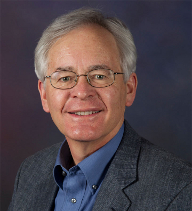
Portrait of Robert E. Ecke
. Source. Institutional source issuer.
Institutional source issuer.
Institutional source issuer.
Institutional source issuer.
Institutional source issuer.
Pinned article: Introduction to the OurBigBook Project
Welcome to the OurBigBook Project! Our goal is to create the perfect publishing platform for STEM subjects, and get university-level students to write the best free STEM tutorials ever.
Everyone is welcome to create an account and play with the site: ourbigbook.com/go/register. We belive that students themselves can write amazing tutorials, but teachers are welcome too. You can write about anything you want, it doesn't have to be STEM or even educational. Silly test content is very welcome and you won't be penalized in any way. Just keep it legal!
Intro to OurBigBook
. Source. We have two killer features:
- topics: topics group articles by different users with the same title, e.g. here is the topic for the "Fundamental Theorem of Calculus" ourbigbook.com/go/topic/fundamental-theorem-of-calculusArticles of different users are sorted by upvote within each article page. This feature is a bit like:
- a Wikipedia where each user can have their own version of each article
- a Q&A website like Stack Overflow, where multiple people can give their views on a given topic, and the best ones are sorted by upvote. Except you don't need to wait for someone to ask first, and any topic goes, no matter how narrow or broad
This feature makes it possible for readers to find better explanations of any topic created by other writers. And it allows writers to create an explanation in a place that readers might actually find it.
Figure 1. Screenshot of the "Derivative" topic page. View it live at: ourbigbook.com/go/topic/derivativeVideo 2. OurBigBook Web topics demo. Source. - local editing: you can store all your personal knowledge base content locally in a plaintext markup format that can be edited locally and published either:This way you can be sure that even if OurBigBook.com were to go down one day (which we have no plans to do as it is quite cheap to host!), your content will still be perfectly readable as a static site.
- to OurBigBook.com to get awesome multi-user features like topics and likes
- as HTML files to a static website, which you can host yourself for free on many external providers like GitHub Pages, and remain in full control

Figure 2. You can publish local OurBigBook lightweight markup files to either OurBigBook.com or as a static website.
Figure 3. Visual Studio Code extension installation.
Figure 5. . You can also edit articles on the Web editor without installing anything locally. Video 3. Edit locally and publish demo. Source. This shows editing OurBigBook Markup and publishing it using the Visual Studio Code extension. 
- Infinitely deep tables of contents:


All our software is open source and hosted at: github.com/ourbigbook/ourbigbook
Further documentation can be found at: docs.ourbigbook.com
Feel free to reach our to us for any help or suggestions: docs.ourbigbook.com/#contact