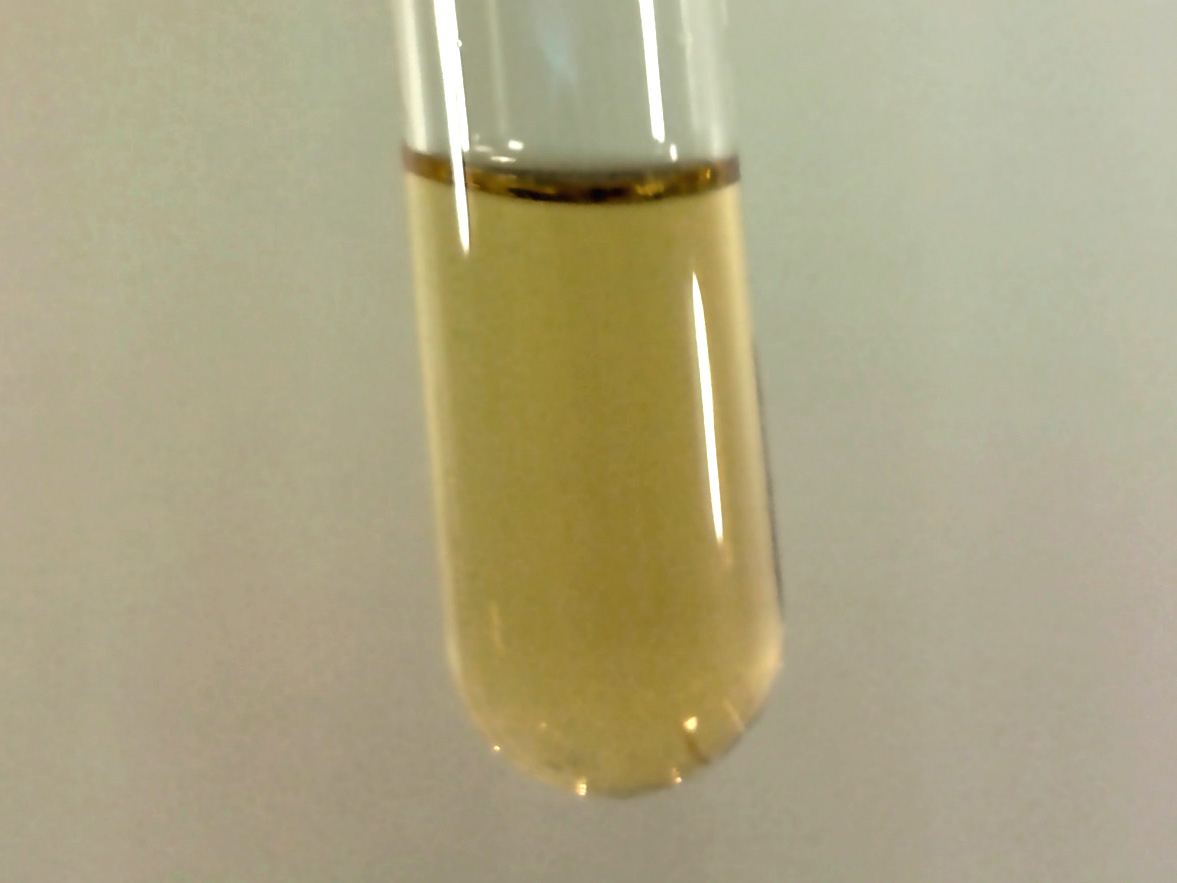
The chemical element with atomic number nine.
Fluorine-18 is a radioactive isotope of fluorine with 9 protons and 9 neutrons. It decays to oxygen-18, mainly by emitting a Positron and also by electron capture. Its approximately 110-minute half-life makes its radioactivity change appreciably over an ordinary laboratory session. It is used in positron emission tomography.[ref]
https://arxiv.org/abs/1012.3891. Original standardization study, abstract: daughter isotope, competing decay modes, half-life and PET use
The half-life can be measured by following the falling radioactivity, rather than by watching one nucleus wait to decay. A 2010 experiment used ionization chambers, germanium detectors and coincidence counting with fast scintillators, following decay for up to nine half-lives. The combined result was . Comparing different detector systems tests whether the inferred decay rate depends on one measurement technique.[ref]
The half-life of 18F by Eduardo García-Toraño and others. Abstract: apparatus, observation interval and reported result
For a closed sample governed only by radioactive decay, the surviving parent fraction is . Taking 110 minutes as an illustrative rounded half-life, 220 minutes leaves one quarter of the original fluorine-18 nuclei. Four half-lives leave , not zero. This calculation concerns nuclear survival; movement of a labelled molecule into or out of an observed region is an additional process.