Mary Buckland, also known as Mary Morland, contributed to paleontology through fossil collecting and scientific illustration. Her drawings made anatomical details of specimens available for comparison by researchers who could not examine the original fossils directly.
The Geological Society's collections identify her drawings of a Megalosaurus jaw used with William Buckland's 1824 description, and views of a fossil rhinoceros skull published in Georges Cuvier's work. These are specific contributions to the visual evidence of comparative anatomy: orientation, preserved margins and visible structures have to be communicated accurately for a reader to assess a reconstruction. The illustration credit and the authorship of the accompanying paper are distinct historical claims.[ref]
Mary Buckland in the Geological Society collections. Scientific illustrator; Megalosaurus jaw and fossil rhinoceros skull illustrations credited to Mary Morland
Paleontologist whose research includes early life and physiological interpretations of mass extinction.

Portrait of Andrew H. Knoll
. The Royal Society (Royal Society uploader); existing crop by Auguel. CC BY-SA 4.0, via Wikimedia Commons. Source.
Paleontologist studying large-scale evolution and extinction selectivity, including the marine fossil record.

Portrait of David Jablonski
. Image courtesy of Susan M. Kidwell. Source.A paleontologist who investigated the anatomy of early jawless vertebrates, using galeaspid evidence to test hypotheses about the origin of paired appendages.[ref]

Portrait of Zhikun Gai
. External portrait hosted by Institute of Vertebrate Paleontology and Paleoanthropology, Chinese Academy of Sciences. Source.A paleontologist who investigated early jawed vertebrate anatomy, including fossil evidence relevant to the origin of the pectoral girdle.[ref]
A paleontologist who studied skull characters in early jawed vertebrates, testing how combinations of bony-fish-like features inform relationships near the base of the jawed-vertebrate tree.[ref]
A paleontologist who studied early jawed vertebrates, including Silurian fossils with character combinations that inform the origins of modern jaw and skull structures.[ref]

Portrait of Min Zhu (paleontologist)
. External portrait hosted by Institute of Vertebrate Paleontology and Paleoanthropology, Chinese Academy of Sciences. Source.A paleontologist who used Acanthodes anatomy to test the reconstruction of the last common ancestor of modern jawed vertebrates.[ref]
A paleontologist who coauthored experiments on soft-tissue fossilization, testing how mineral preservation can retain structures that would otherwise decay.[ref]
A paleontologist who investigated taphonomy through experiments on soft-tissue fossilization, connecting observable decay and mineralization to exceptional preservation.[ref]

Portrait of Derek Briggs
. External portrait hosted by Yale University, Department of Earth & Planetary Sciences. Source.A paleontologist who studied how transport and burial affect vertebrate remains, connecting taphonomy to reconstruction of an ancient biological population.[ref]
A paleontologist who coauthored the description of an early Jurassic jumping frog, using comparative anatomy to investigate the evolution of locomotion.[ref]
An Early Jurassic jumping frog by Neil H. Shubin and Farish A. Jenkins Jr.. Author roster and research findings
A paleontologist who studied early frog locomotion, testing how the endoskeleton of an early relative constrains hypotheses about the origin of jumping.[ref]
A paleontologist who investigated Triadobatrachus massinoti using three-dimensional imaging, reassessing its anatomy and the evolution of trunk length in early amphibians.[ref]
A paleontologist who studied the skull of Ichthyornis, using its mixture of characters to reconstruct the stepwise assembly of the modern avian head.[ref]
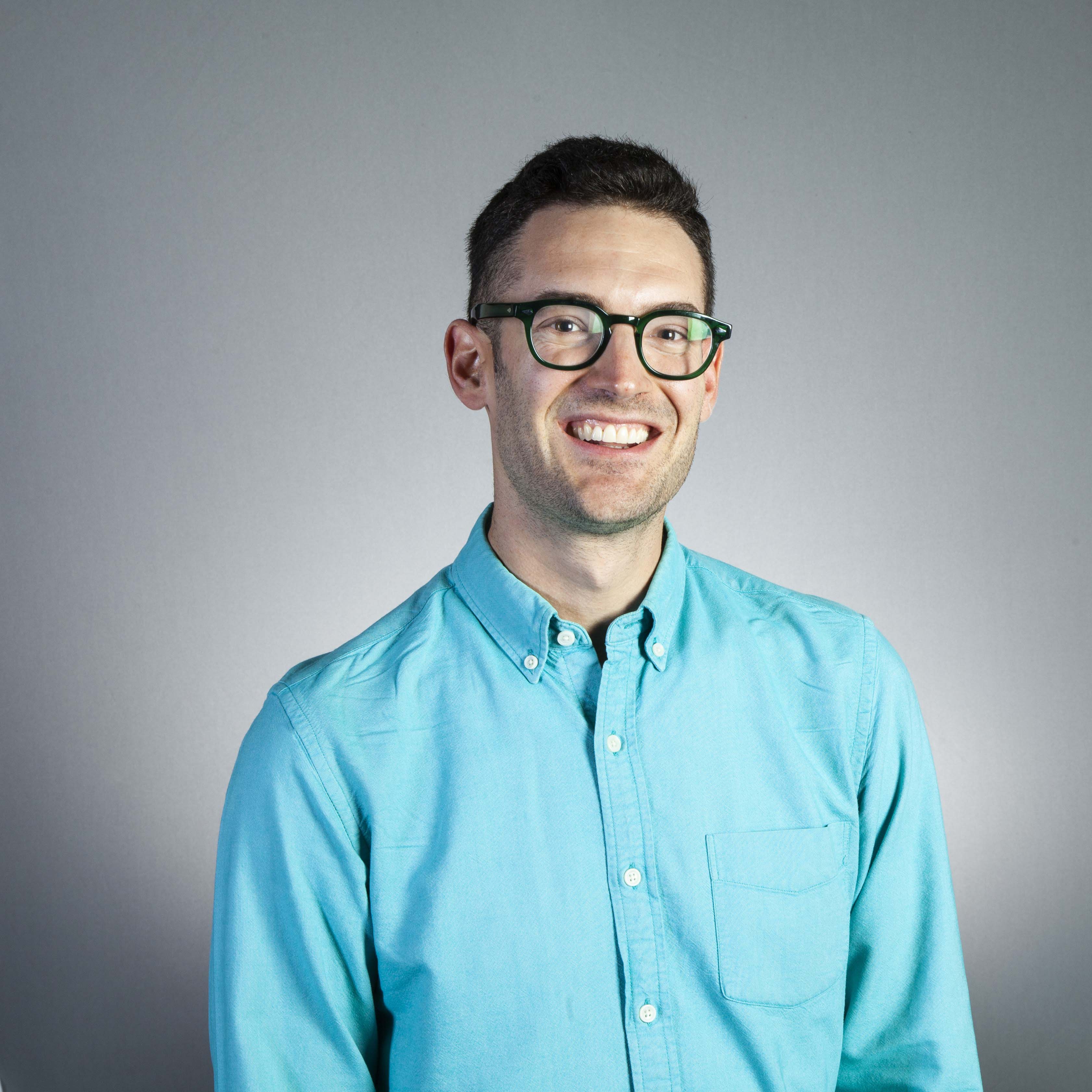
Portrait of Daniel J. Field
. External portrait hosted by Christ's College, University of Cambridge. Source.A paleontologist who investigated changes in the vomer and their relationship to cranial kinesis in the lineage containing birds.[ref]
A paleontologist who studied a Cretaceous bird fossil that informs the inferred palate of the crown group ancestor of living birds.[ref]
A paleontologist who investigated very old DNA from mammoths, using genome data to test population history and ancestry of extinct lineages.[ref]
A paleontologist who used ancient protein sequences to test evolution relationships of extinct South American ungulates, illustrating palaeoproteomics when recoverable DNA is unavailable.[ref]
A paleontologist who investigated breakdown of Meckel's cartilage during development and its implications for evolution of the mammal middle ear.[ref]
A paleontologist who combined morphological and molecular evidence to reconstruct the ancestor and diversification of placental mammals.[ref]
A paleontologist who investigated the timing of mammal diversification using phylogenomics and calibrated evolutionary-time inference.[ref]
A paleontologist who used insertions of repetitive DNA elements to investigate relationships among artiodactyls and cetaceans, including the close relationship of cetaceans and hippopotamuses.[ref]
A paleontologist who investigated the molecular relationships of placental mammals and parallel diversification into similar ecological forms.[ref]
A paleontologist who described a quadrupedal early Sirenia, using its mixture of terrestrial and aquatic characters to reconstruct a transition in locomotion.[ref]
The earliest known fully quadrupedal sirenian by Daryl P. Domning. Author roster and research findings
A paleontologist who studied early eutherian mammals, testing the anatomy evidence used to distinguish placental and marsupial relatives.[ref]
A paleontologist who investigated scapula development in Australopithecus afarensis, using comparative growth patterns to assess the possible role of climbing.[ref]
A paleontologist who used carbon isotope ratio measurements in tooth enamel to reconstruct dietary resources used by Paranthropus boisei.[ref]
A paleontologist who studied dental microwear as evidence of diet, testing how surface wear compares with the dietary implications of gross tooth form.[ref]
A paleontologist who studied early mammal fossils, including Eomaia scansoria, whose preserved endoskeleton informs the early history of eutherians.[ref]
A paleontologist who used oxygen isotope ratio evidence to investigate thermal physiology in extinct therapsids, comparing them with other contemporary tetrapods.[ref]
A paleontologist who investigated inner ear biomechanics as evidence bearing on the origin of mammalian endothermy.[ref]
A paleontologist who investigated turtle skull evolution, using stem-lineage fossils to test hypotheses about their ancestral temporal openings.[ref]
Evolutionary origin of the turtle skull by G. S. Bever and others. Author roster and research findings
A paleontologist who coauthored the description of a Triassic stem-turtle, investigating the assembly of the turtle body plan.[ref]
A paleontologist who studied a Triassic stem-turtle, using its character combination to reconstruct early changes in the turtle body plan.[ref]
A paleontologist who studied feathered dinosaur fossils, including evidence that large body size did not preclude an extensive covering of feathers.[ref]
A paleontologist who investigated developmental and comparative evidence about digit identity in vertebrate limbs, including the correspondence of digits in bird wings.[ref]
A paleontologist who investigated phylogenetic nomenclature and bird origins, distinguishing ancestry-based group definitions from classifications based only on a few striking characters.[ref]
A paleontologist who combined genomic and fossil evidence to investigate the evolutionary origin of enamel.[ref]
A paleontologist who coauthored work on polydactyly in early tetrapod limbs, showing why the five-digit condition should not be assumed for every ancestral limb.[ref]
A paleontologist who investigated early tetrapod limbs, including fossil evidence for more than five anatomical digits.[ref]
A paleontologist who studied the pectoral fin of Tiktaalik, investigating the skeletal transition between a fin and a tetrapod limb.[ref]
A paleontologist who investigated the relationship between oxygen availability, ecology and the Cambrian diversification of animals.[ref]
A paleontologist who coauthored research on a Cambrian fish from North America, using exceptionally preserved anatomy to investigate early vertebrate evolution.[ref]
A paleontologist who investigated early animal evolution, including exceptionally preserved Cambrian fish anatomy.[ref]
A paleontologist who studied early Cambrian vertebrates from China; the cited primary publication credits the author with these initials.[ref]
Lower Cambrian vertebrates from south China by D.-G. Shu and others. Author roster and research findings
A paleontologist who coauthored an anatomical interpretation of Kimberella, testing evidence for bilaterian-like organization before the Cambrian.[ref]
A paleontologist who investigated Kimberella and other early animal fossils, using preserved body form to test hypotheses about pre-Cambrian diversity.[ref]
A paleontologist who studied a Devonian lamprey from South Africa, providing fossil evidence for the antiquity of the lamprey body plan.[ref]
A paleontologist who investigated early jawed-vertebrate teeth, using tiny preserved dental structures to test the age and diversification of early lineages.[ref]
A paleontologist who investigated hagfish fossils and the relationship between morphological and molecular evidence in early vertebrate phylogenetics.[ref]
A paleontologist who studied anatomically selective carcass decay, testing how loss of diagnostic characters can bias interpretation of the vertebrate fossil record.[ref]
A paleontologist who combined ancient DNA, fossils and morphological comparisons to investigate historical introductions of red deer into Ireland.[ref]
A paleontologist who investigated the evidence for brown bear presence in Holocene Britain, distinguishing native persistence from possible importation of animals.[ref]
A paleontologist who studied the Miocene ape Pierolapithecus, using its trunk and hand character combination to investigate early great-ape locomotion.[ref]
A paleontologist who studied early Australian marsupial fossils and their implications for the historical distribution of mammalian lineages.[ref]
A paleontologist who investigated Cretaceous mammals from Madagascar, using complete skeletal evidence to test hypotheses about anatomical specialization and long-term isolation.[ref]
A paleontologist who studied South American monotreme fossils, using dental evidence to investigate the former geographical distribution of that lineage.[ref]
First discovery of monotremes in South America by Rosendo Pascual and others. Author roster and research findings
A paleontologist who investigated the origin of tribosphenic teeth, using phylogenetics analysis to test competing histories of mammalian dental evolution.[ref]
A paleontologist who described a Jurassic mammal from Madagascar, using its jaw and teeth to investigate early mammalian relationships.[ref]
A Middle Jurassic mammal from Madagascar by John J. Flynn and others. Author roster and research findings
A paleontologist who investigated relationships between digestive strategy and the evolution of herbivorous mammals, including horses.[ref]
A paleontologist who studied horse dietary change, comparing dental wear with the evolution of tooth crown height.[ref]
A paleontologist who investigated three-dimensional tooth complexity and its relationship to diet in different mammalian lineages.[ref]
Articles were limited to the first 100 out of 102 total.
Articles by others on the same topic
There are currently no matching articles.