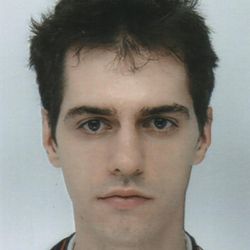
Brian Josephson Updated 2025-07-16
Carl David Anderson Updated 2025-07-16
Carl Sagan Updated 2025-07-16
David Tong Updated 2025-07-16
A charismatic, perfect-English-accent (Received Pronunciation) physicist from University of Cambridge, specializing in quantum field theory.
He has done several "vulgarization" lectures, some of which could be better called undergrad appetizers rather, a notable example being Video "Quantum Fields: The Real Building Blocks of the Universe by David Tong (2017)" for the prestigious Royal Institution, but remains a hardcore researcher: scholar.google.com/citations?hl=en&user=felFiY4AAAAJ&view_op=list_works&sortby=pubdate. Lots of open access publications BTW, so kudos.
The amount of lecture notes on his website looks really impressive: www.damtp.cam.ac.uk/user/tong/teaching.html, he looks like a good educator.
David has also shown some interest in applications of high energy mathematical ideas to condensed matter, e.g. links between the renormalization group and phase transition phenomena. TODO there was a YouTube video about that, find it and link here.
Ciro Santilli wonders if his family is of East Asian, origin and if he can still speak any east asian languages. "Tong" is of course a transcription of several major Chinese surnames and from looks he could be mixed blood, but as mentioned at www.ancestry.co.uk/name-origin?surname=tong it can also be an English "metonymic occupational name for a maker or user of tongs". After staring at his picture for a while Ciro is going with the maker of tongs theory initially.
Edward Teller Updated 2025-07-16
www.youtube.com/playlist?list=PLVV0r6CmEsFw1phnddYWXtVkRW8eUVlqx Edward Teller interview by Web of Stories (1996) Date shown at: www.webofstories.com/play/edward.teller/1. Listener: John H. Nuckolls
Edward Teller, An Early Time
. Source. Comissioned by the Los Alamos National Laboratory in 1979. Producer: Mario Balibreraa.- youtu.be/Goim-4MF_uE?t=338; holy fuck he almost cut his foot off on a stupid tram accident!
- youtu.be/Goim-4MF_uE?t=457: he plays the piano
- youtu.be/Goim-4MF_uE?t=965: he drove Szilard to propose to Einstein the Einstein-Szilard letter
Enrico Fermi Updated 2025-07-16
Died of cancer at age 53. Ciro Santilli just can't help but speculate that it is linked to radioactivity exposure.
Ernest Lawrence Updated 2025-07-16
Ernest Rutherford Updated 2025-07-16
Erwin Schrödinger Updated 2025-07-16
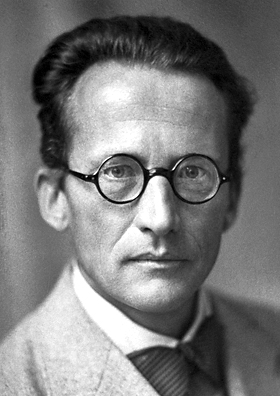
Ettore Majorana Updated 2025-07-16

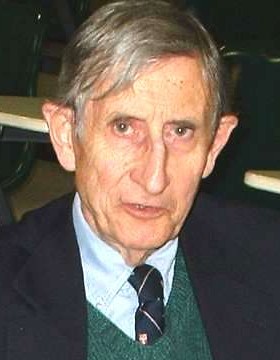
Freeman Dyson Updated 2025-09-09
Ciro Santilli's admiration for Dyson goes beyond his "unify all the things approach", which Ciro loves, but also extends to the way he talks and the things he says. Dyson is one of Ciro's favorite physicist.
Besides this, he was also very idealistic compassionate, and supported a peaceful resolution until World War II with United Kingdom was basically inevitable. Note that this was a strategic mistake.
Dyson is "hawk nosed" as mentioned in Genius: Richard Feynman and Modern Physics by James Gleick (1994) chapter "Dyson". But he wasn't when he was young, see e.g. i2.wp.com/www.brainpickings.org/wp-content/uploads/2016/03/freemandyson_child-1.jpg?resize=768%2C1064&ssl=1 It seems that his nose just never stopped growing after puberty.
He also has some fun stories, like him practicing night climbing while at Cambridge University, and having walked from Cambridge to London (~86km!) in a day with his wheelchair bound friend.
Ciro Santilli feels that the label child prodigy applies even more so to him than to Feynman and Julian Schwinger.
Bibliography:
- QED and the men who made it: Dyson, Feynman, Schwinger, and Tomonaga by Silvan Schweber (1994) chapter 9 Freeman Dyson and the Structure of Quantum Field Theory
Galileo Galilei Updated 2025-07-16
Hans Bethe Updated 2025-07-16
Richard Feynman was working under him there, and was promoted to team lead by him because Richard impressed Hans.
He was also the person under which Freeman Dyson was originally under when he moved from the United Kingdom to the United States.
And Hans also impressed Feynman, both were problem solvers, and liked solving mental arithmetic and numerical analysis.
This relationship is what brought Feynman to Cornell University after World War II, Hans' institution, which is where Feynman did the main part of his Nobel prize winning work on quantum electrodynamics.
Heinrich Hertz Updated 2025-07-16
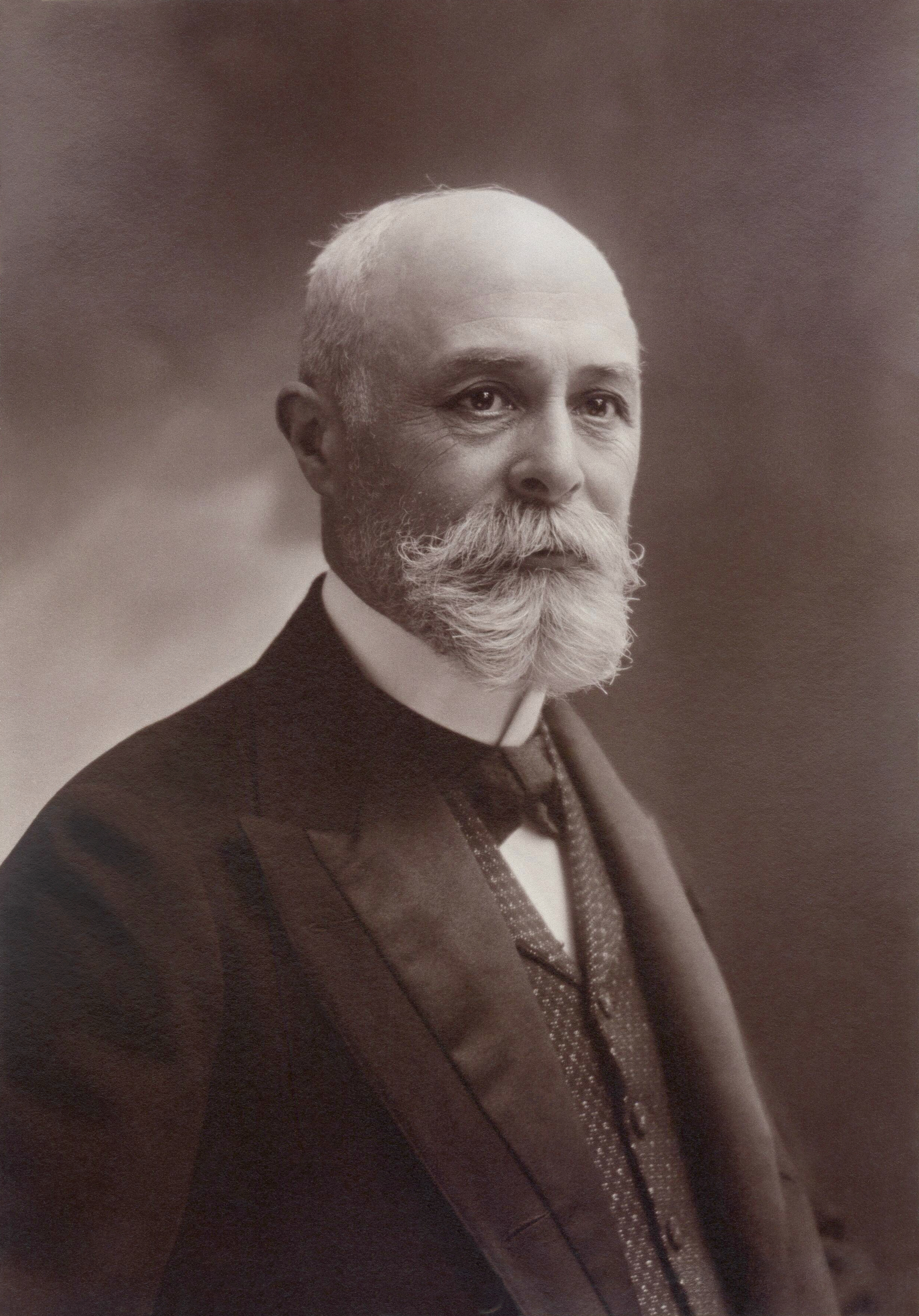
Henri Becquerel Updated 2025-07-16
Hermann Weyl Updated 2025-07-16
Isaac Newton Updated 2025-07-16
Isidor Isaac Rabi Updated 2026-08-21
He was a leading figure at the MIT Radiation Laboratory, and later he was head at the Columbia University laboratory that carried out the crucial Lamb-Retherford experiment and the anomalous magnetic dipole moment of the electron published at The Magnetic Moment of the Electron by Kusch and Foley (1948) using related techniques.


Jakob Schwichtenberg Updated 2025-07-16
James Clerk Maxwell Updated 2025-07-16
There are unlisted articles, also show them or only show them.