
Jean Baptiste Perrin Updated 2025-07-16
J. J. Thomson Updated 2025-07-16
John Archibald Wheeler Updated 2025-07-16
Richard Feynman's mentor at Princeton University, and notable contributor to his development of quantum electrodynamics.
Worked with Niels Bohr at one point.
Web of Stories interview (1996): www.youtube.com/playlist?list=PLVV0r6CmEsFzVlqiUh95Q881umWUPjQbB. He's a bit slow, you wonder if he's going to continute or not! One wonders if it is because of age, or he's always been like that.
John Bardeen Updated 2025-07-16
The Story of John Bardeen at the University of Illinois (2010)
Source. - youtu.be/OyV8qSwGUHU?t=976 of when Bardeen demoed the transistor in class is particularly memorable
- youtu.be/OyV8qSwGUHU?t=1105 some of his golf colleagues didn't know he had won a Nobel Prize!
John C. Baez Updated 2025-07-16
John von Neumann Updated 2025-07-16
This is the one Ciro Santilli envies the most, because he has such a great overlap with Ciro's interests, e.g.:
John von Neuman - a documentary by the Mathematical Association of America (1966)
Source. Some good testimonies. Some boring. Julian Schwinger Updated 2025-07-16
He started working at night and sleeping during the moring/early afternoon while he was at university.
He was the type of guy that was so good that he didn't really have to follow the university rules very much. He would get into trouble for not following some stupid requirement, but he was so good that they would just let him get away with it.
Besides quantum electrodynamics, Julian worked on radar at the Rad Lab during World War II, unlike most other top physicists who went to Los Alamos Laboratory to work on the atomic bomb, and he made important contributions there on calculating the best shape of the parts and so on.
He was known for being very formal mathematically and sometimes hard to understand, in stark contrast to Feynman which was much more lose and understandable, especially after Freeman Dyson translated him to the masses.
However, QED and the men who made it: Dyson, Feynman, Schwinger, and Tomonaga by Silvan Schweber (1994) does emphacise that he was actually also very practical in the sense that he always aimed to obtain definite numbers out of his calculations, and that was not only the case for the Lamb shift.
Karl Guthe Jansky Updated 2025-07-16
Leonard Susskind Updated 2026-08-21
The bald confident chilled out particle physics guy from Stanford University!
Also one can't stop thinking abot Leonard Hofstadter from The Big Bang Theory upoen hearing his name.

Leonard Susskind lecturing in 2013
. Source. Louis de Broglie Updated 2025-07-16
Lord Kelvin Updated 2025-07-16
Luboš Motl Updated 2025-07-16
physicist with lots of focus on politically incorrect/Right wing stuff:
- motls.blogspot.com/ his blog
- physics.stackexchange.com/users/1236/lubo%c5%a1-motl he has lots of contributions to Physics Stack Exchange
- settheory.net/crackpot-physics: some comments about him from settheory.net
Ludwig Boltzmann Updated 2025-07-16
Marie Curie Updated 2025-07-16
Like all big names in science, she was at the right place at the right time and with the right interest and passion.
Notably, the man she married, Pierre Curie, happened to be a the world master at precisely the technique that she needed to carefully measure radioactivity: he had the most precise electrometers in the world, which allowed to detect small amounts of radioactivity via the ionization of air by radiation . These used piezoelectricity, which Pierre Curie co-discovered with his brother.

Marie Curie c. 1920
. Source. Michio Kaku Updated 2025-07-16
Well known popular science character. He just looks futuristic and wraps stuff in exciting empty words. When he shows up, you won't be learning much.
Murray Gell-Mann Updated 2025-07-16
Web of Stories 1997 interview playlist: www.youtube.com/playlist?list=PLVV0r6CmEsFxKFx-0lsQDs6oLP3SZ9BlA
The way this dude speaks. He exhales incredible intelligence!!!
In the interviews you can see that he pronounces names in all languages amazingly, making acute effort to do so, to the point of being notable. His passion for linguistics is actually mentioned on Genius: Richard Feynman and Modern Physics by James Gleick (1994).
Maybe this obsession is partly due to his name which no English speaking person knows how to pronounce from the writing.
This passion also led in part for his names to some physics terminology he worked on winning out over alternatives by his collaborators, most notably in the case of the naming of the quark.
Max Planck Updated 2025-07-16
Niels Bohr Updated 2026-08-21

Pascual Jordan Updated 2026-08-21
One of the leading figures of the early development of quantum electrodynamics.

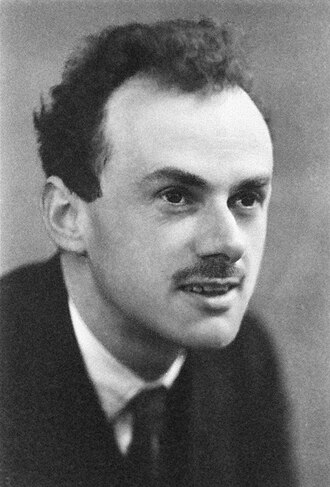
Paul Dirac Updated 2026-08-21
Eccentric nerdy slow speaking physicist mostly based in University of Cambridge.
Created the Dirac equation, what else do you need to know?!


QED and the men who made it: Dyson, Feynman, Schwinger, and Tomonaga by Silvan Schweber (1994) chapter 1.3 "P.A.M. Dirac and the Birth of Quantum Electrodynamics" quotes Dirac saying how being at high school during World War I was an advantage, since all slightly older boys were being sent to war, and so the younger kids were made advance as fast as they could through subjects. Exactly the type of thing Ciro Santilli wants to achieve with OurBigBook.com, but without the need for a world war hopefully.
Dirac was a staunch atheist having said during the Fifth Solvay Conference (1927)[ref]:
If we are honest - and scientists have to be - we must admit that religion is a jumble of false assertions, with no basis in reality. The very idea of God is a product of the human imagination. It is quite understandable why primitive people, who were so much more exposed to the overpowering forces of nature than we are today, should have personified these forces in fear and trembling. But nowadays, when we understand so many natural processes, we have no need for such solutions. I can't for the life of me see how the postulate of an Almighty God helps us in any way. What I do see is that this assumption leads to such unproductive questions as why God allows so much misery and injustice, the exploitation of the poor by the rich and all the other horrors He might have prevented. If religion is still being taught, it is by no means because its ideas still convince us, but simply because some of us want to keep the lower classes quiet. Quiet people are much easier to govern than clamorous and dissatisfied ones. They are also much easier to exploit. Religion is a kind of opium that allows a nation to lull itself into wishful dreams and so forget the injustices that are being perpetrated against the people. Hence the close alliance between those two great political forces, the State and the Church. Both need the illusion that a kindly God rewards - in heaven if not on earth - all those who have not risen up against injustice, who have done their duty quietly and uncomplainingly. That is precisely why the honest assertion that God is a mere product of the human imagination is branded as the worst of all mortal sins.
There are unlisted articles, also show them or only show them.