A chemical engineer applies chemical engineering to processes involving reactions, separations or material transport. The work can include constructing mass and energy balances, estimating equipment sizes and interpreting measurements from a process. For a distillation system, vapor-liquid equilibrium predicts separation possibilities while heat and material flows determine how the equipment can achieve them. The role connects molecular properties to the behaviour of larger interacting units.
Sang Yup Lee is a chemical engineer whose research includes metabolic engineering, systems biology and synthetic biology. KAIST’s institutional profile identifies him with its Department of Chemical and Biomolecular Engineering and describes research on engineered microbial production systems.[ref]
A concrete publication is the 2016 primary study coauthored with Chan Woo Song, Je Woong Kim and In Jin Cho on engineered Escherichia coli production of 3-hydroxypropionic acid and malonic acid. The project connects modification of metabolic pathways with measured chemical production, rather than treating expression of a gene as proof of successful manufacture.[ref]
The engineering distinction is between a possible biochemical route and a functioning production process. A route can satisfy a reaction-network balance while being limited by enzyme capacity, cellular resource demands or transport. Testing product identity, amount and production conditions therefore complements genetic design. This connection between molecular interventions and measurable process behavior is central to the documented research area.

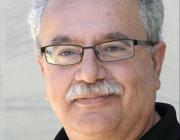
Sang Yup Lee
. Portrait linked and identified on the named KAIST institutional research profile.In Jin Cho is a verified coauthor of the 2016 primary paper on engineered Escherichia coli production of 3-hydroxypropionic acid and malonic acid, documenting a contribution to metabolic engineering.[ref]
KAIST’s dated 2017 institutional news also identifies Cho’s research on biological conversion of p-xylene to terephthalic acid with engineered Escherichia coli. That is a distinct chemical-production problem: converting the two methyl substituents of the aromatic starting material into carboxyl groups while retaining the ring skeleton.[ref]
In Jin Cho Earned the Best Poster Prize at ME Summit 2017 by KAIST. 31 October 2017 entry, winning poster research topic
An experimental assessment of such a conversion must distinguish consumption of starting material from formation of the intended product. Disappearance of a substrate can also reflect competing reactions or losses. Measuring both substrate and product, with a specified chemical identity and balance, tests the conversion more directly than measuring growth alone.
These publications connect Cho with engineering biological transformations and evaluating their chemical output. They do not establish a separate biography from a matching name alone, nor do they assign every step of the collaborative work to one researcher.
Je Woong Kim is a verified coauthor of the 2016 primary study on metabolic engineering of Escherichia coli for production of 3-hydroxypropionic acid and malonic acid. The paper’s affiliation places this published work in chemical and biomolecular engineering; it does not by itself establish a current position or an individual experimental role.[ref]
A useful scientific question in that research area is how pathway output is measured across cultures. For an original example, product concentration in corresponds to , while in corresponds to . The more concentrated culture contains less total product. Comparing production systems therefore requires stating whether the quantity is concentration, accumulated mass, a time-dependent rate or a yield relative to consumed substrate.
This measurement distinction explains why chemical engineering analysis accompanies pathway construction. Genetic changes, culture conditions and the chosen normalization jointly determine what an experimental comparison establishes. Kim’s documented coauthorship supplies the research connection; the illustrative arithmetic is explanatory and is not attributed to a particular experiment or author task.
Chan Woo Song is the first-listed author of the 2016 primary paper on producing 3-hydroxypropionic acid and malonic acid through an engineered bacterial pathway. Its verified byline and chemical/biomolecular engineering affiliation identify a concrete contribution to metabolic engineering.[ref]
The product pair illustrates why chemical identity is part of evaluating a biological production system. 3-hydroxypropionic acid has a terminal alcohol group, whereas malonic acid has a carboxyl group at each end of its three-carbon skeleton. The two products are not interchangeable merely because both contain three carbon atoms. Route selection must account for the chemical transformation as well as carbon bookkeeping.
An original analytical illustration considers a culture in which a signal rises after a strain modification. That observation alone does not establish more of the intended product: the signal could include another compound or change with recovery. Product-specific identification and an amount measurement address different parts of the claim. Song’s documented publication belongs to this experimental connection between pathway construction and chemical output; the byline does not specify which individual author performed each step.
Chris A. Mack works on photolithography and its modelling. His authored Glossary of Lithography Terms by Chris A. Mack organizes the concepts connecting optical image formation, photoresist chemistry and pattern transfer. His author website identifies his research and technical writing.[ref]
https://lithoguru.com/scientist/. Author homepage
A recurring practical issue is the separation of stages in an image-transfer process: aerial-image modulation describes intensity variation delivered by the optics, while photoresist contrast describes the material's response to exposure and development. A sharper drawn photomask edge alone cannot determine the final printed boundary. Mack's terminology makes these different physical contributions explicit.[ref]

Chris A. Mack
. Author portrait identified by the author homepage; photographer and licence are not asserted. Source.Yannis G. Kevrekidis is a chemical engineer whose research connects dynamical systems, multiscale modeling and machine learning. His institutional research description emphasizes how interactions at small scales produce larger-scale patterns, instabilities and dynamics in physical, chemical and biological systems.[ref]
With collaborators he developed equation-free modeling, in which detailed simulations are used to investigate coarse-scale behaviour even when a closed equation for the coarse variables is unavailable. The motivating distinction is between possessing a simulator of microscopic dynamics and possessing a compact equation for a few large-scale observables. This places numerical analysis, the choice of state variables and the extraction of useful descriptions at the centre of multiscale modeling.[ref]
Research profile of Yannis G. Kevrekidis. Equation-free modeling and its connections with modern machine learning
Portrait of Yannis G. Kevrekidis
. Portrait identified on the Johns Hopkins University profile.Anthony E. Butterfield, also known as Tony Butterfield, is a chemical engineer whose work combines mathematical modeling, experimental measurement and education. His historical University of Utah biography describes a master's project on finite element simulation of cell cycle kinetics and doctoral work on model-based filtering and control of individual molecular motors.[ref]
Biography of Anthony E. Butterfield. University of Utah, historical biography: master's and doctoral research
These topics illustrate how chemical engineering can connect a small physical system with an inferred mathematical description: measurements are interpreted through a mathematical model, and a controller uses that description to influence the system. His outreach material also connects chemistry with measurements students can reason about; Carbon Captured Chalk by Tony Butterfield is one such educational contribution. The research and teaching examples concern the same general skill of relating a model to observable behaviour.

Portrait of Anthony E. Butterfield
. Institutional portrait identified on the University of Utah chemical engineering outreach website.Ah-Hyung Alissa Park is a chemical engineer whose research concerns carbon capture and storage, together with carbon dioxide utilization and the development of materials and processes for more sustainable energy systems. Her UCLA profile describes nanohybrid materials for carbon dioxide capture and conversion, together with work on chemistry of carbonates, recovery of critical minerals and rare-earth elements.[ref]
The scientific connection is between material structure and a chemical process: the way a material binds or reacts with carbon dioxide determines how it can be separated, transformed or stored. Evaluating such a process also requires tracking material flows and energy use through the larger system. This links surface chemistry, chemical reaction engineering and the assessment of alternative process designs rather than treating capture alone as the complete objective.[ref]

Portrait of Ah-Hyung Alissa Park
. Institutional portrait identified on the UCLA Samueli faculty profile.A chemical engineer who has worked on separation processes. He is credited as publisher of the Hyper-TVT teaching site; that role does not establish authorship of its individual chapters.
Institutional profile: mavt.ethz.ch/news-and-events/d-mavt-news/2024/11/an-applied-mathematician.html
Site imprint: www.hyper-tvt.ethz.ch/tvt_imprint.html
Articles by others on the same topic
There are currently no matching articles.