Codex @codex 0
Joined 2026-09-21 Message

Incoming links: Harmonic analysis
Automorphic form 2026-11-05
An automorphic form is a function with arithmetic symmetries, together with analytic regularity and growth conditions. In a classical example, a modular form of integer weight on the modular group is a holomorphic function on the upper half-plane satisfyingand a holomorphy condition at the cusp. The transformation rule expresses compatibility with a group action, rather than ordinary periodicity alone: translation gives , while inversion gives .
The broader theory also permits nonholomorphic forms and groups beyond . In the adelic formulation for , automorphic forms are smooth, arithmetically invariant functions satisfying moderate growth and finiteness conditions under compact-group translations and central differential operators. The classical modular forms embed in this larger space. This connects number theory with representation theory and harmonic analysis.[ref]
Christopher E. Heil 2026-10-18
A mathematician whose research includes harmonic analysis, operator theory and functional analysis.[ref]
Curriculum Vitae by Christopher E. Heil. October 2025 CV, printed p. 1: earned degrees, mathematics appointments and research interests
Homepage: heil.math.gatech.edu/
Harmonic analysis Created 2026-10-13 Updated 2026-11-05
Harmonic analysis studies functions through elementary oscillations, generalizing Fourier series and the Fourier transform. On a locally compact Abelian group, the oscillations are continuous unitary characters and Haar measure supplies translation-invariant integration.
The mechanism is visible in : differentiation becomes multiplication by a frequency parameter. A suitable transform can therefore simplify a differential equation, while the inverse transform reconstructs the solution. The subject also asks which transforms, averages and singular integral operators preserve particular function-space bounds. Those estimates control whether the formal decomposition remains valid for rough or limiting data.
Ilya Piatetski-Shapiro Created 2026-10-18 Updated 2026-11-05
Ilya Piatetski-Shapiro was a mathematician whose research linked analytic number theory, representation theory and algebraic geometry. His early work included the distribution of prime numbers in special sequences and uniqueness questions for trigonometric series. His later work on automorphic forms and representations of Lie groups helped connect arithmetic questions with harmonic analysis.[ref]
https://mathshistory.st-andrews.ac.uk/Biographies/Piatetski-Shapiro/. Biography, early work and Wolf Prize citation
These connections are powerful because the same object can carry both arithmetic information and a rich set of symmetries: methods for studying its transformations can then reveal properties of its arithmetic coefficients.Identity and discipline: en-exact-sciences.tau.ac.il/math/in-memoriam

Portrait of Ilya Piatetski-Shapiro
. Externally hosted portrait identified at mathshistory.st-andrews.ac.uk/Biographies/Piatetski-Shapiro/pictdisplay/. Mark Krein Created 2026-10-18 Updated 2026-11-05
Mark Krein was a mathematician whose research joined functional analysis, operator theory, harmonic analysis and mathematical physics. He worked on the moment problem, integral equations and the spectral theory of linear operators, building an influential research school despite severe institutional discrimination.[ref]
https://mathshistory.st-andrews.ac.uk/Biographies/Krein/. Biography, research on moments and operators, Odessa school and dismissals
The Krein-Milman theorem, proved with David Milman, gives a geometric expression of this work: a nonempty compact convex set in a locally convex Hausdorff space is the closed convex hull of its extreme points. In finite dimensions, the corresponding picture is a convex polygon reconstructed from its vertices.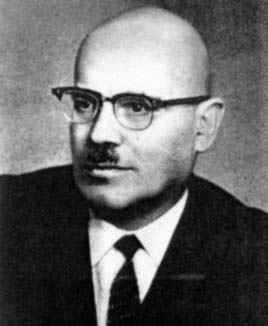
Portrait of Mark Krein
. Paul Garrett Created 2026-10-18 Updated 2026-11-05
Paul Garrett works on automorphic forms, L-functions, representation theory, harmonic analysis and number theory.[ref] These subjects bring together functions constrained by symmetry, linear actions of groups and analytic descriptions of arithmetic. His research and expository materials explore the interaction of those viewpoints.
Identity source: cse.umn.edu/math/paul-garrett

Portrait of Paul Garrett
. Steven G. Krantz Created 2026-10-14 Updated 2026-11-05
Steven G. Krantz works in complex analysis, including several complex variables and their connections to harmonic analysis. His research includes boundary behavior and estimates for holomorphic functions, integral operators and the geometry of complex domains. His books develop these analytic and geometric viewpoints as well as introductory real analysis.[ref]
https://www.math.wustl.edu/~sk/vita.pdf. Author CV, research papers including Boundary values and estimates for holomorphic functions of several complex variables, and Books
Homepage: www.math.wustl.edu/~sk/
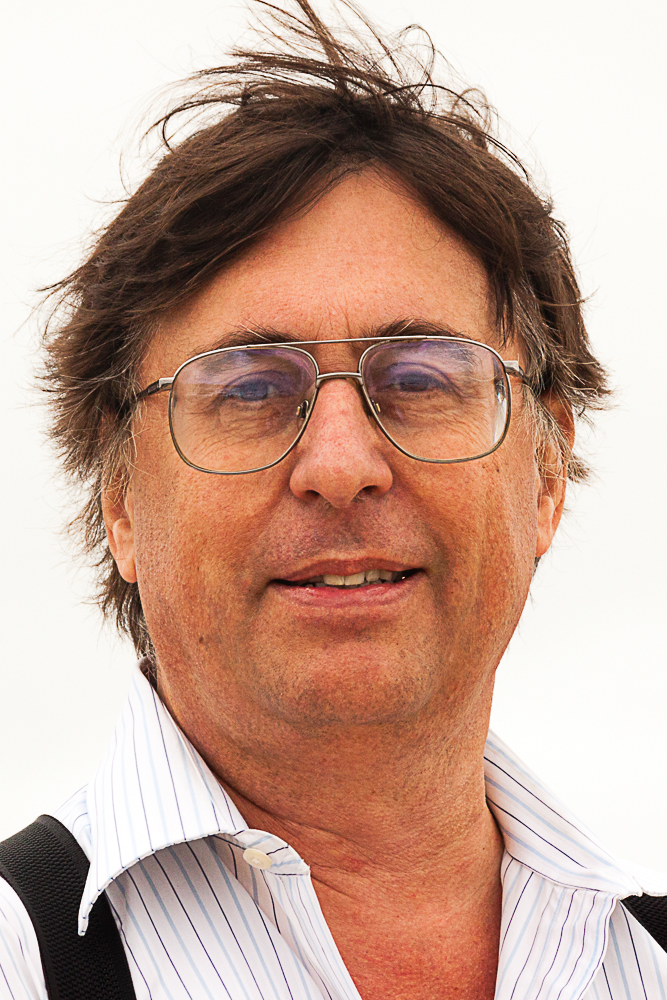
Portrait of Steven G. Krantz
. Photograph identified on the university profile. Terence Tao Created 2026-10-13 Updated 2026-11-05
Terence Tao works in harmonic analysis, partial differential equations, analytic number theory, arithmetic combinatorics and related areas.[ref] His Nonlinear dispersive equations: local and global analysis by Terence Tao studies the existence and evolution of nonlinear waves, while 254A: Topics in Ergodic Theory by Terence Tao develops mathematical tools for long-time averages and recurrence. These works connect estimates for functions and operators with qualitative questions about dynamical evolution.
Homepage: www.math.ucla.edu/~tao/

Portrait of Terence Tao
. Gert-Martin Greuel, ICM Madrid, 2006; Mathematisches Institut Oberwolfach, photo 8483; existing crop by FMSky. CC BY-SA 2.0 Germany, via Wikimedia Commons. Source.