Philipp Kanske studies social-affective and social-cognitive processes. His EmpaToM study independently varied emotional content and the need to infer a speaker’s mental state, combining behavioral measures with neuroimaging. The design helps separate empathy from theory of mind rather than assuming that a response to an emotional story measures both. [ref]
Dissecting the social brain: Introducing the EmpaToM to reveal distinct neural networks and brain-behavior relations for empathy and Theory of Mind by Philipp Kanske and others. 2015, task construction, independent manipulations and neural comparisons
A researcher who tested observational conditioning of fear in rhesus monkeys. Edited videos paired a demonstrator’s fear behavior with different objects, allowing acquired avoidance of fear-relevant and fear-irrelevant objects to be compared. The 1989 author record anchors this identity; the experiment tests selective social learning rather than mere exposure to an object.[ref]
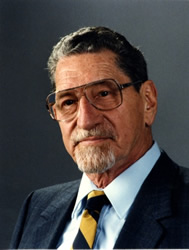
Portrait of Richard Lazarus
. External portrait hosted by University of California Academic Senate. Source.A clinical psychologist whose research investigated anxiety and obsessive-compulsive problems. [ref]
https://www.wits.ac.za/alumni/obituaries/obituary-content-by-year/. Wits obituary: Stanley Jack Rachman
[ref]Reducing contamination by exposure plus safety behaviour by Stanley Rachman and others. Journal of Behavior Therapy and Experimental Psychiatry 42, 397–404; 80 undergraduates, exposure with or without hygienic wipes, two-session analogue
A clinical psychologist who tested whether changing reasoning processes can reduce paranoia. Her SlowMo trial evaluated a blended digital intervention against usual care, with a prespecified GPTS endpoint and additional outcomes. The study connects a cognitive account of persistent threat beliefs to an intervention whose clinical effects can be measured.[ref]
Effects of SlowMo, a Blended Digital Therapy Targeting Reasoning, on Paranoia Among People With Psychosis: A Randomized Clinical Trial by Philippa Garety and others. 2021, randomized trial, primary 24-week GPTS endpoint and secondary outcomes

Portrait of Philippa Garety
. King's College London profile portrait. Source.A researcher who tested feedback-informed treatment for depression and anxiety. In a trial assigning therapists to different treatment conditions, progress feedback identified patients whose outcomes were off track. This design evaluates whether giving clinicians systematic outcome information improves treatment, while accounting for patients being clustered within therapists.[ref]
Feedback-informed treatment versus usual psychological treatment for depression and anxiety: a multisite, open-label, cluster randomised controlled trial by Jaime Delgadillo and others. 2018, cluster allocation, 77 therapists and 2233 patients

Portrait of Jaime Delgadillo
. King's College London profile portrait. Source.A researcher who tested how a visuospatial task influences later intrusive recollections. Participants watched a distressing film and, after a delay, either played Tetris or entered a control condition; subsequent intrusions and deliberate recognition memory were measured separately. The analogue experiment tests a cognitive mechanism and does not by itself establish treatment effectiveness after real-world psychological trauma.[ref]
Can Playing the Computer Game Tetris Reduce the Build-Up of Flashbacks for Trauma? A Proposal from Cognitive Science by Emily A. Holmes and others. 2009, trauma-film experiment, one-week intrusions and recognition

Portrait of Emily A. Holmes
. Katie Chan. CC BY-SA 3.0, via Wikimedia Commons. Source.A clinical psychologist who used virtual reality to test mechanisms maintaining persecutory delusions. A randomized experiment compared entering simulated social situations while retaining safety behaviors with entering them while dropping those behaviors. Measuring changes in conviction connects the manipulation to a proposed mechanism, beyond simply exposing participants to a social setting.[ref]
Virtual reality in the treatment of persecutory delusions: randomised controlled experimental study testing how to reduce delusional conviction by Daniel Freeman and others. 2016, 30-participant experimental study and real-world assessment

Portrait of Daniel Freeman
. University of Oxford profile portrait. Source.- Comparison of a theoretically driven cognitive therapy (the Feeling Safe Programme) with befriending for the treatment of persistent persecutory delusions: a parallel, single-blind, randomised controlled trial by Daniel Freeman and others
- Effects of cognitive behaviour therapy for worry on persecutory delusions in patients with psychosis (WIT): a parallel, single-blind, randomised controlled trial with a mediation analysis by Daniel Freeman and others
- The effects of improving sleep on mental health (OASIS): a randomised controlled trial with mediation analysis by Daniel Freeman and others
- Virtual reality in the treatment of persecutory delusions: randomised controlled experimental study testing how to reduce delusional conviction by Daniel Freeman and others
A clinical and cognitive psychologist at the University of Western Australia whose work investigates anxiety-linked information processing. [ref][ref]
Selective attention and emotional vulnerability: assessing the causal basis of their association through the experimental manipulation of attentional bias by Colin MacLeod and others. Journal of Abnormal Psychology 111, 107–123; modified dot-probe training and responses to a standardised stress task
Portrait of Colin MacLeod
. University of Western Australia profile portrait. Source.A clinical psychologist who coauthored the original dual representation theory of post-traumatic stress disorder. The account distinguishes verbally accessible recollections from representations activated by situational cues. This proposed difference explains how deliberately describing an event can diverge from involuntary reliving; it is a theoretical account of human memory, not a demonstration of two isolated anatomical stores.[ref]
A dual representation theory of posttraumatic stress disorder by Chris R. Brewin and others. 1996, original theoretical distinction, pp. 670–686
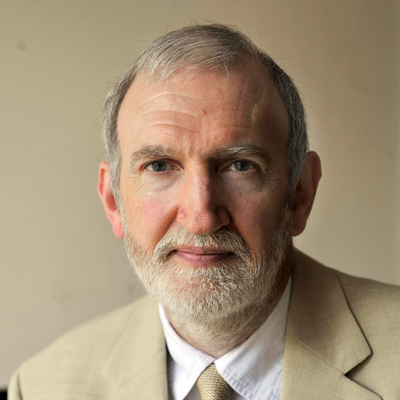
Portrait of Chris R. Brewin
. British Academy profile portrait. Source.A clinical psychologist who, with David M. Clark, proposed a cognitive model of persistent post-traumatic stress disorder. Negative interpretations and poorly contextualized autobiographical memory can generate a sense of current threat even though the event is past. The account links continuing symptoms to cognitive and behavioral strategies that prevent those interpretations from changing.[ref]
A cognitive model of posttraumatic stress disorder by Anke Ehlers and David M. Clark. 2000, proposed current-threat mechanism and maintaining strategies

Portrait of Anke Ehlers
. British Academy profile portrait. Source.

Photograph by Cfonagy, released into the public domain. Source: Wikimedia Commons.

Charles M. Borduin studied multisystemic therapy for serious juvenile offending. The treatment is evaluated through outcomes that extend beyond immediate symptom reports, including later offending. Distinguishing a controlled treatment comparison from a simple before-and-after change is essential when attributing long-term outcomes to an intervention. [ref]
Multisystemic treatment of serious juvenile offenders: long-term prevention of criminality and violence by Charles M. Borduin and others. 1995, long-term intervention comparison
A researcher who compared people with persistent psychotic experiences who did and did not need clinical care. The 2016 study also included a control group without such experiences. Differences in distress, functioning and psychological characteristics help distinguish having an unusual experience from developing a clinical difficulty requiring support.[ref]
- Clinical relevance of appraisals of persistent psychotic experiences in people with and without a need for care: an experimental study by Emmanuelle Peters and others
- Clinical, socio-demographic and psychological characteristics in individuals with persistent psychotic experiences with and without a need for care by Emmanuelle Peters and others
Erik Hedman studied internet-delivered cognitive behavioral therapy for severe health anxiety. A randomized trial compared therapist-guided internet treatment with an attention-control condition. The comparison tests that delivery arrangement and treatment package, rather than showing that an online format alone is sufficient or that every form of health concern has the same mechanism. [ref]
Internet-based cognitive-behavioural therapy for severe health anxiety: randomised controlled trial by Erik Hedman and others. 2011, randomized therapist-guided internet-CBT comparison
David F. Tolin studied decision making in hoarding. His experiment compared keep-or-discard decisions involving personally owned and control items while measuring neural activity. Ownership-dependent responses help distinguish difficulty discarding one’s own possessions from a general inability to make any decision. [ref]
Neural mechanisms of decision making in hoarding disorder by David F. Tolin and others. 2012, owned versus control-item decisions and neuroimaging
Randy O. Frost developed a cognitive-behavioral account of hoarding incorporating information processing, attachment, avoidance and beliefs about possessions. The model links apparently similar accumulation outcomes to several candidate maintaining processes. It generates hypotheses for assessment and intervention rather than establishing one cause from the presence of clutter alone. [ref]
A cognitive-behavioral model of compulsive hoarding by Randy O. Frost and others. 1996, original multifactor model
A clinical psychologist who tested prospective relationships between prior adversity, later psychological stress and depression.[ref]
A clinical psychologist who investigated genetic and environmental contributions to adversity exposure-conditioned adaptation scores.[ref]
A clinical psychologist who examined attachment and mental-health outcomes following randomized foster-care allocation.[ref]
A clinical psychologist who tested the effectiveness and specificity of the Penn Resiliency Program.[ref]
A clinical psychologist who studied prospective adaptation and differing courses after bereavement.[ref]
Resilience to loss and chronic grief by George A. Bonanno and others. 2002, author and original research

Portrait of George A. Bonanno
. Via Wikimedia Commons. Source.
A researcher who examined whether parental anxiety changes how well children respond to cognitive behavioral therapy for anxiety. Her trial compared child treatment with and without additional parent anxiety management, separating families by parental-anxiety status. The design tests when a parent intervention adds benefit instead of assuming the same effect in every family.[ref]
The role of parental anxiety in the treatment of childhood anxiety by Vanessa E. Cobham and others. 1998, parental-anxiety strata and parent-intervention comparison

Portrait of Vanessa E. Cobham
. University of Queensland profile portrait. Source.A researcher who tested internet-delivered cognitive behavioral therapy for adolescent anxiety disorders in routine care. A randomized comparison evaluated the addition of parent sessions, with diagnostic remission assessed after treatment and at follow-up. This separates evidence for the treatment package from evidence that involving parents supplies an additional benefit.[ref]
A randomized controlled trial of internet-delivered cognitive behaviour therapy for adolescent anxiety disorders in a routine clinical care setting with and without parent sessions by Polly Waite and others. 2019, randomized parent-session comparison and remission outcomes

Portrait of Polly Waite
. Professional-association workshop portrait. Source.A researcher who tested cognitive behavioral therapy for childhood anxiety disorders. A randomized trial compared a sixteen-session intervention with a waiting-list condition in children aged nine to thirteen. The work made clinical claims testable through measured outcomes, while the comparison leaves separate questions about specific mechanisms and performance against another active treatment.[ref]

Portrait of Philip C. Kendall
. Publisher author portrait. Source.A researcher who tested parent-based treatment for childhood anxiety through the SPACE treatment program. A noninferiority trial compared the parent intervention with child cognitive behavioral therapy and measured family accommodation. This asks whether changing parental responses can achieve an acceptable clinical outcome even when the child does not attend the intervention sessions.[ref]
Parent-Based Treatment as Efficacious as Cognitive-Behavioral Therapy for Childhood Anxiety: A Randomized Noninferiority Study of Supportive Parenting for Anxious Childhood Emotions by Eli R. Lebowitz and others. 2020, noninferiority design, ages 7–14 and accommodation outcomes

Portrait of Eli R. Lebowitz
. Yale Medicine profile portrait. Source.A researcher who examined the applicability of a cognitive model of social anxiety disorder to adolescents. Her work with David M. Clark connects self-focused attention and safety behaviors to treatment while considering developmental qualifications. This avoids assuming that a model developed for adults transfers unchanged to younger people.[ref]
Understanding Social Anxiety Disorder in Adolescents and Improving Treatment Outcomes: Applying the Cognitive Model of Clark and Wells (1995) by Eleanor Leigh and David M. Clark. 2018, cognitive model and developmental qualifications

Portrait of Eleanor Leigh
. Medical Research Foundation profile portrait. Source.- Self-focused attention and safety behaviours maintain social anxiety in adolescents: An experimental study by Eleanor Leigh and others
- Understanding Social Anxiety Disorder in Adolescents and Improving Treatment Outcomes: Applying the Cognitive Model of Clark and Wells (1995) by Eleanor Leigh and David M. Clark
A researcher who tested cognitive behavioral therapy for adolescent panic disorder. A trial compared an adolescent intervention with self-monitoring in 26 participants aged fourteen to seventeen. The comparison distinguishes an evaluated treatment from simply recording symptoms, and the small sample defines the precision with which its effects can be estimated.[ref]
Cognitive-behavioral treatment of panic disorder in adolescence by Donna B. Pincus and others. 2010, PCT-A versus self-monitoring comparison
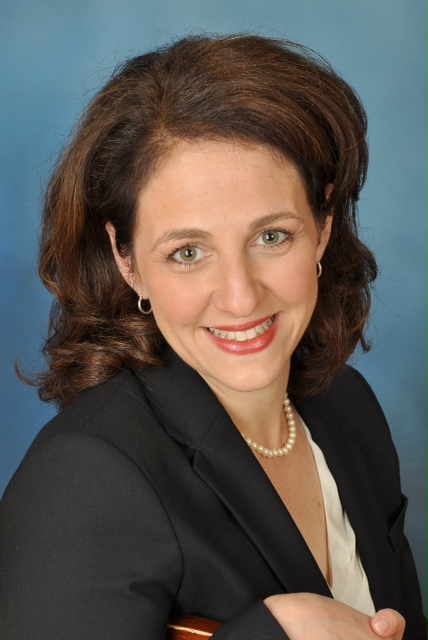
Portrait of Donna B. Pincus
. Boston University profile portrait. Source.A researcher who examined treatment of childhood anxiety disorders when mothers also had an anxiety disorder. A 211-family trial tested additions targeting maternal anxiety or mother–child interaction alongside child treatment, including economic evaluation. Its design addresses whether treating family processes adds value beyond a child-focused intervention.[ref]

Portrait of Cathy Creswell
. Publisher author portrait. Source.- Clinical outcomes and cost-effectiveness of brief guided parent-delivered cognitive behavioural therapy and solution-focused brief therapy for treatment of childhood anxiety disorders: a randomised controlled trial by Cathy Creswell and others
- Treatment of childhood anxiety disorder in the context of maternal anxiety disorder: a randomised controlled trial and economic analysis by Cathy Creswell and others
A clinical psychologist who developed the social anxiety model with David M. Clark. [ref]
https://research.manchester.ac.uk/en/persons/adrian.wells. Manchester research profile: cognitive theory and emotional disorders

Portrait of Adrian Wells
. Psychology publisher author portrait. Source.A clinical psychologist who developed learning-based explanations and strategies for exposure therapy.[ref]
Maximizing exposure therapy: An inhibitory learning approach by Michelle G. Craske and others. 2014, author and study described in the original publication

Portrait of Michelle G. Craske
. Romaine; crop by Kleon3. CC0 1.0, via Wikimedia Commons. Source.
A clinical psychologist who tested cognitive-behavioral prevention of depression in high-risk adolescents.[ref]
Prevention of Depression in At-Risk Adolescents by Judy Garber and others. 2009, author and study described in the original publication
A clinical psychologist who evaluated preventive family intervention after parental bereavement.[ref]
Six-year follow-up of a preventive intervention for parentally bereaved youths by Irwin Sandler and others. 2010, author and study described in the original publication
A clinical psychologist who tested exposure and response prevention in obsessive-compulsive disorder.[ref]
Randomized, placebo-controlled trial of exposure and ritual prevention, clomipramine, and their combination in the treatment of obsessive-compulsive disorder by Edna B. Foa and others. 2005, author and study described in the original publication

Portrait of Edna B. Foa
. David Shankbone. CC BY 3.0, via Wikimedia Commons. Source.
A clinical psychologist who tested self-focused attention, safety behaviors and video feedback in social anxiety.[ref]
Why social anxiety persists by Freda McManus and others. 2008, author and study described in the original publication
A clinical psychologist who experimentally investigated the maintaining role of safety behaviors in anxiety.[ref]
An experimental investigation of the role of safety-seeking behaviours in the maintenance of panic disorder with agoraphobia by Paul Salkovskis and others. 1999, author and study described in the original publication
- An experimental investigation of the role of safety-seeking behaviours in the maintenance of panic disorder with agoraphobia by Paul Salkovskis and others
- Obsessional-compulsive problems: A cognitive-behavioural analysis by Paul Salkovskis
- The Health Anxiety Inventory: development and validation of scales for the measurement of health anxiety and hypochondriasis by Paul Salkovskis and others
A clinical psychologist who developed cognitive accounts and treatments of panic disorder.[ref]
A cognitive approach to panic by David M. Clark. 1986, author and study described in the original publication
- A cognitive approach to panic by David M. Clark
- A cognitive model of posttraumatic stress disorder by Anke Ehlers and David M. Clark
- A comparison of cognitive therapy, applied relaxation and imipramine in the treatment of panic disorder by David M. Clark and others
- Cognitive therapy versus exposure and applied relaxation in social phobia: a randomized controlled trial by David M. Clark and others
- Improving access to psychological therapy: Initial evaluation of two UK demonstration sites by David M. Clark and others
- Transparency about the outcomes of mental health services (IAPT approach): an analysis of public data by David M. Clark and others
- Understanding Social Anxiety Disorder in Adolescents and Improving Treatment Outcomes: Applying the Cognitive Model of Clark and Wells (1995) by Eleanor Leigh and David M. Clark
Articles by others on the same topic
There are currently no matching articles.