Carlos A. Driscoll studies the evolutionary relationships and domestication of cats using genetic evidence. In a 2007 study, Driscoll and colleagues compared 979 domestic cats and wildcats sampled across different geographical populations.[ref]
The Near Eastern origin of cat domestication by Carlos A. Driscoll and others. Science 317, pp. 519–523; primary byline, abstract and sampling
The analysis combined variation in microsatellites with mitochondrial genomes. These provide complementary ancestry signals: the mitochondrial genome traces a maternal lineage, while the sampled nuclear DNA markers capture additional relationships. The study found domestic cats genetically close to sampled Near Eastern wildcats and used this pattern to infer an origin associated with that region.[ref]
The Near Eastern origin of cat domestication by Carlos A. Driscoll and others. Abstract and genetic analyses; nuclear markers, mitochondrial DNA and ancestry inference
The motivating comparison is more informative than similarity in appearance alone. If domestic animals group with one regional wild population across genetic markers, that supplies evidence about ancestry. It does not by itself determine the exact place, date or cultural sequence of domestication; those historical questions also depend on sampling and other kinds of evidence.
Tobias Nicolas Rojas led a study testing whether combinations of fleshy-fruit traits predict the animals that disperse their seeds. The researchers measured traits of 134 species and compared these with documented fruit–disperser interactions. Separating morphological, chemical and visual traits allowed the proposed seed dispersal syndrome to be tested as a pattern, rather than assumed from a few familiar examples.[ref]
Fleshy fruit traits and seed dispersers: which traits define syndromes? by Tobias Nicolas Rojas and others. Methods, Fruit traits and Seed dispersers; Results, Fruit trait relationships
For example, a strong relationship between fruit mass and diameter need not imply equally strong relationships with chemical traits. The study connects field observations to a specific question in ecology: how reliably can an interaction partner be inferred from an organism's measured features?
Timothy T. Bergsma developed field measurements of nitrogen gas losses from soil. His 2001 study measured both nitrous oxide and dinitrogen using enrichment with the stable isotope nitrogen-15 and mass spectrometry. Modification of the instrument's head amplifier enabled analysis of nitrous oxide as well as dinitrogen.[ref]
Measuring simultaneous fluxes from soil of N2O and N2 in the field using the 15N-gas nonequilibrium technique by Timothy T. Bergsma and others. Abstract and Methods, Environ. Sci. Technol. 35, 4307–4312
Measuring both gases matters for denitrification: a soil can lose nitrogen without releasing the same fraction as nitrous oxide. An isotope label helps distinguish newly generated gas from the large atmospheric background of dinitrogen, making the chemical partition of the loss experimentally accessible.
An ecologist whose work connected the logistic map and other simple mathematical models to population dynamics.[ref]
Simple mathematical models with very complicated dynamics by Robert M. May. 1976 review of simple population models and their complicated dynamics

Robert M. May lecturing at Harvard in 2009
. Photograph by NBeale, cropped by Ravenpuff. CC BY-SA 3.0, via Wikimedia Commons. Source.
An ecologist who investigated the dependence of predation on prey abundance, using search and handling arguments to explain a saturating functional response.[ref]
Some Characteristics of Simple Types of Predation and Parasitism by C. S. Holling. Author roster and experimental or comparative findings
An ecologist who studied the spread of the greater white-toothed shrew in Ireland and its relationship to changes in the distribution of a native shrew.[ref]
Invading and expanding: range dynamics and ecological consequences of the greater white-toothed shrew (Crocidura russula) invasion in Ireland by Allan D. McDevitt and others. Author roster and experimental or comparative findings
An ecologist who investigated species eradication, comparing the campaigns against introduced muskrats and coypus in Britain.[ref]
The eradication of muskrats and coypus from Britain by L. M. Gosling and others. Author roster and experimental or comparative findings
An ecologist who tested effects of introduced hedgehog removal on breeding waders, comparing nest success in removal and control plots.[ref]
Experimental removal of introduced hedgehogs improves wader nest success in the Western Isles, Scotland by Digger B. Jackson. Author roster and experimental or comparative findings
An ecologist who investigated how deer browsing changes habitat suitability for breeding common nightingales, using paired exclusion and browsed plots.[ref]
Experimental evidence that deer browsing reduces habitat suitability for breeding Common Nightingales Luscinia megarhynchos by Chas A. Holt and others. Author roster and experimental or comparative findings
An ecologist who used genetic markers to investigate introgression between red deer and sika deer in a hybrid zone.[ref]
Introgression through rare hybridization: A genetic study of a hybrid zone between red and sika deer (genus Cervus) in Argyll, Scotland by Simon J. Goodman and others. Author roster and experimental or comparative findings
An ecologist who investigated coordinated monitoring and control of invasive American mink, linking management at landscape scale to biological invasion.[ref]
Turning back the tide of American mink invasion at an unprecedented scale through community participation and adaptive management by Rosalind Bryce and others. Author roster and experimental or comparative findings
An ecologist who studied changes in grey squirrel distribution associated with recovery of the native pine marten in Ireland.[ref]
Population crash in an invasive species following the recovery of a native predator: the case of the American grey squirrel and the European pine marten in Ireland by Emma Sheehy and others. Author roster and experimental or comparative findings
An ecologist who investigated disease associated with red squirrel declines, comparing experimental susceptibility in red and grey squirrels.[ref]
Parapoxvirus causes a deleterious disease in red squirrels associated with UK population declines by Daniel M. Tompkins and others. Author roster and experimental or comparative findings
An ecologist who investigated changes in the tropical-forest carbon sink, comparing African and Amazonian forests through time.[ref]
Asynchronous carbon sink saturation in African and Amazonian tropical forests by Wannes Hubau and others. Authorship and research contribution
An ecologist who studied vulnerability of forest xylem to drought, connecting hydraulic function to environmental stress.[ref]
Global convergence in the vulnerability of forests to drought by Brendan Choat and others. Authorship and research contribution
An ecologist who investigated how changes in surface albedo can offset some climatic effects of boreal forest carbon storage.[ref]
Offset of the potential carbon sink from boreal forestation by decreases in surface albedo by Richard A. Betts. Authorship and research contribution
An ecologist who investigated the fate of additional carbon taken up by a mature forest during free-air carbon dioxide enrichment, separating uptake from net storage.[ref]
The fate of carbon in a mature forest under carbon dioxide enrichment by Mingkai Jiang and others. Authorship and research contribution
An ecologist who studied how limited nitrogen availability constrains the response of forest productivity to increased carbon dioxide.[ref]
An ecologist who investigated carbon storage and net uptake in the world’s forests, combining observations across forest systems.[ref]
A large and persistent carbon sink in the world's forests by Yude Pan and others. Authorship and research contribution
An ecologist who investigated the relationship between biodiversity and ecosystem stability through long-term grassland experiments.[ref]
Biodiversity and ecosystem stability in a decade-long grassland experiment by David Tilman and others. Authorship and research contribution
An ecologist who coauthored a method for separating Selection effect in biodiversity experiments from complementarity effects.[ref]
Partitioning selection and complementarity in biodiversity experiments by Michel Loreau and Andy Hector. Authorship and research contribution
An ecologist who investigated how biodiversity changes ecosystem function, including a quantitative partition into selection and complementarity components.[ref]
Partitioning selection and complementarity in biodiversity experiments by Michel Loreau and Andy Hector. Authorship and research contribution
An ecologist who studied global patterns of plant functional traits, connecting structural differences to functional strategies.[ref]
The global spectrum of plant form and function by Sandra Díaz and others. Authorship and research contribution
An ecologist who investigated the relationship between plant functional traits and the growth-survival trade-off in tropical trees.[ref]
Functional traits and the growth-mortality trade-off in tropical trees by S. Joseph Wright and others. Authorship and research contribution
An ecologist who studied coordinated variation in leaf structure and function, contributing to the leaf economics spectrum.[ref]
The worldwide leaf economics spectrum by Ian J. Wright and others. Authorship and research contribution
An ecologist who investigated ecological field-experiment design and pseudoreplication, clarifying why repeated measurements within one treatment unit do not create independent treatment replicates.[ref]
Pseudoreplication and the Design of Ecological Field Experiments by Stuart H. Hurlbert. Authorship and research contribution
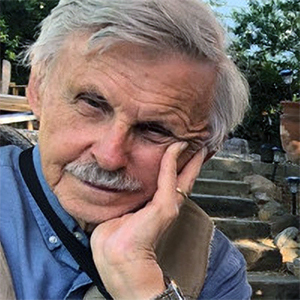
Portrait of Stuart H. Hurlbert
. Externally hosted portrait identified at biology.sdsu.edu/emeritus/. Articles by others on the same topic
There are currently no matching articles.