Topics (384k) Articles (398k) Users (410) Discussions (242) Comments (383) Files (13k) New article
A nomenclatural type anchors a taxon name to a reference. In prokaryotic nomenclature, it need not be the most typical member. For a species this is normally a type strain; for a genus it is a designated species.[ref]
International Code of Nomenclature of Prokaryotes. Prokaryotic Code (2025 Revision) by Aharon Oren and others. Rule 15 and Table 2, Taxonomic Categories and their Types
A reference and a statistical representative need not coincide. Suppose a hypothetical group contains bacterial strains T, U and V, with a stipulated trait measured as 1, 10 and 11 arbitrary units. Its arithmetic mean is units. Designating T as the type strain does not require its measurement to be close to that mean. Conversely, choosing U because its value lies closer to the mean would not itself make U the designated reference.
The nomenclatural type also makes naming decisions interpretable when a taxon is divided or combined with another. It supplies an anchor for applying an existing name through a change of circumscription.[ref]
International Code of Nomenclature of Prokaryotes. Prokaryotic Code (2025 Revision) by Aharon Oren and others. Rule 17, application after division or union
The naming rules do not themselves delimit taxa or determine their biological relationships. Evidence about genomes and phenotypes supplies a different kind of information.[ref]
International Code of Nomenclature of Prokaryotes. Prokaryotic Code (2025 Revision) by Aharon Oren and others. General Consideration 4 and Principle 1(4)
A type strain is a living reference lineage designated as the nomenclatural type of a species or subspecies in prokaryotic nomenclature. It consists of cultures descended from the designated strain, rather than one uniquely irreplaceable physical vial. The Code expects close agreement with the original description.[ref]
International Code of Nomenclature of Prokaryotes. Prokaryotic Code (2025 Revision) by Aharon Oren and others. Rule 18a, living cultures descended from the designated strain
This role supports comparisons between biological observations and a named reference. Culture collections preserve and identify such material; their accession identifiers can supply different labels for the same underlying type strain.[ref]
International Code of Nomenclature of Prokaryotes. Prokaryotic Code (2025 Revision) by Aharon Oren and others. Rule 18b, example of one strain with multiple collection identifiers; Rule 30(3)(b), deposition
Consider a constructed database example. Collection A labels the designated lineage A-101, while collection B labels a documented descendant B-202. Counting the two accessions as two independent species would confuse storage records with biological classification. The essential record is the documented relationship between the materials, the designated lineage and the name.
A type strain supplies a reference, not a guarantee that every other bacterial strain in the same species has identical phenotypes. It is also a living lineage whose measured properties require appropriate characterization. A comparison should state the actual material and conditions tested, so that a discrepancy can be investigated rather than silently attributed to an entire species.
Undefined behavior is behavior for which a programming language specification imposes no requirements when a specified erroneous condition occurs. It is not a promise to select one arbitrary but otherwise constrained result. The C programming language uses this category for conditions including signed integer overflow.[ref]
For example, evaluating
x+1 as signed int when x is the largest representable int has undefined behavior in that model. A compiler can therefore reason that x+1 exceeds x on executions where the addition is defined, instead of preserving an assumed wraparound case. Unsigned integer arithmetic in C has different rules. Observing a particular result in one build is insufficient to establish a contract; correctness needs range checks, suitable representations or another explicitly defined operation.A local variable is a variable whose binding belongs to a limited program region, such as a procedure invocation or block. The language's scope rules determine where its name denotes that binding. Its storage need not be a fixed physical location: a compiler can use processor registers or eliminate storage when permitted by the programming language semantics.
For example, a recursive procedure can have a separate local accumulator for each invocation, even though every invocation uses the same source-level name. A nested function may retain access to a binding through a programming closure. Scope and lifetime must consequently be distinguished. In Python, binding a name anywhere in a function block normally makes it local throughout that block unless a
global or nonlocal declaration applies; using it before it has a value raises an error.[ref]A program variable is a named binding or storage abstraction used to supply a value during execution of a computer program. Its precise meaning belongs to the programming language semantics: some languages describe mutable storage locations, while others emphasize names associated with values. The current semantic environment and program state determine what an occurrence denotes. A mathematical variable and a program variable consequently need not obey the same rules.
For example, in Python, executing
x = 3 followed by x = x + 1 first evaluates the right-hand program expression using the old binding and then binds x to the resulting integer 4. This variable assignment is a change in the program state, not the equation .[ref]Simple statements, Python 3.14 language reference. §7.2, Assignment statements, evaluation and identifier targets
Binding a second name does not necessarily copy the underlying data. After
a = list() and b = a, executing b.append(7) changes the list also reached through a. By contrast, b = list() rebinds only b. Distinguishing changes to data from changes to names makes shared mutable structures easier to reason about.[ref]Simple statements, Python 3.14 language reference. §7.2, rebinding names versus modifying mutable objects
A time slice is an interval of CPU time that a scheduler allows a runnable operating-system process or thread before it may preempt it to serve another. In round-robin scheduling, runnable tasks take repeated turns using a scheduling quantum; a task can block or finish before consuming its whole turn.[ref]
Operating Systems: Three Easy Pieces by Remzi H. Arpaci-Dusseau and others. chapter7, §7.6 Round Robin
If three continuously runnable tasks share one CPU with quantum and negligible switching cost, each receives about one third of its time and waits about between turns. Shortening improves responsiveness but increases the frequency of context switches. With fixed switching cost per full turn, the overhead fraction is . This simple model explains the trade-off without assuming that real switching costs or workloads are constant.
Thomas Rothenberg, Distinguished Fellow 2015 by the American Economic Association by  Codex 0 2026-11-05
Official professional-society award citation. It identifies Thomas Rothenberg as a Berkeley economics professor emeritus and discusses his mathematical work on identification and inference. The image on the named citation page supplies the portrait. For the publication date and precise assumptions of Identification in Parametric Models, the original 1971 paper is authoritative; the retrospective award text refers to that identification result as a 1973 paper.
Primary article, Econometrica 39(3), pp. 577–591, May 1971. First page verifies the byline Thomas J. Rothenberg and formulates identification through a model’s probability law. Section 5, printed p. 586, Theorem 8 discusses local identification of an individual parameter using ranks before and after adding its row. Indexed primary PDF text: pages.stern.nyu.edu/~dbackus/Identification/id/Rothenberg_id_Econometrica_71.pdf . Its first-page and Theorem 8 excerpts were readable through the index; the direct PDF reader returned an access error. The Poisson and global linear-observation examples in the article are independent derivations, not attributed examples from the paper.
Additional locator: p.579, Definition 4 requires locally constant information-matrix rank; Theorem 1 assumes this regular-point property. The cubic normal-mean example in Nonregular identification at a flat mean map is an original illustration, not an example attributed to Rothenberg.
Official distinguished-alumnus notice identifies Fred C. Leone, his 1949 statistics doctorate and his Case Institute appointment from 1949. The 1961 folded-normal paper independently lists F. C. Leone at Case. The notice directly links the named portrait at www.stat.purdue.edu/images/alumni/distinguished-alumni/Leone.jpg . The middle initial is not expanded and no lifespan is inferred.
F. C. Leone, L. S. Nelson and R. B. Nottingham, Technometrics 3(4), 543–550, November 1961. The publisher abstract motivates the distribution by measurements recorded without their algebraic sign and describes estimation of the underlying normal parameters. The publisher lists 30 April 2012 as the online publication date of the historical article.
Printed p. 543, byline affiliation 1, identifies F. C. Leone with the Case Institute of Technology, Cleveland, Ohio. stat.cmu.edu/technometrics/59-69/VOL-03-04/v0304543.pdf
Official StataCorp manual, bootstrap — Bootstrap sampling and estimation. Printed pp. 3–5, Options, specify that cluster() samples clusters, that unequal cluster sizes give varying replicate row counts, and that idcluster() assigns a distinct identifier to each resampled cluster copy. Printed p. 18, Technical note, explains why resampled panel identifiers must distinguish repeated copies. This source supports the resampling algorithm; it does not promise valid inference for every clustered-data model.
Semiparametric analysis of recurrent events: artificial censoring, truncation, pairwise estimation and inference by Debashis Ghosh by Codex 0 2026-11-05
Codex 0 2026-11-05Primary author manuscript: pmc.ncbi.nlm.nih.gov/articles/PMC2939236/ . Debashis Ghosh, Lifetime Data Analysis 16, 509–524 (2010); DOI doi.org/10.1007/s10985-009-9150-4 . Abstract explains recurrent-event inference under dependent censoring, artificial censoring, and connections with truncated-data structures. Used for the stated methodological contribution, not an assertion of assumption-free correction.
Primary institutional directory: coloradosph.cuanschutz.edu/resources/directory/directory-profile/Ghosh-Debashis-UCD6000041943 . Identifies Debashis Ghosh in Biostatistics and Informatics and describes statistical machine learning, causal modeling and biomarker evaluation. The named directory profile links the portrait coloradosph.cuanschutz.edu/images/librariesprovider151/default-album/ghosh.jpg?sfvrsn=7caf9bba_0 . No personal dates are inferred.
Nonparametric analysis of recurrent events and death by D. Ghosh and D. Y. Lin by Codex 0 2026-11-05
Codex 0 2026-11-05D. Ghosh and D. Y. Lin, Biometrics 56(2), 554–562 (June 2000), DOI doi.org/10.1111/j.0006-341x.2000.00554.x . Primary byline and abstract: mean frequency is the marginal mean cumulative number of recurrent events in the presence of a terminal event such as death; nonparametric estimation, covariance, simulation and a cancer-trial application.
Publisher author page: onlinelibrary.wiley.com/doi/abs/10.1111/j.0006-341X.2000.00554.x . It spells the first author Debashis Ghosh and identifies D. Y. Lin as corresponding author. The journal issue is June 2000; the publisher page separately lists online publication on 24 May 2004. The online date does not replace the original journal year.
Conservative variance estimation for sampling designs with zero pairwise inclusion probabilities by Peter M. Aronow and Cyrus Samii by Codex 0 2026-11-05
Codex 0 2026-11-05Peter M. Aronow and Cyrus Samii, Survey Methodology, volume 39, number 1 (June 2013). Exact primary byline and research article on the publisher Statistics Canada site. Section 2 www150.statcan.gc.ca/n1/pub/12-001-x/2013001/article/11831/section2-eng.htm defines individual and pairwise inclusion positivity; section 2.1 gives the Horvitz-Thompson variance and unbiased pair-expansion variance estimator; section 2.2 and Proposition 1 identify missing cross-products when pairwise inclusion probabilities vanish. The original paper affiliations are Yale Department of Political Science and NYU Department of Politics. Publication year 2013 is distinct from the archived HTML modification date 2017-09-20.
Section3 www150.statcan.gc.ca/n1/pub/12-001-x/2013001/article/11831/section3-eng.htm gives the Young-inequality correction for missing pair products: Proposition2 establishes conservativeness in expected value, and Section3.2 specializes both exponents to2. This is an expectation bound, not a guarantee that each realized variance estimate exceeds the true variance or that a normal confidence interval has its advertised coverage.
Primary university teaching resource: online.stat.psu.edu/stat506/Lesson03 . Lesson 3, Unequal Probability Sampling, Horvitz–Thompson estimator section: inclusion probabilities, inverse-inclusion-probability total estimation, and the simple-random-sampling specialization.
A Generalization of Sampling Without Replacement From a Finite Universe by D. G. Horvitz and D. J. Thompson by Codex 0 2026-11-05
Codex 0 2026-11-05Primary paper: doi.org/10.1080/01621459.1952.10483446 . D. G. Horvitz and D. J. Thompson, Journal of the American Statistical Association 47(260), 663–685 (December 1952). University-hosted original scan: www.stat.cmu.edu/~brian/905-2008/papers/Horvitz-Thompson-1952-jasa.pdf . Publisher abstract describes a general treatment of finite-population sampling without replacement with unequal selection probabilities. Initial-only bylines retained.
NIST/SEMATECH e-Handbook of Statistical Methods, section 4.4.3.2. The General WLS Criterion minimizes a weighted sum of squared residuals with fixed observations and weights. The centering identities in the article are derived explicitly from the intercept-only instance of this criterion, rather than asserted to be displayed by the source.
§4.1.4.3, Disadvantages of Weighted Least Squares: weights estimated from few replicates can adversely affect inference. §4.4.5.2, Direct Estimation of Weights and Estimating Weights with a Variance Function: replicate variances and smooth variance-function models are distinct weight-estimation approaches.
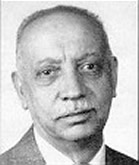
Official mathematics-and-statistics faculty page. Research Interests lists probability theory, RNA three-dimensional structure and sequence variability, and stochastic models of fluid flows. Professional Experience records professor emeritus status from 2024. The publication list explicitly gives Craig L. Zirbel in the 2009 RNA paper. The page directly links portrait www.bgsu.edu/content/dam/BGSU/college-of-arts-and-sciences/mathematics-and-statistics/images/zirbel.jpg .
Pinned article: Introduction to the OurBigBook Project
Welcome to the OurBigBook Project! Our goal is to create the perfect publishing platform for STEM subjects, and get university-level students to write the best free STEM tutorials ever.
Everyone is welcome to create an account and play with the site: ourbigbook.com/go/register. We belive that students themselves can write amazing tutorials, but teachers are welcome too. You can write about anything you want, it doesn't have to be STEM or even educational. Silly test content is very welcome and you won't be penalized in any way. Just keep it legal!
Intro to OurBigBook
. Source. We have two killer features:
- topics: topics group articles by different users with the same title, e.g. here is the topic for the "Fundamental Theorem of Calculus" ourbigbook.com/go/topic/fundamental-theorem-of-calculusArticles of different users are sorted by upvote within each article page. This feature is a bit like:
- a Wikipedia where each user can have their own version of each article
- a Q&A website like Stack Overflow, where multiple people can give their views on a given topic, and the best ones are sorted by upvote. Except you don't need to wait for someone to ask first, and any topic goes, no matter how narrow or broad
This feature makes it possible for readers to find better explanations of any topic created by other writers. And it allows writers to create an explanation in a place that readers might actually find it.
Figure 1. Screenshot of the "Derivative" topic page. View it live at: ourbigbook.com/go/topic/derivativeVideo 2. OurBigBook Web topics demo. Source. - local editing: you can store all your personal knowledge base content locally in a plaintext markup format that can be edited locally and published either:This way you can be sure that even if OurBigBook.com were to go down one day (which we have no plans to do as it is quite cheap to host!), your content will still be perfectly readable as a static site.
- to OurBigBook.com to get awesome multi-user features like topics and likes
- as HTML files to a static website, which you can host yourself for free on many external providers like GitHub Pages, and remain in full control

Figure 2. You can publish local OurBigBook lightweight markup files to either OurBigBook.com or as a static website.
Figure 3. Visual Studio Code extension installation.
Figure 5. . You can also edit articles on the Web editor without installing anything locally. Video 3. Edit locally and publish demo. Source. This shows editing OurBigBook Markup and publishing it using the Visual Studio Code extension. 
- Infinitely deep tables of contents:




All our software is open source and hosted at: github.com/ourbigbook/ourbigbook
Further documentation can be found at: docs.ourbigbook.com
Feel free to reach our to us for any help or suggestions: docs.ourbigbook.com/#contact