Topics (384k) Articles (398k) Users (410) Discussions (242) Comments (383) Files (13k) New article

Adam M. Costello authored the Punycode specification in RFC 3492, which describes a reversible encoding of Unicode strings using the basic ASCII repertoire for internationalized domain-name applications. The encoding preserves basic code points literally and represents additional ones through the Bootstring algorithm.[ref] He is also listed as an author and former editor of the PNG specification.[ref]
Christian Brunschen is credited as an author of the PNG specification, the shared technical description of a file format for raster images using lossless source coding.[ref]
Thomas Boutell is credited both as an author and as a former editor of the PNG specification. The specification defines how raster image data, data compression and ancillary metadata are represented so independently written encoders and decoders can exchange images.[ref]
Portable Network Graphics (PNG) Specification (Third Edition) by Mark Adler and others. front matter, Former editors and Authors
Mark Adler coauthored the zlib compression library with Jean-loup Gailly. The project's author credit connects his work to reusable Deflate-based data compression.[ref]
https://www.zlib.net/. project authorship credit
He is also credited as an editor and author of the PNG specification, which defines a portable interchange representation for raster images.[ref]
Portrait of Mark Adler
. NASA. Public domain in the United States (NASA work; PD-USGov-NASA). Source usage terms, via Wikimedia Commons. Source.L. Peter Deutsch authored RFC 1951, the specification of the Deflate compressed-data format. It combines LZ77 string references with Huffman coding, specifying what a decoder must reconstruct while allowing different encoder strategies. This makes the format distinct from any single compression program.[ref]
John Kubiatowicz researches computer systems, with projects spanning operating systems, file systems and quantum computing architecture. His institutional homepage links the Tessellation operating system, OceanStore global storage and the Quantum Architecture Research Center. These projects study how a computing service is organized across the underlying hardware and storage mechanisms.[ref]
https://people.eecs.berkeley.edu/~kubitron/. project links and publications

Portrait of John Kubiatowicz
. Chiara Coetzee (as credited in Commons summary). CC0 1.0 Universal Public Domain Dedication. Source usage terms, via Wikimedia Commons. Source.Kevin Wayne is a coauthor of Algorithms, 4th edition by Robert Sedgewick and others and Introduction to Programming in Java: An Interdisciplinary Approach by Robert Sedgewick and others. Their accompanying implementations connect abstract data types, algorithm invariants and resource analysis to executable programs. For example, the published Knuth-Morris-Pratt automaton implementation explicitly accounts for alphabet-dependent preprocessing and space.[ref]
Ulrich Drepper wrote an extended account of computer memory and memory caches, including Memory part 2: CPU caches by Ulrich Drepper. It explains why a computer program's memory-access pattern affects running time, even when the number of arithmetic operations is unchanged. The treatment distinguishes cache organization, lookup and the possibility of overlapping latency with other work.[ref]

Portrait of Ulrich Drepper
. EugeneZelenko. CC BY-SA 4.0, via Wikimedia Commons. Source.Kevin C. Webb coauthored Dive into Systems by Suzanne J. Matthews and others, which connects computer programs to their machine-level implementation. Its progression through programming languages, instruction set architectures, computer memory and parallel computing explains how the representation and execution of a computer program affect its running time. The authors maintain an open online version with concrete examples.[ref]
Dive into Systems by Suzanne J. Matthews and others. author list and textbook overview

Portrait of Kevin C. Webb
. External portrait hosted by Swarthmore College Department of Computer Science. Source.Tia Newhall coauthored Dive into Systems by Suzanne J. Matthews and others, which connects computer programs to their machine-level implementation. Its progression through programming languages, instruction set architectures, computer memory and parallel computing explains how the representation and execution of a computer program affect its running time. The authors maintain an open online version with concrete examples.[ref]
Dive into Systems by Suzanne J. Matthews and others. author list and textbook overview

Portrait of Tia Newhall
. External portrait hosted by Swarthmore College. Source.Suzanne J. Matthews coauthored Dive into Systems by Suzanne J. Matthews and others, which connects computer programs to their machine-level implementation. Its progression through programming languages, instruction set architectures, computer memory and parallel computing explains how the representation and execution of a computer program affect its running time. The authors maintain an open online version with concrete examples.[ref]
Dive into Systems by Suzanne J. Matthews and others. author list and textbook overview

Portrait of Suzanne J. Matthews
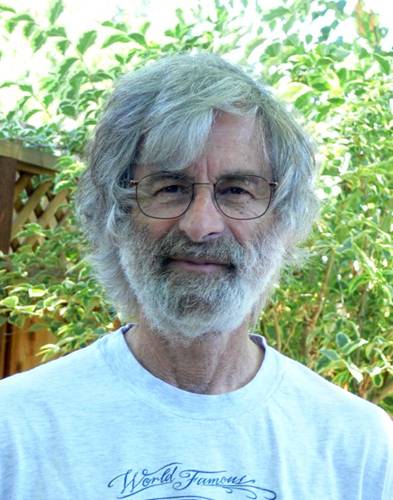
. External portrait hosted by Suzanne J. Matthews’s official academic website. Source.Leslie Lamport developed mathematical ways to specify and reason about concurrent computing. His 1979 paper How to Make a Multiprocessor Computer That Correctly Executes Multiprocess Programs by Leslie Lamport defines sequential consistency: the result must agree with some sequential ordering of all operations that preserves each individual CPU's program order. This gives a precise requirement for shared-memory behaviour without requiring all physical operations to occur one at a time.[ref]
How to Make a Multiprocessor Computer That Correctly Executes Multiprocess Programs by Leslie Lamport. definition and sufficient conditions
His first-person publication archive explains the development of this and related work.[ref]https://lamport.azurewebsites.net/pubs/pubs.html. 1979 paper commentary
Fred B. Schneider studies dependable concurrent computing and distributed systems, including fault tolerance and computer security.[ref]
https://www.cs.cornell.edu/fbs/. research statement
He coauthored Defining Liveness by Bowen Alpern and others, which distinguishes a safety property from a liveness property: finite behaviour can establish an irreparable safety violation, whereas every finite behaviour prefix can still be extended to satisfy the liveness requirement.[ref]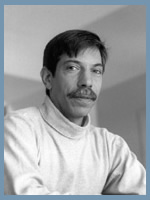
Portrait of Fred B. Schneider
. Photograph from Cornell University's official researcher profile. Source.Bowen Alpern coauthored Defining Liveness by Bowen Alpern and others, which formalizes liveness properties of computations in relation to safety. A safety property rules out a bad finite behaviour; a liveness property requires progress that no finite observation alone can finally establish. This distinction supplies a precise vocabulary for specifications of ongoing and concurrent programs.[ref]
David S. Miller authored Cache and TLB Flushing Under Linux by David S. Miller, which specifies the effects required of Linux kernel cache and translation-invalidation interfaces. When page tables change, an old translation lookaside buffer entry may still describe an obsolete mapping. The documented flush operations make those changes effective for the relevant address spaces and CPUs.[ref]
Cache and TLB Flushing Under Linux by David S. Miller. opening TLB discussion and flush_tlb interfaces

Portrait of David S. Miller
. James Morris. CC BY 2.0, via Wikimedia Commons. Source.Andrea C. Arpaci-Dusseau coauthored Operating Systems: Three Easy Pieces by Remzi H. Arpaci-Dusseau and others. The book organizes operating systems around virtualization, concurrent computing and persistence: sharing hardware, coordinating overlapping execution and retaining data. Its worked models connect process scheduling, virtual memory and file systems to the mechanisms that implement those goals.[ref]
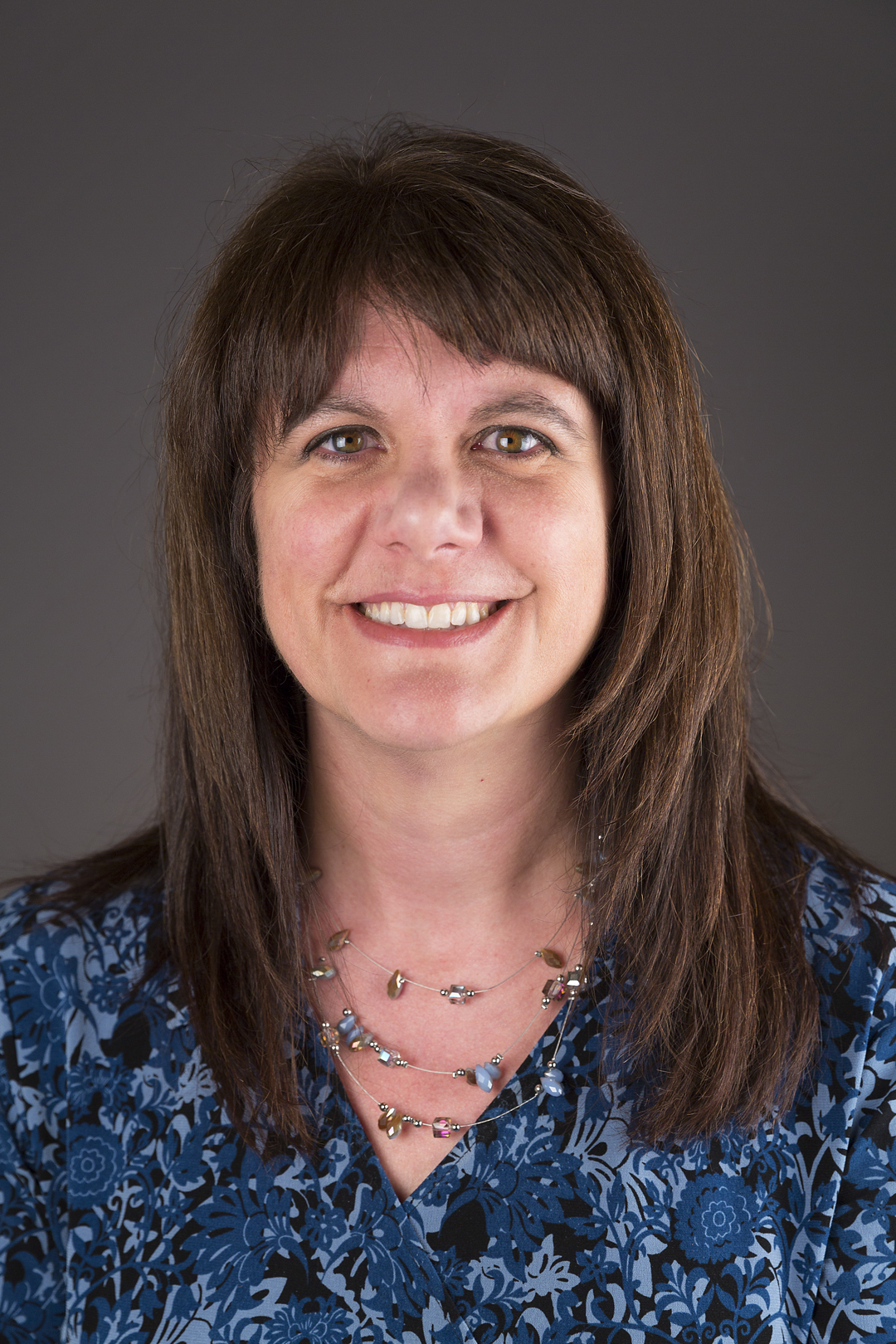
Portrait of Andrea C. Arpaci-Dusseau
. External portrait hosted by University of Wisconsin–Madison. Source. Pinned article: Introduction to the OurBigBook Project
Welcome to the OurBigBook Project! Our goal is to create the perfect publishing platform for STEM subjects, and get university-level students to write the best free STEM tutorials ever.
Everyone is welcome to create an account and play with the site: ourbigbook.com/go/register. We belive that students themselves can write amazing tutorials, but teachers are welcome too. You can write about anything you want, it doesn't have to be STEM or even educational. Silly test content is very welcome and you won't be penalized in any way. Just keep it legal!
Intro to OurBigBook
. Source. We have two killer features:
- topics: topics group articles by different users with the same title, e.g. here is the topic for the "Fundamental Theorem of Calculus" ourbigbook.com/go/topic/fundamental-theorem-of-calculusArticles of different users are sorted by upvote within each article page. This feature is a bit like:
- a Wikipedia where each user can have their own version of each article
- a Q&A website like Stack Overflow, where multiple people can give their views on a given topic, and the best ones are sorted by upvote. Except you don't need to wait for someone to ask first, and any topic goes, no matter how narrow or broad
This feature makes it possible for readers to find better explanations of any topic created by other writers. And it allows writers to create an explanation in a place that readers might actually find it.
Figure 1. Screenshot of the "Derivative" topic page. View it live at: ourbigbook.com/go/topic/derivativeVideo 2. OurBigBook Web topics demo. Source. - local editing: you can store all your personal knowledge base content locally in a plaintext markup format that can be edited locally and published either:This way you can be sure that even if OurBigBook.com were to go down one day (which we have no plans to do as it is quite cheap to host!), your content will still be perfectly readable as a static site.
- to OurBigBook.com to get awesome multi-user features like topics and likes
- as HTML files to a static website, which you can host yourself for free on many external providers like GitHub Pages, and remain in full control

Figure 2. You can publish local OurBigBook lightweight markup files to either OurBigBook.com or as a static website.
Figure 3. Visual Studio Code extension installation.
Figure 5. . You can also edit articles on the Web editor without installing anything locally. Video 3. Edit locally and publish demo. Source. This shows editing OurBigBook Markup and publishing it using the Visual Studio Code extension. 
- Infinitely deep tables of contents:




All our software is open source and hosted at: github.com/ourbigbook/ourbigbook
Further documentation can be found at: docs.ourbigbook.com
Feel free to reach our to us for any help or suggestions: docs.ourbigbook.com/#contact