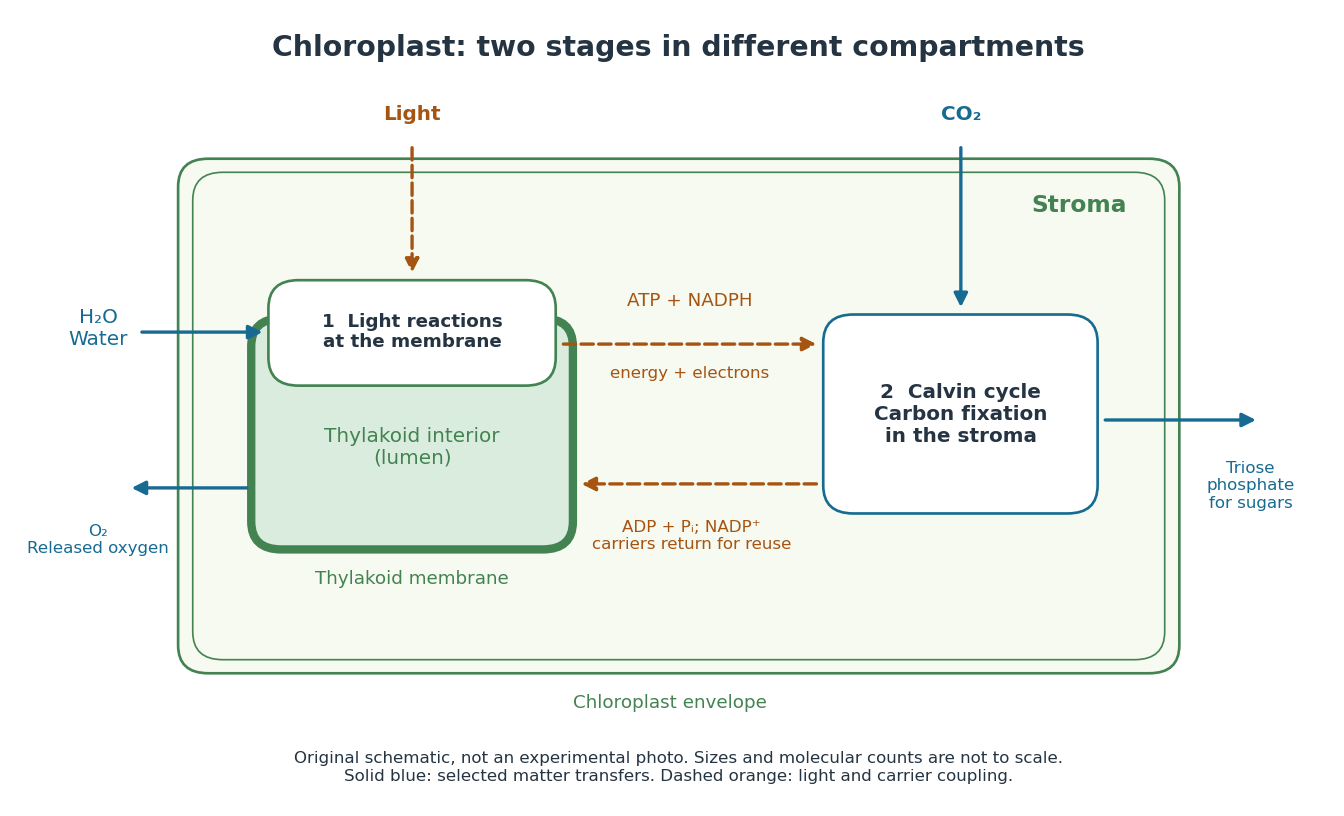
In a chloroplast, light-dependent reactions take place at thylakoid membranes. Chlorophyll captures light; Electron transfer helps establish an electrochemical gradient across the thylakoid membrane, enabling formation of ATP. The oxygenic photosynthesis pathway also forms NADPH and releases molecular oxygen from water. ATP and NADPH become available in the chloroplast stroma for the Calvin cycle. See Alberts et al.: chloroplast light reactions.

Articles by others on the same topic
There are currently no matching articles.