Topics (384k) Articles (398k) Users (410) Discussions (242) Comments (383) Files (13k) New article

Cecilia R. Aragon coauthored the randomized search-tree construction with Raimund Seidel. Their treap combines binary search tree order on keys with heap order on random priorities. A key set and distinct priorities determine the tree; independent random priorities give expected logarithmic search and update costs. The analysis separates expected cost from the possibly linear height of a particular realization.[ref]
The construction makes balancing probabilistic without storing the explicit balance conditions used by AVL trees. Operations that split or join a tree preserve the two orderings, making the idea useful for both ordered dictionaries and sequence data structures.
The World Wide Web Consortium develops Web standards through technical groups and a public review process. Its specifications can define computational behavior precisely: WebXR describes tracked poses and views, while the CSS color specification defines color values and their interpretation. Such documents distinguish an interface's semantics from the particular browser or device implementing it. A document's stated publication status also matters; a draft records work in progress rather than silently implying a completed recommendation.[ref]
https://www.w3.org/about/. Mission and standards development
[ref]WebXR Device API by World Wide Web Consortium. Status of This Document and interface definitions
The Khronos Group publishes interoperability specifications for graphics and related computational interfaces. Its OpenGL specification defines a rendering pipeline, including rasterization, fragment shaders and per-fragment operations. A specification makes observable behavior portable across implementations: for example, a configured depth buffer comparison determines whether a candidate surface contributes to the framebuffer. This is a definition of an interface contract, rather than a requirement that all implementations use identical internal hardware.[ref]
https://www.khronos.org/about/. Organizational description and open interoperability standards
[ref]The OpenGL Graphics System Version 4.6 Core Profile by Khronos Group. Chapters 14, 15 and 17
The CRYSTALS project developed the lattice-based designs CRYSTALS-Kyber and CRYSTALS-Dilithium. They solve different tasks: Kyber is a key encapsulation mechanism, while Dilithium provides digital signatures. Their compact representations use structured polynomial arithmetic and explicit computational hardness assumptions. Kyber's construction uses module learning with errors; Dilithium combines a Fiat-Shamir transform with response rejection. ML-KEM and ML-DSA are the corresponding standardized descendants, so a project submission and a final standard should be distinguished when choosing precise encodings or parameters.[ref]
Kyber documentation by CRYSTALS project. Introduction and Scientific Background
[ref]Dilithium documentation by CRYSTALS project. Introduction and Scientific Background
The Lustre project develops and documents Lustre file system, a distributed parallel file system. Its architecture separates namespace and metadata operations from bulk file-content operations, allowing different servers to handle those workloads. A client can therefore resolve a file through the metadata service and transfer its content through object-storage services. The project documentation identifies these roles explicitly, which matters when reasoning about where a request travels and which service limits its performance.[ref]
Introduction to Lustre by Lustre project. Overview and Lustre Architecture
Google is the organizational author of the recommendation-system course cited here. Its candidate-generation explanation connects learned item and query vectors with similarity search. The choice between dot product, cosine similarity and Euclidean distance can change the selected items; normalizing vectors makes these particular rankings equivalent. This gives a concrete computational contribution of the cited documentation rather than treating the organization name as a technical method.[ref]
Brian Jeff wrote Arm's 2013 overview of its Cortex-A mobile processor roadmap. The article distinguishes architectural generations and implementation choices, explaining the Cortex-A8 as a dual-issue processor that preserves instruction issue order.[ref]
A Walk Through the Cortex-A Mobile Roadmap by Brian Jeff. 19 November 2013, byline and Cortex-A8 section
The distinction is concrete: issuing two independent instructions in a cycle is compatible with maintaining program order. It does not by itself imply out-of-order execution, which permits ready instructions to proceed around stalled ones subject to correctness constraints. This example separates issue width from scheduling policy, two different dimensions of microarchitecture. The attribution here concerns Jeff's identified technical explanation; a product overview is not evidence that its author individually designed every processor it describes.
D. McGrew authored RFC 5116, which specifies an interface for authenticated encryption with associated data. The RFC's author-address section identifies him as David A. McGrew. Its technical contribution is to make the inputs and outputs of encryption and authenticated decryption explicit, including the key, nonce, readable authenticated data, ciphertext and failure result.[ref]
For example, a packet header can remain readable while being authenticated together with an encrypted payload. Changing that header must invalidate the result rather than silently attach the old payload to a different context. The RFC also separates an algorithm's nonce requirements from management of nonces by the surrounding cryptographic protocol. Reusing a key/nonce pair can violate a construction's assumptions even though the interface accepts values of the correct length.[ref]
An Interface and Algorithms for Authenticated Encryption by D. McGrew. §3.1, nonce requirements
Christopher D. Manning is a researcher in natural language processing whose work connects linguistic structure with statistical and neural methods. Stanford's institutional biography identifies contributions to learned word representations, language understanding and computational analysis of sentence structure.[ref]
He is a coauthor of Introduction to Information Retrieval by Christopher D. Manning and others. The book gives precise mathematical formulations of problems that arise when a system retrieves documents in response to a query. This connects an algorithm's output to a measurable task instead of evaluating it only by a few convincing examples.[ref]
For instance, suppose a query has twelve relevant documents, and a system returns ten documents of which six are relevant. Its precision is , while its recall is . Returning more documents can change the two measures differently. This example illustrates the distinction between making useful predictions and choosing a reproducible way to evaluate them, a recurring issue in natural language processing.
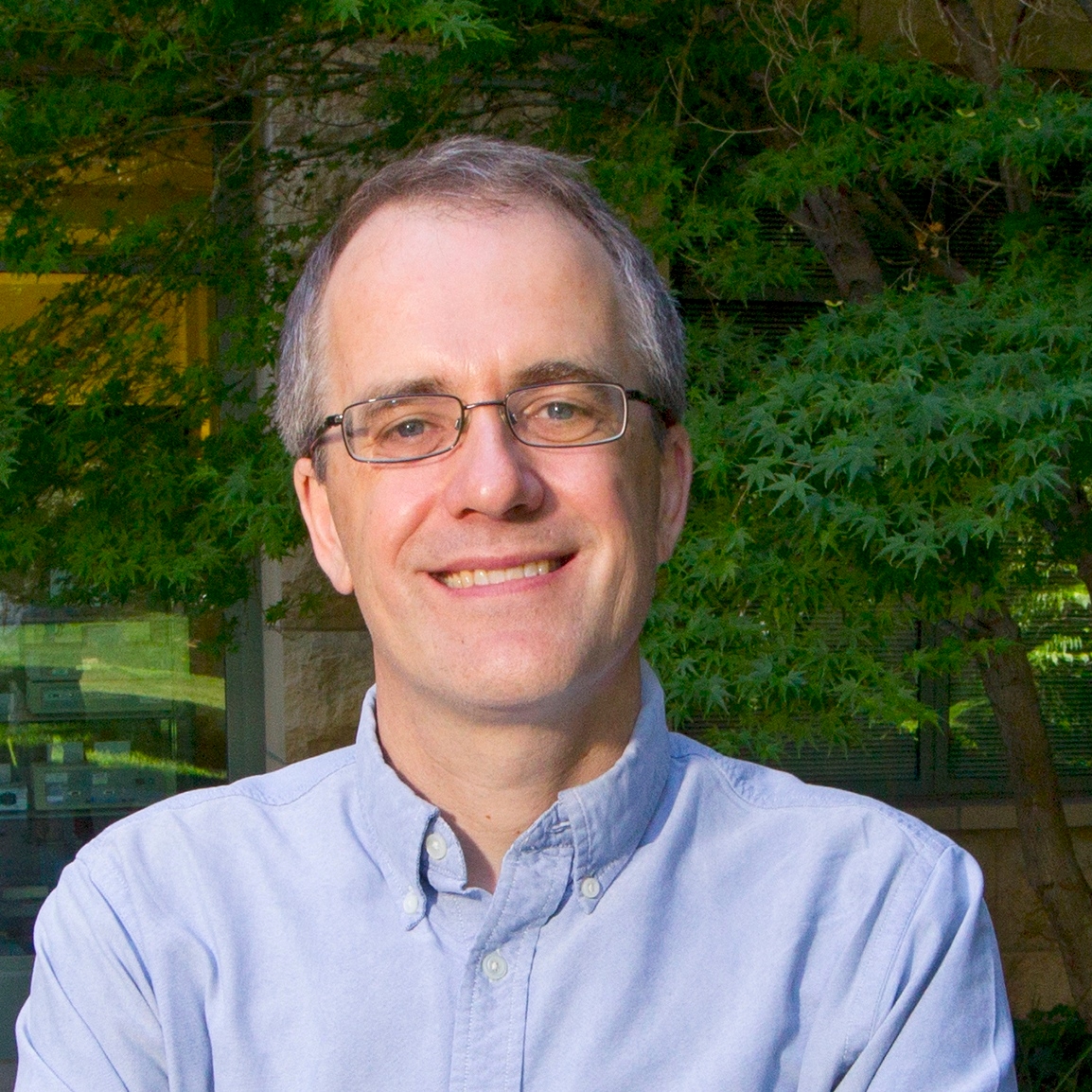
Hinrich Schütze is a researcher in natural language processing and computational linguistics whose work includes learning representations of language from text. His LMU profile identifies his research and teaching at its Center for Information and Language Processing.[ref]
Hinrich Schütze profile by LMU Munich. institutional appointment and responsibilities
In his 1998 paper Automatic Word Sense Discrimination by Hinrich Schütze, occurrences of an ambiguous word are represented by their surrounding context and grouped using clustering. The groups can distinguish uses without requiring a human to supply a sense label for every training example. The paper investigates alternative representations and evaluates how well the resulting groups separate uses.[ref]
For an illustrative example, occurrences of “bank” near “loan” and “account” differ from occurrences near “river” and “flood”. A context vector can record such differences, and clustering can group similar vectors. This is a problem of discovering useful structure from data; the algorithm's groups need not coincide perfectly with the entries of a human dictionary. The example connects his work to unsupervised learning and to the broader use of word embeddings.

Hinrich Schütze, identified portrait on his LMU institutional profile
. External image from Hinrich Schütze profile by LMU Munich.Ray Smith is a researcher and developer associated with optical character recognition and the Tesseract engine. His official author profile records development of Tesseract at HP Labs Bristol and later work on it at Google. These are documented contributions, rather than an identification with other people sharing the name.[ref]
His 2007 paper An Overview of the Tesseract OCR Engine by Ray Smith explains an architecture that first organizes a page into text lines and words, then performs recognition in two passes. Confident first-pass results train an adaptive classifier; a later pass revisits difficult words using what the system has learned about that document. The paper also discusses character segmentation and recognition features.[ref]
An Overview of the Tesseract OCR Engine by Ray Smith. pp629–632,Sections2and7: architecture and adaptive classification
A useful example is a page printed in one unusual font. Recognizing several clear characters can provide evidence about that page's letter shapes, helping interpret an ambiguous character elsewhere. Adaptation improves specificity but also makes the reliability of its training examples important. This explains a documented design idea; the 2007 architecture should not be assumed to describe every later Tesseract release.

Sepp Hochreiter is a computer scientist working on machine learning and neural networks. His institutional profile identifies long short-term memory among his research topics. The1997paper with Jürgen Schmidhuber connects his earlier analysis of decaying learning signals to a recurrent architecture designed to preserve useful error flow.[ref]
Sepp Hochreiter profile by JKU. Institutional identification and research topics
[ref]Long Short-Term Memory by Sepp Hochreiter and Jürgen Schmidhuber. Abstract; Section3 and its account of the1991analysis
A toy chain rule calculation explains the motivation. If a learning signal is multiplied by at each of twenty successive steps, its contribution is scaled byThat small contribution can make an early input difficult to associate with a much later training signal. The example illustrates the vanishing gradient problem; it is not a measurement of every recurrent neural network.
The long short-term memory design introduced a controlled internal path with constant error flow, while multiplicative gates regulate access. Its artificial-data experiments included successful learning across delays exceeding1000discrete steps. The reported capability belongs to those experiments and their architecture-specific learning rules, rather than implying that any trained instance will remember every input indefinitely.[ref]
Long Short-Term Memory by Sepp Hochreiter and Jürgen Schmidhuber. Abstract; Sections3–5: error-flow construction and artificial tasks

Sepp Hochreiter, identified on his JKU institutional profile
. External institutional portrait from Sepp Hochreiter profile by JKU.Jürgen Schmidhuber is a computer scientist whose research includes learning architectures for recurrent neural networks. He coauthored the1997long short-term memory paper with Sepp Hochreiter and the2000adaptive-forgetting paper with Felix A. Gers and Fred Cummins. These are team contributions documented by the original bylines.[ref] [ref] [ref]
The1997architecture separates a persistent internal state from learned control of access to that state. A LSTM input gate controls new input, while a LSTM output gate controls how stored information influences output. This arrangement was designed to reduce the vanishing gradient problem that makes distant events difficult to associate during learning.[ref]
Long Short-Term Memory by Sepp Hochreiter and Jürgen Schmidhuber. Abstract; Sections3–4: constant error flow and multiplicative gates
An illustrative task presents a marked value early in a long stream, then asks for it after many irrelevant inputs. A network needs both a way to retain the relevant information and a way to protect it from later interference. The paper tested artificial long-delay tasks; success on those experiments is evidence about the architecture and learning procedure under specified conditions, not a guarantee of unlimited or error-free memory.
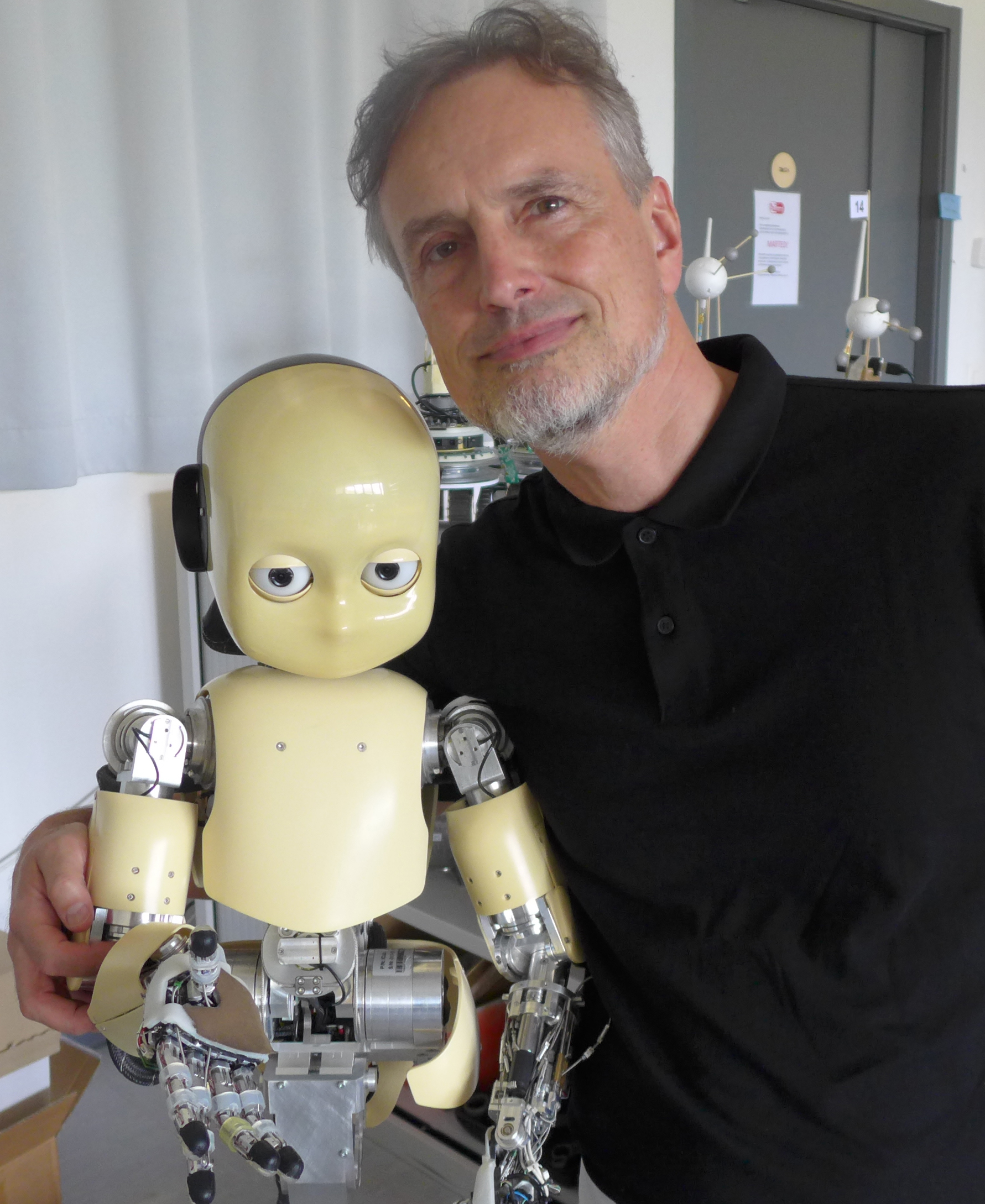
Jürgen Schmidhuber, photograph linked from his author homepage
. External photograph identified in the Photos list of Jürgen Schmidhuber homepage.Felix A. Gers is a researcher in machine learning and recurrent neural networks. His institutional profile connects his research with long short-term memory; the full-name byline of his2000paper verifies the name used here.[ref] [ref]
Learning to Forget: Continual Prediction with LSTM by Felix A. Gers, Jürgen Schmidhuber and Fred Cummins. MIT Press full author byline; DOI10.1162/089976600300015015
With Jürgen Schmidhuber and Fred Cummins, he introduced the adaptive LSTM forget gate to address continual input streams lacking externally marked reset points. The gate lets a LSTM memory cell learn when to reduce retained state, rather than requiring every sequence boundary to be supplied from outside.[ref]
Learning to Forget: Continual Prediction with LSTM by Felix A. Gers, Jürgen Schmidhuber and Fred Cummins. Abstract: continual prediction and learned resets
A scalar toy update makes selective retention tangible:Here is a retention multiplier and a new contribution. With and , choices , and retain , and respectively. This arithmetic illustrates one role of a LSTM forget gate; it omits the other gates and training equations of a complete long short-term memory network. Forgetting stored state is also distinct from discarding all learned network parameters.
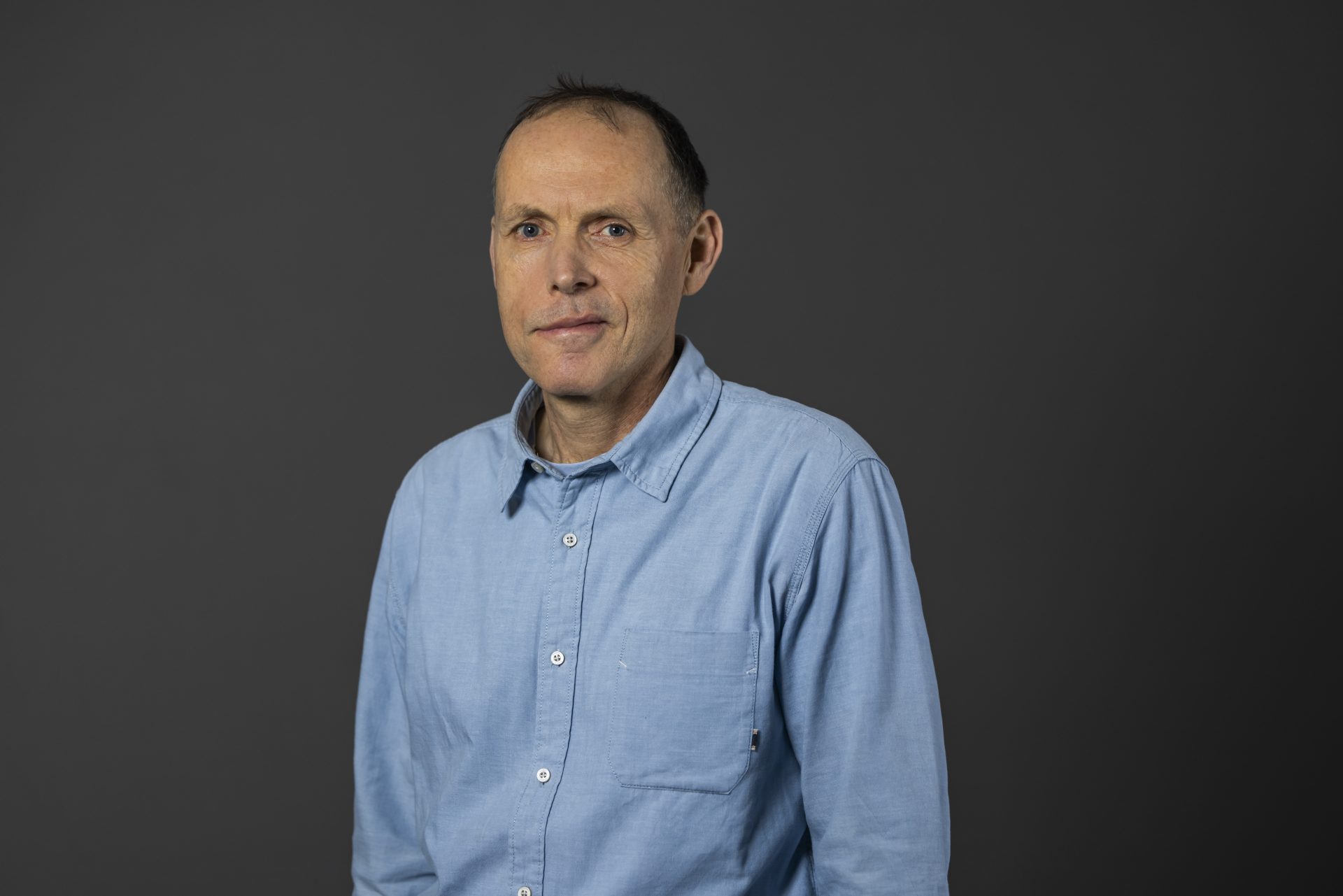
Felix Gers, identified on his BHT research profile
. External institutional portrait from Felix Gers profile by BHT.Fred Cummins is a researcher in cognitive science and speech whose work includes the timing of people speaking together. A2019speaker profile describes his empirical investigation of joint speech. His own publication list also confirms coauthorship of the2000long short-term memory forget-gate paper with Felix A. Gers and Jürgen Schmidhuber.[ref]
Fred Cummins speaker profile at Battle of Ideas 2019. Date-specific speaker biography and author publication-list cross-check
His2003study of synchronous speech asked pairs of readers to speak a prepared text together and measured their timing. Across the reported conditions, corresponding points were typically separated by about40milliseconds, with larger differences at phrase beginnings. Comparison conditions examined practice and visual access to the partner; both speakers adjusted their timing relative to individual control readings.[ref]
Practice and performance in speech produced synchronously by Fred Cummins. Abstract; Methods; synchrony and phrasal-position results
This supplies a concrete scientific question: is coordinated timing produced by one speaker simply trailing the other, or by mutual adjustment? Recording both voices and comparing them with individual readings can distinguish these accounts. The result concerns a structured reading task, rather than proving that every spontaneous crowd utterance follows the same timing rule.

Fred Cummins, identified on his2019speaker profile
. External portrait from Fred Cummins speaker profile at Battle of Ideas 2019.Klaus Greff is a machine learning researcher whose work includes controlled comparisons of long short-term memory architectures. His author homepage identifies the researcher and links his publications; the original byline of LSTM: A Search Space Odyssey by Klaus Greff and others confirms his participation in that study.[ref]
The study compared eight architectural variants across three task families, optimizing hyperparameters separately for each variant. This matters because a poorly tuned variant is not a fair test of its architecture. None significantly improved on the standard architecture in the reported comparisons, while removing particular components exposed the importance of the LSTM forget gate and output activation.[ref]
LSTM: A Search Space Odyssey by Klaus Greff and others. Abstract: variant comparisons, separate tuning and component importance
For an illustrative ablation study, compare a complete recurrent neural network with a version lacking one gate, while keeping the training task and evaluation procedure comparable. A worse result after removal is evidence about that component under the tested conditions; it does not establish that no alternative architecture could ever replace it. This is the scientific value of a controlled comparison beyond displaying one successful network.

Klaus Greff, identified on his author homepage
. External portrait linked and labeled by Klaus Greff homepage.Michael F. Plass is a computer scientist whose work connects typography with mathematical optimization. With Donald E. Knuth, he coauthored the 1981 paper that describes the Knuth-Plass line-breaking algorithm: choosing breaks for an entire paragraph with dynamic programming, allowing later text to influence earlier choices. The original byline places both authors in Stanford University's Computer Science Department.[ref]
Breaking paragraphs into lines by Donald E. Knuth and Michael F. Plass. Page1119: original byline, affiliation and summary
The authors' historical account credits Michael F. Plass with introducing feasible breakpoints into the developing algorithm in summer 1977, reducing the active possibilities considered. They report its implementation in the first complete version of TeX in March 1978. These dates describe the development of the method, rather than the later publication date.[ref]
Breaking paragraphs into lines by Donald E. Knuth and Michael F. Plass. Page1176: feasible-breakpoint refinement and implementation chronology
An illustrative spacing calculation shows one ingredient of the model. Suppose fixed boxes total 24 width units and two spaces each have normal width 3 and stretchability 2. Their natural total width is 30. For a target width of 32, the adjustment ratio is ; each space becomes , giving . This original numerical example shows proportional stretching, before the paragraph-wide choice of breaks.
The full method also represents break preferences with penalties and accounts for relevant relationships between successive lines. Line breaking with squared slack cost is a useful simpler model for understanding global choices, while the published Knuth-Plass line-breaking algorithm handles adjustable spacing and additional preferences.[ref]
Breaking paragraphs into lines by Donald E. Knuth and Michael F. Plass. Pages1121–1122: boxes, glue and penalties; pages1158–1159: active-node state
Chuan Guo is a computer scientist and coauthor of On Calibration of Modern Neural Networks by Chuan Guo and others (2017), which studies whether neural-network confidence agrees with observed correctness. Its experiments and post-processing comparisons helped make probability calibration a concrete evaluation question alongside classification accuracy. The paper marks its first three authors as equal contributors; the work should not be attributed solely to the first-listed author.[ref]
On Calibration of Modern Neural Networks by Chuan Guo and others. First-page byline, equal-contribution note and abstract
The distinction can be illustrated without reproducing an experiment. Suppose a synthetic classifier makes predictions, of which are correct, and reports confidence for every selected class. Its accuracy is , while its mean confidence is . Changing only the reported confidence to leaves the predictions and accuracy unchanged but removes this group's mean confidence gap. Aggregate agreement still does not prove calibration within every subgroup.
Temperature scaling, examined in the paper, makes a related distinction operational by fitting one positive scalar to adjust probabilities while preserving the selected class within each example. The mathematical transformation and its measured limitations belong to temperature scaling; they do not imply that every classifier can be made perfectly calibrated with one number.[ref]
On Calibration of Modern Neural Networks by Chuan Guo and others. §4.2, Eq. (9); §5, calibration comparisons
Homepage: sites.google.com/view/chuanguo . The page lists the calibration paper, distinguishing this author from other researchers with the same name.
Christian Szegedy is a researcher whose coauthored work includes Inception and methods for training convolutional neural networks. Rethinking the Inception Architecture for Computer Vision by Christian Szegedy and others examines computationally efficient convolutional design and regularization, including label smoothing. The original paper's byline identifies him as a coauthor; these are collaborative contributions.[ref]
Rethinking the Inception Architecture for Computer Vision by Christian Szegedy and others. First-page byline and abstract; §§2–3 and 7
One idea is to change training targets rather than demand probability one for a single class. For classes and smoothing amount , the paper mixes the original target with a uniform distribution. In an illustrative three-class problem with target and , this givesThe target still favors the labeled class, but allocates some mass to the others. This changes the cross-entropy training objective; it is not the same operation as fitting temperature scaling after training.[ref]
Rethinking the Inception Architecture for Computer Vision by Christian Szegedy and others. §7, mixture target and uniform-label distribution
The architectural work also motivates checking computation counts. In a simplified same-channel comparison, a five-by-five convolution uses weights, while two successive three-by-three convolutions use , ignoring biases and boundary effects. The reduction is . This own arithmetic illustrates the paper's factorization motivation; the two networks need not represent identical functions, particularly when a nonlinearity intervenes.[ref]
Rethinking the Inception Architecture for Computer Vision by Christian Szegedy and others. §3.1, replacing larger spatial convolutions by smaller ones
The scientific value is the combination of testable architecture and training choices: compare classification behavior, parameter counts and computation under stated conditions rather than inferring that one named architecture is always best.
Victor Eijkhout is a computing researcher and author of TeX by Topic by Victor Eijkhout, a technical reference explaining how TeX processes input, expands macros and builds typeset material. Its subject-based organization makes the distinction between TeX tokens, TeX expansion and later layout operations explicit.[ref]
TeX by Topic by Victor Eijkhout. Title page; Chapter 1, The Structure of the TeX Processor; Chapters 11–12, Macros and Expansion
A small example illustrates the kind of mechanism such a reference explains. Define a TeX macro with
\def\double#1{#1#1}. The call \double{ab} substitutes the argument's two letter tokens twice, producing the expanded letter-token sequence abab. In contrast, \double ab takes only the next unbraced letter token as its argument; the remaining b follows the replacement, giving aab. These are own illustrative calls under ordinary tokenization, not quotations from the book.[ref]The example shows why reading source as raw character substitution can be misleading. Argument boundaries and tokenization are part of the computation; the eventual visual layout is a later concern. That separation connects a practical typesetting problem with more general ideas about programming language processing.
His institutional profile also identifies work in numerical linear algebra, scientific computing and parallel computing, and links his computing textbooks. These are professional contributions beyond the TeX reference, rather than evidence inferred from a similarly named person.[ref]

Portrait of Victor Eijkhout
. Portrait linked from the institutional profile at the Texas Advanced Computing Center. Source. Pinned article: Introduction to the OurBigBook Project
Welcome to the OurBigBook Project! Our goal is to create the perfect publishing platform for STEM subjects, and get university-level students to write the best free STEM tutorials ever.
Everyone is welcome to create an account and play with the site: ourbigbook.com/go/register. We belive that students themselves can write amazing tutorials, but teachers are welcome too. You can write about anything you want, it doesn't have to be STEM or even educational. Silly test content is very welcome and you won't be penalized in any way. Just keep it legal!
Intro to OurBigBook
. Source. We have two killer features:
- topics: topics group articles by different users with the same title, e.g. here is the topic for the "Fundamental Theorem of Calculus" ourbigbook.com/go/topic/fundamental-theorem-of-calculusArticles of different users are sorted by upvote within each article page. This feature is a bit like:
- a Wikipedia where each user can have their own version of each article
- a Q&A website like Stack Overflow, where multiple people can give their views on a given topic, and the best ones are sorted by upvote. Except you don't need to wait for someone to ask first, and any topic goes, no matter how narrow or broad
This feature makes it possible for readers to find better explanations of any topic created by other writers. And it allows writers to create an explanation in a place that readers might actually find it.
Figure 1. Screenshot of the "Derivative" topic page. View it live at: ourbigbook.com/go/topic/derivativeVideo 2. OurBigBook Web topics demo. Source. - local editing: you can store all your personal knowledge base content locally in a plaintext markup format that can be edited locally and published either:This way you can be sure that even if OurBigBook.com were to go down one day (which we have no plans to do as it is quite cheap to host!), your content will still be perfectly readable as a static site.
- to OurBigBook.com to get awesome multi-user features like topics and likes
- as HTML files to a static website, which you can host yourself for free on many external providers like GitHub Pages, and remain in full control

Figure 2. You can publish local OurBigBook lightweight markup files to either OurBigBook.com or as a static website.
Figure 3. Visual Studio Code extension installation.
Figure 5. . You can also edit articles on the Web editor without installing anything locally. Video 3. Edit locally and publish demo. Source. This shows editing OurBigBook Markup and publishing it using the Visual Studio Code extension. 
- Infinitely deep tables of contents:


All our software is open source and hosted at: github.com/ourbigbook/ourbigbook
Further documentation can be found at: docs.ourbigbook.com
Feel free to reach our to us for any help or suggestions: docs.ourbigbook.com/#contact