
Bureau International des Poids et Mesures 2026-10-14
Santa Monica College 2026-10-14
Andrew Coffey Created 2026-10-14 Updated 2026-11-05
Chromatography separates components of a mixture through different migration rates in contact with a chromatographic stationary phase while a chromatographic mobile phase transports them. Liquid chromatography describes the physical state of the transporting phase; size-exclusion chromatography describes a separation mechanism. Classification by phase and classification by mechanism answer different questions. In ideal size-exclusion chromatography, differential access to liquid-filled pores replaces binding as the source of differential migration.
Sonja Schneider Created 2026-10-14 Updated 2026-11-05
Sonja Schneider authored an application study combining size-exclusion chromatography with light scattering and concentration measurements to characterize proteins. The measurements estimate molar mass independently of a retention-time calibration alone.
A change in shape can change elution behaviour without producing the same change in molar mass. Combining detectors helps distinguish altered conformation from altered assembly.[ref]
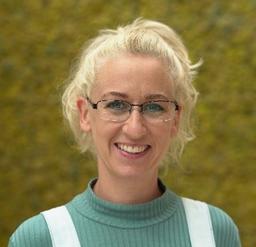
Portrait of Sonja Schneider
. Portrait from the SelectScience speaker profile. GE Healthcare 2026-10-14
G. P. Moss Created 2026-10-14 Updated 2026-11-05
Stereochemistry studies the spatial arrangement of chemical atoms in molecules. A Fischer projection records this information at successive stereocenters, whereas a molecular formula only counts chemical atoms. See McMurry: representing carbohydrate stereochemistry.
Vernier 2026-10-14
List of chemists Created 2026-10-14 Updated 2026-10-24
Chemical engineer Created 2026-10-14 Updated 2026-11-05
A chemical engineer applies chemical engineering to processes involving reactions, separations or material transport. The work can include constructing mass and energy balances, estimating equipment sizes and interpreting measurements from a process. For a distillation system, vapor-liquid equilibrium predicts separation possibilities while heat and material flows determine how the equipment can achieve them. The role connects molecular properties to the behaviour of larger interacting units.
Microcentrifuge Created 2026-10-14 Updated 2026-10-20
A microcentrifuge performs centrifugation of small sample tubes, as used to concentrate biological cells and separate debris in the PV92 teaching experiment.
Biophysicist Created 2026-10-14 Updated 2026-11-05
A scientist who investigates biological systems using physical methods and models. A biophysicist may connect single-molecule measurements with molecular mechanisms or use collective physical behavior to explain tissue organization.
Core practical 4: Investigate the effect of sucrose concentration on pollen tube growth by Pearson Education Ltd Created 2026-10-14 Updated 2026-10-31
Seven-page teacher, student and technician worksheets in EDEXCEL Biology B Teacher Resource Pack 1, issued by Pearson Education Ltd. The printed copyright is 2015; no separate publication or revision date or personal byline is established. The teacher notes credit adaptation from several protocols including SAPS.
Observing the growth of pollen tubes (Practical Biology) Created 2026-10-14 Updated 2026-10-31
Online text: practicalbiology.org/cells-to-systems/reproductive-systems/observing-the-growth-of-pollen-tubes
Published educational practical on Practical Biology, a Royal Society of Biology site. No personal byline or publication date is stated. September 2009 is a health and safety check; October 2011 is the access date of a linked website. Neither establishes publication.
Cited passages: Technical note 3; Teaching notes, male gametophyte, tube shape and the steps between pollen germination and seed formation.
A Reversible Photoreaction Controlling Seed Germination by Harry Alfred Borthwick and others Created 2026-10-14 Updated 2026-10-31
By Harry Alfred Borthwick, Sterling Brown Hendricks, Marion W. Parker, Eben H. Toole, Vivian Kearns Toole.
Published in Proceedings of the National Academy of Sciences 38(8), pp. 662–666, August 1952. The communicated date, 7 June 1952, is a manuscript date.[ref]
https://pmc.ncbi.nlm.nih.gov/articles/PMC1063632/. Primary article author roster and publication metadata
Online text: www.pnas.org/doi/pdf/10.1073/pnas.38.8.662
Cited passages: pp. 662–663: wet blotters, covered dishes, darkness, 20 °C and a two-prism glass spectrograph; p. 664: seven lots of 200 seeds, 16-hour dark imbibition, one-minute red and four-minute far-red exposures, and a two-day endpoint; p. 665, Table 1: qualitative red/far-red reversal and incomplete suppression; p. 663: pigment identification explicitly deferred.
Seed dormancy and the control of germination by William E. Finch-Savage and Gerhard Leubner-Metzger Created 2026-10-14 Updated 2026-10-31
Published in New Phytologist 171(3), pp. 501–523; first published online 14 July 2006.[ref]
https://doi.org/10.1111/j.1469-8137.2006.01787.x. Publisher author credits, volume, pages and first-publication date
Online text: doi.org/10.1111/j.1469-8137.2006.01787.x
Cited passages: Summary, p. 501; §II.1 Seed structure and seed germination, p. 502; §II.2 Definition of seed dormancy, p. 502.
Cell Respiration by the K20 Center Created 2026-10-14 Updated 2026-10-31
University of Oklahoma K20 Center educational laboratory handout adapted from the 2001 AP Biology Lab Manual. The associated lesson was published on 8 November 2022; that is not an established publication date for this undated attachment. Its tables are blank.
The checkpoint delaying anaphase in response to chromosome monoorientation is mediated by an inhibitory signal produced by unattached kinetochores by Conly L. Rieder and others Created 2026-10-14 Updated 2026-10-31
Online text: doi.org/10.1083/jcb.130.4.941
Experimental article published on 15 August 1995 in Journal of Cell Biology 130(4), pp. 941–948. The full author PDF was inspected at the separately linked copy.
Cited passages: pp. 941–942, Abstract and Materials and Methods: Cell Culture; Laser Microsurgery and Video-enhanced Light Microscopy; pp. 943–947, arm-cutting control, Table I, Figures 1, 5 and 6; destruction of the last unattached kinetochore and correlative electron microscopy.
Overview of Circadian Rhythms by Martha Hotz Vitaterna and others Created 2026-10-14 Updated 2026-10-31
Online text: pmc.ncbi.nlm.nih.gov/articles/PMC6707128/
Authored review published in 2001 in Alcohol Research & Health 25(2), pp. 85–93. The actually inspected PDF copy is linked below; the publisher record is hosted by PubMed Central.
Cited passages: Vitaterna, Takahashi and Turek (2001), Overview of Circadian Rhythms, pp. 85–86, Biological Rhythms and Basic Properties of Circadian Rhythms; p. 92, glossary entries Entrainment, Free running and Masking; pp. 86–87, Figure 1A; p. 92, Free running; pp. 86–87, synchronization to external cues; p. 92, Entrainment and Zeitgeber.
Mutagenesis and Mapping of a Mouse Gene, Clock, Essential for Circadian Behavior by Martha Hotz Vitaterna and others Created 2026-10-14 Updated 2026-10-31
By Martha Hotz Vitaterna, David P. King, Anne-Marie Chang, Jon M. Kornhauser, Phillip L. Lowrey, J. David McDonald, William F. Dove, Lawrence H. Pinto, Fred W. Turek, Joseph S. Takahashi.
Online text: pmc.ncbi.nlm.nih.gov/articles/PMC3839659/
Experimental article published on 29 April 1994 in Science 264(5159), pp. 719–725. The 2013 PMC availability date is distinct from journal publication.
Cited passages: Figure 2A–C; Table 2 and discussion of activity counts and loss of rhythmicity; References and Notes 10 and 14; Vitaterna and others (1994), Mutagenesis and Mapping of a Mouse Gene, Clock, Essential for Circadian Behavior, Figure 1 and References and Notes 6–10.
Protein Preparation Handbook, Thermo Fisher Scientific Created 2026-10-14 Updated 2026-10-31
Manufacturer scientific handbook issued by Thermo Fisher Scientific. The printed copyright range is 2016–2018; the document code does not establish its publication year. Figure 9A measures salt removal through conductivity, while Figure 8 measures protein retention separately; neither test alone establishes preserved enzymatic function.
Cited passages: Protein Preparation Handbook, printed p. 11, Figure 8 and caption: membrane series, preparation, duration, temperature and protein assay; the separately plotted vitamin B12 uses a different optical readout; Protein Preparation Handbook, printed p. 11, Figure 9A and caption: sample preparation, 10K membrane, baths, conductivity and conventional-dialysis reference.
There are unlisted articles, also show them or only show them.