Topics (384k) Articles (398k) Users (410) Discussions (242) Comments (383) Files (13k) New article

Charles-Augustin de Coulomb used a torsion balance to turn weak electric forces into measurable angular displacements. The restoring torque of a twisted silver wire supplies a calibrated mechanical comparison with the electric force. In his first electrical memoir for 1785, he varied the wire's imposed twist and compared the equilibrium separations of two small bodies carrying like electric charges. The total twist, including the moving arm's deflection, determines the restoring torque. These measurements supported the inverse-square dependence expressed by Coulomb's law, joining a mechanical calibration with the geometry of electric charges.[ref]
Premier mémoire sur l'électricité et le magnétisme by Charles-Augustin de Coulomb. First memoir, apparatus construction, repulsion trials and total torsion-angle comparison, pp. 569–577; Academy volume for 1785, printed 1788
Physicist and engineer whose work includes friction and strength of materials. His name appears in the Mohr-Coulomb failure criterion.

Portrait of Charles-Augustin de Coulomb
. Louis Hierle, 1894, after Hippolyte Lecomte; painted portrait at Versailles. Public domain according to the Wikimedia Commons file page (PD-old-100 and PD-US-expired). Source usage terms, via Wikimedia Commons. Source.A. A. Barker authored a 1965 calculation of radial distribution functions for a proton–electron plasma. The associated Barker acceptance probability supplies a useful rule for equilibrium Markov chain Monte Carlo: if the probability-and-proposal ratio for a proposed move is , accept with probability . For reverse moves the ratio is , so the acceptance probabilities have ratio , giving detailed balance. The rule connects a microscopic sampling decision with the desired equilibrium distribution.[ref]
Monte Carlo Calculations of the Radial Distribution Functions for a Proton-Electron Plasma by A. A. Barker. 1965 publication identity; acceptance-rule explanation in modern notation
Author credited under these initials on the 1965 Monte Carlo method plasma paper Monte Carlo Calculations of the Radial Distribution Functions for a Proton-Electron Plasma by A. A. Barker. The initials are not expanded because an exact identity beyond the publication credit has not been established here. University of Adelaide thesis addendum identifying the 1965 publication.
Maurice Karnaugh developed a map method for simplifying Boolean functions in electric circuit design. A Karnaugh map arranges truth table entries so that neighboring cells differ in one variable. Grouping adjacent entries reveals variables that do not affect an output. For example, Boolean algebra gives , removing dependence on . His 1953 paper also distinguishes a short Boolean algebra expression from an economical physical electric circuit, because the best implementation depends on the available components.[ref]
The Map Method for Synthesis of Combinational Logic Circuits by Maurice Karnaugh. 1953 original paper, opening synthesis discussion and map representation; two-variable identity illustrated here
Physicist and computer scientist associated with the Karnaugh map for simplifying Boolean functions. Wikipedia biography identifies the subject and his logic-design contribution.
Daniel Gottesman developed a useful way to describe quantum circuits by following their Pauli operators instead of all their probability amplitudes. An -qubit stabilizer state is specified by independent compatible commuting Pauli operators whose common eigenspace is one-dimensional. A Clifford gate maps Pauli operators to Pauli operators by conjugation, so these generators can be updated efficiently on a computer. This explains why a large family of entangled computations is efficiently simulable, and supplies the language of stabilizer codes.[ref]
The Heisenberg Representation of Quantum Computers by Daniel Gottesman. Sections 2–3, stabilizers and the Clifford group; Table 1, generator conjugations
Physicist whose work includes the stabilizer formalism for quantum error correction. His The Heisenberg Representation of Quantum Computers by Daniel Gottesman develops the Pauli group description of Clifford circuits. Verified institutional profile.
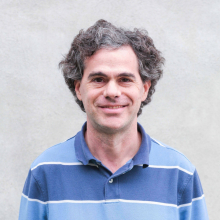
Daniel Gottesman. External portrait supplied by the University of Maryland Department of Computer Science; photographer and licence are not specified on the verified profile.
Source. A photographer credited by Wikimedia Commons for the circa-1900 portrait of Carl Wernicke reproduced here.
Photographer credited by the Oberwolfach Photo Collection and the verified Wikimedia Commons file for the 2007 portrait displayed in James R. Norris. The credit is retained without adding unverified biographical details.
A photographer credited on Wikimedia Commons for the 2015 photograph of Martin Fowler embedded above. The attribution and exact photograph identity are given by the [ref]
https://commons.wikimedia.org/wiki/File:Webysther_20150414193208_-_Martin_Fowler.jpg. Commons file record
.
Portrait of Tim Maudlin
. Philosophy at the University of Edinburgh; frame from its online course, cropped on Wikimedia Commons. CC BY 4.0, via Wikimedia Commons. Source.
Portrait of John Locke
. Godfrey Kneller, 1697; Hermitage Museum. Public domain. Source and usage information on the linked Wikimedia file page. Source.
Portrait of Karl Popper
. Franz Barta; LSE Library, circa 1980. No known copyright restrictions, via Wikimedia Commons. Source.
Portrait of Imre Lakatos
. Library of the London School of Economics and Political Science; staff portrait circa 1960s; IMAGELIBRARY/277; Flickr photo 3983645490. No known copyright restrictions (Flickr Commons), via Wikimedia Commons. Source.
Portrait of Thomas Kuhn
. Bob Bielk, 1977; Princeton University Weekly Bulletin. Public domain in the United States; the linked file page records territorial qualifications. Source. Pinned article: Introduction to the OurBigBook Project
Welcome to the OurBigBook Project! Our goal is to create the perfect publishing platform for STEM subjects, and get university-level students to write the best free STEM tutorials ever.
Everyone is welcome to create an account and play with the site: ourbigbook.com/go/register. We belive that students themselves can write amazing tutorials, but teachers are welcome too. You can write about anything you want, it doesn't have to be STEM or even educational. Silly test content is very welcome and you won't be penalized in any way. Just keep it legal!
Intro to OurBigBook
. Source. We have two killer features:
- topics: topics group articles by different users with the same title, e.g. here is the topic for the "Fundamental Theorem of Calculus" ourbigbook.com/go/topic/fundamental-theorem-of-calculusArticles of different users are sorted by upvote within each article page. This feature is a bit like:
- a Wikipedia where each user can have their own version of each article
- a Q&A website like Stack Overflow, where multiple people can give their views on a given topic, and the best ones are sorted by upvote. Except you don't need to wait for someone to ask first, and any topic goes, no matter how narrow or broad
This feature makes it possible for readers to find better explanations of any topic created by other writers. And it allows writers to create an explanation in a place that readers might actually find it.
Figure 1. Screenshot of the "Derivative" topic page. View it live at: ourbigbook.com/go/topic/derivativeVideo 2. OurBigBook Web topics demo. Source. - local editing: you can store all your personal knowledge base content locally in a plaintext markup format that can be edited locally and published either:This way you can be sure that even if OurBigBook.com were to go down one day (which we have no plans to do as it is quite cheap to host!), your content will still be perfectly readable as a static site.
- to OurBigBook.com to get awesome multi-user features like topics and likes
- as HTML files to a static website, which you can host yourself for free on many external providers like GitHub Pages, and remain in full control

Figure 2. You can publish local OurBigBook lightweight markup files to either OurBigBook.com or as a static website.
Figure 3. Visual Studio Code extension installation.
Figure 5. . You can also edit articles on the Web editor without installing anything locally. Video 3. Edit locally and publish demo. Source. This shows editing OurBigBook Markup and publishing it using the Visual Studio Code extension. 
- Infinitely deep tables of contents:




All our software is open source and hosted at: github.com/ourbigbook/ourbigbook
Further documentation can be found at: docs.ourbigbook.com
Feel free to reach our to us for any help or suggestions: docs.ourbigbook.com/#contact