Topics (384k) Articles (398k) Users (410) Discussions (242) Comments (383) Files (13k) New article

A physicist whose work on fluid mechanics linked mathematical models with measurements of turbulence. He used an anemometer with a heated wire to probe velocity fluctuations and studied Burgers' equation, a simplified nonlinear equation that retains competition between wave steepening and viscous smoothing. The simpler equation makes it possible to isolate mechanisms that are entangled in the full Navier-Stokes equations. His work also introduced the Burgers vector as a measure of a dislocation in a crystal lattice.[ref]
Jan Burgers' Biography at the University of Maryland. Scientific-work paragraphs: hot-wire measurements, turbulence models, Burgers equation and crystal dislocations
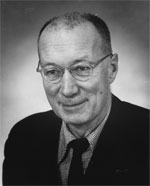
Portrait of Jan Burgers
. Source. Mildred Dresselhaus investigated the electronic band structure and optical response of carbon materials, from graphite to carbon nanotubes. Her group's Raman spectroscopy studies used resonant enhancement to distinguish nanotubes by their geometry and electronic transitions. Measurements on individual carbon nanotubes connected the vibrational spectrum with diameter and chirality, making light scattering a structural probe at the scale of a single tube.[ref]
https://physics.mit.edu/faculty/mildred-dresselhaus/. MIT faculty profile, Research Interests: resonant Raman characterization of individual nanotubes
Her authored solid-state lecture notes also explain how impurity spectra test models of electrons and holes in semiconductors, including the limitations of treating every impurity as a simple hydrogen-like system.[ref]
MIT memorial profile and portrait: physics.mit.edu/faculty/mildred-dresselhaus/

Portrait of Mildred Dresselhaus
. Official White House photograph by Pete Souza; existing Commons crop of Mildred Dresselhaus. Public domain (official United States federal government photograph). Source usage terms, via Wikimedia Commons. Source.Sydney Chapman developed a quantitative explanation of atmospheric ozone photochemistry. In the basic mechanism, ultraviolet radiation dissociates molecular oxygen, an oxygen atom combines with another molecular oxygen and a third collision partner to form ozone, and further reactions remove it. His 1930 treatment connected the production and destruction reaction rates with the distribution and seasonal variation of ozone, while explicitly setting aside uncertain atmospheric transport. It was a testable physical model with stated omissions, rather than a complete account of all observed ozone changes.[ref]
A Theory of Upper-Atmospheric Ozone by Sydney Chapman. Introduction and sections on formation and removal of atmospheric ozone; original-paper excerpt

Portrait of Sydney Chapman (mathematician)
. NOAA. Public domain in the United States (NOAA official work). Source usage terms, via Wikimedia Commons. Source.A theoretical physicist who, with Scott Hill, developed a calculable measure of quantum entanglement for pairs of qubits. Their 1997 work introduced the concurrence approach and obtained an exact preparation-cost formula for mixed states of rank at most two, with evidence for a broader extension. This turned an optimization over pure-state decompositions into a practical calculation for an important class of small quantum systems.[ref]
Entanglement of a Pair of Quantum Bits by Scott Hill and William K. Wootters. Abstract and equations (3)–(6): rank-two result and magic-basis construction
Jainendra K. Jain proposed describing the fractional quantum Hall effect through composite fermions: correlated electronic states represented by electrons carrying an even number of units of the magnetic flux quantum. In this effective description, important fractional electronic states correspond to filled effective Landau levels, connecting them with the integer quantum Hall effect. For instance, the electronic filling factor belongs to the sequence with . Flux attachment here encodes many-electron correlations; it is not a claim that each electron is a tiny classical solenoid.[ref]
Composite-fermion approach for the fractional quantum Hall effect by J. K. Jain. Physical Review Letters 63, 199–202 (1989), abstract and composite-fermion construction

Portrait of Jainendra K. Jain
. Xpaqui. CC0 1.0 Universal, via Wikimedia Commons. Source.
Portrait of Wojciech H. Zurek
. Los Alamos National Laboratory. Unless otherwise indicated, this information has been authored by an employee or employees of the Los Alamos National Security, LLC (LANS), operator of the Los Alamos National Laboratory under Contract No. DE-AC52-06NA25396 with the U.S. Department of Energy. The U.S. Government has rights to use, reproduce, and distribute this information. The public may copy and use this information without charge, provided that this Notice and any statement of authorship are reproduced on all copies. Neither the Government nor LANS makes any warranty, express or implied, or assumes any liability or responsibility for the use of this information. Los Alamos National Laboratory attribution permission, via Wikimedia Commons. Source.Artur Ekert proposed deriving a shared cryptographic key from measurements on entangled particle pairs while testing other measurement settings through a Bell inequality. The different settings therefore serve two purposes: correlated results supply candidate key bits, and the observed correlations constrain possible descriptions of the source and an eavesdropper. The proposal connected a foundational test of quantum mechanics with the operational task of quantum key distribution, under the assumptions of its measurement and security model.[ref]
Quantum cryptography based on Bell's theorem by Artur K. Ekert. 1991 proposal, entangled pairs, key settings and Bell-correlation test

Portrait of Artur Ekert
. The Royal Society (required attribution); Commons author field: Duncan.Hull; existing crop by Ravenpuff. CC BY-SA 3.0, via Wikimedia Commons. Source.David Attwood studies the use of diffraction for X-ray microscopy. With Janos Kirz, he authored the X-Ray Data Booklet's account of zone plates: concentric rings select contributions that interfere at a focus. Their treatment connects outer-zone width to spatial resolution and explains why an ideal opaque/transparent zone plate sends only of incident power into its first diffraction order. Resolving a small structure and collecting a useful fraction of the incident X-rays are therefore separate design constraints.[ref]
Zone Plates by Janos Kirz and David Attwood. Section 4.4, zone geometry, resolution and first-order efficiency

Portrait of David Attwood
. External portrait hosted by University of California, Berkeley. Source.A theoretical condensed matter physicist who introduced the Hubbard model in 1963 to study electron correlation in narrow energy bands. The model balances motion of electrons between lattice sites against the Coulomb interaction cost of putting two electrons on the same site. By retaining these competing ingredients, it makes the crossover between mobile and localized electrons accessible without modeling every detail of a real solid.[ref]
Electron correlations in narrow energy bands by John Hubbard. pp. 238–241: motivation, simplified interaction and model Hamiltonian
Coauthor of the 1966 proof excluding finite-temperature magnetic order in finite-range one- and two-dimensional isotropic Heisenberg models. The primary publication identifies the author as N. D. Mermin. doi.org/10.1103/PhysRevLett.17.1133

Portrait of N. David Mermin
. Prolineserver. CC BY-SA 3.0, via Wikimedia Commons. Source.An experimental optical physicist who coauthored a bright source of polarization-entangled photon pairs in 1995. Noncollinear type-II spontaneous parametric down-conversion generated the pairs, while compensation of distinguishability allowed strong polarization entanglement. A source of this kind supplies repeatable inputs for Bell tests and experiments in quantum information.[ref]
New High-Intensity Source of Polarization-Entangled Photon Pairs by Paul G. Kwiat and others. Abstract and apparatus: type-II phase matching, compensation and polarization coincidences
A theoretical physicist who formulated physical requirements for a quantum computer: controllable qubits, initialization, coherence lasting long enough for operations, universal quantum logic gates and readout. His analysis lets proposed hardware platforms be compared through the same operational tasks.[ref]
The Physical Implementation of Quantum Computation by David P. DiVincenzo. Section III: five requirements; section IV: communication requirements
With Daniel Loss, he proposed encoding qubits in single-electron spins in coupled quantum dots, using electrically controlled coupling for two-qubit operations.[ref]
Quantum Computation with Quantum Dots by Daniel Loss and David P. DiVincenzo. Abstract and section II: gated tunneling barrier and spin gates
Michael E. McIntyre studies geophysical fluid dynamics, including atmospheric and oceanic motion. His graduate notes develop the connection between rotation, density stratification and large-scale motion, providing a physical foundation for interpreting waves and circulation rather than treating weather maps as purely descriptive patterns.[ref]
Fundamentals of Atmosphere-Ocean Dynamics by Michael Edgeworth McIntyre. Graduate lecture notes: course scope
That connection is useful because a local parcel force balance and the evolution of a global circulation concern different scales. Conservation laws and carefully stated approximations determine when a reduced dynamical model can represent the observed flow.
Ignacio Cirac and Peter Zoller showed how laser control of a chain of trapped ions could implement quantum computation. Their proposal transfers information between an ion's internal quantum state and a collective vibrational normal mode, then uses that shared motion to perform a conditional operation on another ion. Returning the motion to its starting quantum state leaves the intended quantum logic gate acting on the internal qubits.[ref]
Quantum Computations with Cold Trapped Ions by J. I. Cirac and P. Zoller. 1995 proposal, collective vibrational mode and gate construction

Portrait of Ignacio Cirac
. Original copyright holder credited on Commons as Author original propietry; uploaded by Gallowolf, crop by Kimsaka. CC BY-SA 3.0, via Wikimedia Commons. Source.Peter Zoller and Ignacio Cirac proposed a trapped-ion quantum computer in which internal quantum states store qubits and a shared vibrational normal mode connects them. Carefully chosen laser pulses couple internal and motional quantum states, allowing a conditional quantum logic gate between different ions. The shared motion serves as a temporary communication channel rather than an independently addressed wire; controlling and restoring that motion is essential to the proposed gate sequence.[ref]
Quantum Computations with Cold Trapped Ions by J. I. Cirac and P. Zoller. Original 1995 proposal, ion internal levels, collective motion and conditional gate sequence

Portrait of Peter Zoller
. Hans Weber, 14 March 2007. CC BY-SA 3.0, via Wikimedia Commons. Source.Michael Berry (physicist) showed that slowly carrying a nondegenerate energy eigenstate around a closed loop of external parameters can produce a geometric phase in addition to its dynamical phase. The geometric phase depends on the path through parameter space and survives after the ordinary energy-dependent contribution is removed. For a spin following a slowly varying magnetic field, it is proportional to the solid angle enclosed by the field direction, making the geometry measurable through interference.[ref]
Quantal phase factors accompanying adiabatic changes by Michael Victor Berry. Abstract and section 4, spinning particle in a slowly changing magnetic field

Portrait of Michael Berry (physicist)
. Vahram Mekhitarian, photograph; Jakob Gottfried, derivative crop. CC BY-SA 4.0, via Wikimedia Commons. Source.Physicist and author of the 1957 primary magnetic-isotherm criterion now associated with the Arrott plot. The publication identifies affiliations at Carnegie Institute of Technology and Ford Motor Company's Scientific Laboratory; no biographical dates are asserted here.
Ondrej Krivanek develops electron microscopy methods that connect atomic structure with chemical identity. A 2010 coauthored experiment used an aberration-corrected scanning transmission electron microscope to distinguish individual boron, nitrogen, carbon and oxygen atoms in a single sheet of hexagonal boron nitride. Collecting electrons scattered through large angles made the image intensity sensitive to atomic identity: the same measurement located atoms and identified substitutional impurities, rather than merely showing an unresolved average composition.[ref]
Atom-by-atom structural and chemical analysis by annular dark-field electron microscopy by O. L. Krivanek and others. Nature 464, 571–574 (2010), abstract and atomic identification in a monolayer

Portrait of Ondrej Krivanek
. Thomas Barstad Eckhoff, credited as Thomas Eckhoff, via The Kavliprize; Oslo, 5 September 2022; existing individual Krivanek crop. CC BY-SA 2.0, via Wikimedia Commons. Source.An experimental condensed matter physicist who, with T. G. Mason, developed optical microrheology of complex fluids. Dynamic light scattering measures the random displacement of probe particles; a generalized Langevin equation relates those fluctuations to the fluid's storage modulus and loss modulus. Comparing the result with mechanical measurements showed that microscopic motion could probe bulk viscoelasticity over a broad frequency range.[ref]
Saul Teukolsky studied particle orbits and radiation near rotating black holes with James M. Bardeen and William H. Press. Their 1972 work used locally nonrotating orthonormal frames to express physical measurements in the Kerr metric.
This separates locally measured particle speeds from coordinate behavior affected by frame dragging. The paper applied the method to energy extraction and radiation, testing whether a formally allowed process could operate on physically reasonable orbits.[ref]

Portrait of Saul Teukolsky in 1975
. Photograph credited to A. T. Service, via Wikimedia Commons. CC BY-SA 3.0. Source. Pinned article: Introduction to the OurBigBook Project
Welcome to the OurBigBook Project! Our goal is to create the perfect publishing platform for STEM subjects, and get university-level students to write the best free STEM tutorials ever.
Everyone is welcome to create an account and play with the site: ourbigbook.com/go/register. We belive that students themselves can write amazing tutorials, but teachers are welcome too. You can write about anything you want, it doesn't have to be STEM or even educational. Silly test content is very welcome and you won't be penalized in any way. Just keep it legal!
Intro to OurBigBook
. Source. We have two killer features:
- topics: topics group articles by different users with the same title, e.g. here is the topic for the "Fundamental Theorem of Calculus" ourbigbook.com/go/topic/fundamental-theorem-of-calculusArticles of different users are sorted by upvote within each article page. This feature is a bit like:
- a Wikipedia where each user can have their own version of each article
- a Q&A website like Stack Overflow, where multiple people can give their views on a given topic, and the best ones are sorted by upvote. Except you don't need to wait for someone to ask first, and any topic goes, no matter how narrow or broad
This feature makes it possible for readers to find better explanations of any topic created by other writers. And it allows writers to create an explanation in a place that readers might actually find it.
Figure 1. Screenshot of the "Derivative" topic page. View it live at: ourbigbook.com/go/topic/derivativeVideo 2. OurBigBook Web topics demo. Source. - local editing: you can store all your personal knowledge base content locally in a plaintext markup format that can be edited locally and published either:This way you can be sure that even if OurBigBook.com were to go down one day (which we have no plans to do as it is quite cheap to host!), your content will still be perfectly readable as a static site.
- to OurBigBook.com to get awesome multi-user features like topics and likes
- as HTML files to a static website, which you can host yourself for free on many external providers like GitHub Pages, and remain in full control

Figure 2. You can publish local OurBigBook lightweight markup files to either OurBigBook.com or as a static website.
Figure 3. Visual Studio Code extension installation.
Figure 5. . You can also edit articles on the Web editor without installing anything locally. Video 3. Edit locally and publish demo. Source. This shows editing OurBigBook Markup and publishing it using the Visual Studio Code extension. 
- Infinitely deep tables of contents:




All our software is open source and hosted at: github.com/ourbigbook/ourbigbook
Further documentation can be found at: docs.ourbigbook.com
Feel free to reach our to us for any help or suggestions: docs.ourbigbook.com/#contact