Topics (384k) Articles (398k) Users (410) Discussions (242) Comments (383) Files (13k) New article

Bill Pickering (rocket scientist) was an electrical engineer whose work connected electronic instrumentation with robotic space exploration. His experience designing telemetry equipment brought him to the Jet Propulsion Laboratory, where he later served as director from 1954 to 1976.[ref]
William H. Pickering in the JPL directors' biographies. Career and JPL directorship
During that period, JPL participated in the launch of Explorer 1 and developed spacecraft for studying the Moon and planets. The Ranger program returned close-up lunar images and the Surveyor program achieved soft landings. Those missions illustrate the coupled engineering problem: an instrument must make a useful measurement, and the spacecraft must control its operation and communicate the result across a large distance.[ref]
William H. Pickering in the JPL directors' biographies. Explorer I, Ranger, Surveyor and planetary missions

Portrait of Bill Pickering (rocket scientist)
. NASA/JPL-Caltech. Public domain (NASA). Source usage terms, via Wikimedia Commons. Source.An electrical engineer who developed integrated circuits at Texas Instruments.[ref]
Professional profile of Jack St. Clair Kilby. Independent professional identity

Portrait of Jack Kilby
. James R. Biard. CC BY-SA 4.0, via Wikimedia Commons. Source.Charles K. Kao was an electrical engineer whose work helped establish the feasibility of low-loss optical fiber communication. With George Alfred Hockham, he analyzed dielectric-fibre guidance at optical frequencies, including the losses and information-carrying limitations of the medium.[ref]
Dielectric-fibre surface waveguides for optical frequencies by Charles Kuen Kao and George Alfred Hockham. 1966, synopsis and introduction
The important engineering question was how to turn a physically guided mode into a practical long-distance signal path. Their analysis examined absorption, bending loss and dispersion alongside mode behaviour. This linked the electromagnetic design of a waveguide to the properties of the glass and to the timing of signals, rather than treating transparency as a sufficient description.[ref]
Dielectric-fibre surface waveguides for optical frequencies by Charles Kuen Kao and George Alfred Hockham. Loss and information-capacity discussion

Portrait of Charles K. Kao
. David Dobkin. CC BY-SA 3.0, via Wikimedia Commons. Source.Electrical engineer whose research includes nuclear magnetic resonance and dynamic nuclear polarization.[ref]
https://www.au.dk/en/show/person/jhar%40clin.au.dk. Primary identity record
Carl W. Helstrom developed quantum detection and estimation methods for distinguishing signals and inferring parameters in optical systems. His work asks what information a quantum measurement can extract when the field itself limits accuracy. The Helstrom-Holevo bound expresses the minimum error probability for distinguishing two specified quantum states, connecting a statistical decision problem to an optimal quantum measurement.[ref]
https://opg.optica.org/josa/abstract.cfm?uri=josa-60-2-233. Estimation of Object Parameters by a Quantum-Limited Optical System, 1970
An electrical engineer whose research includes game theory and mathematical optimization.[ref]
https://computing.mit.edu/about/people/leadership/asu-ozdaglar/. MIT institutional profile, education and research expertise
Homepage: asu.mit.edu/
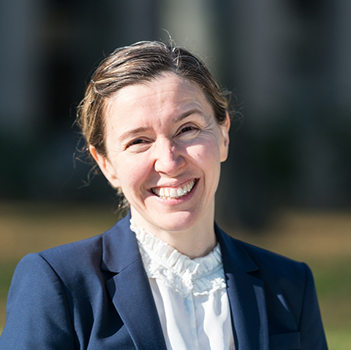
Portrait of Asu Ozdaglar
. Portrait linked by the MIT Schwarzman College of Computing profile.An electrical engineer whose experiments investigated selection and recognition of simultaneous speech.

Portrait of Colin Cherry
. Historical photograph hosted by the MacTutor History of Mathematics archive at the University of St Andrews. Source.Peter B. L. Meijer is a researcher whose work includes image-to-sound sensory substitution. His 1992 engineering paper described how a grayscale image could be encoded as a time-varying sound pattern.[ref]
The design scans image columns from left to right. Horizontal position becomes time within a scan, vertical position selects an audio frequency, and brightness sets an oscillator's amplitude. For example, a bright point high on the right produces a relatively high-frequency component late in the scan. Different rows contribute superposed tones. This provides an explicit encoding whose mathematical information content can be studied separately from how well a listener learns to interpret it.[ref]
An experimental system for auditory image representations by Peter B. L. Meijer. Image-to-Sound Mapping, figure 1 and finite-duration discussion
Hal Abelson is a computer scientist whose work uses computer programming as a way to express and investigate ideas. With Gerald Jay Sussman, he developed the course behind Structure and Interpretation of Computer Programs by Harold Abelson and others. Its use of Scheme connects concrete programs with programming abstraction, recursion and the organization of computations.[ref]
His work on Logo and computational geometry also brought mathematical exploration into programming education. Rather than treating a program only as a sequence of commands, this approach lets a learner examine how a compact procedure generates an entire family of behaviours.[ref]

Portrait of Hal Abelson
. Joi, Flickr photograph, 23 June 2011; Commons records a successful CC BY 2.0 Flickr review. Creative Commons Attribution 2.0 Generic., via Wikimedia Commons. Source.Stephen Cook is a computer scientist whose 1971 paper established a foundational connection between the class NP and Boolean satisfiability. The Cook-Levin theorem is expressed in modern terminology by saying that Boolean satisfiability is NP-complete.[ref]
The Complexity of Theorem-Proving Procedures by Stephen A. Cook. Section 1, Theorem 1 and construction in its proof
The proof encodes the possible steps of a polynomially bounded Nondeterministic Turing machine as a Boolean formula. A satisfying assignment describes an accepting computation, and the formula has polynomial size. This makes polynomial-time reduction a way to compare apparently different computational tasks: an efficient general solver for the encoded problem would solve every problem in NP. Cook's broader work also connects mathematical logic with proof complexity.[ref]
https://www.cs.toronto.edu/~sacook/. Research publications and Logical Foundations of Proof Complexity

Portrait of Stephen Cook
. orcmid, Flickr photograph, 15 June 2012. Creative Commons Attribution 2.0 Generic., via Wikimedia Commons. Source.A computer scientist working on quantum information theory.[ref]
https://uwaterloo.ca/institute-for-quantum-computing/profiles/john-watrous. Official profile: computer science degrees and quantum computing research
Institutional profile: uwaterloo.ca/institute-for-quantum-computing/profiles/john-watrous
A computer scientist researching machine learning and artificial neural networks.[ref]
Geoffrey E. Hinton by Geoffrey E. Hinton. Brief Biography: Computer Science faculty appointments and machine-learning research

Portrait of Geoffrey Hinton
. Cmichel67. CC BY-SA 4.0, via Wikimedia Commons. Source.John M. Jumper is a computer scientist whose research connects machine learning with the prediction of protein structures. He is the first author of the 2021 AlphaFold paper, which introduced a redesigned neural network architecture incorporating information from related protein sequences and known structural constraints.[ref]
The system was tested in CASP14, a blind assessment in which predicted structures are compared with experimentally determined structures withheld from the predictors. This makes the comparison a test on previously unseen targets. The work showed that learned representations could support accurate three-dimensional structural predictions for many proteins, while confidence estimates help distinguish more reliable regions from uncertain ones.[ref]
Highly accurate protein structure prediction with AlphaFold by John Jumper and others. CASP14 evaluation and model confidence

Portrait of John M. Jumper
. John Sears. CC BY-SA 4.0, via Wikimedia Commons. Source.Matthew McKague authored Self-testing graph states, which constructs tests for connected graph states using observed quantum correlations. The aim is to identify the shared quantum state and local quantum measurements, up to the equivalences allowed by the test, through their observable correlations. The paper also establishes robustness: small deviations from the ideal correlations yield controlled deviations in the conclusion.[ref]
https://arxiv.org/abs/1010.1989. abstract and main results
Edsger W. Dijkstra was a computer scientist whose work includes the Dijkstra algorithm for shortest paths with nonnegative edge weights. Its key step finalizes the unsettled vertex with the smallest tentative distance; nonnegative edge weights ensure that a later route cannot improve that distance.[ref]
The same short paper also treated the minimum spanning tree problem. The distinction is instructive: minimizing the total weight of a connecting tree differs from minimizing routes from a source. Dijkstra later recalled devising the shortest-path example for a 1956 computer demonstration using a simplified Dutch railway map, a concrete explanation of the computational task for a general audience.[ref]
Reflections on A Note on Two Problems in Connexion with Graphs by Edsger W. Dijkstra. EWD841a, recollection of the 1956 demonstration

Portrait of Edsger W. Dijkstra
. Hamilton Richards. CC BY-SA 3.0, via Wikimedia Commons. Source.Robert C. Prim was a computer scientist whose Prim's algorithm constructs a minimum spanning tree. Starting from one vertex, it repeatedly adds a least-weight edge connecting the current tree to a new vertex. The goal is to minimize the total weight needed to connect every vertex, rather than to minimize each route from a chosen source.[ref]
His paper motivated the problem through communication, distribution and transportation networks, including leased communication lines. Its opening map connects Washington and the then forty-eight state capitals. That application shows how a geometric network-design question becomes a reusable optimization problem on a graph.[ref]
Shortest Connection Networks and Some Generalizations by Robert C. Prim. Page 1389 and figure 1
Richard S. Sutton is a computer scientist whose work developed temporal-difference learning, an important method in reinforcement learning. His 1988 paper studied how a predictor can learn from the difference between successive predictions, and proved convergence and optimality in specified special cases.[ref]
A central idea is to update an earlier estimate using a later estimate before the eventual outcome is known. For example, if an estimated chance rises from to , a learning rate of moves the earlier estimate toward the later one by . This illustrates the temporal credit-assignment idea; its guarantees depend on the learning problem and update rule, rather than following from this numerical example alone.

Portrait of Richard S. Sutton, 27 October 2016
. Steve Jurvetson; extracted from Deep Thinkers on Deep Learning. CC BY 2.0, via Wikimedia Commons. Source.Researcher whose work includes Expressing fear enhances sensory acquisition by Joshua M. Susskind and others.
A computer scientist whose research includes structured symbolic computation and problem solving.[ref]
Computer science as empirical inquiry: symbols and search by Allen Newell and others. Author identification and the research contribution described in this paper
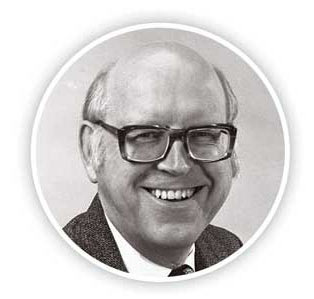
Portrait of Allen Newell
. Source: Wikipedia. Source.A computer scientist whose research includes learned visual representations and model–human comparison.[ref]
ImageNet-trained CNNs are biased towards texture; increasing shape bias improves accuracy and robustness by Robert Geirhos and others. Author identification and the research contribution described in this paper
Pinned article: Introduction to the OurBigBook Project
Welcome to the OurBigBook Project! Our goal is to create the perfect publishing platform for STEM subjects, and get university-level students to write the best free STEM tutorials ever.
Everyone is welcome to create an account and play with the site: ourbigbook.com/go/register. We belive that students themselves can write amazing tutorials, but teachers are welcome too. You can write about anything you want, it doesn't have to be STEM or even educational. Silly test content is very welcome and you won't be penalized in any way. Just keep it legal!
Intro to OurBigBook
. Source. We have two killer features:
- topics: topics group articles by different users with the same title, e.g. here is the topic for the "Fundamental Theorem of Calculus" ourbigbook.com/go/topic/fundamental-theorem-of-calculusArticles of different users are sorted by upvote within each article page. This feature is a bit like:
- a Wikipedia where each user can have their own version of each article
- a Q&A website like Stack Overflow, where multiple people can give their views on a given topic, and the best ones are sorted by upvote. Except you don't need to wait for someone to ask first, and any topic goes, no matter how narrow or broad
This feature makes it possible for readers to find better explanations of any topic created by other writers. And it allows writers to create an explanation in a place that readers might actually find it.
Figure 1. Screenshot of the "Derivative" topic page. View it live at: ourbigbook.com/go/topic/derivativeVideo 2. OurBigBook Web topics demo. Source. - local editing: you can store all your personal knowledge base content locally in a plaintext markup format that can be edited locally and published either:This way you can be sure that even if OurBigBook.com were to go down one day (which we have no plans to do as it is quite cheap to host!), your content will still be perfectly readable as a static site.
- to OurBigBook.com to get awesome multi-user features like topics and likes
- as HTML files to a static website, which you can host yourself for free on many external providers like GitHub Pages, and remain in full control

Figure 2. You can publish local OurBigBook lightweight markup files to either OurBigBook.com or as a static website.
Figure 3. Visual Studio Code extension installation.
Figure 5. . You can also edit articles on the Web editor without installing anything locally. Video 3. Edit locally and publish demo. Source. This shows editing OurBigBook Markup and publishing it using the Visual Studio Code extension. 
- Infinitely deep tables of contents:




All our software is open source and hosted at: github.com/ourbigbook/ourbigbook
Further documentation can be found at: docs.ourbigbook.com
Feel free to reach our to us for any help or suggestions: docs.ourbigbook.com/#contact