Topics (384k) Articles (398k) Users (410) Discussions (242) Comments (383) Files (13k) New article

A theoretical physicist studying dynamical approaches to the measurement problem. His review with Giancarlo Ghirardi develops models in which nonlinear and random modifications of the Schrödinger equation account for localization of macroscopic objects while retaining ordinary microscopic predictions to high accuracy. Such models make the transition from quantum behavior to classical behavior part of the dynamics.[ref]
Dynamical Reduction Models by Angelo Bassi and Giancarlo Ghirardi. Abstract and model-development sections: nonlinear stochastic dynamics and macroscopic reduction
Detlef Dürr, Sheldon Goldstein and Nino Zanghì investigated how the usual quantum measurement rules arise in Bohmian mechanics, where a wave function guides a definite particle configuration. Their analysis connects quantum equilibrium, with configuration probability density , to the statistics of apparatus records. In this account, a self-adjoint operator summarizes a class of experimental procedures; its appearance does not require every quantum observable to be an additional pre-existing particle property.[ref]

Portrait of Detlef Dürr
. Via Wikimedia Commons; credits and usage information are on the linked source file page. Source.A theoretical physicist working on foundations of quantum mechanics. In joint research on Bohmian mechanics and Ghirardi-Rimini-Weber theory, he examines how microscopic laws describe definite macroscopic outcomes. The analysis distinguishes particle trajectories, a continuous matter density and discrete spacetime events as different ways to specify the theory's primitive ontology.[ref]
A theoretical physicist whose collaborative work compares Bohmian mechanics with Ghirardi-Rimini-Weber theory. Their common organizing idea is a primitive ontology: an account of matter in ordinary space, alongside the law governing its evolution. This clarifies how different proposals address the measurement problem even when both use a wave function.[ref]
On the Common Structure of Bohmian Mechanics and the Ghirardi-Rimini-Weber Theory by Valia Allori and others. Abstract and sections 2–3: particles, matter density and flashes
A theoretical physicist who coauthored a classification of interpretations through their underlying-state distributions. With Robert Spekkens, he distinguished psi-epistemic models, which permit overlap between distributions for distinct pure quantum states, from psi-ontic models, which forbid it. The framework makes arguments about what a wave function represents mathematically explicit, and helps state the assumptions behind later impossibility theorems.[ref]
A theoretical physicist who, with Nicholas Harrigan, made the distinction between psi-ontic models and psi-epistemic models precise. In an ontological model of a quantum system, the key question is whether different pure quantum states can assign nonzero probability to the same underlying physical state. This separates overlap of preparation distributions from the different question of whether the wave function is a complete description.[ref]
Einstein, incompleteness, and the epistemic view of quantum states by Nicholas Harrigan and Robert W. Spekkens. Classification of ontological models and distinction between epistemicity and incompleteness
A theoretical physicist who, with Jonathan Barrett and Terry Rudolph, derived the Pusey-Barrett-Rudolph theorem. A joint measurement on independently prepared systems can exclude outcomes that overlapping underlying-state distributions would require to remain possible. This gives a sharp obstruction to a class of psi-epistemic models, rather than a conclusion free of assumptions about preparation.[ref]
On the reality of the quantum state by Matthew F. Pusey and others. Equations (1)–(5) and generalization in Appendix A
A theoretical physicist who coauthored the Pusey-Barrett-Rudolph theorem. The argument turns the question of whether a quantum state is merely incomplete information into a testable consistency condition on an ontological model of a quantum system. Its conclusion depends on preparation independence, so that physical assumption must accompany statements of the theorem.[ref]
On the reality of the quantum state by Matthew F. Pusey and others. Main argument and independent-preparation assumption
A theoretical physicist who coauthored the Pusey-Barrett-Rudolph theorem. Assuming preparation independence, the theorem constrains psi-epistemic models that represent distinct pure quantum states by overlapping distributions of underlying physical states. Its force comes from comparing the model's possible measurement outcomes with the zero probabilities predicted by quantum mechanics.[ref]
On the reality of the quantum state by Matthew F. Pusey and others. Equations (1)–(5): exclusion argument and independent preparations
A theoretical physicist working on precise formulations of the measurement problem. His joint work compares Bohmian mechanics, in which particles have positions guided by a wave function, with Ghirardi-Rimini-Weber theory, in which localization events modify the dynamics. The comparison distinguishes an equation for the wave function from an account of what occupies physical space, such as the GRW flash ontology.[ref]
William Thomson, later Lord Kelvin, distinguished the mechanical equivalence of heat from restrictions on cyclic conversion of heat into work. Conservation of energy alone gives for a heat engine, but does not determine how small the rejected heat can be. His 1851 treatment revised the caloric reading of Carnot's theorem while retaining a universal limit on reversible engines. In modern absolute-temperature notation, the reversible bound is .[ref]
Dynamical theory of heat by William Thomson. Sections 1–14, heat/work equivalence and cyclic-engine restrictions; modern temperature notation
A physicist whose thermodynamics distinguished conservation of energy from restrictions on cyclic heat-to-work conversion.

William Thomson, Lord Kelvin; photograph credited to Messrs. Dickinson, London; Smithsonian Libraries, via Wikimedia Commons; public domain
. Source. Benjamin Thompson, also known as Count Rumford, investigated the sustained production of heat by friction during cannon boring. In the water-enclosed experiment, continued mechanical motion heated the surrounding water to boiling. He also compared the thermal behavior of material removed from the bore with that of the original metal, testing whether the heating could be explained by releasing a special store from the chips. The observations helped challenge a finite-reservoir account of caloric and connected mechanical work with the production of heat.[ref]
An inquiry concerning the source of the heat which is excited by friction by Benjamin Thompson. 1798 paper, metal-chip/strip comparison and Experiment No. 3
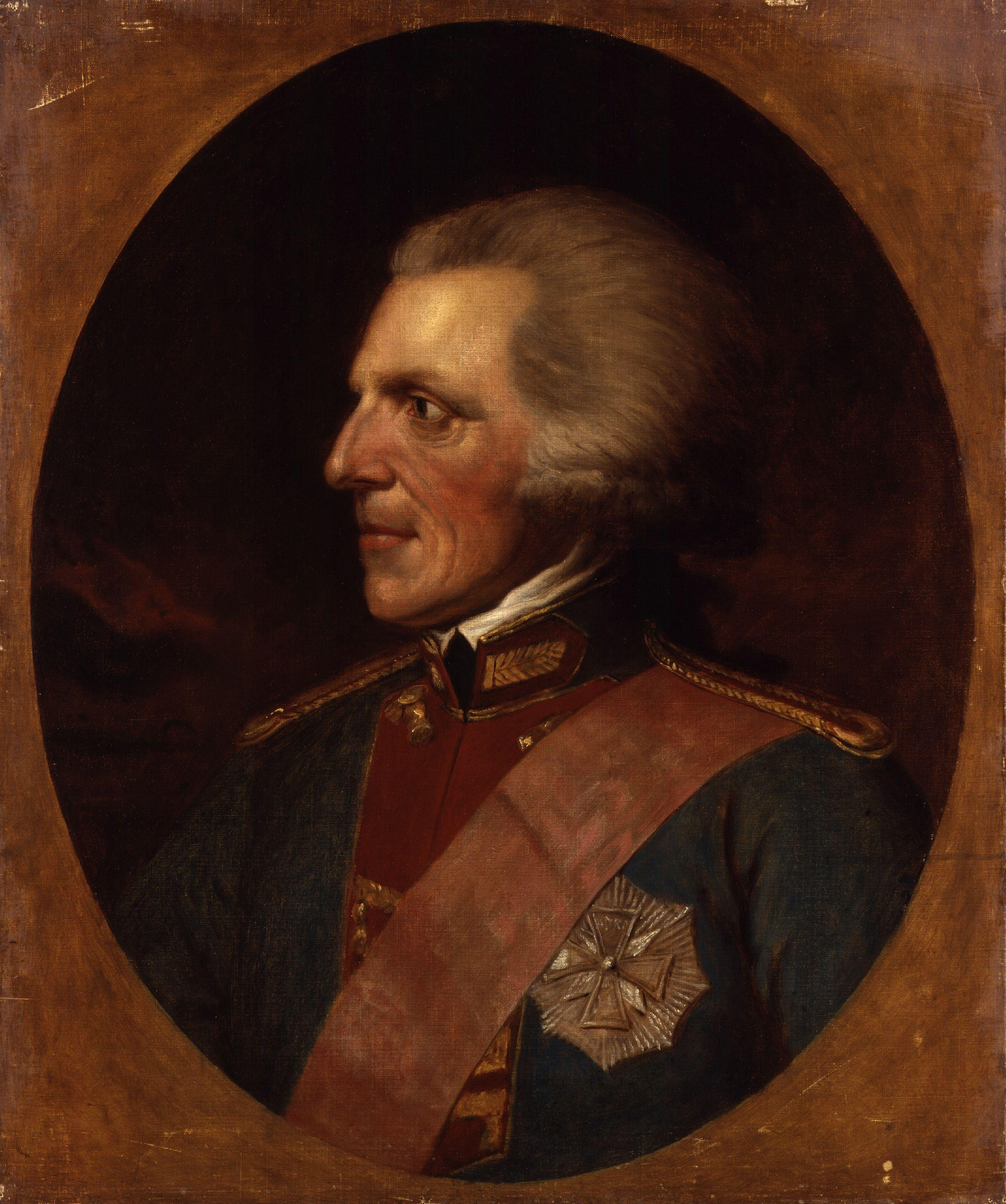
Benjamin Thompson, Count Rumford; early nineteenth-century copy after a 1792 portrait by Moritz Kellerhoven; National Portrait Gallery, London; public-domain image via Wikimedia Commons
. Source. Hugh Everett III proposed treating an observer and a measured quantum system within one unitary quantum dynamics. For an ideal quantum measurement, evolves into : the apparatus records become correlated with the alternatives. A relative state describes the measured quantum system conditional on a particular record, while the joint quantum state remains entangled. His 1957 formulation sought to account for records within this common dynamics, without adding a separate dynamical wave function collapse postulate.[ref]
Relative State Formulation of Quantum Mechanics by Hugh Everett III. Discussion of measurement correlations and relative states
A physicist who proposed a unitary relative-state account of quantum measurement, developed in the many-worlds interpretation.

Hugh Everett III in 1964; Hugh Everett III papers, University of California, Irvine; photographer unrecorded in the Wikimedia file record; non-free historical portrait hosted by English Wikipedia
. Source. Robert Hooke used microscopy to connect the visible properties of material with structures too small to inspect unaided. In Micrographia by Robert Hooke, his examination of cork revealed many tiny compartments, which he called cells. He related this architecture to the material's lightness, resistance to absorbing water and recovery after compression. The account records the specimen preparation, illumination and observed structure, making the instrument and viewing conditions part of the evidence for the interpretation of plant tissue.[ref]
Micrographia by Robert Hooke. Observation XVIII, cork structure and its proposed relation to material properties

Modern reconstructed portrait of Robert Hooke
. Rita Greer, 2006; modern imaginative reconstruction from written descriptions, not an authenticated lifetime likeness. Free Art License, artlibre.org/licence/lal/en/ . Wikimedia permission ticket 2009082810018211; no alteration other than display scaling. Source.Maurice Goldhaber, L. Grodzins and A. W. Sunyar inferred neutrino helicity indirectly from a nuclear-decay sequence. After electron capture, the recoiling excited nucleus emits a gamma ray; selecting resonantly scattered gamma rays preferentially selects a recoil direction. A magnetized absorber analyzes the circular polarization of that selected radiation. Combining the angular-momentum relation with the measured polarization gave evidence for negative neutrino helicity, rather than requiring a direct spin measurement on a detected neutrino.[ref]
Helicity of Neutrinos by Maurice Goldhaber and others. Experimental arrangement, recoil/resonance selection and polarization analysis, pp. 1015–1017

Maurice Goldhaber in 2000
. Photograph by CA2MI, dedicated under CC0; file source and credit. Source.An experimental physicist whose work helped make broad treatment fields for proton therapy. His 1977 study describes spreading a narrow proton beam by multiple scattering, blocking part of its central intensity peak, and scattering again to fill the profile. The resulting flatter absorbed dose distribution makes a useful field cover a larger region rather than concentrating the beam at its center. This is an example of designing the beam-delivery apparatus around the intended dose pattern.[ref]
Flattening of proton dose distributions for large-field radiotherapy by Andreas M. Koehler and others. Abstract: central-peak blocking, rescattering and flat dose profiles over large fields
A physicist who applied radiobiology to the comparison of radiation therapy schedules. His work on the linear-quadratic radiobiology model explains why equal total absorbed doses can produce different biological effects when delivered in different-sized fractions. The model separates contributions linear and quadratic in the dose per fraction, while a comparison of schedules must also consider tissue recovery and proliferation over time. This work helped turn a statement of delivered energy into a model of biological response.[ref]
The linear-quadratic formula and progress in fractionated radiotherapy by John Francis Fowler. Introduction: radiobiological basis of fractionation, dose per fraction and delayed proliferation
Robert R. Wilson proposed using fast protons for radiation therapy by exploiting their depth-dependent energy deposition. A proton loses kinetic energy along its path and has enhanced stopping near the end of its range, producing a Bragg peak. His 1946 paper connected this measured interaction with a way to concentrate irradiation at a chosen depth. The physical idea links particle accelerator design, stopping power and spatial control of deposited energy.[ref]
Radiological use of fast protons by Robert R. Wilson. 1946 paper, rise of specific ionization near the end of the proton range
Physicist who proposed the use of fast protons for radiation therapy in 1946.[ref]
https://history.fnal.gov/historical/applications/history_proton_therapy.html. Primary identity record

Portrait of Robert R. Wilson
. Fermilab History and Archives, 12 September 1970; original photographer unidentified; crop by FMSky. Public domain (PD-USGov-DOE), as documented on the linked Commons file page. Source.An experimental optical physicist who coauthored the observation of three-photon Greenberger–Horne–Zeilinger states. The experiment combined two entangled photon pairs and erased information about their origin; detection of a trigger photon selected events with the desired three-party correlations. This extended optical entanglement experiments beyond pairs into a setting useful for tests of local realism.[ref]
Observation of Three-Photon Greenberger-Horne-Zeilinger Entanglement by Dik Bouwmeester and others. Abstract: pair-origin erasure, trigger detection and three-photon correlations
Avshalom Elitzur and Lev Vaidman proposed detecting an absorbing object through a Mach-Zehnder interferometer adjusted so that destructive interference makes one output dark. Blocking one arm permits a photon to reach that previously dark output. In that successful outcome the photon is detected rather than absorbed by the object, yet its detection establishes that the arm was obstructed. For the balanced arrangement, the success probability is per trial; absorption still occurs with probability .[ref]
Quantum mechanical interaction-free measurements by Avshalom C. Elitzur and Lev Vaidman. Sections 1–2, single-photon interferometer and the three possible outcomes

Portrait of Avshalom Elitzur
. Avishag Shaar-Yashuv. CC BY-SA 4.0, via Wikimedia Commons. Source. Pinned article: Introduction to the OurBigBook Project
Welcome to the OurBigBook Project! Our goal is to create the perfect publishing platform for STEM subjects, and get university-level students to write the best free STEM tutorials ever.
Everyone is welcome to create an account and play with the site: ourbigbook.com/go/register. We belive that students themselves can write amazing tutorials, but teachers are welcome too. You can write about anything you want, it doesn't have to be STEM or even educational. Silly test content is very welcome and you won't be penalized in any way. Just keep it legal!
Intro to OurBigBook
. Source. We have two killer features:
- topics: topics group articles by different users with the same title, e.g. here is the topic for the "Fundamental Theorem of Calculus" ourbigbook.com/go/topic/fundamental-theorem-of-calculusArticles of different users are sorted by upvote within each article page. This feature is a bit like:
- a Wikipedia where each user can have their own version of each article
- a Q&A website like Stack Overflow, where multiple people can give their views on a given topic, and the best ones are sorted by upvote. Except you don't need to wait for someone to ask first, and any topic goes, no matter how narrow or broad
This feature makes it possible for readers to find better explanations of any topic created by other writers. And it allows writers to create an explanation in a place that readers might actually find it.
Figure 1. Screenshot of the "Derivative" topic page. View it live at: ourbigbook.com/go/topic/derivativeVideo 2. OurBigBook Web topics demo. Source. - local editing: you can store all your personal knowledge base content locally in a plaintext markup format that can be edited locally and published either:This way you can be sure that even if OurBigBook.com were to go down one day (which we have no plans to do as it is quite cheap to host!), your content will still be perfectly readable as a static site.
- to OurBigBook.com to get awesome multi-user features like topics and likes
- as HTML files to a static website, which you can host yourself for free on many external providers like GitHub Pages, and remain in full control

Figure 2. You can publish local OurBigBook lightweight markup files to either OurBigBook.com or as a static website.
Figure 3. Visual Studio Code extension installation.
Figure 5. . You can also edit articles on the Web editor without installing anything locally. Video 3. Edit locally and publish demo. Source. This shows editing OurBigBook Markup and publishing it using the Visual Studio Code extension. 
- Infinitely deep tables of contents:




All our software is open source and hosted at: github.com/ourbigbook/ourbigbook
Further documentation can be found at: docs.ourbigbook.com
Feel free to reach our to us for any help or suggestions: docs.ourbigbook.com/#contact