
Hal Abelson is a computer scientist whose work uses computer programming as a way to express and investigate ideas. With Gerald Jay Sussman, he developed the course behind Structure and Interpretation of Computer Programs by Harold Abelson and others. Its use of Scheme connects concrete programs with programming abstraction, recursion and the organization of computations.[ref]
His work on Logo and computational geometry also brought mathematical exploration into programming education. Rather than treating a program only as a sequence of commands, this approach lets a learner examine how a compact procedure generates an entire family of behaviours.[ref]

Portrait of Hal Abelson
. Joi, Flickr photograph, 23 June 2011; Commons records a successful CC BY 2.0 Flickr review. Creative Commons Attribution 2.0 Generic., via Wikimedia Commons. Source.
Stephen Cook is a computer scientist whose 1971 paper established a foundational connection between the class NP and Boolean satisfiability. The Cook-Levin theorem is expressed in modern terminology by saying that Boolean satisfiability is NP-complete.[ref]
The Complexity of Theorem-Proving Procedures by Stephen A. Cook. Section 1, Theorem 1 and construction in its proof
The proof encodes the possible steps of a polynomially bounded Nondeterministic Turing machine as a Boolean formula. A satisfying assignment describes an accepting computation, and the formula has polynomial size. This makes polynomial-time reduction a way to compare apparently different computational tasks: an efficient general solver for the encoded problem would solve every problem in NP. Cook's broader work also connects mathematical logic with proof complexity.[ref]
https://www.cs.toronto.edu/~sacook/. Research publications and Logical Foundations of Proof Complexity

Portrait of Stephen Cook
. orcmid, Flickr photograph, 15 June 2012. Creative Commons Attribution 2.0 Generic., via Wikimedia Commons. Source.
A computer scientist working on quantum information theory.[ref]
https://uwaterloo.ca/institute-for-quantum-computing/profiles/john-watrous. Official profile: computer science degrees and quantum computing research
Institutional profile: uwaterloo.ca/institute-for-quantum-computing/profiles/john-watrous
A computer scientist researching machine learning and artificial neural networks.[ref]
Geoffrey E. Hinton by Geoffrey E. Hinton. Brief Biography: Computer Science faculty appointments and machine-learning research

Portrait of Geoffrey Hinton
. Cmichel67. CC BY-SA 4.0, via Wikimedia Commons. Source.
John M. Jumper is a computer scientist whose research connects machine learning with the prediction of protein structures. He is the first author of the 2021 AlphaFold paper, which introduced a redesigned neural network architecture incorporating information from related protein sequences and known structural constraints.[ref]
The system was tested in CASP14, a blind assessment in which predicted structures are compared with experimentally determined structures withheld from the predictors. This makes the comparison a test on previously unseen targets. The work showed that learned representations could support accurate three-dimensional structural predictions for many proteins, while confidence estimates help distinguish more reliable regions from uncertain ones.[ref]
Highly accurate protein structure prediction with AlphaFold by John Jumper and others. CASP14 evaluation and model confidence

Portrait of John M. Jumper
. John Sears. CC BY-SA 4.0, via Wikimedia Commons. Source.
Matthew McKague authored Self-testing graph states, which constructs tests for connected graph states using observed quantum correlations. The aim is to identify the shared quantum state and local quantum measurements, up to the equivalences allowed by the test, through their observable correlations. The paper also establishes robustness: small deviations from the ideal correlations yield controlled deviations in the conclusion.[ref]
https://arxiv.org/abs/1010.1989. abstract and main results
Edsger W. Dijkstra was a computer scientist whose work includes the Dijkstra algorithm for shortest paths with nonnegative edge weights. Its key step finalizes the unsettled vertex with the smallest tentative distance; nonnegative edge weights ensure that a later route cannot improve that distance.[ref]
The same short paper also treated the minimum spanning tree problem. The distinction is instructive: minimizing the total weight of a connecting tree differs from minimizing routes from a source. Dijkstra later recalled devising the shortest-path example for a 1956 computer demonstration using a simplified Dutch railway map, a concrete explanation of the computational task for a general audience.[ref]
Reflections on A Note on Two Problems in Connexion with Graphs by Edsger W. Dijkstra. EWD841a, recollection of the 1956 demonstration

Portrait of Edsger W. Dijkstra
. Hamilton Richards. CC BY-SA 3.0, via Wikimedia Commons. Source.
Robert C. Prim was a computer scientist whose Prim's algorithm constructs a minimum spanning tree. Starting from one vertex, it repeatedly adds a least-weight edge connecting the current tree to a new vertex. The goal is to minimize the total weight needed to connect every vertex, rather than to minimize each route from a chosen source.[ref]
His paper motivated the problem through communication, distribution and transportation networks, including leased communication lines. Its opening map connects Washington and the then forty-eight state capitals. That application shows how a geometric network-design question becomes a reusable optimization problem on a graph.[ref]
Shortest Connection Networks and Some Generalizations by Robert C. Prim. Page 1389 and figure 1
Richard S. Sutton is a computer scientist whose work developed temporal-difference learning, an important method in reinforcement learning. His 1988 paper studied how a predictor can learn from the difference between successive predictions, and proved convergence and optimality in specified special cases.[ref]
A central idea is to update an earlier estimate using a later estimate before the eventual outcome is known. For example, if an estimated chance rises from to , a learning rate of moves the earlier estimate toward the later one by . This illustrates the temporal credit-assignment idea; its guarantees depend on the learning problem and update rule, rather than following from this numerical example alone.

Portrait of Richard S. Sutton, 27 October 2016
. Steve Jurvetson; extracted from Deep Thinkers on Deep Learning. CC BY 2.0, via Wikimedia Commons. Source.
Researcher whose work includes Expressing fear enhances sensory acquisition by Joshua M. Susskind and others.
A computer scientist whose research includes structured symbolic computation and problem solving.[ref]
Computer science as empirical inquiry: symbols and search by Allen Newell and others. Author identification and the research contribution described in this paper
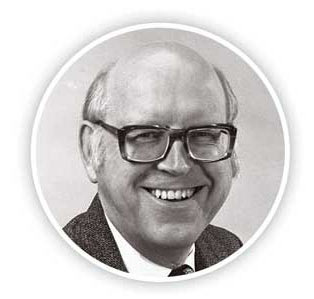
Portrait of Allen Newell
. Source: Wikipedia. Source.
A computer scientist whose research includes learned visual representations and model–human comparison.[ref]
ImageNet-trained CNNs are biased towards texture; increasing shape bias improves accuracy and robustness by Robert Geirhos and others. Author identification and the research contribution described in this paper
A computer scientist whose research includes computational intelligence and the neural basis of constructing imagined experiences.[ref]
Patients with hippocampal amnesia cannot imagine new experiences by Demis Hassabis and others. Author identification and the research contribution described in this paper

Portrait of Demis Hassabis
. John Sears. CC BY-SA 4.0, via Wikimedia Commons. Source.
A computer scientist studying reinforcement learning and its connections with neuroscience.[ref]
https://willdabney.com/. Identity and authorship record
Computer scientist and coauthor of Gradient Estimation Using Stochastic Computation Graphs by John Schulman and others. The 2015 paper gives a common framework for score-function gradient estimators and pathwise gradients. Publication identifying the author and affiliation.
Stuart J. Russell is a computer scientist whose work concerns artificial intelligence and the design of systems that choose actions from available information. With Peter Norvig, he wrote Artificial Intelligence: A Modern Approach by Stuart Russell and Peter Norvig. Its agent perspective connects search algorithms, first-order logic, probabilistic reasoning, decision theory and machine learning.[ref]
Artificial Intelligence: A Modern Approach by Stuart Russell and Peter Norvig. Author byline and chapters 2–22 in the fourth-edition contents
His research and lectures also examine uncertainty about an intelligent system's objectives. That question differs from uncertainty about its observations: even a system that predicts its environment accurately can need information about what outcome its user wants.[ref]
Stuart Russell's Berkeley research profile. Research areas; Uncertainty in Objectives and Human Compatible links


Peter Norvig is a computer scientist whose work combines artificial intelligence, computer programming and technical education. With Stuart J. Russell, he wrote Artificial Intelligence: A Modern Approach by Stuart Russell and Peter Norvig, which connects search algorithms, logical reasoning, probabilistic reasoning and machine learning through the design of intelligent agents.[ref]
Artificial Intelligence: A Modern Approach by Stuart Russell and Peter Norvig. Author byline and fourth-edition table of contents
His programming explanations also connect compact working examples with general ideas: his spelling-correction tutorial illustrates how candidate generation and a probability model can cooperate in selecting a correction.[ref]

Portrait of Peter Norvig in 2019
. Christopher Michel, photograph; Filetime, existing Commons crop. CC BY-SA 4.0. Source.
Primary profile: anon.cs.rochester.edu/people/faculty/kautz_henry/index.html

Portrait of Henry Kautz
. Portrait hosted on the University of Rochester Department of Computer Science faculty profile. Source.A computer scientist working on Boolean satisfiability and automated planning, including SATPlan with Henry Kautz.
Primary profile: carlsaganinstitute.cornell.edu/bart-selman
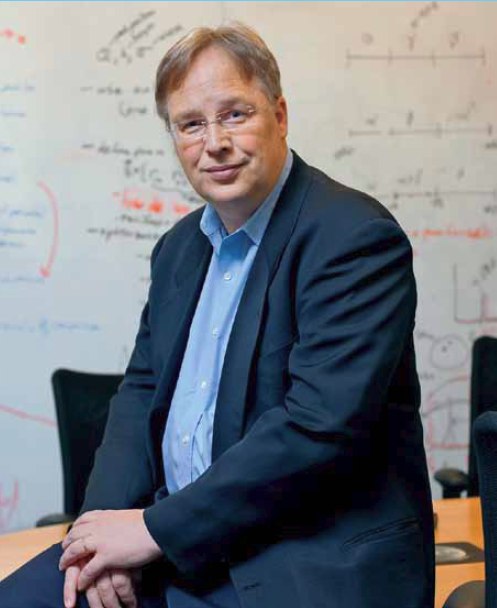
Portrait of Bart Selman
. Photograph from Bart Selman’s Cornell University homepage. Source.A computer scientist working on game theory, algorithms and computational complexity theory. Co-author with Christos Papadimitriou of On the Complexity of Cooperative Solution Concepts by Xiaotie Deng and Christos Papadimitriou, which studies induced subgraph games.
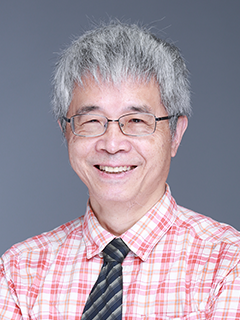
Portrait displayed on the Peking University profile of Xiaotie Deng
. External institutional image credited to its source profile. The individual photographer and image licence are not stated in the inspected material. Source. There are unlisted articles, also show them or only show them.