
A computer scientist working on algorithms, computational complexity theory and game theory. Co-author with Xiaotie Deng of On the Complexity of Cooperative Solution Concepts by Xiaotie Deng and Christos Papadimitriou.
Primary profile: Columbia University faculty profile.

Christos Papadimitriou speaking at EPFL on 30 June 2009
. Photograph by Rama, via Wikimedia Commons. CC BY-SA 2.0 France. Source.Computer scientist and coauthor of End-to-end arguments in system design by Jerome H. Saltzer and others.
Institutional profile: www.csail.mit.edu/person/jerry-saltzer

Portrait of Jerry Saltzer
. Source: MIT Computer Science and Artificial Intelligence Laboratory, Jerry Saltzer profile. Photographer not established. External portrait hosted by MIT Computer Science and Artificial Intelligence Laboratory. Source.Computer scientist and coauthor of End-to-end arguments in system design by Jerome H. Saltzer and others.

Portrait of David P. Reed
. Source: David P. Reed's author biography, Deep Plum Research. Photographer not established. External portrait hosted by Deep Plum Research. Source.


William Giauque investigated chemical thermodynamics at very low temperatures. Calorimetry and magnetic cooling connect accessible microscopic states with entropy and thermal response.
A reduction in temperature makes previously negligible level spacings relevant to state populations. Low-temperature measurements therefore test how molecular rotation, spin, and crystal structure contribute to thermodynamic quantities.[ref]
A chemist at Berkeley whose research and teaching focused on chemical thermodynamics.[ref]
William Francis Giauque by D. N. Lyon and others. Teaching paragraphs: chemistry instructor in 1922; Advanced Physical Chemistry and Chemical Thermodynamics courses

Portrait of William Giauque
. The Nobel Foundation, 1949 copyright notice; photographer and capture date unspecified. English Wikipedia identifies the photograph as public domain in Sweden with its United States copyright status unconfirmed. Source.
Robert Robinson (chemist) investigated the structures and synthesis of plant natural products, especially alkaloids. His synthesis of tropinone used a proposed biological pattern of assembly to guide laboratory construction, an influential example of connecting chemical synthesis with ideas about biosynthesis.[ref]
A Synthesis of Tropinone by Robert Robinson. A synthesis of tropinone, 1917, pp.762–768; historical proposal distinguished from a proven biosynthetic pathway

Portrait of Robert Robinson (chemist)
. Unknown author; Nobel Foundation. Public domain. Source usage terms, via Wikimedia Commons. Source.
Alan MacDiarmid coauthored research on the synthesis and structure of polythiazyl and its precursor. The sulfur-nitrogen polymer provides an example of electronic conduction in a material whose backbone is not a carbon chain.
Its behaviour depends on the extended solid and its electronic states, rather than solely on counting lone pairs in an isolated repeating unit.[ref]
Synthesis and structure of the polymeric metal, (SN)x, and its precursor, S2N2 by Alan G. MacDiarmid and others. 1975, polymeric sulfur nitride and its precursor
Portrait of Alan MacDiarmid
. Collection: Science History Institute; photographer not established in this pass. Via Wikimedia Commons; credits and usage information are on the linked source file page. Source.Narayan Sadashiv Hosmane coauthored synthetic routes to small nido carboranes using borane-derived starting materials and Lewis-base adducts. The work connects boron-hydride chemistry with incorporation of carbon into an open cluster framework.
A carborane is specified by both its vertex inventory and its cage connectivity. Retaining a small open cage differs from simply producing any compound with the same elemental ingredients.[ref]
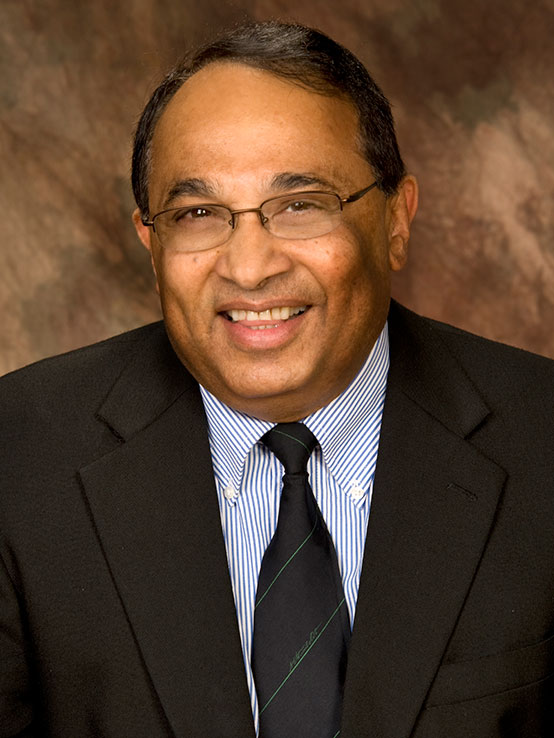
Portrait of Narayan Sadashiv Hosmane
. External portrait hosted by Northern Illinois University Department of Chemistry and Biochemistry. Source.Rainer Ludwig Claisen investigated rearrangements that make new carbon–carbon chemical bonds. His 1912 paper describes conversion of phenol allyl ethers into carbon-allylated phenols, a transformation now associated with the Claisen rearrangement. The product moves the allyl attachment from oxygen to the aromatic carbon skeleton.[ref]
Über Umlagerung von Phenol-allyläthern in C-Allyl-phenole by Rainer Ludwig Claisen. Über Umlagerung von Phenol-allyläthern in C-Allyl-phenole, 1912, pp.3157–3166

Portrait of Rainer Ludwig Claisen
. Unknown author; University of Kiel. Public domain. Source usage terms, via Wikimedia Commons. Source.
Mario Molina coauthored low-temperature experiments on the self-reaction of chlorine monoxide. Infrared and ultraviolet measurements identified formation of the dimer associated with the chlorine monoxide dimer cycle.
A laboratory intermediate supplies a concrete link between a proposed catalytic cycle and an atmospheric ozone budget. Dimer formation, thermal dissociation, and photodissociation compete, so its abundance and its ozone-loss effect are separate quantities.[ref]
Production of chlorine oxide (Cl2O2) from the self-reaction of the chlorine oxide (ClO) radical by L. T. Molina and M. J. Molina. Flow-system dimer production at 220–240 K and infrared/ultraviolet identification
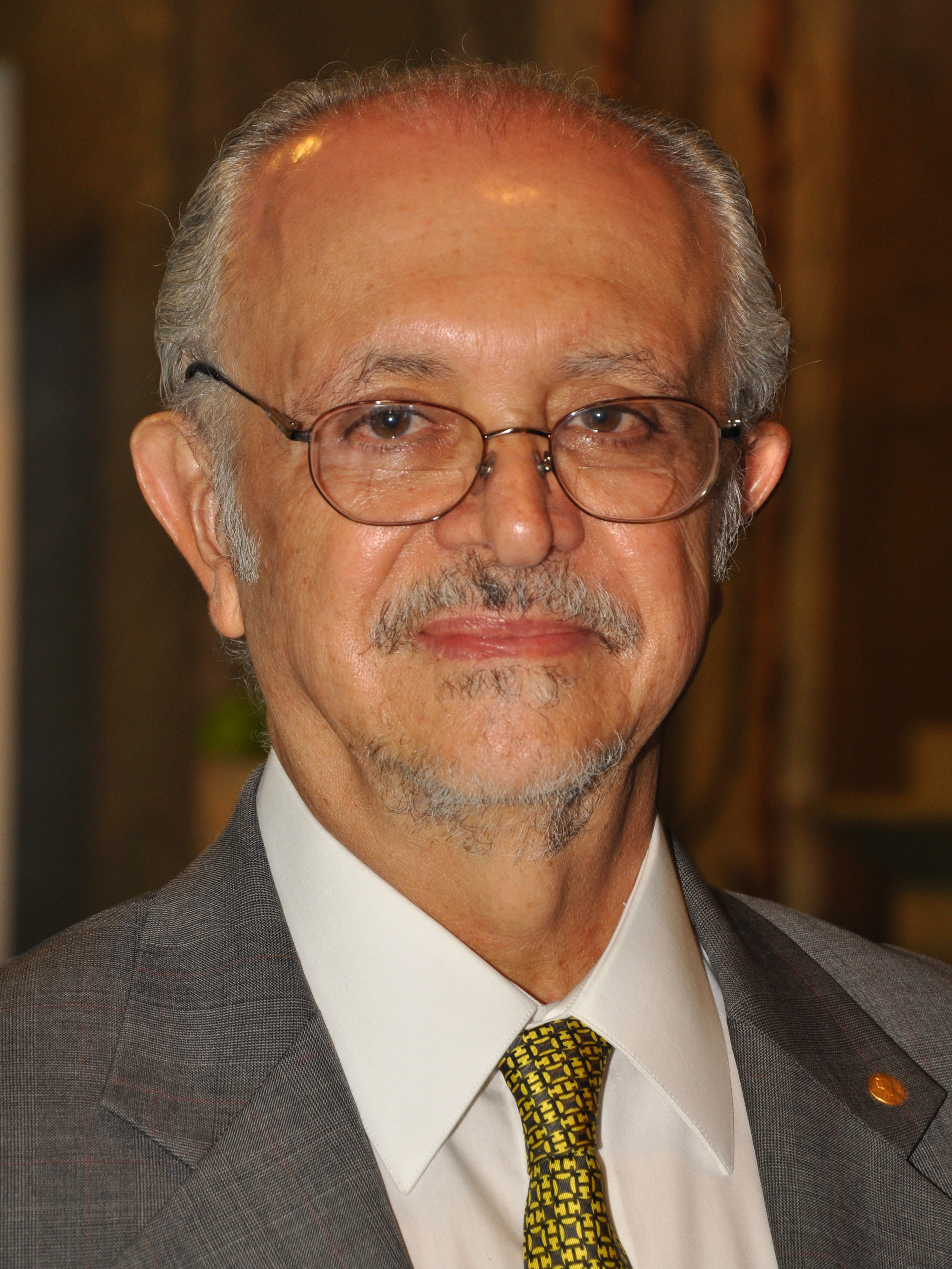
Portrait of Mario Molina
. Janwikifoto; science.in2pic.com. CC BY-SA 3.0, via Wikimedia Commons. Source.
Karl Barry Sharpless developed methods for asymmetric oxidation, including Sharpless asymmetric epoxidation and asymmetric dihydroxylation. A chiral catalyst makes one enantiomer form preferentially, giving synthetic chemists control over molecular handedness as well as molecular connectivity.[ref]
https://www.nobelprize.org/uploads/2018/06/sharpless-lecture.pdf. 2001 Nobel lecture: asymmetric epoxidation and dihydroxylation, geraniol examples

Portrait of Karl Barry Sharpless
. Bengt Oberger; cropped by JB Hoang Tam. CC BY-SA 4.0, via Wikimedia Commons. Source.
Norman Greenwood coauthored research on the reactions of boron-hydride clusters with cobalt, rhodium, and iridium complexes. A reported borallyl iridium product illustrates how a cluster can become a multidentate ligand.
John David Kennedy coauthored research with Norman Greenwood and David Reed on reactions of the octahydrotriborate anion with transition-metal complexes. The work characterizes a borallyl iridium product, connecting boron-hydride cluster chemistry with metal coordination.
A cluster fragment can bind a metal through more than one atom. Establishing that connectivity requires evidence about the actual product, rather than assuming that every boron-hydride reagent retains its starting geometry.[ref]
Reactions of the octahydrotriborate(1-) anion, B3H8-, with some complexes of cobalt(I), cobalt(II), rhodium(I), and iridium(I), and the characterization of the borallyl complex IrIII(eta3-B3H7)(CO)H(PPh3)2 by Norman N. Greenwood and others. Abstract: reactions and characterized borallyl iridium product
Jacob Israelachvili coauthored a theory connecting amphiphile geometry with self-assembly into micelles and bilayers. The relative sizes of the polar headgroup and hydrophobic chain constrain how molecules can pack into a curved interface.
This gives a physical connection between molecular architecture and aggregate shape. Changing headgroup interactions or chain volume can therefore alter the preferred assembly without changing the basic amphiphilic character of a molecule.[ref]
Theory of self-assembly of hydrocarbon amphiphiles by Jacob N. Israelachvili and others. Molecular packing and aggregate geometry
Victor Goldschmidt, the geochemist Victor Moritz Goldschmidt, related the distribution of chemical elements to their chemical behaviour and the properties of minerals. His work on atomic radius values and ionic radius values connected crystal chemistry with crystallography; his geochemical classification organized elements according to their association with different material reservoirs.[ref]
https://www.mn.uio.no/geo/english/research/goldschmidt/about_goldschmidt/. University of Oslo biography: crystal chemistry, X-ray methods and 1923 geochemical classification

Portrait of Victor Goldschmidt
. Unknown author; Oslo Museum, image no. OB.F05887a. CC BY-SA 4.0, via Wikimedia Commons. Source.
Paul Flory developed a lattice treatment of polymer solutions that accounts for the reduced mixing entropy of connected chain segments. A chain contributes many segments but remains one translating molecule.
This distinction helps explain why long-chain mixtures can separate under small unfavourable contact energies. Flory–Huggins solution theory connects molecular connectivity with the balance between mixing entropy and interaction energy.[ref]
Thermodynamics of High Polymer Solutions by Paul J. Flory. Lattice counting and combinatorial entropy

Portrait of Paul Flory
. Unidentified Associated Press photographer; press image labeled 1973; existing 3:4 crop by Materialscientist. Public domain in the United States: publication without copyright notice, 1931–1977. Source usage terms, via Wikimedia Commons. Source.
Robert Boyle used an air pump and sealed receiver to investigate how reduced gas pressure affected physical phenomena. Moving from an open atmosphere to a controllable vessel allowed the presence and mechanical effects of air to become experimental variables. His gas studies also connected pressure and volume, the relation commemorated by Boyle's law.[ref]
New Experiments Physico-Mechanicall by Robert Boyle. 1660: air-pump receiver and experiments on the spring of air; pressure-volume relation in the later appendix
Chemist whose investigations included controlled operations on air in a receiver attached to an air pump.

Portrait of Robert Boyle
. Photograph by Eowyn041084, 16 January 2013, of a portrait attributed to Jonathan Richardson (died 1745). CC BY-SA 4.0, via Wikimedia Commons. Source.
Carl Wilhelm Scheele distinguished the component of air supporting combustion from the air remaining after it was consumed. His experiments on fire-air, now identified as oxygen, used different chemical preparations and combustion observations to establish that ordinary air was a mixture rather than one uniform substance.[ref]
Chemical Treatise on Air and Fire by Carl Wilhelm Scheele. Numbered experimental sections on preparation of fire-air and the remaining air; published 1777
Chemist whose Chemical Treatise on Air and Fire by Carl Wilhelm Scheele records independent investigations of oxygen.

Portrait of Carl Wilhelm Scheele
. Ida Falander (1842–1927); turn-of-the-20th-century likeness, sourced by Commons to the Royal Society of Chemistry. Public domain: life plus 70 years or fewer; United States publication before 1930 as stated on File. Source usage terms, via Wikimedia Commons. Source.
Joseph Priestley investigated different kinds of gas by collecting them and testing their effects on a flame and on breathing. His account of the experiment of 1 August 1774 describes gas released from heated Mercury calx that supported unusually vigorous burning. He called the material dephlogisticated air; its subsequent interpretation became central to the chemistry of oxygen.[ref]
Experiments and Observations on Different Kinds of Air by Joseph Priestley (1775). Volume II, section III: experiment of 1 August 1774 and subsequent interpretation
Chemist whose Experiments and Observations on Different Kinds of Air by Joseph Priestley (1775) describes the investigation of dephlogisticated air.

Portrait of Joseph Priestley
. Ellen Sharples (1769–1849), pastel, 1794–1797; National Portrait Gallery, London, NPG 175; scan of a print. Public domain: life plus 100 years or fewer; United States publication before 1931; faithful 2D reproduction. Source usage terms, via Wikimedia Commons. Source.
Antoine Lavoisier explained combustion through combination with oxygen. In his textbook's Mercury–air experiment, prolonged heating produced a red solid and changed the air remaining in the vessel; heating the separated solid released a gas that supported combustion. The linked transformations made the composition of air and the chemistry of oxygen experimentally tractable.[ref]
Elements of Chemistry by Antoine Lavoisier. Part I, chapters III–V: mercury-air experiment and oxygen nomenclature

Portrait of Antoine Lavoisier
. Johann Friedrich Bolt (1769–1836), engraving dated 1796; reproduced in Biographies of Scientific Men (1912). Public domain: life plus 70 years or fewer; United States publication before 1931. Source usage terms, via Wikimedia Commons. Source.
There are unlisted articles, also show them or only show them.