
A theoretical physicist who coauthored the Pusey-Barrett-Rudolph theorem. Assuming preparation independence, the theorem constrains psi-epistemic models that represent distinct pure quantum states by overlapping distributions of underlying physical states. Its force comes from comparing the model's possible measurement outcomes with the zero probabilities predicted by quantum mechanics.[ref]
On the reality of the quantum state by Matthew F. Pusey and others. Equations (1)–(5): exclusion argument and independent preparations
A theoretical physicist working on precise formulations of the measurement problem. His joint work compares Bohmian mechanics, in which particles have positions guided by a wave function, with Ghirardi-Rimini-Weber theory, in which localization events modify the dynamics. The comparison distinguishes an equation for the wave function from an account of what occupies physical space, such as the GRW flash ontology.[ref]
William Thomson, later Lord Kelvin, distinguished the mechanical equivalence of heat from restrictions on cyclic conversion of heat into work. Conservation of energy alone gives for a heat engine, but does not determine how small the rejected heat can be. His 1851 treatment revised the caloric reading of Carnot's theorem while retaining a universal limit on reversible engines. In modern absolute-temperature notation, the reversible bound is .[ref]
Dynamical theory of heat by William Thomson. Sections 1–14, heat/work equivalence and cyclic-engine restrictions; modern temperature notation
A physicist whose thermodynamics distinguished conservation of energy from restrictions on cyclic heat-to-work conversion.

William Thomson, Lord Kelvin; photograph credited to Messrs. Dickinson, London; Smithsonian Libraries, via Wikimedia Commons; public domain
. Source. 
Benjamin Thompson, also known as Count Rumford, investigated the sustained production of heat by friction during cannon boring. In the water-enclosed experiment, continued mechanical motion heated the surrounding water to boiling. He also compared the thermal behavior of material removed from the bore with that of the original metal, testing whether the heating could be explained by releasing a special store from the chips. The observations helped challenge a finite-reservoir account of caloric and connected mechanical work with the production of heat.[ref]
An inquiry concerning the source of the heat which is excited by friction by Benjamin Thompson. 1798 paper, metal-chip/strip comparison and Experiment No. 3
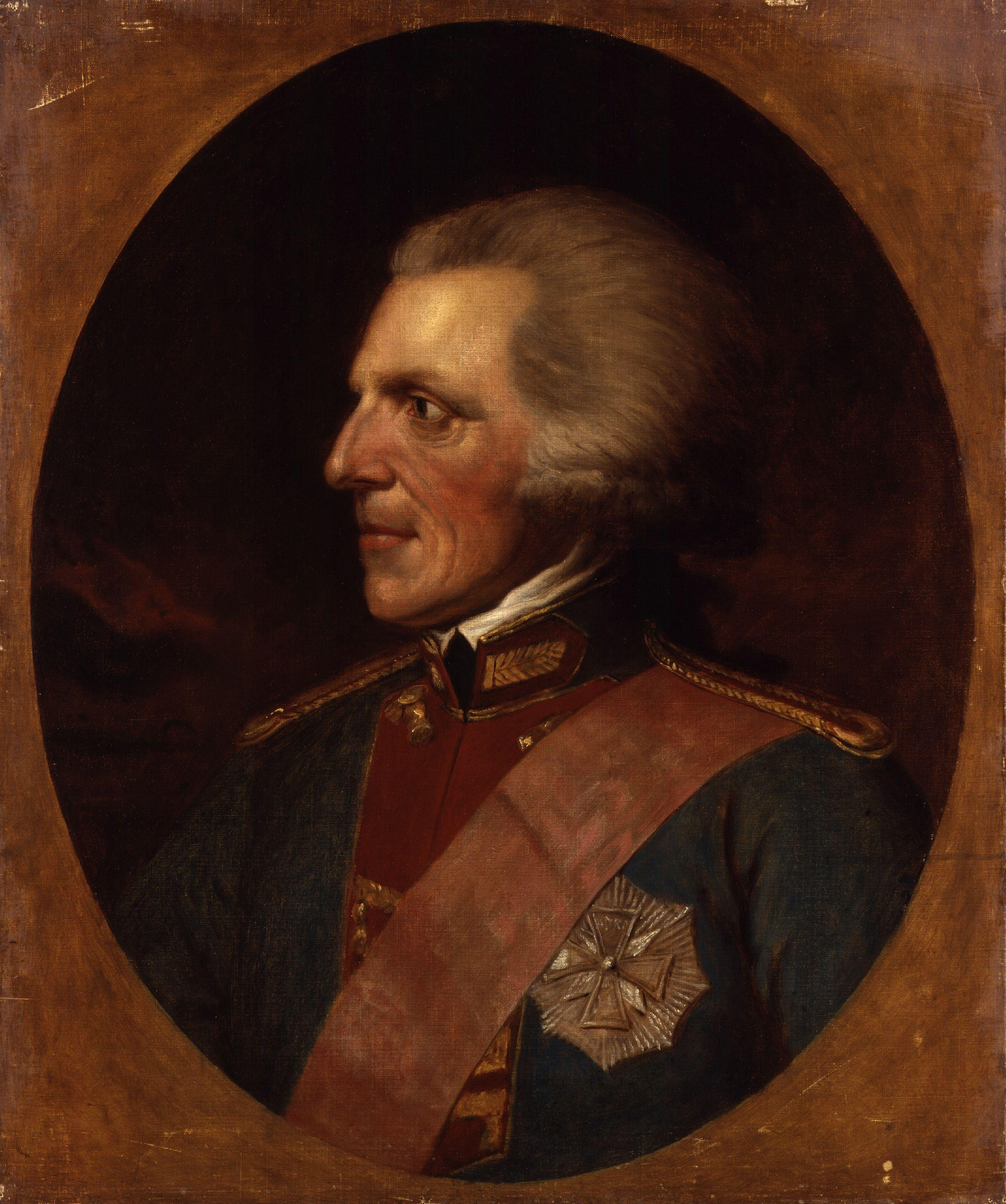
Benjamin Thompson, Count Rumford; early nineteenth-century copy after a 1792 portrait by Moritz Kellerhoven; National Portrait Gallery, London; public-domain image via Wikimedia Commons
. Source. 
Hugh Everett III proposed treating an observer and a measured quantum system within one unitary quantum dynamics. For an ideal quantum measurement, evolves into : the apparatus records become correlated with the alternatives. A relative state describes the measured quantum system conditional on a particular record, while the joint quantum state remains entangled. His 1957 formulation sought to account for records within this common dynamics, without adding a separate dynamical wave function collapse postulate.[ref]
Relative State Formulation of Quantum Mechanics by Hugh Everett III. Discussion of measurement correlations and relative states
A physicist who proposed a unitary relative-state account of quantum measurement, developed in the many-worlds interpretation.

Hugh Everett III in 1964; Hugh Everett III papers, University of California, Irvine; photographer unrecorded in the Wikimedia file record; non-free historical portrait hosted by English Wikipedia
. Source. 
Robert Hooke used microscopy to connect the visible properties of material with structures too small to inspect unaided. In Micrographia by Robert Hooke, his examination of cork revealed many tiny compartments, which he called cells. He related this architecture to the material's lightness, resistance to absorbing water and recovery after compression. The account records the specimen preparation, illumination and observed structure, making the instrument and viewing conditions part of the evidence for the interpretation of plant tissue.[ref]
Micrographia by Robert Hooke. Observation XVIII, cork structure and its proposed relation to material properties

Modern reconstructed portrait of Robert Hooke
. Rita Greer, 2006; modern imaginative reconstruction from written descriptions, not an authenticated lifetime likeness. Free Art License, artlibre.org/licence/lal/en/ . Wikimedia permission ticket 2009082810018211; no alteration other than display scaling. Source.
Maurice Goldhaber, L. Grodzins and A. W. Sunyar inferred neutrino helicity indirectly from a nuclear-decay sequence. After electron capture, the recoiling excited nucleus emits a gamma ray; selecting resonantly scattered gamma rays preferentially selects a recoil direction. A magnetized absorber analyzes the circular polarization of that selected radiation. Combining the angular-momentum relation with the measured polarization gave evidence for negative neutrino helicity, rather than requiring a direct spin measurement on a detected neutrino.[ref]
Helicity of Neutrinos by Maurice Goldhaber and others. Experimental arrangement, recoil/resonance selection and polarization analysis, pp. 1015–1017

Maurice Goldhaber in 2000
. Photograph by CA2MI, dedicated under CC0; file source and credit. Source.
An experimental physicist whose work helped make broad treatment fields for proton therapy. His 1977 study describes spreading a narrow proton beam by multiple scattering, blocking part of its central intensity peak, and scattering again to fill the profile. The resulting flatter absorbed dose distribution makes a useful field cover a larger region rather than concentrating the beam at its center. This is an example of designing the beam-delivery apparatus around the intended dose pattern.[ref]
Flattening of proton dose distributions for large-field radiotherapy by Andreas M. Koehler and others. Abstract: central-peak blocking, rescattering and flat dose profiles over large fields
A physicist who applied radiobiology to the comparison of radiation therapy schedules. His work on the linear-quadratic radiobiology model explains why equal total absorbed doses can produce different biological effects when delivered in different-sized fractions. The model separates contributions linear and quadratic in the dose per fraction, while a comparison of schedules must also consider tissue recovery and proliferation over time. This work helped turn a statement of delivered energy into a model of biological response.[ref]
The linear-quadratic formula and progress in fractionated radiotherapy by John Francis Fowler. Introduction: radiobiological basis of fractionation, dose per fraction and delayed proliferation
Robert R. Wilson proposed using fast protons for radiation therapy by exploiting their depth-dependent energy deposition. A proton loses kinetic energy along its path and has enhanced stopping near the end of its range, producing a Bragg peak. His 1946 paper connected this measured interaction with a way to concentrate irradiation at a chosen depth. The physical idea links particle accelerator design, stopping power and spatial control of deposited energy.[ref]
Radiological use of fast protons by Robert R. Wilson. 1946 paper, rise of specific ionization near the end of the proton range
Physicist who proposed the use of fast protons for radiation therapy in 1946.[ref]
https://history.fnal.gov/historical/applications/history_proton_therapy.html. Primary identity record

Portrait of Robert R. Wilson
. Fermilab History and Archives, 12 September 1970; original photographer unidentified; crop by FMSky. Public domain (PD-USGov-DOE), as documented on the linked Commons file page. Source.
An experimental optical physicist who coauthored the observation of three-photon Greenberger–Horne–Zeilinger states. The experiment combined two entangled photon pairs and erased information about their origin; detection of a trigger photon selected events with the desired three-party correlations. This extended optical entanglement experiments beyond pairs into a setting useful for tests of local realism.[ref]
Observation of Three-Photon Greenberger-Horne-Zeilinger Entanglement by Dik Bouwmeester and others. Abstract: pair-origin erasure, trigger detection and three-photon correlations
Avshalom Elitzur and Lev Vaidman proposed detecting an absorbing object through a Mach-Zehnder interferometer adjusted so that destructive interference makes one output dark. Blocking one arm permits a photon to reach that previously dark output. In that successful outcome the photon is detected rather than absorbed by the object, yet its detection establishes that the arm was obstructed. For the balanced arrangement, the success probability is per trial; absorption still occurs with probability .[ref]
Quantum mechanical interaction-free measurements by Avshalom C. Elitzur and Lev Vaidman. Sections 1–2, single-photon interferometer and the three possible outcomes

Portrait of Avshalom Elitzur
. Avishag Shaar-Yashuv. CC BY-SA 4.0, via Wikimedia Commons. Source.
Charles-Augustin de Coulomb used a torsion balance to turn weak electric forces into measurable angular displacements. The restoring torque of a twisted silver wire supplies a calibrated mechanical comparison with the electric force. In his first electrical memoir for 1785, he varied the wire's imposed twist and compared the equilibrium separations of two small bodies carrying like electric charges. The total twist, including the moving arm's deflection, determines the restoring torque. These measurements supported the inverse-square dependence expressed by Coulomb's law, joining a mechanical calibration with the geometry of electric charges.[ref]
Premier mémoire sur l'électricité et le magnétisme by Charles-Augustin de Coulomb. First memoir, apparatus construction, repulsion trials and total torsion-angle comparison, pp. 569–577; Academy volume for 1785, printed 1788
Physicist and engineer whose work includes friction and strength of materials. His name appears in the Mohr-Coulomb failure criterion.

Portrait of Charles-Augustin de Coulomb
. Louis Hierle, 1894, after Hippolyte Lecomte; painted portrait at Versailles. Public domain according to the Wikimedia Commons file page (PD-old-100 and PD-US-expired). Source usage terms, via Wikimedia Commons. Source.
A. A. Barker authored a 1965 calculation of radial distribution functions for a proton–electron plasma. The associated Barker acceptance probability supplies a useful rule for equilibrium Markov chain Monte Carlo: if the probability-and-proposal ratio for a proposed move is , accept with probability . For reverse moves the ratio is , so the acceptance probabilities have ratio , giving detailed balance. The rule connects a microscopic sampling decision with the desired equilibrium distribution.[ref]
Monte Carlo Calculations of the Radial Distribution Functions for a Proton-Electron Plasma by A. A. Barker. 1965 publication identity; acceptance-rule explanation in modern notation
Author credited under these initials on the 1965 Monte Carlo method plasma paper Monte Carlo Calculations of the Radial Distribution Functions for a Proton-Electron Plasma by A. A. Barker. The initials are not expanded because an exact identity beyond the publication credit has not been established here. University of Adelaide thesis addendum identifying the 1965 publication.
Maurice Karnaugh developed a map method for simplifying Boolean functions in electric circuit design. A Karnaugh map arranges truth table entries so that neighboring cells differ in one variable. Grouping adjacent entries reveals variables that do not affect an output. For example, Boolean algebra gives , removing dependence on . His 1953 paper also distinguishes a short Boolean algebra expression from an economical physical electric circuit, because the best implementation depends on the available components.[ref]
The Map Method for Synthesis of Combinational Logic Circuits by Maurice Karnaugh. 1953 original paper, opening synthesis discussion and map representation; two-variable identity illustrated here
Physicist and computer scientist associated with the Karnaugh map for simplifying Boolean functions. Wikipedia biography identifies the subject and his logic-design contribution.
Daniel Gottesman developed a useful way to describe quantum circuits by following their Pauli operators instead of all their probability amplitudes. An -qubit stabilizer state is specified by independent compatible commuting Pauli operators whose common eigenspace is one-dimensional. A Clifford gate maps Pauli operators to Pauli operators by conjugation, so these generators can be updated efficiently on a computer. This explains why a large family of entangled computations is efficiently simulable, and supplies the language of stabilizer codes.[ref]
The Heisenberg Representation of Quantum Computers by Daniel Gottesman. Sections 2–3, stabilizers and the Clifford group; Table 1, generator conjugations
Physicist whose work includes the stabilizer formalism for quantum error correction. His The Heisenberg Representation of Quantum Computers by Daniel Gottesman develops the Pauli group description of Clifford circuits. Verified institutional profile.
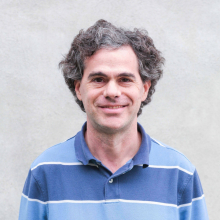
Daniel Gottesman. External portrait supplied by the University of Maryland Department of Computer Science; photographer and licence are not specified on the verified profile.
Source. A photographer credited by Wikimedia Commons for the circa-1900 portrait of Carl Wernicke reproduced here.
Photographer credited by the Oberwolfach Photo Collection and the verified Wikimedia Commons file for the 2007 portrait displayed in James R. Norris. The credit is retained without adding unverified biographical details.

A photographer credited on Wikimedia Commons for the 2015 photograph of Martin Fowler embedded above. The attribution and exact photograph identity are given by the [ref]

https://commons.wikimedia.org/wiki/File:Webysther_20150414193208_-_Martin_Fowler.jpg. Commons file record
. There are unlisted articles, also show them or only show them.