
Mathematician working in probability theory and stochastic calculus; author of Markov Chains by James R. Norris. Author's Cambridge page.

James R. Norris at Oberwolfach in 2007. Photograph credited to Renate Schmid; Wikimedia Commons and the Oberwolfach Photo Collection.
Photograph by Renate Schmid. Verified file and source credit, licensed CC BY-SA 2.0 Germany. No changes. Source.A mathematician specializing in algebraic number theory. The Hasse diagram is named after him.[ref]
https://en.wikipedia.org/wiki/Helmut_Hasse. Biographical identity and field
[ref]
Portrait of Helmut Hasse by Konrad Jacobs
. Oberwolfach Photo Collection, photograph by Konrad Jacobs, via Wikimedia Commons. CC BY-SA 2.0 Germany. The linked file page identifies the sitter and the photographer. Source.A Colombian mathematician known for Recamán's sequence. The primary sequence record cites his 1991 correspondence; an institution-hosted interview independently identifies him as the mathematician and educator.[ref]
OEIS entry A005132. References: letter of 29 January 1991
[ref]https://eduteka.icesi.edu.co/articulos/EntrevistaBernardoRecaman. Eduteka interview, hosted by Universidad Icesi
Verified Spanish-language identity page: es.wikipedia.org/wiki/Bernardo_Recam%C3%A1n_Santos. An exact usable portrait URL was not established in the bounded Commons/Wikipedia and institutional-source check; the report records that gap without inferring that no portrait exists.
W. J. M. Rankine was a Scottish engineer and physicist who contributed to thermodynamics, classical mechanics and the teaching of engineering. As professor of civil engineering and mechanics at Glasgow from 1855 to 1872, he emphasized connecting theory with practice and worked with shipbuilders on vessels and engines.[ref]
Macquorn Rankine in the University of Glasgow Story. Biographical account: professorship, research and collaboration with shipbuilders
The Rankine cycle connects his name with the analysis of heat engines using a working fluid that undergoes vaporization and condensation. Its idealized sequence of pumping, heating, expansion and cooling connects a practical steam engine to a calculation of mechanical work and thermal efficiency. The broader importance of his work lies in making quantitative physical theory part of systematic engineering design.
Institutional historical profile: Imperial College historical plaque booklet: William John Macquorn Rankine.

Portrait of William John Macquorn Rankine
. Thomas Annan, photograph made before his death in 1887; National Galleries of Scotland, PGP R 2115.24. Restoration by Adam Cuerden. Commons marks the photograph and faithful reproduction public domain, including expired U.S. copyright; Public Domain Mark. The restoration's stated unrestricted permission requests attribution where possible. Source.Christian Otto Mohr was an engineer whose work connected graphical methods with the analysis of stressed materials. Mohr's circle represents the normal stress and shear stress on differently oriented planes by points on a circle, turning a change of coordinates into a geometric construction. TU Dresden's historical account relates this construction to his 1882 work on the representation of stress and deformation.[ref]
Der Mohrsche Spannungskreis wird 125 Jahre alt by Günter Zumpe. Dresdner Universitätsjournal 12/2008, page 9; discussion of Mohr's 1882 Civilingenieur article
For a two-dimensional stress tensor, the circle has centre and radiusIts horizontal intercepts give the principal stresses. This makes Mohr's circle useful for seeing both extremal stresses and the relation between plane orientation and the components of stress.

Portrait of Christian Otto Mohr
. Wilhelm Höffert, 1897; scan via Wikimedia Commons. Public domain according to the Wikimedia Commons file page (PD-old-100 and Public Domain Mark). Source usage terms, via Wikimedia Commons. Source.An electrical engineer whose research includes optimization and control theory.[ref]
https://www.eecs.mit.edu/people/pablo-parrilo/. MIT EECS profile: engineering professorship; Optimization and Game Theory; Systems Theory, Control, and Autonomy
Homepage: www.mit.edu/~parrilo/


Bill Pickering (rocket scientist) was an electrical engineer whose work connected electronic instrumentation with robotic space exploration. His experience designing telemetry equipment brought him to the Jet Propulsion Laboratory, where he later served as director from 1954 to 1976.[ref]
William H. Pickering in the JPL directors' biographies. Career and JPL directorship
During that period, JPL participated in the launch of Explorer 1 and developed spacecraft for studying the Moon and planets. The Ranger program returned close-up lunar images and the Surveyor program achieved soft landings. Those missions illustrate the coupled engineering problem: an instrument must make a useful measurement, and the spacecraft must control its operation and communicate the result across a large distance.[ref]
William H. Pickering in the JPL directors' biographies. Explorer I, Ranger, Surveyor and planetary missions

Portrait of Bill Pickering (rocket scientist)
. NASA/JPL-Caltech. Public domain (NASA). Source usage terms, via Wikimedia Commons. Source.
An electrical engineer who developed integrated circuits at Texas Instruments.[ref]
Professional profile of Jack St. Clair Kilby. Independent professional identity

Portrait of Jack Kilby
. James R. Biard. CC BY-SA 4.0, via Wikimedia Commons. Source.
Charles K. Kao was an electrical engineer whose work helped establish the feasibility of low-loss optical fiber communication. With George Alfred Hockham, he analyzed dielectric-fibre guidance at optical frequencies, including the losses and information-carrying limitations of the medium.[ref]
Dielectric-fibre surface waveguides for optical frequencies by Charles Kuen Kao and George Alfred Hockham. 1966, synopsis and introduction
The important engineering question was how to turn a physically guided mode into a practical long-distance signal path. Their analysis examined absorption, bending loss and dispersion alongside mode behaviour. This linked the electromagnetic design of a waveguide to the properties of the glass and to the timing of signals, rather than treating transparency as a sufficient description.[ref]
Dielectric-fibre surface waveguides for optical frequencies by Charles Kuen Kao and George Alfred Hockham. Loss and information-capacity discussion

Portrait of Charles K. Kao
. David Dobkin. CC BY-SA 3.0, via Wikimedia Commons. Source.
Electrical engineer whose research includes nuclear magnetic resonance and dynamic nuclear polarization.[ref]
https://www.au.dk/en/show/person/jhar%40clin.au.dk. Primary identity record
Carl W. Helstrom developed quantum detection and estimation methods for distinguishing signals and inferring parameters in optical systems. His work asks what information a quantum measurement can extract when the field itself limits accuracy. The Helstrom-Holevo bound expresses the minimum error probability for distinguishing two specified quantum states, connecting a statistical decision problem to an optimal quantum measurement.[ref]
https://opg.optica.org/josa/abstract.cfm?uri=josa-60-2-233. Estimation of Object Parameters by a Quantum-Limited Optical System, 1970
An electrical engineer whose research includes game theory and mathematical optimization.[ref]
https://computing.mit.edu/about/people/leadership/asu-ozdaglar/. MIT institutional profile, education and research expertise
Homepage: asu.mit.edu/
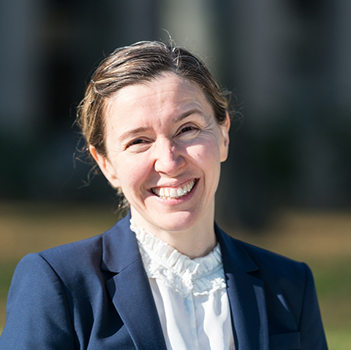
Portrait of Asu Ozdaglar
. Portrait linked by the MIT Schwarzman College of Computing profile.An electrical engineer whose experiments investigated selection and recognition of simultaneous speech.

Portrait of Colin Cherry
. Historical photograph hosted by the MacTutor History of Mathematics archive at the University of St Andrews. Source.Peter B. L. Meijer is a researcher whose work includes image-to-sound sensory substitution. His 1992 engineering paper described how a grayscale image could be encoded as a time-varying sound pattern.[ref]
The design scans image columns from left to right. Horizontal position becomes time within a scan, vertical position selects an audio frequency, and brightness sets an oscillator's amplitude. For example, a bright point high on the right produces a relatively high-frequency component late in the scan. Different rows contribute superposed tones. This provides an explicit encoding whose mathematical information content can be studied separately from how well a listener learns to interpret it.[ref]
An experimental system for auditory image representations by Peter B. L. Meijer. Image-to-Sound Mapping, figure 1 and finite-duration discussion
There are unlisted articles, also show them or only show them.