A scientist who studies heredity and variation. A geneticist may connect inherited traits with genes, measure how variants pass through families or populations, or alter a sequence experimentally to test its biological function.
A geneticist who investigates genetic contributions to variation in behavior. Comparisons among relatives and genomic measurements address population variation; a genetic association alone does not establish a single deterministic cause of an individual’s behavior.
A geneticist who investigates inherited contributions to psychiatric traits and disorders. Family studies and genomic comparisons estimate patterns of liability and identify associated variants, whose effects depend on the population and measurement context.
A researcher whose work concerns child and adolescent anxiety or relevant cognitive mechanisms.[ref]
Heart-beat perception, panic/somatic symptoms and anxiety sensitivity in children by Thalia C. Eley and others. Behaviour Research and Therapy 42, 439–448; 79 children aged 8–11, mental tracking and symptom/sensitivity measures

Portrait of Thalia C. Eley
. Association for Child and Adolescent Mental Health portrait. Source.A psychiatric geneticist who investigated inherited liability to psychiatric outcomes using family and genomic evidence.[ref]
Schizophrenia as a complex trait by Patrick F. Sullivan and others. 2003, author and study described in the original publication
A behavioral geneticist who tested historic depression candidate gene and interaction hypotheses in large samples.[ref]
No support for historic candidate gene or candidate gene-by-interaction hypotheses for major depression across multiple large samples by Richard Border and others. 2019, author and study described in the original publication
A behavioral geneticist who used population-register and family designs to study inherited psychiatric liability.[ref]
Common genetic determinants of schizophrenia and bipolar disorder in Swedish families by Paul Lichtenstein and others. 2009, author and study described in the original publication
Geneticist and first author of the original FOXP2 speech-and-language study. Lai and collaborators connected a mutation in a forkhead-domain gene with a severe inherited disorder, providing a molecular entry point into studying speech and language development.[ref]
Researcher in molecular evolution. Yang and collaborators developed statistical approaches to evolutionary trees and divergence times, connecting sequence data and fossil information with explicit uncertainty in inferred histories.[ref]
Researcher in statistical phylogenetics. Rannala and collaborators developed probabilistic approaches to evolutionary-tree inference, connecting models of sequence evolution with uncertainty about relationships and divergence times.[ref]
Conceptual issues in Bayesian divergence time estimation by Bruce Rannala. Title, author list and reported study
- Bayesian estimation of species divergence times under a molecular clock using multiple fossil calibrations with soft bounds by Ziheng Yang and Bruce Rannala
- Conceptual issues in Bayesian divergence time estimation by Bruce Rannala
- Probability distribution of molecular evolutionary trees: a new method of phylogenetic inference by Bruce Rannala and Ziheng Yang
Researcher in statistical phylogenetics. Felsenstein developed a maximum-likelihood approach to inferring evolutionary trees from DNA sequences, connecting explicit models of sequence change with quantitative comparison of tree hypotheses.[ref]
Evolutionary trees from DNA sequences: a maximum likelihood approach by Joseph Felsenstein. Title, author list and reported study
Researcher in evolutionary developmental biology. With Nicholas A. Levis, Pfennig tested predictions of plasticity-led evolution, connecting environmentally responsive traits with later adaptive genetic change.[ref]
Researcher in phenotypic plasticity and evolution. With David W. Pfennig, Levis evaluated a frequency-dependent prediction of plasticity-led adaptation, turning a proposed evolutionary sequence into an empirical comparison.[ref]
Geneticist who analyzed the relationship between sex chromosomes and hybrid sterility. Haldane’s 1922 paper identified the recurring association of absent, rare or sterile hybrid offspring with the heterogametic sex.[ref]
Sex ratio and unisexual sterility in hybrid animals by J. B. S. Haldane. Title, author list and reported study

Portrait of J. B. S. Haldane
. Author not identified on the file page; source: University of Washington modern-synthesis image collection. Public domain in the United States (PD-US). Source usage terms, via Wikimedia Commons. Source.Researcher in genomic imprinting. Vrana and collaborators investigated disrupted imprinting in hybrids between Peromyscus species, connecting parent-of-origin regulation with incompatibilities between genomes.[ref]
Genomic imprinting is disrupted in interspecific Peromyscus hybrids by Paul B. Vrana and others. Title, author list and reported study
Researcher in bacterial genetics. Rayssiguier and collaborators investigated how mismatch-repair defects weaken the barrier to genetic recombination between related bacteria, connecting DNA surveillance with maintenance of genetic separation.[ref]
Researcher in experimental evolution. McDonald and collaborators investigated how sex changes the dynamics of adaptation, connecting genetic recombination with the competing fates of mutations in evolving populations.[ref]
Researcher in meiosis. Keeney and collaborators showed that Spo11 catalyzes programmed DNA double-strand breaks, connecting the initiation of meiotic genetic recombination with a specific molecular activity.[ref]
Researcher in development and evolution. Waddington’s experiments on genetic assimilation investigated how a trait initially produced under an environmental treatment could become expressed without that treatment after selection.[ref]
Genetic assimilation of an acquired character by Conrad Hal Waddington. Title, author list and reported study

Portrait of C. H. Waddington
. Latyzsewski, Miron; source: University of Edinburgh; cropped by Buruneng. CC BY 3.0, via Wikimedia Commons. Source.Researcher in evolutionary genetics. Melissa M. Gray and collaborators investigated rapid, extreme body-size change in island mice, connecting an unusual natural phenotype with its inherited determinants.[ref]
Genetics of Rapid and Extreme Size Evolution in Island Mice by Melissa M. Gray and others. Title, author list and reported study
Researcher in experimental evolution. Rokyta and collaborators measured beneficial mutation effects in viruses, testing whether their distribution followed a commonly used exponential model rather than assuming that form.[ref]
Beneficial fitness effects are not exponential for two viruses by Darin R. Rokyta and others. Title, author list and reported study
Researcher in evolutionary genetics. Orr analyzed distributions of factors fixed during adaptation, connecting assumptions about the fitness landscape with predictions about the sizes of evolutionary steps.[ref]
Researcher in evolutionary genomics. Wang and collaborators investigated genomic patterns of pleiotropy, connecting the number of traits affected by a gene with questions about the evolution of biological complexity.[ref]
Genomic patterns of pleiotropy and the evolution of complexity by Zhi Wang and others. Title, author list and reported study
Researcher in quantitative genetics. Lande developed a multivariate treatment of evolution, connecting correlated inherited variation with joint changes in traits such as brain and body size.[ref]
Researcher in evolutionary genetics. Chan and collaborators investigated repeated deletion of a Pitx1 enhancer in sticklebacks, connecting changes in regulatory DNA with adaptive pelvic reduction.[ref]
Researcher in developmental genetics. Halder and collaborators induced eyes at unusual body locations by directing eyeless expression in Drosophila, testing a developmental regulator through a striking gain-of-function experiment.[ref]
Researcher in reproductive genetics. Davies and collaborators re-engineered PRDM9 zinc fingers and reversed hybrid sterility in mice, connecting DNA-binding specificity with reproductive compatibility.[ref]
Researcher in evolutionary genomics. Lamichhaney and collaborators investigated Darwin's finches using genome sequencing, connecting inherited sequence differences with beak variation and the history of diversification.[ref]
Researcher in molecular evolution. Chen and collaborators investigated the origin of an Antarctic fish antifreeze-glycoprotein gene from a trypsinogen gene, tracing a new biochemical adaptation to modification of an older genetic sequence.[ref]
Researcher in evolutionary genomics. Singhal and collaborators studied stable recombination hotspots in birds, connecting comparative genomic evidence with questions about how the locations of genetic exchange persist through time.[ref]
Stable recombination hotspots in birds by Sonal Singhal and others. Title, author list and reported study
Geneticist who, with Esther Lederberg, developed replica plating to investigate bacterial mutants. Preserving the spatial pattern of colonies allowed selection to reveal variants that already existed before exposure.[ref]
Replica plating and indirect selection of bacterial mutants by Joshua Lederberg and Esther Lederberg. Title, author list and reported study

Portrait of Joshua Lederberg
. Source. Researcher in molecular cloning. Cohen’s account of the field’s early development describes the experiments that made recombinant plasmids useful for propagating and studying selected DNA sequences.[ref]
DNA cloning: A personal view after 40 years by Stanley Norman Cohen. Title, author list and reported study
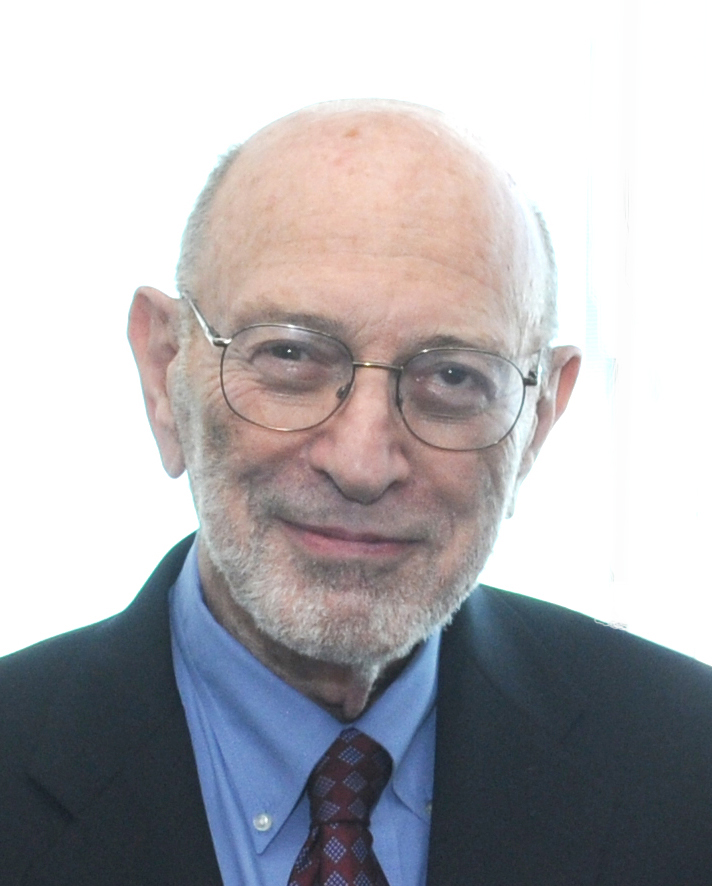


Geneticist studying bacterial genome maintenance. Patricia Rosa coauthored research comparing maintenance functions of linear and circular plasmids in Borrelia burgdorferi, connecting unusual genome architecture with inheritance of extrachromosomal DNA.[ref]
Articles by others on the same topic
There are currently no matching articles.