Topics (384k) Articles (398k) Users (410) Discussions (242) Comments (383) Files (13k) New article

A paleontologist who studied a Cretaceous bird fossil that informs the inferred palate of the crown group ancestor of living birds.[ref]
A paleontologist who investigated changes in the vomer and their relationship to cranial kinesis in the lineage containing birds.[ref]
A paleontologist who studied the skull of Ichthyornis, using its mixture of characters to reconstruct the stepwise assembly of the modern avian head.[ref]
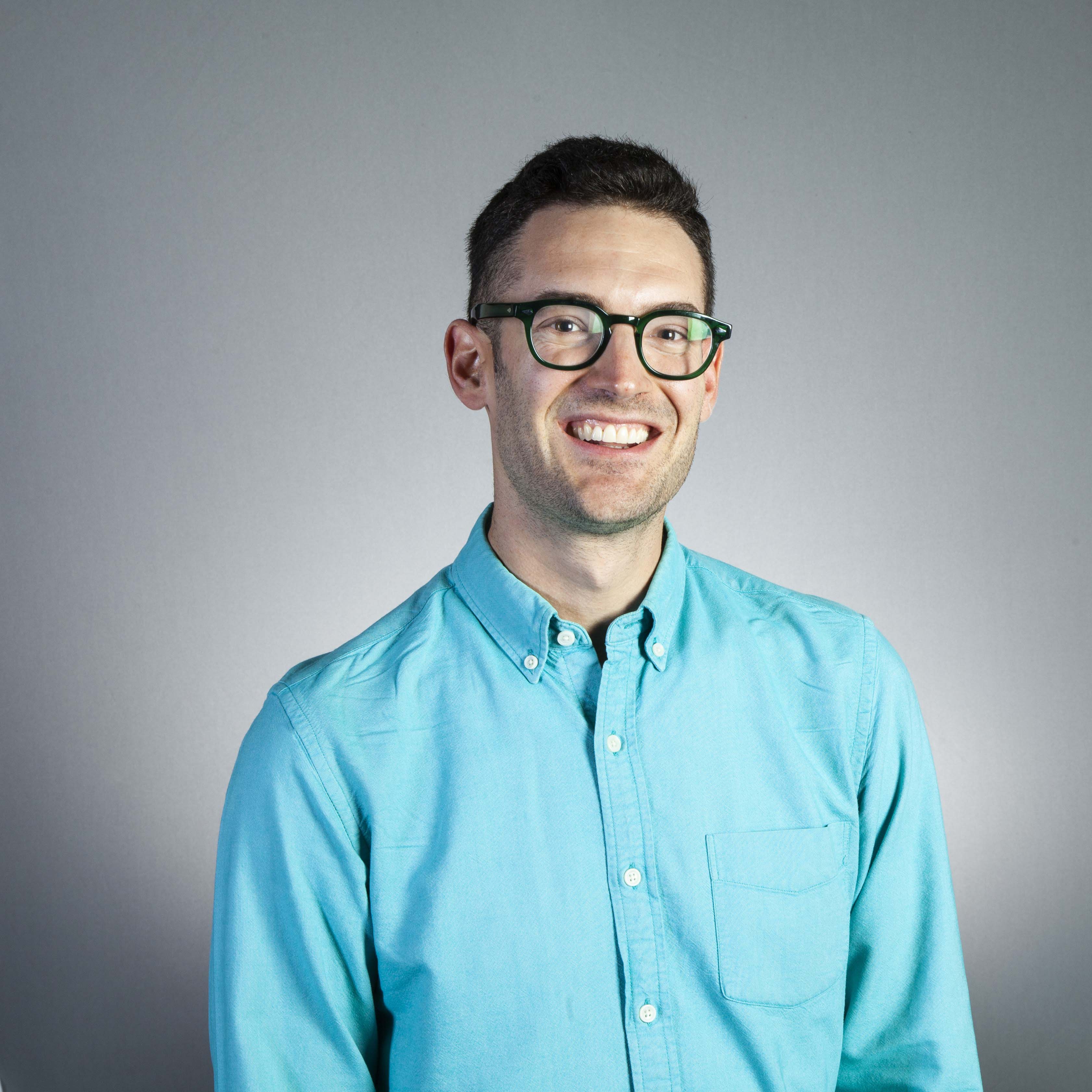
Portrait of Daniel J. Field
. External portrait hosted by Christ's College, University of Cambridge. Source.A paleontologist who investigated Triadobatrachus massinoti using three-dimensional imaging, reassessing its anatomy and the evolution of trunk length in early amphibians.[ref]
A paleontologist who studied early frog locomotion, testing how the endoskeleton of an early relative constrains hypotheses about the origin of jumping.[ref]
A paleontologist who coauthored experiments on soft-tissue fossilization, testing how mineral preservation can retain structures that would otherwise decay.[ref]
A paleontologist who used Acanthodes anatomy to test the reconstruction of the last common ancestor of modern jawed vertebrates.[ref]
A paleontologist who studied skull characters in early jawed vertebrates, testing how combinations of bony-fish-like features inform relationships near the base of the jawed-vertebrate tree.[ref]
A paleontologist who investigated early jawed vertebrate anatomy, including fossil evidence relevant to the origin of the pectoral girdle.[ref]
A paleontologist who investigated the anatomy of early jawless vertebrates, using galeaspid evidence to test hypotheses about the origin of paired appendages.[ref]

Portrait of Zhikun Gai
. External portrait hosted by Institute of Vertebrate Paleontology and Paleoanthropology, Chinese Academy of Sciences. Source.A researcher who coauthored a quantitative measure of small-world networks. Comparing clustering coefficients and path lengths with a reference network made the classification testable rather than a purely visual judgement.[ref]
A researcher who coauthored the cloning and comparison of genes encoding human visual pigments. Relating their sequences helped connect molecular variation to the different spectral sensitivities underlying colour vision.[ref]
A researcher who coauthored genetic crosses and mapping studies of opsin gene expression in cichlids. The results implicated both nearby and distant regulatory regions, showing that differences in visual sensitivity can involve regulation as well as changes in pigment sequence.[ref]
Genetic basis of differential opsin gene expression in cichlid fishes by Karen L. Carleton and others. 2010, abstract and genetic mapping
A researcher who coauthored an experiment adding an opsin to the retina of adult Primates through gene therapy. Subsequent behavioral testing showed new colour vision discrimination, connecting a molecular intervention to a measured perceptual ability.[ref]
Gene therapy for red-green colour blindness in adult primates by Katherine Mancuso and others. 2009, abstract and behavioral results
A researcher who coauthored the cloning of a large candidate odorant-receptor gene family from olfactory tissue. The molecular result supplied a possible mechanism for distinguishing a very large variety of odorants.[ref]
A novel multigene family may encode odorant receptors: a molecular basis for odor recognition by Linda B. Buck and others. study design and results; author roster

Portrait of Linda B. Buck
. The Royal Society. CC BY-SA 3.0, via Wikimedia Commons. Source.A neuroscientist who coauthored experiments visualizing projections of olfactory sensory neurons expressing a particular odorant receptor. Genetic labeling and receptor replacements helped connect receptor identity to organization of the olfactory bulb.[ref]
Visualizing an Olfactory Sensory Map by Peter Mombaerts and others. 1996, receptor-expressing neurons and receptor-swap experiments
A researcher who coauthored experiments linking expanded Hedgehog signalling to eye degeneration in cavefish. Manipulating signaling in surface fish connected a developmental mechanism to a difference between populations.[ref]
Researcher in computational RNA biology. Barash and collaborators investigated the splicing code, connecting combinations of sequence features with predictions of how transcripts are processed.[ref]
Researcher in RNA splicing. Ule and collaborators developed an RNA map of Nova-dependent regulation, connecting binding positions of a regulatory protein with the direction of its effect on splicing.[ref]
An RNA map predicting Nova-dependent splicing regulation by Jernej Ule and others. Title, author list and reported study
Pinned article: Introduction to the OurBigBook Project
Welcome to the OurBigBook Project! Our goal is to create the perfect publishing platform for STEM subjects, and get university-level students to write the best free STEM tutorials ever.
Everyone is welcome to create an account and play with the site: ourbigbook.com/go/register. We belive that students themselves can write amazing tutorials, but teachers are welcome too. You can write about anything you want, it doesn't have to be STEM or even educational. Silly test content is very welcome and you won't be penalized in any way. Just keep it legal!
Intro to OurBigBook
. Source. We have two killer features:
- topics: topics group articles by different users with the same title, e.g. here is the topic for the "Fundamental Theorem of Calculus" ourbigbook.com/go/topic/fundamental-theorem-of-calculusArticles of different users are sorted by upvote within each article page. This feature is a bit like:
- a Wikipedia where each user can have their own version of each article
- a Q&A website like Stack Overflow, where multiple people can give their views on a given topic, and the best ones are sorted by upvote. Except you don't need to wait for someone to ask first, and any topic goes, no matter how narrow or broad
This feature makes it possible for readers to find better explanations of any topic created by other writers. And it allows writers to create an explanation in a place that readers might actually find it.
Figure 1. Screenshot of the "Derivative" topic page. View it live at: ourbigbook.com/go/topic/derivativeVideo 2. OurBigBook Web topics demo. Source. - local editing: you can store all your personal knowledge base content locally in a plaintext markup format that can be edited locally and published either:This way you can be sure that even if OurBigBook.com were to go down one day (which we have no plans to do as it is quite cheap to host!), your content will still be perfectly readable as a static site.
- to OurBigBook.com to get awesome multi-user features like topics and likes
- as HTML files to a static website, which you can host yourself for free on many external providers like GitHub Pages, and remain in full control

Figure 2. You can publish local OurBigBook lightweight markup files to either OurBigBook.com or as a static website.
Figure 3. Visual Studio Code extension installation.
Figure 5. . You can also edit articles on the Web editor without installing anything locally. Video 3. Edit locally and publish demo. Source. This shows editing OurBigBook Markup and publishing it using the Visual Studio Code extension. 
- Infinitely deep tables of contents:



All our software is open source and hosted at: github.com/ourbigbook/ourbigbook
Further documentation can be found at: docs.ourbigbook.com
Feel free to reach our to us for any help or suggestions: docs.ourbigbook.com/#contact