
Danny Dolev Created 2026-10-31 Updated 2026-11-05
Danny Dolev is a computer scientist whose work with Andrew Yao helped establish formal analysis of cryptographic protocols. Their 1981 report studied active adversaries that can alter or replay messages and impersonate participants, going beyond passive observation of encrypted traffic.[ref]
The Dolev-Yao model isolates protocol structure by treating encryption and decryption as symbolic operations with specified cancellation rules. Security analysis then asks what messages the adversary can construct from available knowledge. This supplies a tractable mathematical question about a defined model; connecting the model to an implementation requires its assumptions to hold.
Andrew Yao Created 2026-10-31 Updated 2026-11-05
Andrew Yao is a computer scientist whose work spans analysis of algorithms, computational complexity theory, cryptography and quantum computing. His training included doctorates in both physics and computer science.[ref]
With Danny Dolev, he developed formal models for the security of cryptographic protocols using public-key cryptography. Their Dolev-Yao model makes an active adversary's possible manipulations explicit while treating the underlying encryption and decryption symbolically. The resulting distinction is useful: a protocol can fail through its pattern of messages even if its encryption primitives behave as intended.[ref]
On the Security of Public Key Protocols by Danny Dolev and Andrew Yao. 1981 Stanford report, abstract and introduction
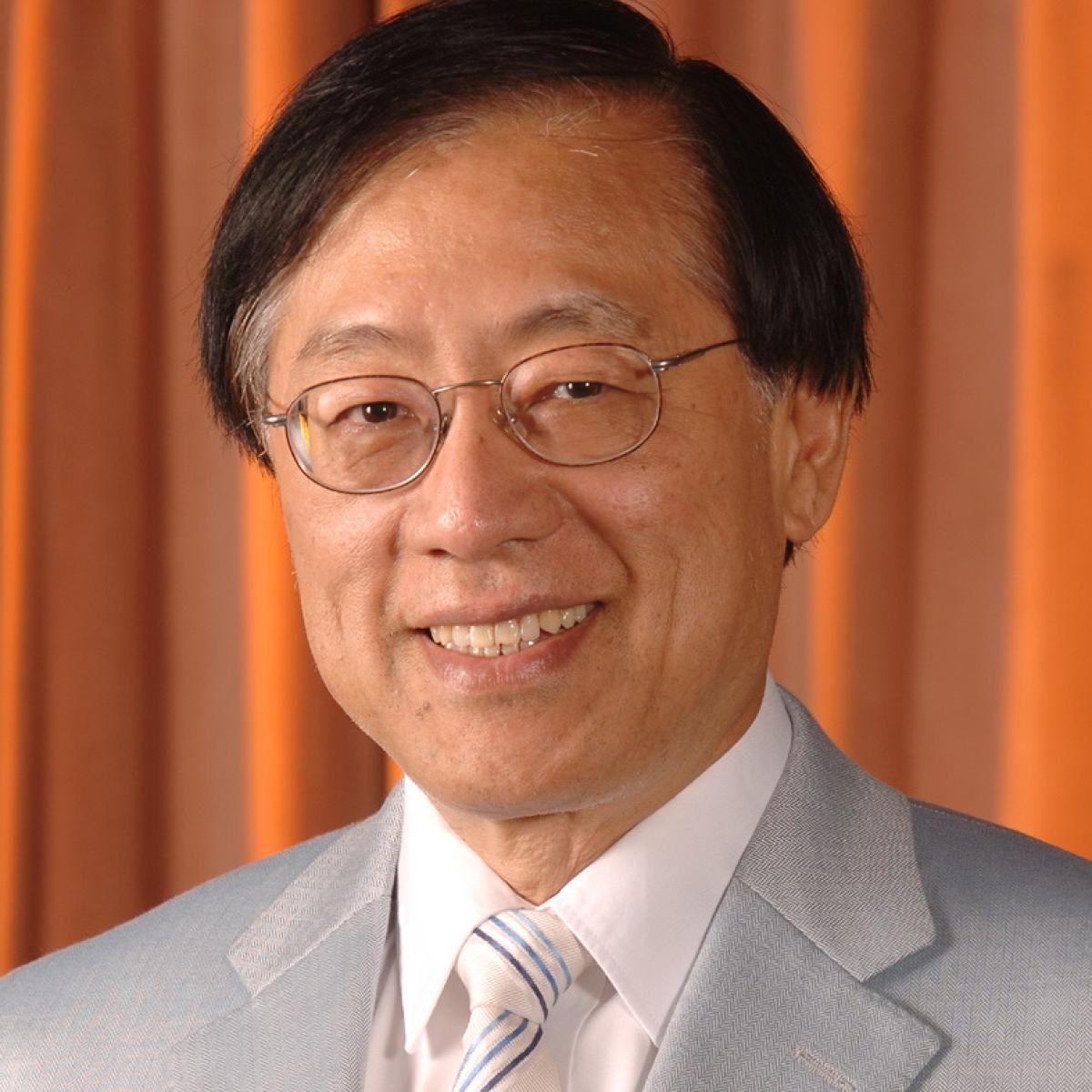
Portrait of Andrew Yao
. Source. William Odling Created 2026-10-31 Updated 2026-11-05
William Odling helped explore systematic arrangements of the chemical elements before Dmitri Mendeleev published his periodic table. His 1864 arrangement placed chemically related elements into a tabular pattern. Such arrangements made recurring relationships among chemical properties visible and helped turn lists of substances into a classification.[ref]
https://www.rsc.org/news/2019/january/finding-the-periodic-table. Royal Society of Chemistry history: Odling’s independent 1864 table
Verified external portrait record: archives.sciencehistory.org/repositories/3/archival_objects/51106
Edward Frankland Created 2026-10-31 Updated 2026-11-05
Edward Frankland used calorimetry to compare the energy available from food with the work performed by muscle. His 1866 argument challenged the view that muscular work must chiefly consume the muscle's own substance. The comparison connected measured heats of oxidation with an energy balance for animal activity.[ref]
On the Source of Muscular Power by Edward Frankland. On the Source of Muscular Power, Royal Institution discourse, 1866: calorimetric measurements and conclusions
Identity: library.si.edu/image-gallery/73414
Verified external portrait record: library.si.edu/image-gallery/73414
Julius Neßler Created 2026-10-31 Updated 2026-11-05
Julius Neßler developed a reagent for detecting and estimating Ammonia by colour. In Nessler's reagent, an alkaline Mercury–iodide system produces a visible response; comparing a sample with standards of known concentration turns that observation into a colorimetry measurement. Equal viewing path lengths make the comparison meaningful.[ref]
https://homepages.uc.edu/~jensenwb/museum-booklets/04.%20Colorimeters.pdf. William B. Jensen, Colorimeters, p.3: Nessler, reagent and matching tubes
A chemist associated with Nessler's reagent. Deutsche Biographie, identity and dates. A verified external portrait appears in University of Cincinnati, Colorimeters booklet, figure 2 on PDF page 3; no standalone portrait URL was established for embedding.
Charles Albert Browne Jr. Created 2026-10-31 Updated 2026-11-05
Charles Albert Browne Jr. connected sugar analysis with quantitative optical activity measurements. His handbook distinguishes a polarimeter that directly measures an angle from a compensating saccharimeter using a quartz wedge. The distinction matters because an instrument's scale and compensation method enter the interpretation of a sugar measurement.[ref]
A Handbook of Sugar Analysis by Charles Albert Browne Jr.. 1912, pp.84–85 and chapter VI
Justus von Liebig Created 2026-10-31 Updated 2026-11-05
Justus von Liebig argued for a chemical account of fermentation in which decomposition of a ferment induces a corresponding change in neighbouring material. The ensuing disagreement with Louis Pasteur concerned whether the activity of living yeast was essential to the observed transformation. The dispute made the relation between chemical change and living organisms an experimental question.[ref]
https://biotech.law.lsu.edu/cphl/history/articles/pasteur.htm. Pasteur’s primary retrospective discussion of Liebig’s decomposition account and yeast experiments
Verified external portrait record: digital.sciencehistory.org/works/zb6pn2u/viewer/8nsyo71
Robert Bunsen Created 2026-10-31 Updated 2026-11-05
Robert Bunsen and Gustav Kirchhoff developed spectrum analysis as a method of chemical identification. A flame supplied light from the sample; a slit, collimator, prism, and telescope separated and displayed the characteristic lines. Comparing these lines allowed chemical constituents to be recognized even when their ordinary flame colours were difficult to distinguish.[ref]
Chemical Analysis by Observation of Spectra by Gustav Kirchhoff and Robert Bunsen. 1860, apparatus description and comparison of salt spectra
Verified external portrait reference: Portrait or portrait collection identifying the sitter.

William Crookes 2026-10-31
Verified external portrait reference: Portrait or portrait collection identifying the sitter.
Ferdinand Reich Created 2026-10-31 Updated 2026-11-05
Ferdinand Reich investigated zinc minerals using chemical separation and spectrum analysis. With Hieronymus Theodor Richter, he identified indium in 1863 after finding a spectral feature inconsistent with the expected thallium. The episode illustrates how a distinctive spectral line can guide the isolation of a new chemical element.[ref]
https://periodic-table.rsc.org/element/49/Indium. History: zinc blende analysis, unfamiliar line and joint isolation of indium
Verified external portrait reference: Portrait or portrait collection identifying the sitter.

Hieronymus Theodor Richter Created 2026-10-31 Updated 2026-11-05
Hieronymus Theodor Richter and Ferdinand Reich identified indium through spectrum analysis of material obtained from a zinc mineral. The unusual indigo-coloured spectral line distinguished the new chemical element from thallium, which Reich had initially sought. Their joint 1863 paper reported the new substance.[ref]
https://periodic-table.rsc.org/element/49/Indium. History: Reich and Richter’s 1863 spectral identification; original report DOI 10.1002/prac.18630900122
Verified external portrait reference: Portrait or portrait collection identifying the sitter.
Henry Enfield Roscoe Created 2026-10-31 Updated 2026-11-05
Henry Enfield Roscoe explained chemical manufacture through particular substances and transformations. In his elementary textbook, the production of phosphorus begins with bone ash and proceeds through acid phosphate, connecting the chemistry of phosphates with the recovery of the elemental substance.[ref]
Lessons in Elementary Chemistry by Henry Enfield Roscoe. Inspected 1868 printing, Lesson XV, printed pp.131–133
Verified external portrait reference: Portrait or portrait collection identifying the sitter.
James Marsh Created 2026-10-31 Updated 2026-11-05
James Marsh developed an arsenic detection method that separated the suspect material's arsenic into a form giving a visible deposit. In the original apparatus, hydrogen generated in a vessel carried the volatile arsenic-containing product toward a heated region. The value of the test was its sensitivity and separation of the diagnostic material from the original sample.[ref]
A chemist who developed a sensitive arsenic detection method. External portrait: Portrait in The Records of the Woolwich District, volume 1, p.340.

Hermann von Fehling Created 2026-10-31 Updated 2026-11-05
Hermann von Fehling developed a method for quantitative sugar determination using copper chemistry. Fehling's reagent contains alkaline copper(II) stabilized by tartrate; a positive Fehling's test produces copper(I) oxide. The test measures reducing behaviour rather than identifying one particular sugar.[ref]
Die quantitative Bestimmung von Zucker und Stärkmehl mittelst Kupfervitriol by Hermann von Fehling. Die quantitative Bestimmung von Zucker und Stärkmehl mittelst Kupfervitriol, 1849, pp.106–113
Chemist associated with Fehling's reagent. Authentic external portrait: commons.wikimedia.org/wiki/File:Hermann_fehling.jpg.

Marcellin Berthelot 2026-10-31
Chemist whose 1856 formic acid preparation used oxalic acid and glycerol. Authentic museum portrait: www.parismuseescollections.paris.fr/en/node/1056491.
Holger Fleischer Created 2026-10-31 Updated 2026-11-05
Holger Fleischer investigated how classroom tests for reducing sugars should be interpreted. His discussion of the iodine test also examines why the copper test should not automatically be represented as formation of one uniquely specified organic oxidation product: observable reduction of copper(II) does not establish every detail of the accompanying organic reaction mechanism.[ref]
The Iodine Test for Reducing Sugars by Holger Fleischer. 2019, section 2.3: complexity and misinterpretation of organic products in copper tests
Chemistry educator and author of The Iodine Test for Reducing Sugars by Holger Fleischer. The publisher identifies the author with Scheffold-Gymnasium, Schwäbisch Gmünd: www.sciepub.com/WJCE/abstract/10312. The chemical educator is distinct from the legal scholar with the same name.
Andrew Ure Created 2026-10-31 Updated 2026-11-05
Andrew Ure described industrial chemistry through apparatus, material transformations, and manufacturing processes. His dictionary's account of Mercury compounds distinguishes the preparation of mercury(II) chloride from routes to mercury(I) chloride, showing how a chemical reference could connect substance identity with manufacturing practice.[ref]
Dictionary of Arts, Manufactures and Mines by Andrew Ure. Mercury entry, printed p.141 and following calomel methods
Chemist and scientific writer. Authentic portrait: Smithsonian Libraries portrait record.
Amedeo Avogadro Created 2026-10-31 Updated 2026-11-05
Amedeo Avogadro proposed relating gas volumes to the numbers of molecules they contain. His 1811 essay uses simple combining-volume ratios to argue for equal molecular counts in equal gas volumes under matched conditions, the idea now expressed by Avogadro's law. The distinction between an atom and a molecule is essential when interpreting how elemental gases combine.[ref]
https://webserver.lemoyne.edu/~giunta/avogadro.html. 1811 essay, section I: equal volumes and relative numbers of molecules
Scientist associated with Avogadro's law. Authentic institutional portrait: Science History Institute portrait record.
For a binary operation , its Cartesian lifting sends lists to the list comprehension , with the right generator varying fastest. On finite lists this preserves associativity but need not preserve commutativity or idempotence, because list order and repeated entries matter.
List zip 2026-10-31
Combine corresponding entries of two lists into a list of tuples. The usual finite-list operation stops when either input ends. A lazy evaluation implementation can produce entries from infinite lists, but its exact strictness depends on the order of pattern matching in the definition.
There are unlisted articles, also show them or only show them.