
Siméon Denis Poisson Created 2026-10-31 Updated 2026-11-05
A French mathematician whose work connected analysis, probability theory and mathematical physics. His 1837 study of probabilities of judicial decisions introduced the Poisson distribution. Its modern parameter controls both the mean and variance of the count, making the law useful for modeling rare events.
His research on attractive forces and potential theory also helped shape the Poisson equation, relating the Laplacian of a potential to its source. His name appears in the Poisson bracket of Hamiltonian mechanics as well: the same biography reaches both statistical counts and the geometry of dynamical equations. [ref]
https://mathshistory.st-andrews.ac.uk/Biographies/Poisson/. University of St Andrews historical biography, mathematical work and career

Siméon Denis Poisson, cropped portrait from a lithograph
. Portrait source. François-Séraphin Delpech, after Nicolas Eustache Maurin; existing crop hosted on Wikimedia Commons. The file cites the Smithsonian Libraries Scientific Identity source. Public-domain artwork; faithful reproduction, PD-Art / Public Domain Mark.
Øystein Ore Created 2026-10-31 Updated 2026-11-05
Øystein Ore worked in ring theory, Galois theory, lattice theory and graph theory. His work on noncommutative rings investigated when a ring can be embedded in a division ring, extending the idea of forming fractions beyond commutative arithmetic.
His later books also linked mathematical ideas with their history. The movement from algebraic structures to closure relations and graphs illustrates how an organizing mathematical viewpoint can lead into several different subjects.[ref]

Portrait of Øystein Ore
. Identified external portrait in the University of St Andrews MacTutor collection; photographer not stated on the inspected display. Source. Harish-Chandra Created 2026-10-31 Updated 2026-11-05
Harish-Chandra developed representation theory for Lie groups, especially infinite-dimensional representations of semisimple groups. His work connects continuous symmetries with operators on function spaces, extending the symmetry viewpoint familiar from quantum mechanics into deep questions in analysis and number theory.
He trained in theoretical physics before moving toward mathematics. The Institute for Advanced Study records his faculty affiliation from 1963 to 1983 and describes infinite-dimensional representations as a central theme of his work.[ref]
https://www.ias.edu/scholars/harish-chandra. Institutional profile, research description and faculty dates

Portrait of Harish-Chandra
. Photograph by Paul Halmos, as credited by the University of St Andrews MacTutor display. Source. Elizabeth Wong (mathematician) Created 2026-10-31 Updated 2026-11-05
Elizabeth Wong coauthored Sequential Quadratic Programming Methods by Philip E. Gill and Elizabeth Wong with Philip E. Gill. The review concerns constrained optimization, in which successive local quadratic problems determine steps and multiplier estimates.
Their work connects the design of optimization algorithms with the linear algebra needed to solve the local subproblems. The 2010 report's title page identifies the authors and institutional report number.[ref]
Philip E. Gill Created 2026-10-31 Updated 2026-11-05
Philip E. Gill works on numerical analysis, numerical linear algebra and scientific computation. With Elizabeth Wong, he authored Sequential Quadratic Programming Methods by Philip E. Gill and Elizabeth Wong, explaining how constrained nonlinear problems can be approached through successive quadratic models.
The connection with linear algebra is computationally important: solving the local constrained systems is part of making an optimization method reliable.[ref]
Roger Fletcher (mathematician) 2026-10-31
British mathematician associated with numerical analysis and mathematical optimization, including Sℓ1QP.
John E. Dennis 2026-10-31
A mathematician whose research includes mathematical optimization. The Dennis-Moré condition concerns superlinear convergence of quasi-Newton methods.
Homepage: www.cmor-faculty.rice.edu/~dennis/
Jorge Moré Created 2026-10-31 Updated 2026-11-05
A mathematician working on mathematical optimization algorithms and software. The Dennis-Moré condition concerns superlinear convergence of quasi-Newton methods.
Homepage: www.mcs.anl.gov/~more/
Henry Bessemer Created 2026-10-31 Updated 2026-11-05
Henry Bessemer was an engineer associated with the Bessemer process, a method for converting molten pig iron toward steel using an air blast. His 1856 patent describes introducing air into molten iron so that reactions within the bath generate heat while changing its chemical composition.[ref]
Improvement in the manufacture of iron and steel by Henry Bessemer. US16082A, specification and claims
The important design insight is the coupling between chemical reaction, mixing and heating: the unwanted constituents become part of the source of energy for processing the material. The Bessemer process consequently illustrates how understanding a material's chemistry can change the scale and speed of manufacture. Obtaining a desired steel still requires control of the starting chemical composition and the final carbon content.
Identity and portraits: National Portrait Gallery, sitter biography and dated portraits.

Portrait of Henry Bessemer
. Source. Daniel Sleator 2026-10-31
A computer scientist whose work with Robert Tarjan includes splay trees and amortized analysis. His Carnegie Mellon University homepage identifies his full name and academic role.[ref]
https://www.cs.cmu.edu/~sleator/. Named author homepage: Daniel Dominic Kaplan Sleator, professor of computer science

Portrait of Daniel Sleator
. Photograph from the author's Carnegie Mellon University gallery, Some pictures of me. Source. Paul W. Goldberg 2026-10-31
Computer scientist whose work includes algorithms, computational complexity theory and algorithmic game theory.
Official profile: www.cs.ox.ac.uk/people/paul.goldberg/
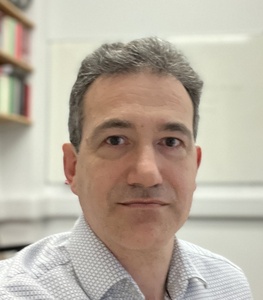


Armin Biere Created 2026-10-31 Updated 2026-11-05
Armin Biere coauthored Symbolic Model Checking without BDDs by Armin Biere and others, which introduced a bounded model checking procedure for linear temporal logic using Boolean satisfiability. The method encodes a finite sequence of finite-state machine transitions as a propositional formula; a satisfying assignment can describe a path violating a requested property. The paper demonstrates how SAT solving can replace binary decision diagrams in this verification task.[ref]
Alessandro Cimatti Created 2026-10-31 Updated 2026-11-05
Alessandro Cimatti coauthored Symbolic Model Checking without BDDs by Armin Biere and others, which introduced a bounded model checking procedure for linear temporal logic using Boolean satisfiability. The method encodes a finite sequence of finite-state machine transitions as a propositional formula; a satisfying assignment can describe a path violating a requested property. The paper demonstrates how SAT solving can replace binary decision diagrams in this verification task.[ref]
Edmund Clarke Created 2026-10-31 Updated 2026-11-05
Edmund Clarke coauthored Symbolic Model Checking without BDDs by Armin Biere and others, which introduced a bounded model checking procedure for linear temporal logic using Boolean satisfiability. The method encodes a finite sequence of finite-state machine transitions as a propositional formula; a satisfying assignment can describe a path violating a requested property. The paper demonstrates how SAT solving can replace binary decision diagrams in this verification task.[ref]
Yunshan Zhu Created 2026-10-31 Updated 2026-11-05
Yunshan Zhu coauthored Symbolic Model Checking without BDDs by Armin Biere and others, which introduced a bounded model checking procedure for linear temporal logic using Boolean satisfiability. The method encodes a finite sequence of finite-state machine transitions as a propositional formula; a satisfying assignment can describe a path violating a requested property. The paper demonstrates how SAT solving can replace binary decision diagrams in this verification task.[ref]
Bernard Sufrin Created 2026-10-31 Updated 2026-11-05
Bernard Sufrin is a computer scientist whose work includes formal methods, programming language design and tools for mathematical reasoning about programs. His Oxford profile identifies computer support for refinement and proof among his research interests.[ref]
His Communicating Scala Objects by Bernard Sufrin describes a Scala library for concurrent computing through communicating components. Channels and process composition make communication structure explicit; closure and alternation then require specified semantics so that a component can respond coherently to several possible interactions.[ref]
Communicating Scala Objects by Bernard Sufrin. Library description, communication, closure and alternation
Homepage: www.cs.ox.ac.uk/people/bernard.sufrin/

Portrait of Bernard Sufrin
. Source. Jack Elton Bresenham Created 2026-10-31 Updated 2026-11-05
Jack Elton Bresenham is a computer scientist known for Bresenham's line algorithm, which turns a line segment into a sequence of adjacent grid steps using incremental integer arithmetic. Its original setting was a digital plotter rather than a modern display.[ref]
Algorithm for computer control of a digital plotter by Jack Bresenham. 1965, introduction and algorithm
His reported apparatus could move from one grid point to any of eight neighbours, with a typical spacing of one hundredth of an inch. The implementation controlled an IBM 1627 plotter from an IBM 1401; the paper reports 333 core locations and about 1.5 milliseconds of computation between successive increments. Avoiding repeated multiplication and division made the geometric method practical on that hardware.[ref]
Bui Tuong Phong Created 2026-10-31 Updated 2026-11-05
Bui Tuong Phong was a computer scientist whose work on computer graphics includes the Phong reflection model. His 1975 paper, Illumination for computer generated pictures by Bui Tuong Phong, connects geometric descriptions of surfaces with the calculation of their visible appearance.[ref]
Illumination for computer generated pictures by Bui Tuong Phong. Communications of the ACM 18(6), 311–317
The Phong reflection model separates Lambertian reflectance and specular reflection contributions, letting a broad matte response and a concentrated highlight be adjusted independently. For a concrete software example, the JavaFX PhongMaterial class combines those contributions with ambient and self-illumination terms, using the surface normal vector, reflected-light direction and viewing direction in its calculation.[ref]
David Elliott Bell Created 2026-10-31 Updated 2026-11-05
David Elliott Bell is a computer scientist who developed the Bell-LaPadula model with Leonard J. LaPadula. Their work placed requirements about permitted information access inside an explicit mathematical model of a computer.[ref]
Their 1973 report distinguishes a statement of security from the mechanisms needed to enforce it. A theorem about allowed transitions protects an implementation only when the actual system enforces those transition rules. This connects a global security requirement with local obligations on access control.[ref]
Leonard J. LaPadula Created 2026-10-31 Updated 2026-11-05
Leonard J. LaPadula is a computer scientist who developed the Bell-LaPadula model with David Elliott Bell. Their 1973 report represented a secure computer through states, inputs and permitted transitions, giving precise definitions of security and compromise.[ref]
Secure Computer Systems: Mathematical Foundations by David Elliott Bell and Leonard J. LaPadula. Original report byline; sections II–III
A central proof starts from a secure initial state and constrains every permitted transition to preserve security. Mathematical induction then extends the guarantee to an arbitrary finite execution. LaPadula also prepared the 1996 electronic reconstruction of their original report.[ref]
Secure Computer Systems: Mathematical Foundations by David Elliott Bell and Leonard J. LaPadula. Reconstruction title page; section III, Basic Security Theorem
There are unlisted articles, also show them or only show them.