
A seismically inferred transition associated with the base of the lithosphere, often identified by a decrease in shear-wave velocity. Its depth and sharpness constrain combinations of temperature, composition, hydration, melt fraction and seismic anisotropy. A sharp discontinuity inside a craton can instead lie within its thick lithospheric mantle.[ref]
A global view of the lithosphere-asthenosphere boundary by Catherine A. Rychert and Peter M. Shearer. Abstract and pp. 495–498, distinction between a sharp imaged interface and the possibly deeper cratonic boundary.
Thermal or chemical modification that changes an older lithosphere's properties, potentially reducing its strength or effective thickness. Magma transport, mantle plumes and other mantle flow can contribute. A younger thermal signature does not automatically imply complete replacement of the old crust or lithospheric mantle.
Robert Kass connects Bayesian statistics with statistical methods for neural data. His research includes Bayes factors, prior distributions, asymptotic inference and the analysis of spike trains. His institutional research statement describes using point-process models to analyze the timing of neuronal activity and relationships between brain regions.[ref]
https://www.stat.cmu.edu/~kass/about.html. Author Bio Sketch, Bayesian inference and neural-data analysis
A spike train is naturally represented by a point process: the data include event times rather than only a continuous response or total count. A statistical model can then express how firing intensity changes with an experimental condition or recent activity. This makes the choice of model part of the scientific question about neural communication, while uncertainty calculations distinguish a fitted pattern from a reproducible relationship.
Homepage: www.stat.cmu.edu/~kass/
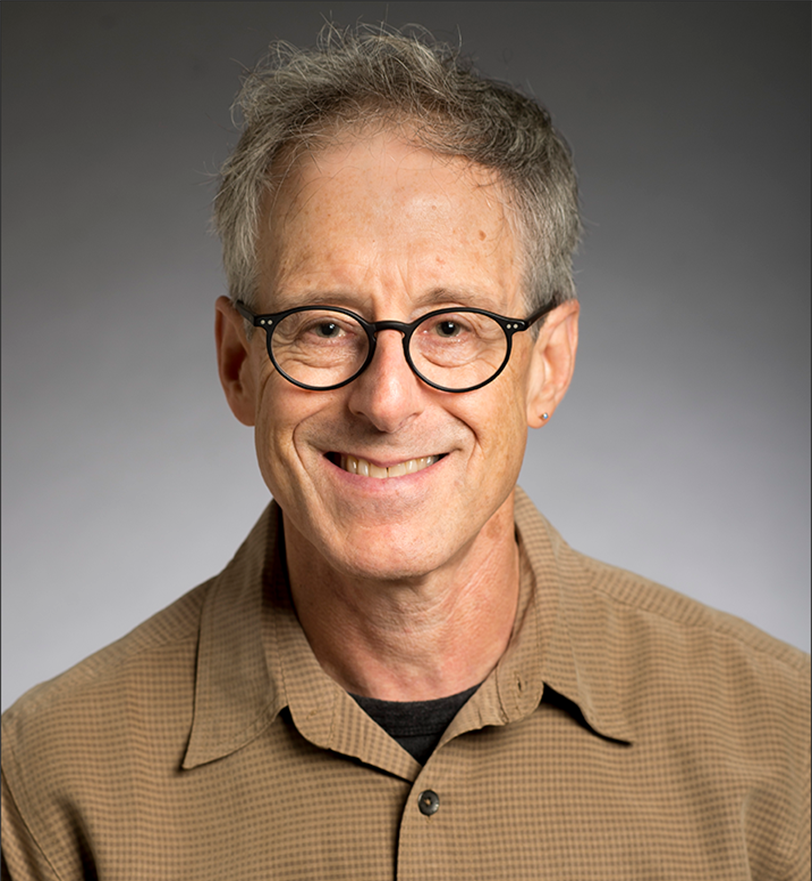
Robert E. Kass
. Donald Rubin's work connects Causal inference, missing data and Bayesian statistics. His Harvard profile lists Causal inference in experiments and observational studies, nonresponse in sample surveys, and Bayesian and empirical Bayesian methods as research interests.[ref]
The potential outcomes framework makes a causal comparison explicit by distinguishing the outcomes that would occur under alternative treatments. Only the outcome under the received treatment is observed for each individual, so identifying an average treatment effect requires design or modelling assumptions. In missing-data analysis, multiple imputation propagates uncertainty by analyzing several completed datasets and pooling their results with Rubin's rules. These ideas explain why filling in one convenient value and then treating it as observed generally understates uncertainty.

Portrait of Donald B. Rubin
. Photograph of Donald B. Rubin linked from the Harvard Department of Statistics profile and labelled Don Rubin.Nan Laird develops statistical methods for incomplete observations, repeated measurements and the combination of evidence across studies. Her Harvard biography identifies contributions to the expectation-maximization algorithm, meta-analysis, longitudinal studies and statistical genetics.[ref]
In a longitudinal study, repeated outcomes from one person are usually dependent. A model with random effects can represent persistent differences between people while estimating population relationships. Treating those observations as independent can distort uncertainty. Laird's work on longitudinal analysis addresses this connection between a scientifically plausible dependence structure and practical inference; the same concern arises when results from heterogeneous studies are combined by random-effects meta-analysis.
Homepage: hsph.harvard.edu/profile/nan-m-laird/
Arthur P. Dempster contributed to multivariate analysis, incomplete-data inference and the representation of uncertain evidence. With Nan Laird and Donald Rubin, he developed the general expectation-maximization algorithm formulation published in 1977. Its expectation step averages a complete-data log likelihood using the current Conditional distribution of latent or missing variables; its maximization step updates parameters using that average. This makes a difficult incomplete-data likelihood accessible through a sequence of simpler calculations.
Harvard's institutional tribute also traces his work on Dempster-Shafer theory, in which evidence can leave an explicit component of uncertainty about an assertion. His dissertation concerned multivariate settings with more variables than observations, anticipating a central difficulty of high-dimensional statistics.[ref]
https://statistics.fas.harvard.edu/news/2026/06/arthur-pentland-dempster-1929-2026-extended-obituary-and-tribute. Harvard tribute, dissertation, upper/lower probabilities and EM collaboration
Identity and life dates: Harvard Department of Statistics obituary and tribute.

Portrait of Arthur P. Dempster
. Llorenzi. CC BY-SA 3.0, via Wikimedia Commons. Source.
Andrew Gelman works on Bayesian statistics, statistical modelling and the interpretation of data in scientific and social questions. His research and teaching connect hierarchical Bayesian models, regression, computation and statistical graphics. His Columbia research page describes applications ranging from survey inference and elections to environmental and medical measurements.[ref]
A characteristic modelling problem is learning about many related groups: completely separate estimates can be noisy, while a single common estimate can hide differences. A hierarchical Bayesian model estimates group parameters together and lets the data influence their degree of pooling. Model checking, including posterior predictive checks, then asks whether simulated observations reproduce scientifically relevant features of the actual data. This connects fitting a model with examining the adequacy of its assumptions.

Portrait of Andrew Gelman
. Andrewgelman, 13 May 2026. CC BY 4.0, via Wikimedia Commons. Source.
Hal S. Stern is a statistician whose research includes Bayesian statistics and the analysis of forensic evidence. He is a coauthor of Bayesian Data Analysis by Andrew Gelman and others and of the article with Andrew Gelman explaining why a difference between statistical significance and nonsignificance need not itself be statistically significant. This distinction separates the comparison of two estimated effects from two separate hypothesis tests.[ref]

Portrait of Hal S. Stern
. Photograph linked by the author’s University of California, Irvine homepage; photographer and licence are not asserted. Source.Bernard Lewis Welch developed inference for means when sample variances cannot be treated as estimates of one shared population variance. His 1947 paper explicitly generalized Student's problem to several different population variances.[ref]
The Generalization of Student's Problem when Several Different Population Variances are Involved by Bernard Lewis Welch. Biometrika 34(1–2), 28–35 (1947), publisher title and byline
The familiar two-group Welch's t-test estimates the standard error of a mean difference using , rather than pooling both sample variances under an equal-variance model. Its reference distribution uses approximate statistical degrees of freedom. This makes the distinction between unequal population variances and unequal sample sizes explicit: both enter the uncertainty calculation, and unequal group sizes do not by themselves justify assuming equal variances.
Joseph Born Kadane is a statistician whose work connects Bayesian statistics, decision theory and applications of probability to practical evidence. In his own research statement, he describes work on prior elicitation: constructing probability distributions from an investigator's background knowledge, as well as on the foundations and computation of Bayesian inference.[ref]
https://www.stat.cmu.edu/GSS/kadane.html. Carnegie Mellon, Joseph B. Kadane research statement, theoretical interests
His institutional biography records that he joined Carnegie Mellon in 1971 and headed its statistics department from 1972 to 1981.[ref]
https://www.cmu.edu/dietrich/statistics-datascience/people/emeritus/joseph-kadane.html. Carnegie Mellon departmental biography, Bio
In computing, his name is also attached to Kadane's algorithm for the maximum subarray problem: the best segment ending at a new position either extends the preceding best-ending segment or starts at that position. This gives a linear-time dynamic programming solution.
Portrait of Joseph Born Kadane
. Photograph from Carnegie Mellon University's official researcher profile. Source.Maurice Kendall developed methods for rank-based statistical comparison and helped organize statistical theory through influential textbooks. His 1938 paper introduced a measure of rank correlation associated with the Kendall rank correlation coefficient.[ref]
A New Measure of Rank Correlation by Maurice Kendall. Biometrika 30(1–2), 81–93 (1938), publisher title and byline
The coefficient compares pairs of observations: agreement between their two orderings counts positively, disagreement negatively. This makes it a measure of ordinal association rather than a measure of linear agreement in the original measurement units. For data without ties, identical orderings give coefficient one and reversed orderings minus one. Later editions of his textbook series were developed by authors including Alan Stuart, connecting probability distributions, sampling theory and inference.[ref]

Portrait of Maurice Kendall
. University of St Andrews, MacTutor History of Mathematics Archive. Photographer and image licence are not asserted. Source.Alan Stuart was a statistician and professor at the London School of Economics, closely associated with the systematic presentation of statistical theory in Maurice Kendall's textbook tradition. The publisher credits him as an author of the sixth edition of Kendall's Advanced Theory of Statistics, volume 1, Distribution Theory, published in 1994. Its scope runs from moments and characteristic functions to sampling distributions, order statistics and multivariate normal distributions. This connects the probability distribution of raw observations to the sampling distribution of the statistics used for inference.[ref]
https://www.wiley-vch.de/en/areas-interest/mathematics-statistics/statistics-16st/probability-mathematical-statistics-16st1/kendall-39-s-advanced-theory-of-statistics-volume-1-distribution-theory-978-0-470-66530-5. Publisher catalogue, sixth-edition authorship, contents and Alan Stuart author information

Portrait of Alan Stuart, circa 1979
. Library of the London School of Economics and Political Science, via Wikimedia Commons. The source records no known copyright restrictions; this is not an asserted Creative Commons licence. Source.

Portrait of Earl Babbie
. Babbie, 6 February 2016. CC BY-SA 4.0, via Wikimedia Commons. Source.
Researcher whose work includes Stigma: notes on the management of spoiled identity by Erving Goffman.

Portrait of Erving Goffman
. Photographer not identified in the Commons record. Source file identifies Erving Goffman at high school in Winnipeg, circa 1940. Source.
Research contributions include the primary work cited below.[ref]
https://www.kent.ac.uk/school-of-social-sciences/people/1419/milton-damian. Identity and authorship record
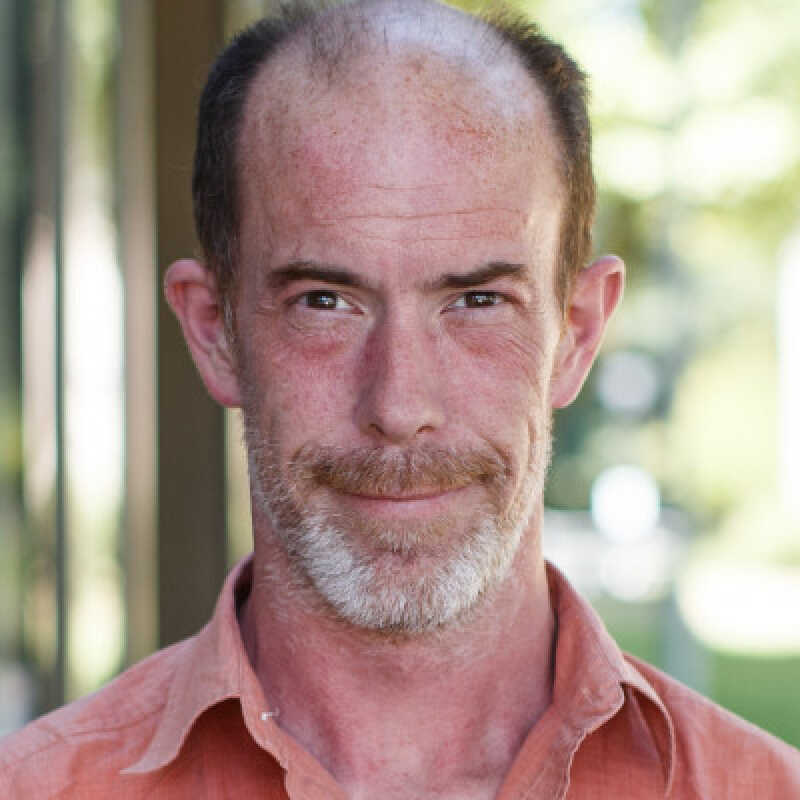
Portrait of Damian Milton
. External institutional portrait identifying Dr Damian Milton on the University of Kent staff page. This image is hosted by Kent, not Wikimedia; photographer and licence are not asserted. Source.Edward E. Jones studied social attribution, including how observers infer a writer’s attitudes from an essay. Comparing assigned and freely chosen positions tests whether observers account for constraints on the writer. The design separates information about the expressed position from information about the freedom to select it. [ref]
The attribution of attitudes by Edward E. Jones and others. 1967, assigned versus chosen essay conditions
A social psychologist who tested how cognitive load affects social attribution. Experiments required observers to judge another person while occupied with an additional task. Their results motivated a distinction between forming an initial characterization and correcting it for situational constraints: an explanation may depend on the processing resources available to the observer.[ref]

Portrait of Daniel T. Gilbert
. Daniel Gilbert; CC BY-SA 4.0. Source.
A researcher who studied cultural variation in social attribution. Comparisons of American and Chinese explanations used both animated physical events and accounts of social events. The work asks how explanatory habits favor properties of an individual or features of a situation, rather than attributing every judgment to a fixed personal disposition.[ref]
A researcher who investigated cross-cultural recognition of facial expressions. His 1971 study tested how participants in New Guinea matched photographs to emotion-eliciting stories. Agreement across populations supports some shared expression–situation mappings, while the story and photograph choices define what the task can establish about everyday emotion recognition.[ref]
Constants across cultures in the face and emotion by Paul Ekman and others. 1971, story-to-photograph task

Portrait of Paul Ekman
. Paul Ekman Group, LLC; CC BY-SA 3.0. Source.
There are unlisted articles, also show them or only show them.