Topics (384k) Articles (398k) Users (410) Discussions (242) Comments (383) Files (13k) New article

Researcher whose work includes Matching learning style to instructional method: effects on comprehension by Beth A. Rogowsky and others.
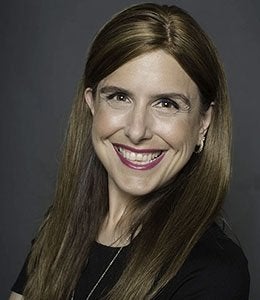
Portrait of Beth A. Rogowsky
. Photograph hosted by Commonwealth University; credits and usage information are on the linked source page. Source.Economist whose research is represented by School readiness and later achievement by Greg J. Duncan and others.
Researcher whose work includes Peer effects, teacher incentives, and the impact of tracking: evidence from a randomized evaluation in Kenya by Esther Duflo and others.

Portrait of Esther Duflo
. Kris Krüg; CC BY-SA 2.0, via Wikimedia Commons. Source.An economist who developed foundations of game theory and the Von Neumann-Morgenstern utility theorem with John von Neumann.

Historical portrait crop of Oskar Morgenstern
. Anonymous photograph, University of the Andes, Colombia; existing Commons crop from its 1954–1955 bulletin group photograph. The source crop is only 48 by 74 pixels. Source.A developmental psychologist who, with M. Keith Moore, reported experiments on neonatal imitation. Infants’ gestures were compared across modeled facial and manual actions to test specific matching. The influential proposal made early imitation experimentally tractable; later disagreement, including Janine Oostenbroek’s longitudinal work, highlights the importance of comparison actions and scoring rules.[ref]
Carole Peterson studied childhood autobiographical memory and its later accessibility. Longitudinal interviews with the same children allow researchers to track changes in reported events and their estimated dates. Comparing interviews distinguishes a stable remembered event from a stable estimate of when it happened. [ref]
The fate of childhood memories by Qi Wang and Carole Peterson. 2016, repeated memory-dating interviews
Carolyn Rovee-Collier studied infant retention and human memory reactivation using mobile-conditioning paradigms. A learned response, a retention interval and a later reminder can be varied separately. Recovery after a reminder distinguishes failure to express an earlier human memory from the stronger claim that all information about the prior experience was permanently lost. [ref]
Reactivation of infant memory by Carolyn Rovee-Collier and others. 1980, mobile conditioning, reminders and retention tests
A developmental psychologist who investigated how self-regulation relates to early academic achievement. His study with Rachel Peters Razza compared effortful control, executive functions and false-belief understanding as predictors of kindergarten mathematics and literacy skills. The design examines overlapping contributions rather than treating self-regulation as a single observed score.[ref]
A developmental psychologist who tested transfer from working memory training in children with low working memory. A three-arm randomized study separated changes on trained or closely related tasks from improvement in broader skills. The design makes the distinction between task practice and generalized cognitive benefit explicit.[ref]
Does working memory training lead to generalized improvements in children with low working memory? by Darren L. Dunning and others. 2013, randomized trial, Results and Discussion
A developmental psychologist who investigated the relationship between early human memory and later language with Harlene Hayne. A distinctive apparatus created a documented event for later verbal and nonverbal testing. The work shows why a child’s failure to describe an early experience cannot, on its own, establish that no information about it was retained.[ref]
Breaking the barrier? Children fail to translate their preverbal memories into language by Gabrielle Simcock and Harlene Hayne. 2002, Magic Shrinking Machine and later testing
A developmental psychologist who, with Gabrielle Simcock, studied how preverbal experience can later be expressed. Children experienced a distinctive Magic Shrinking Machine event and later received verbal and nonverbal human memory tests. Differences between these measures help distinguish retaining an event from being able to describe it using subsequently acquired vocabulary.[ref]
Breaking the barrier? Children fail to translate their preverbal memories into language by Gabrielle Simcock and Harlene Hayne. 2002, event apparatus and verbal/nonverbal tests

Portrait of Harlene Hayne
. Externally hosted portrait; identity and filename are listed in the Wikimedia Commons category for Harlene Hayne. Source.Heinz Wimmer studied the development of belief understanding with unexpected-transfer stories. The task requires predicting a protagonist’s action when that protagonist lacks information available to the child. Separating reality from an agent’s informational perspective made false belief an experimentally tractable question rather than an inference from social competence in general. [ref]
Beliefs about beliefs by Heinz Wimmer and Josef Perner. 1983, false-belief stories and action predictions
A developmental psychologist who, with Courtney Melinda Hale, tested relationships between language and theory of mind. Random allocation to complement-syntax, false belief or relative-clause training allowed changes in different skills to be compared. The experiment addresses whether training one component transfers to another, beyond simply observing that their scores correlate.[ref]
The influence of language on theory of mind by Courtney Melinda Hale and Helen Tager-Flusberg. 2003, training conditions and transfer outcomes
A developmental psychologist who tested claims of neonatal imitation in a longitudinal study. Infants encountered nine social and two nonsocial models across four early ages. Comparing matched responses against the full set of comparison actions did not support specific imitation in that study, illustrating how restricted comparisons can produce misleading evidence of matching.[ref]
Comprehensive longitudinal study challenges the existence of neonatal imitation in humans by Janine Oostenbroek and others. 2016, 106 infants, ages one, three, six and nine weeks
Jenny Saffran studied statistical learning in infancy. Brief exposure to an artificial speech stream was followed by preference tests for sequences with different statistical histories. The design investigates sensitivity to regularities without requiring an infant to explain a rule or already know the words being presented. [ref]
Statistical learning by 8-month-old infants by Jenny R. Saffran and others. 1996, artificial-speech exposure and head-turn tests
Josef Perner studied children’s understanding of false beliefs. Unexpected-transfer stories create a difference between an object’s actual location and the location known to an uninformed protagonist. Asking about the protagonist’s search tests whether children distinguish their own information from another person’s belief, while language and response demands still matter. [ref]
Beliefs about beliefs by Heinz Wimmer and Josef Perner. 1983, unexpected-transfer stories and belief questions
A developmental psychologist who, with Michael Siegal, tested whether question wording affects apparent false-belief understanding. Asking where a character would look first clarified the requested prediction. This isolates one source of task difficulty: a child may interpret a question differently from the experimenter even when the underlying story is unchanged.[ref]
Where to look first for children's knowledge of false beliefs by Michael Siegal and Karen Beattie. 1991, initial-search wording experiments
Pinned article: Introduction to the OurBigBook Project
Welcome to the OurBigBook Project! Our goal is to create the perfect publishing platform for STEM subjects, and get university-level students to write the best free STEM tutorials ever.
Everyone is welcome to create an account and play with the site: ourbigbook.com/go/register. We belive that students themselves can write amazing tutorials, but teachers are welcome too. You can write about anything you want, it doesn't have to be STEM or even educational. Silly test content is very welcome and you won't be penalized in any way. Just keep it legal!
Intro to OurBigBook
. Source. We have two killer features:
- topics: topics group articles by different users with the same title, e.g. here is the topic for the "Fundamental Theorem of Calculus" ourbigbook.com/go/topic/fundamental-theorem-of-calculusArticles of different users are sorted by upvote within each article page. This feature is a bit like:
- a Wikipedia where each user can have their own version of each article
- a Q&A website like Stack Overflow, where multiple people can give their views on a given topic, and the best ones are sorted by upvote. Except you don't need to wait for someone to ask first, and any topic goes, no matter how narrow or broad
This feature makes it possible for readers to find better explanations of any topic created by other writers. And it allows writers to create an explanation in a place that readers might actually find it.
Figure 1. Screenshot of the "Derivative" topic page. View it live at: ourbigbook.com/go/topic/derivativeVideo 2. OurBigBook Web topics demo. Source. - local editing: you can store all your personal knowledge base content locally in a plaintext markup format that can be edited locally and published either:This way you can be sure that even if OurBigBook.com were to go down one day (which we have no plans to do as it is quite cheap to host!), your content will still be perfectly readable as a static site.
- to OurBigBook.com to get awesome multi-user features like topics and likes
- as HTML files to a static website, which you can host yourself for free on many external providers like GitHub Pages, and remain in full control

Figure 2. You can publish local OurBigBook lightweight markup files to either OurBigBook.com or as a static website.
Figure 3. Visual Studio Code extension installation.
Figure 5. . You can also edit articles on the Web editor without installing anything locally. Video 3. Edit locally and publish demo. Source. This shows editing OurBigBook Markup and publishing it using the Visual Studio Code extension. 
- Infinitely deep tables of contents:




All our software is open source and hosted at: github.com/ourbigbook/ourbigbook
Further documentation can be found at: docs.ourbigbook.com
Feel free to reach our to us for any help or suggestions: docs.ourbigbook.com/#contact