Topics (384k) Articles (398k) Users (410) Discussions (242) Comments (383) Files (13k) New article

Keithley Instruments is an instrument manufacturer associated with precision electrical measurement. Its Low Level Measurements Handbook, Seventh Edition by Keithley Instruments explains how current sources, voltmeters and connection arrangements determine what a low-level reading means, with concrete treatments of lead resistance and thermoelectric offset.[ref]
Low Level Measurements Handbook, Seventh Edition by Keithley Instruments. Chapter3, Measurements from Low Resistance Sources; §§3.3.1–3.3.2
A useful example is the handbook's comparison of two-wire resistance measurement with four-terminal sensing. In two-wire measurement, current and voltage readout share the leads, so their resistance contributes to the measured drop. Separate voltage-sensing connections can avoid including that lead drop when sensing current is negligible.[ref]
Low Level Measurements Handbook, Seventh Edition by Keithley Instruments. §3.3.1, Figures3-16–3-17, two-wire and four-wire arrangements
For an original ideal calculation, a resistor has two current leads of each. At , the total drop is , giving if all of it is attributed to the specimen. A separate voltmeter connected directly across the specimen, with negligible sensing current, instead measures and gives .
That result follows from the connection arrangement, rather than from the manufacturer's name. Finite input impedance, contact placement, thermoelectric offset and source uncertainty can still matter. The manufacturer's technical handbook is useful as an apparatus-level account of such limits; its example methods do not establish the accuracy of an unspecified instrument or a particular laboratory setup.
Kris Hauser is a roboticist whose research concerns robot motion planning and control. The University of Illinois identifies him as a professor working across computing and engineering, with research on decision-making for physical robots under limits such as uncertain dynamics and bounded computation.[ref]
Kris Hauser profile by the University of Illinois. Biography, robot planning/control and computational constraints
His identified university profile provides an external portrait of Kris Hauser.
His author-hosted Robotic Systems by Kris Hauser brings geometry, motion selection and contact mechanics into one technical account. Its contact-planning treatment explains why selecting contact and selecting motion are coupled: making or breaking contact changes the constraints on the robot.[ref]
Robotic Systems by Kris Hauser. Chapter 12, Manipulation planning and locomotion planning; Contact modeling
A collision-free trajectory alone does not establish that the available contacts can produce the required forces.An original static planar example makes that distinction quantitative. Suppose two nonadhesive point contacts support a body of gravitational weight at horizontal positions and . With center of mass coordinate and no other applied force or moment, vertical force and torque balance giveAt , the normal reactions are and . Moving the center to while retaining those same contacts would require and . A negative normal reaction violates the nonadhesive contact model. A planner must change the motion, contacts or assumed external forces; a path that avoids obstacles need not satisfy support constraints.
This is a derived example of the modeling question, not an experiment attributed to Hauser. His text supplies the explicit unilateral-contact and equilibrium framework.[ref]
Robotic Systems by Kris Hauser. Chapter 12, Equilibrium conditions and horizontal support-polygon discussion
A proposed robot test compares predicted reactions with calibrated contact measurements while shifting a controlled load, recording any change of contact rather than forcing the original static model onto a changed apparatus.Brian Nosek studies research practices and scientific reproducibility. He co-founded the Center for Open Science with Jeff Spies in 2013, linking infrastructure such as the Open Science Framework to efforts to make scientific work easier to inspect and repeat.[ref]
The Decline Effect: Perceptions Versus Evidence by Brian Nosek. 2023, account of founding and reproducibility projects
His account of a prospective replication project describes an explicit question: must promising results weaken when tested again? Large samples, shared materials and preregistration helped separate proposed methodological causes from an inevitable decline. The broader contribution is to treat the reliability of scientific practice itself as an empirical research problem.[ref]
The Decline Effect: Perceptions Versus Evidence by Brian Nosek. Account of the four-laboratory prospective design and repeated tests

Portrait of Brian Nosek
. Identified Center for Open Science portrait. Source.Jeff Spies co-founded the Center for Open Science with Brian Nosek in 2013. Their work connected research practice with shared infrastructure, including the Open Science Framework, for making study materials, data and analysis more inspectable.[ref]
The Decline Effect: Perceptions Versus Evidence by Brian Nosek. 2023, account of the 2013 founding and transfer of the Open Science Framework project
The scientific contribution concerns the conditions for checking a claim: an accessible analysis script lets another researcher inspect how observations became a reported result. Infrastructure can support computational reproducibility, while a fresh experiment remains a separate test of whether a finding recurs.[ref]
The Open Science Framework by Center for Open Science. Product description: collaborative research management and sharing
William G. Chase investigated how expertise changes perception and human memory. In experiments with Herbert A. Simon, chess players reconstructed briefly viewed positions and copied positions in view. Grouping and recall differed with skill and with the structure of the arrangement.[ref]
Perception in chess by William G. Chase and Herbert A. Simon. Cognitive Psychology 4, 55–81, recall and copying experiments
The expert advantage was especially marked for meaningful chess positions. Random arrangements weakened the value of learned patterns, helping distinguish domain knowledge from a universal increase in immediate storage. The resulting chunking account explains how a player can retain relationships among pieces without encoding every piece as an unrelated item.
Herbert A. Simon studied cognition through explicit models of information processing. His work with William G. Chase compared how chess players of different skill recalled positions and copied arrangements. Expert performance depended strongly on meaningful configurations, supporting an account in terms of learned patterns organized by chunking rather than an unrestricted increase in general short-term storage.[ref]
Perception in chess by William G. Chase and Herbert A. Simon. 1973, experiments comparing recall, copying and structured/random positions
A familiar arrangement can be encoded as one organized pattern where a novice sees many separate pieces. Destroying those relationships by random placement reduces the usefulness of such knowledge. The contrast makes expertise a testable property of representations and experience.

Portrait of Herbert A. Simon
. Rochester Institute of Technology, News and Events, 19 March 1981. Wikimedia Commons identifies the sitter and marks the image public domain in the United States. Source.Marc Grosjean has investigated the time course of cognition through measurements of action. In a 2005 study with colleagues, he analysed mouse tracking data to test how spoken word recognition unfolds while a listener is already moving toward a possible answer.[ref]
Continuous attraction toward phonological competitors by Michael Spivey and others. PNAS 102, pp. 10393–10398; Experiment and Author contributions, M.G. analysed data
Participants saw two pictured objects and heard the name of one. A target such as “candle” could appear beside “candy”, whose name shares its beginning, or beside a phonologically unrelated object. The investigators sampled the cursor's coordinates during the movement, rather than recording only its endpoint. Movements toward the correct object were drawn farther toward the competing object in the similar-name condition.[ref]
Continuous attraction toward phonological competitors by Michael Spivey and others. Experiment, Methods and Figure 1; cohort/control comparisons and sampled trajectories
The example makes a measurement distinction concrete. Two trials can end with the same correct click yet follow different paths, revealing phonological competition that accuracy alone would miss. The cursor is an observable motor response, so conclusions about internal representations still require an explicit model connecting movement with language processing.

Marc Grosjean
. Portrait identified on the University of Zurich profile.Günther Knoblich studies how people perceive actions and coordinate joint action. His experiments ask how the presence and possible actions of another person change an individual's own performance.[ref]
In a 2003 experiment with Natalie Sebanz and colleagues, the two responses of a task were distributed between two people. Each participant made only one response. The same task was also performed alone, and compared with a condition where one person made both responses. A spatial stimulus-response compatibility effect appeared when the one-response task was shared with another participant, resembling the effect in the ordinary two-response task.[ref]
Representing others' actions: just like one's own? by Natalie Sebanz and others. Cognition 88, B11–B21; abstract, task distribution and compatibility results
This supplied evidence that another person's available action could enter the organization of one's own response. The comparison was informative because the required individual response could be held constant while the social arrangement changed. A behavioural compatibility effect supports a functional account of action representation; it does not by itself identify a particular neuron type or prove that every possible social context uses one mechanism.

Günther Knoblich
. Photograph accompanying Knoblich's keynote-speaker biography.Natalie Sebanz investigates the cognitive mechanisms that allow people to perform joint action. Her work examines how individuals anticipate a partner's actions and coordinate their own actions with them.[ref]
https://www.leopoldina.org/en/members/member-list/detail/natalie-sebanz. Institutional research profile; social interaction and joint action
In a 2003 experiment with Günther Knoblich and colleagues, two people divided the responses of a spatial stimulus-response compatibility task between them. Each person made one response. A compatibility effect appeared when the task was shared, resembling performance when a single person controlled both responses; it was absent when the one-response task was performed alone.[ref]
Representing others' actions: just like one's own? by Natalie Sebanz and others. Cognition 88, B11–B21; abstract, individual and group task conditions
The comparison made another person's role experimentally relevant while retaining the individual's response requirement. It supported the idea that a partner's available action can enter one's own task representation. This is a claim about measured performance under specified conditions; identifying its precise neural implementation requires additional evidence.

Natalie Sebanz
. Portrait identified on the University of Innsbruck EPoS Winter Summit page.William D. Marslen-Wilson investigated the time course of spoken word recognition. Work with Alan Welsh helped develop the cohort model: early sounds make several words plausible, and subsequent evidence constrains that lexical cohort.[ref]
Processing interactions and lexical access during word recognition in continuous speech by William D. Marslen-Wilson and Alan Welsh. 1978, cohort account and experimental introduction
Their experiments manipulated pronunciation within continuous speech rather than presenting only isolated written words. This made the timing of incoming information part of the question. A model can explain a listener's eventual correct answer yet still fail to explain how context and partial speech influence the response while the word unfolds.[ref]
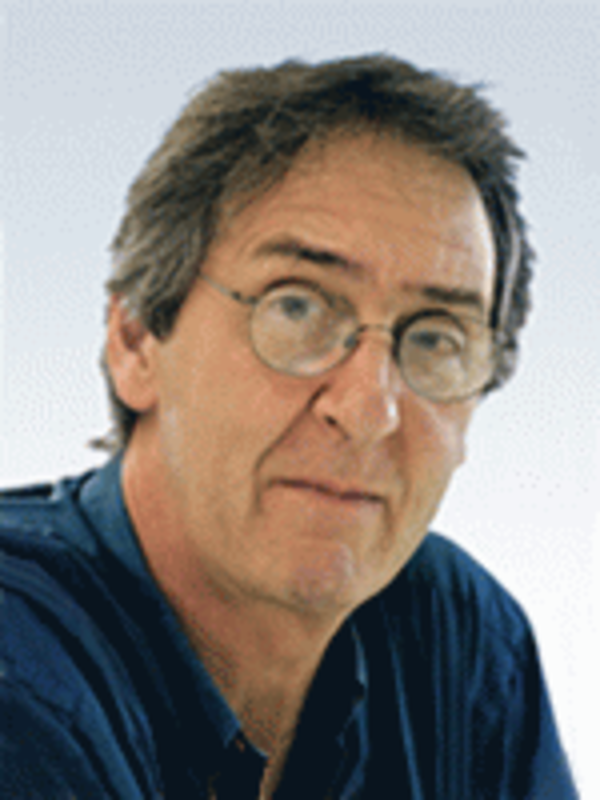
William D. Marslen-Wilson
. Portrait identified on the University of Cambridge Department of Psychology profile.Alan Welsh coauthored, with William D. Marslen-Wilson, a 1978 experimental study of spoken word recognition in continuous speech. The experiments compared a shadowing task, in which listeners repeated speech, with a mispronunciation detection task performed while following a written text.[ref]
Processing interactions and lexical access during word recognition in continuous speech by William D. Marslen-Wilson and Alan Welsh. Cognitive Psychology10, pp.29–63; Abstract and publisher byline
Where an altered pronunciation occurred within a word affected performance, while context influenced the tasks differently. Comparing tasks helped separate an effect of incoming sound from an effect of instructions or expectations. The work contributed to the cohort model, which treats recognition as progressive evaluation of word candidates rather than waiting for an entire utterance.[ref]
George Sperling investigated the amount and duration of information available after a brief visual presentation. His 1960 experiments used partial report paradigms to separate limits on what observers could report from limits on the information initially available.[ref]
The information available in brief visual presentations by George Sperling. Introduction,p.1; partial-report experiments3–5
The key intervention selected only part of a symbol display for report, including conditions with instructions after the display. If the selected subset can be reported better than an exhaustive response would suggest, whole-report performance alone has underestimated accessible information. Delaying the cue then adds a temporal question: what remains available by the time selection is requested?[ref]
The information available in brief visual presentations by George Sperling. Partial-report experiments and post-exposure instruction conditions; Experiment7,p.16
This connects perception, attention and sensory memory while giving them distinct experimental roles. A report is a behavioural output, and its limitations need not map one-to-one onto the observer's original visual experience. Sperling's methodological contribution was to make that ambiguity experimentally tractable rather than settle it by asking only for an introspective description.
Saul Sternberg investigated the timing of mental processes using controlled reaction time experiments. In a 1966 memory-scanning study, participants judged whether a test symbol belonged to a short memorized set. Mean reaction time increased with set length, motivating an account involving rapid internal comparisons.[ref]
High-Speed Scanning in Human Memory by Saul Sternberg. Abstract; task, linear size effect and original interpretation
An illustrative decomposition is , where is the number of stored symbols, summarizes size-independent time and summarizes additional time per item. If and per item, increasing from two to six increases predicted time from to . These are invented teaching values, not reported estimates.
The methodological insight is to turn a proposed mental process into a pattern of quantitative predictions. A linear trend by itself does not uniquely prove one internal architecture; competing processes and strategies must be compared. This distinction keeps the observed timing effect separate from the explanatory model.
Institutional profile: psychology.sas.upenn.edu/people/saul-sternberg .
Iain J. Clarke is a physiologist whose work investigates how brain signals regulate reproduction and other body functions. His Monash profile identifies research in reproduction, the hypothalamus and large-animal models.[ref]
Iain Clarke profile by Monash University. research keywords and personal profile
With James T. Cummins, he developed experiments that directly compared hormone signals and pituitary responses. After the portal-sampling work, a 1985 study used ewes whose pituitaries had been surgically disconnected from hypothalamic input. The investigators supplied controlled GnRH pulses and measured LH responses. Animals receiving a fixed-size pulse every two hours had larger individual LH responses than animals receiving it hourly; a later infusion tested the releasable pituitary hormone pool.[ref]
GnRH pulse frequency determines LH pulse amplitude by altering the amount of releasable LH in the pituitary glands of ewes by Iain J. Clarke and James T. Cummins. Summary, surgical isolation, pulse schedules and subsequent infusion
The design makes timing an explicit experimental variable. With per pulse, an hourly schedule delivers per day, while a two-hour schedule delivers . Thus changing frequency at fixed pulse size also changes total input; that distinction belongs in the interpretation. The resulting work connects a hormone's temporal pattern with the response and storage capacity of its target organ.
Iain J. Clarke, identified portrait on his Monash University profile
. External image from Iain Clarke profile by Monash University.James T. Cummins was a neurosurgeon at St Vincent's Hospital in Melbourne who collaborated with Iain J. Clarke on the physiology of the hypothalamic–pituitary connection. The surgical college's institutional obituary identifies his contribution as devising surgical techniques and animal models that made this region experimentally accessible.[ref]
James Cummins by the Royal Australasian College of Surgeons. paragraph on the Clarke collaboration and surgical animal models
Their 1982 study measured GnRH in the hypophyseal portal system and LH in peripheral blood from conscious ewes, with pituitary function maintained. The observations showed matching secretory pulses in the upstream signal and downstream response.[ref]
The methodological contribution matters because access to a small vascular connection can disturb the very process under study. A preparation that permits repeated measurements while preserving function offers a different test from examining a damaged organ or inferring a local signal solely from peripheral blood. Cummins's work illustrates how surgical technique can create an experimental model for a physiological question.
K. Fushimi is the first author of the 1993 study that cloned and functionally tested the kidney water channel now known as aquaporin-2. The team localized it to the collecting duct and expressed its sequence in Xenopus oocytes, connecting a candidate membrane protein to measured water transport.[ref]
Cloning and expression of apical membrane water channel of rat kidney collecting tubule by K. Fushimi and others. byline and abstract, localization and functional expression
A 1997 first-authored study tested how that channel reaches the cell membrane. The investigators replaced serine256 with alanine and compared the resulting protein with the normal sequence in cultured cells. A stopped-flow light-scattering assay measured osmotic water permeability, while surface labeling assessed membrane localization. cAMP stimulation increased permeability by about for the normal construct but only about for the altered construct in the reported experiments.[ref]
Phosphorylation of serine 256 is required for cAMP-dependent regulatory exocytosis of the aquaporin-2 water channel by K. Fushimi and others. abstract, S256A comparison and measured cAMP responses
The comparison links phosphorylation at a defined amino-acid position to regulated exocytosis and membrane water transport. It also separates two questions: can a protein transport water, and can a cell adjust how much of that protein is present at its surface?
R. H. Adamson is an author of experimental research on the permeability of the microvascular wall. The 2004 study Oncotic pressures opposing filtration across non-fenestrated rat microvessels by R. H. Adamson and others lists an affiliation in human physiology at the University of California, Davis. It combined microvessel measurements, confocal microscopy, electron microscopy and a hydrodynamic model to investigate where oncotic pressure acts across the filtration barrier.[ref]
Oncotic pressures opposing filtration across non-fenestrated rat microvessels by R. H. Adamson and others. author affiliation and abstract, experimental and modelling methods
The important distinction was between bulk interstitial fluid and the much smaller region beside the endothelial glycocalyx. Matching bulk albumin concentrations did not remove all effective opposition to filtration. Linking the physiological measurements to the wall's microscopic structure helped explain this result and refined the interpretation of exchange in a capillary bed. The author's published initials are retained here.
Andrew Schally studied how the hypothalamus controls secretion by the pituitary gland through small peptides. His work helped establish a chemical connection between brain activity and the release of hormones, and he shared the 1977 Nobel Prize in Physiology or Medicine for discoveries concerning brain peptide hormone production. He worked at Tulane and the Veterans Affairs hospital in New Orleans for more than four decades.[ref]
Dr. Andrew Schally, former Tulane endocrinologist and Nobel laureate, dies at 97 by Tulane University. institutional obituary, career and hypothalamic peptide research
One important experimental question was whether separate hypothalamic signals were needed for the two gonadotropins, luteinizing hormone and follicle-stimulating hormone. Schally and colleagues' 1971 report described a purified hypothalamic factor that stimulated both. This connected a chemically characterized signal to two measured pituitary gland responses and helped establish the role of gonadotropin-releasing hormone.[ref]

Portrait attributed to NASA in the Wikimedia Commons file record.
William H. Daughaday was a researcher in endocrinology whose work helped connect growth hormone to circulating growth-promoting factors, including insulin-like growth factor 1. He became the founding chief of Washington University's Metabolism Division in 1951 and later led its diabetes and endocrine research centers. The division's institutional history also credits his work on corticosteroid-binding globulin and early measurements of growth hormone and prolactin.[ref]
William H. Daughaday, MD by Washington University in St. Louis. institutional history, division leadership and scientific contributions
With W. D. Salmon Jr., Daughaday investigated why blood serum could stimulate sulfate incorporation in isolated cartilage. The resulting somatomedin hypothesis made an important conceptual separation: a hormone released by one organ can act through another circulating signal. Daughaday's 2000 retrospective describes the historical experiments behind that interpretation; later identification of insulin-like growth factor 1 gave a molecular identity to an important part of this activity.[ref]
Growth hormone axis overview: somatomedin hypothesis by William Daughaday. historical account of the serum-factor experiments
The distinction remains useful when interpreting experiments: observing a growth hormone-dependent response in a whole animal does not show that growth hormone acts directly on the responding tissue.
Pinned article: Introduction to the OurBigBook Project
Welcome to the OurBigBook Project! Our goal is to create the perfect publishing platform for STEM subjects, and get university-level students to write the best free STEM tutorials ever.
Everyone is welcome to create an account and play with the site: ourbigbook.com/go/register. We belive that students themselves can write amazing tutorials, but teachers are welcome too. You can write about anything you want, it doesn't have to be STEM or even educational. Silly test content is very welcome and you won't be penalized in any way. Just keep it legal!
Intro to OurBigBook
. Source. We have two killer features:
- topics: topics group articles by different users with the same title, e.g. here is the topic for the "Fundamental Theorem of Calculus" ourbigbook.com/go/topic/fundamental-theorem-of-calculusArticles of different users are sorted by upvote within each article page. This feature is a bit like:
- a Wikipedia where each user can have their own version of each article
- a Q&A website like Stack Overflow, where multiple people can give their views on a given topic, and the best ones are sorted by upvote. Except you don't need to wait for someone to ask first, and any topic goes, no matter how narrow or broad
This feature makes it possible for readers to find better explanations of any topic created by other writers. And it allows writers to create an explanation in a place that readers might actually find it.
Figure 1. Screenshot of the "Derivative" topic page. View it live at: ourbigbook.com/go/topic/derivativeVideo 2. OurBigBook Web topics demo. Source. - local editing: you can store all your personal knowledge base content locally in a plaintext markup format that can be edited locally and published either:This way you can be sure that even if OurBigBook.com were to go down one day (which we have no plans to do as it is quite cheap to host!), your content will still be perfectly readable as a static site.
- to OurBigBook.com to get awesome multi-user features like topics and likes
- as HTML files to a static website, which you can host yourself for free on many external providers like GitHub Pages, and remain in full control

Figure 2. You can publish local OurBigBook lightweight markup files to either OurBigBook.com or as a static website.
Figure 3. Visual Studio Code extension installation.
Figure 5. . You can also edit articles on the Web editor without installing anything locally. Video 3. Edit locally and publish demo. Source. This shows editing OurBigBook Markup and publishing it using the Visual Studio Code extension. 
- Infinitely deep tables of contents:




All our software is open source and hosted at: github.com/ourbigbook/ourbigbook
Further documentation can be found at: docs.ourbigbook.com
Feel free to reach our to us for any help or suggestions: docs.ourbigbook.com/#contact